Why Thin Rings Bend (and How to Choose One That Lasts)
“Dainty rings bend for reasons you can control: width, depth, karat and setting. The honest physics of slim bands, plus how to wear one so it stays round.”
AI-generated illustration; not a Shewah product or a scale measurement.
SHEWAH Editorial Concept Illustration (Non-Catalogue)
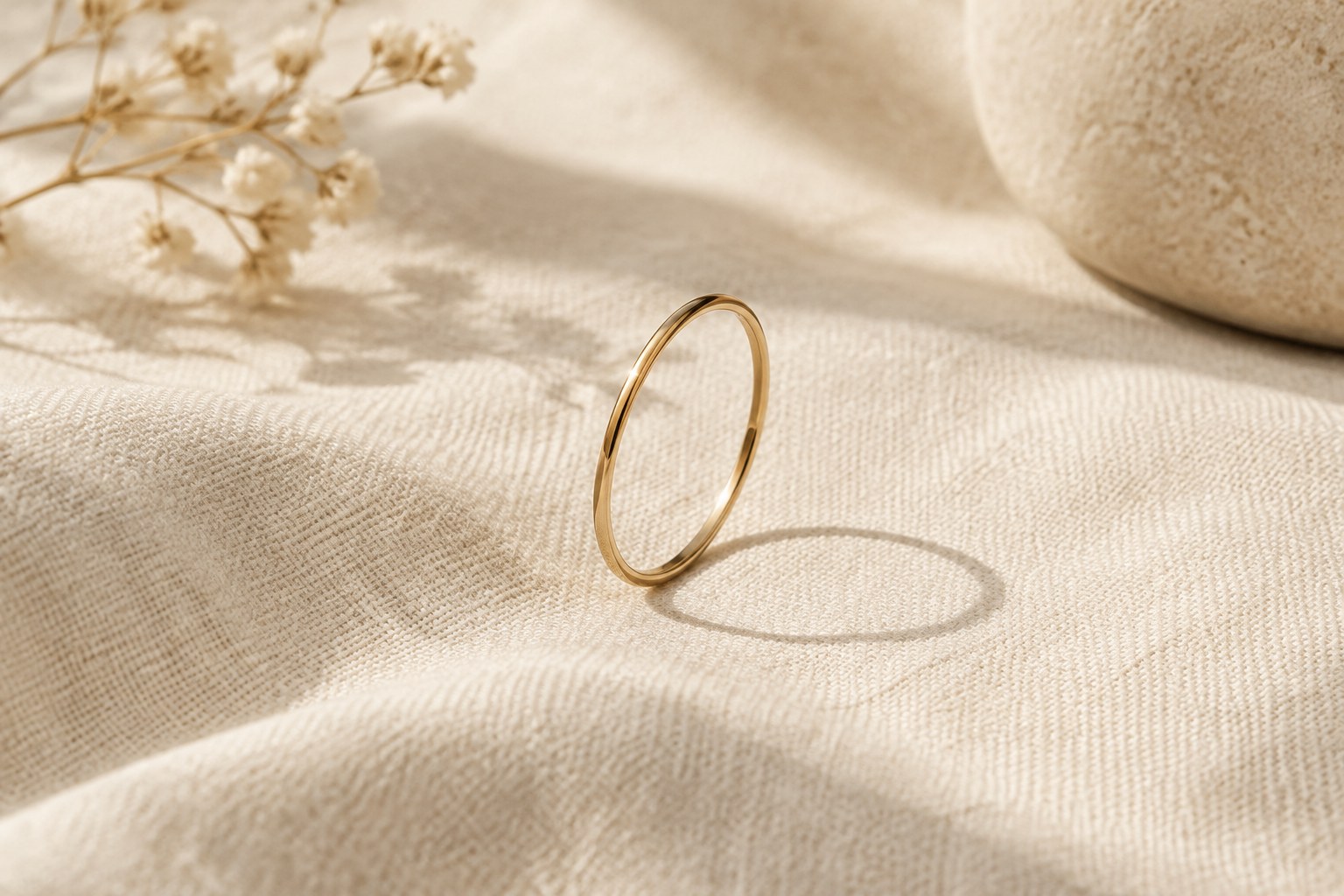
The dainty ring is everywhere: a whisper-thin gold band, a tiny stone, almost nothing on the finger. Then one day it is no longer round. If you have had a slim ring bend, or you are shopping for one now, the physics is worth understanding before you buy - because thin rings bend for reasons, and some of those reasons are choices you control.
Why thin metal moves
Gold is a soft metal by nature. Pure gold can be bent with fingers; the alloys used in jewellery are harder, but hardness has limits. A ring is a circle of metal under constant small forces - gripping a steering wheel, lifting a bag, clapping. Force spreads through whatever metal is present, and a 1.2mm band simply has very little metal to spread it through. Push past what the cross-section can carry and the band deforms. It does not snap; gold yields slowly, which is why bent rings are common and broken ones are rare. Platinum behaves differently again - it is denser and displaces rather than wears, but that is a separate conversation.
The karat trade-off, honestly stated
Higher karat means more pure gold, and pure gold is softer. An 18k thin band (75% gold) will generally yield sooner than the same band in 14k, and 9k is harder still - though alloying recipes vary, so karat is a guide, not a guarantee. There is no free lunch here: the warmer colour and prestige of higher karat comes with softer metal, and slim designs feel that softness first. Whatever karat you choose, the stamp in the band and the seller's written description are what to trust, not any at-home test.
Design choices that protect a slim ring
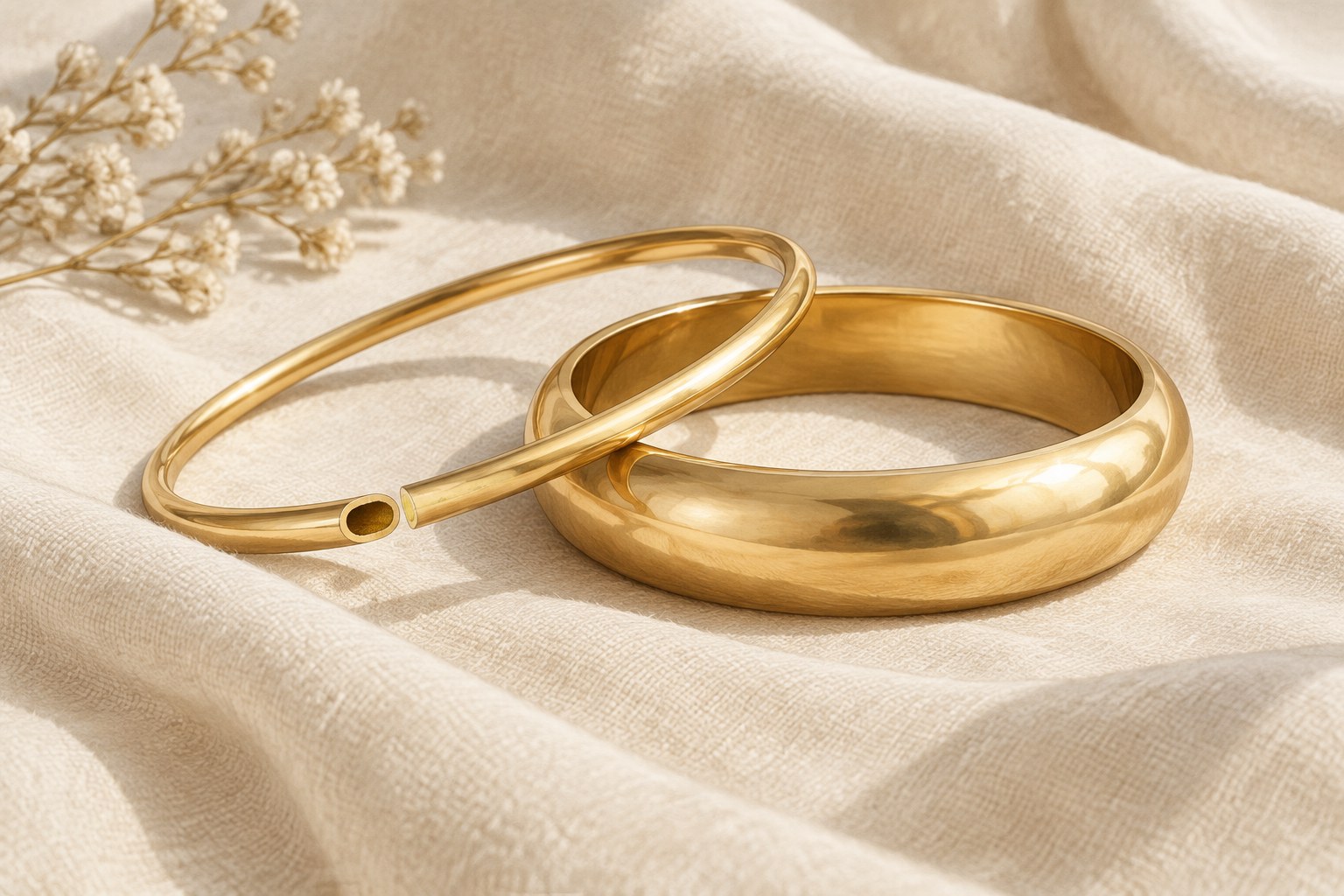
A band that is thin in width but has some depth - a gently domed or squared profile rather than a flat sliver - resists bending far better, because depth does more for strength than width. A bezel setting that wraps the stone adds structure where a tall, spindly prong head removes it. And rings with stones set all the way around cannot be resized and concentrate stress, so they want extra care. Some manufacturers also harden thin castings with controlled heat treatment; it is reasonable to ask whether yours does.
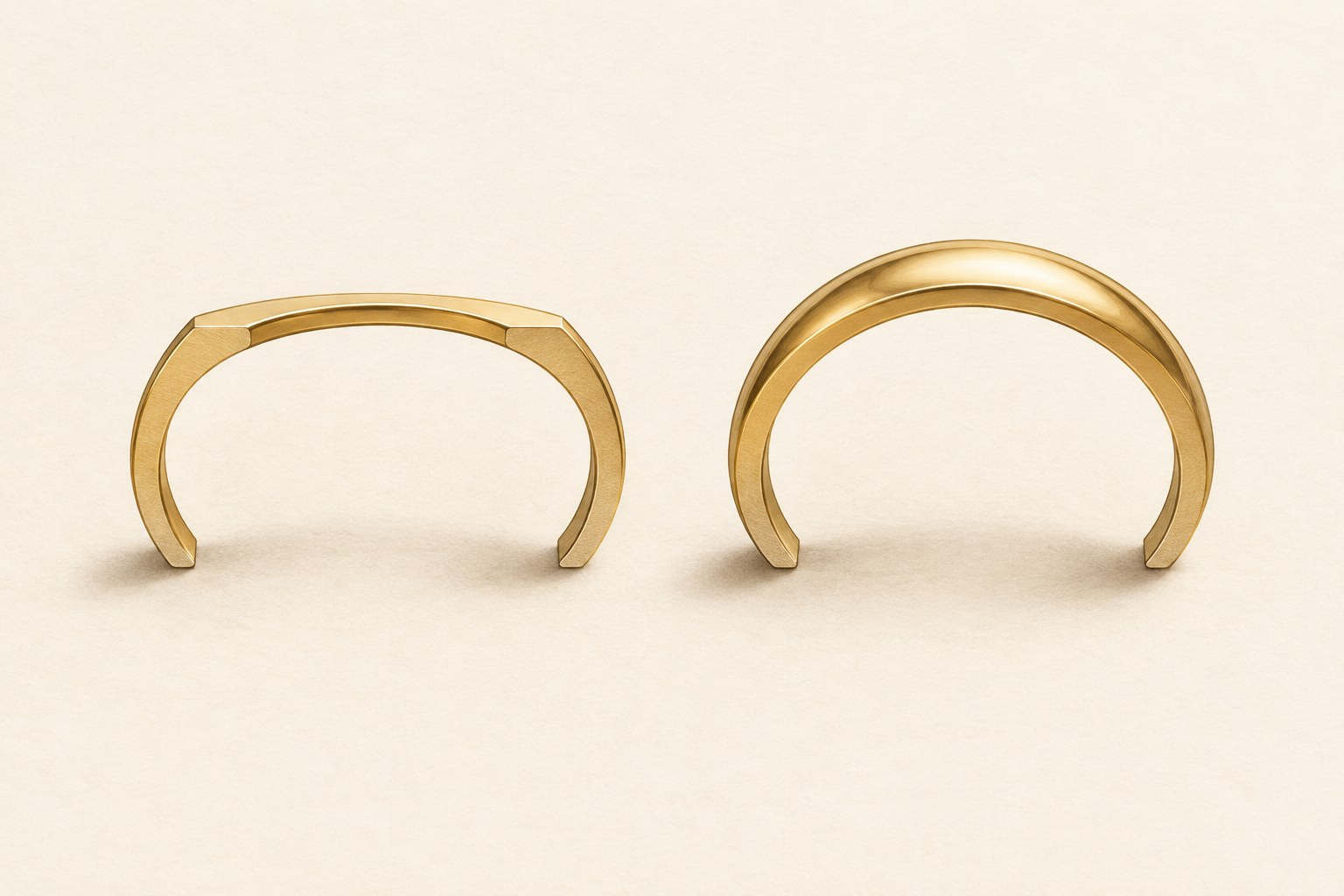
AI-generated illustration; not a Shewah product or a scale measurement.
SHEWAH Editorial Concept Illustration (Non-Catalogue)
Living with a dainty ring
Take it off for the gym, gardening, moving furniture and carrying anything heavy - those are the bending moments, literally. Store it where nothing rests on it. If it goes slightly oval, a jeweller can usually round it back once; repeated bending work-hardens the metal and each round trip makes the next bend easier, so prevention beats repair.
What to ask before you buy
How wide and how deep is the band, in millimetres? What karat, and is the piece cast, handmade or otherwise hardened? Is it resizable? A slim ring chosen with open eyes - knowing it asks for gentler wear - is a joy for years. The disappointment only comes when nobody told you what thin gold can and cannot do.
Delicate, done properly, with Shewah
Shewah makes slim rings to order in Surat and will tell you plainly what a given width and karat will tolerate in daily life. Explore Shewah's jewellery or message us on WhatsApp at +91 96622 66360 - we would rather talk you out of the wrong ring than sell it to you.
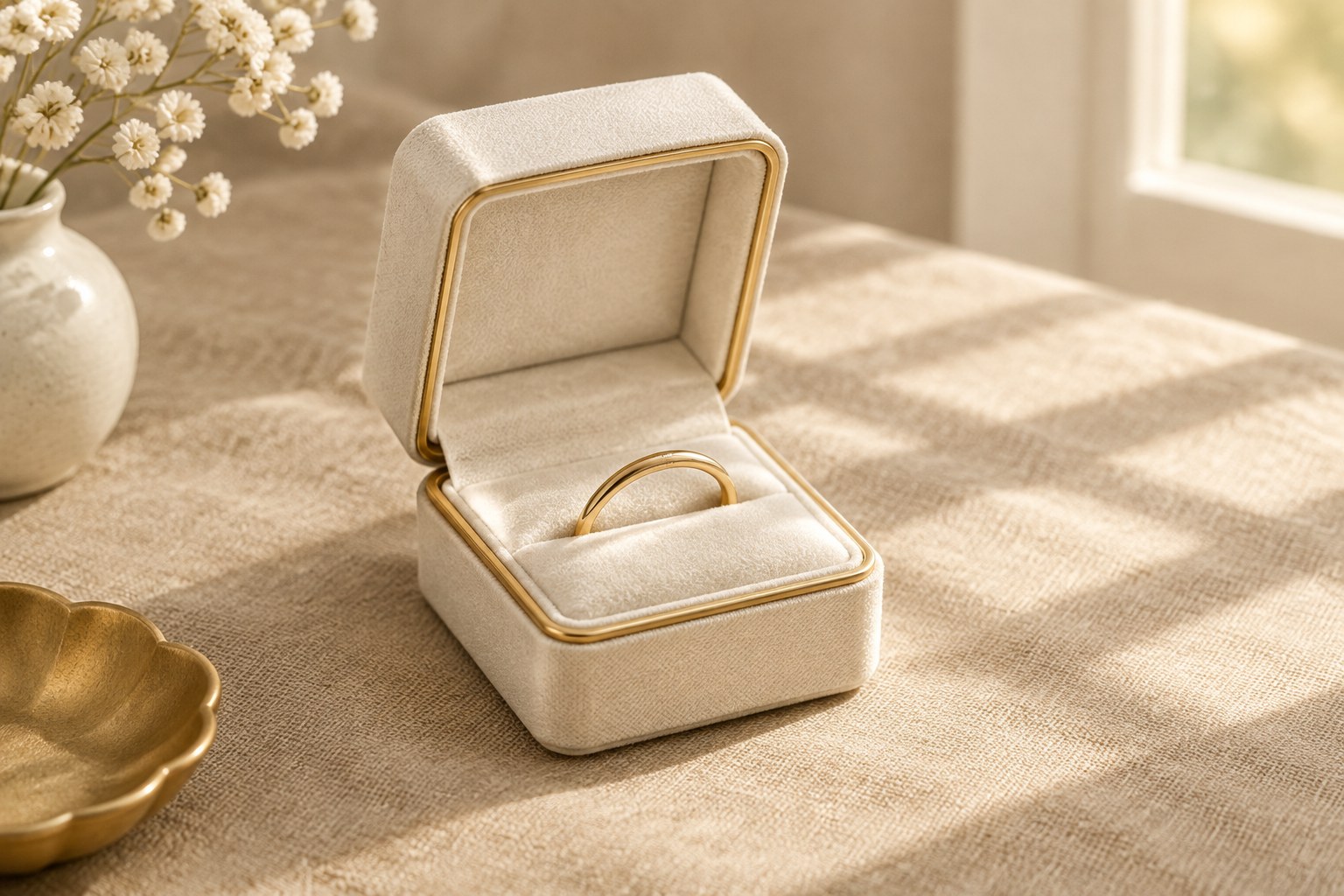
AI-generated illustration; not a Shewah product or a scale measurement.
SHEWAH Editorial Concept Illustration (Non-Catalogue)
Sources
- Ring (jewellery)) - Wikipedia
- Metallurgy - Britannica
- All About Gold - World Gold Council
The Maison Shewah Atelier Standard
Every creation referenced across our journal essays is made individually to order using solid 18K gold and independently certified diamonds (IGI & GIA). We uphold complete material transparency and zero synthetic plating.
Research & Gemological References
- [1]Ring (jewellery) — Wikipedia (Verified: 2026-11-01)
- [2]Metallurgy — Britannica (Verified: 2026-11-01)
- [3]All About Gold — World Gold Council (Verified: 2026-11-01)