Enamel Jewellery: What It Is and How It Wears
“That brilliant colour on gold is glass, not gemstone. What fired enamel is, the main types, how it differs from resin, and how it wears in daily life.”
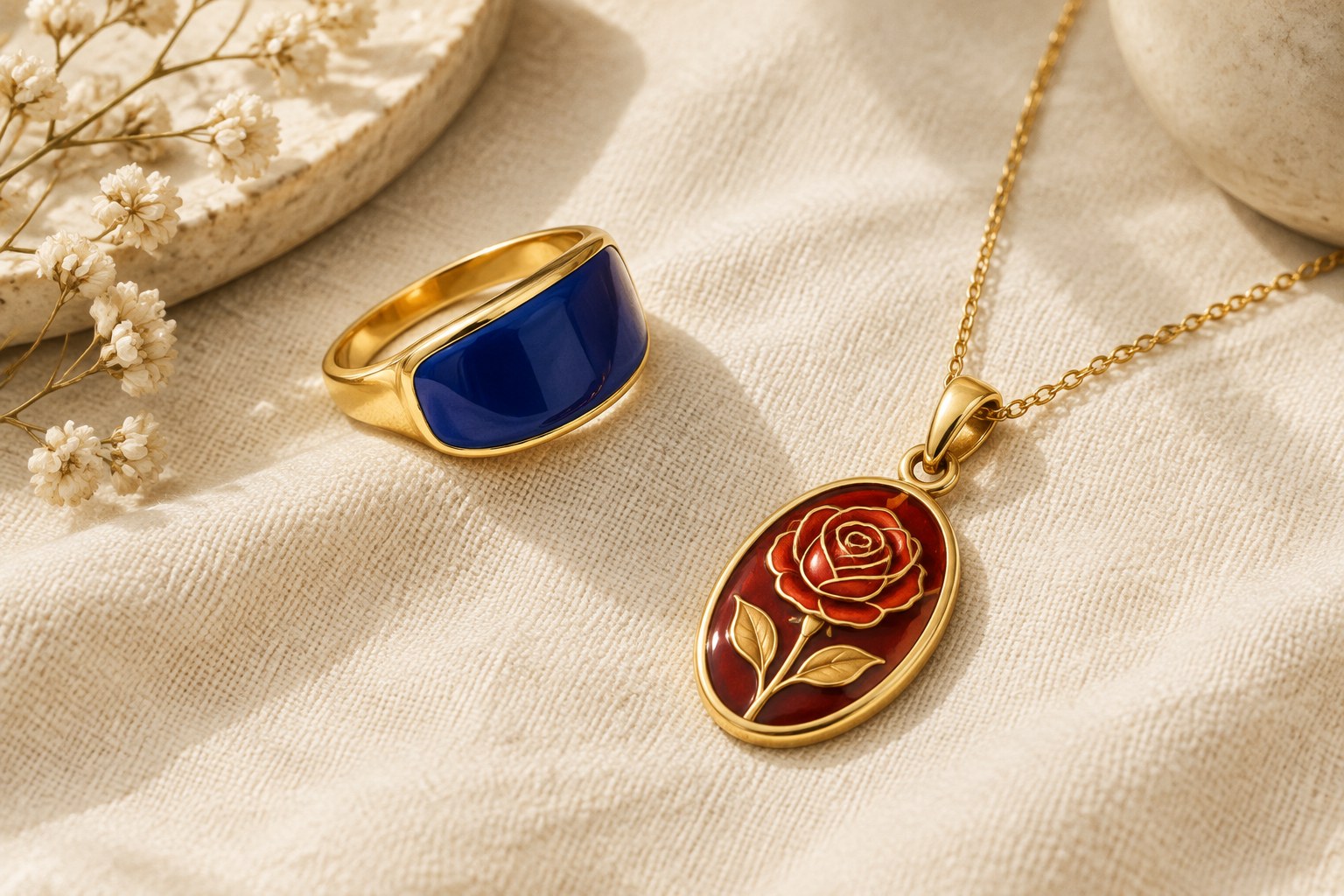
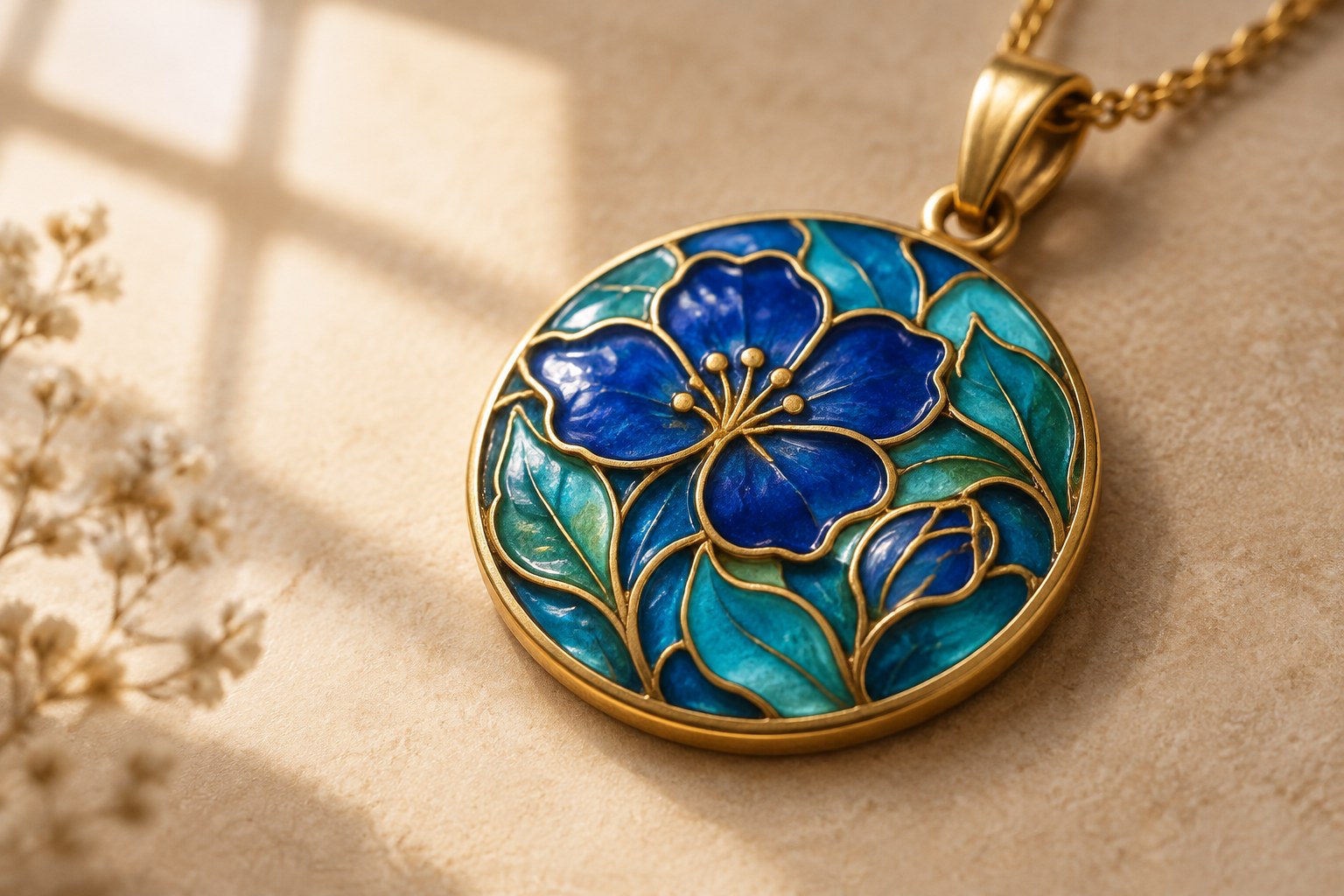
AI-generated illustration; not a Shewah product or a scale measurement.
SHEWAH Editorial Concept Illustration (Non-Catalogue)
A flash of deep blue on a gold ring, a red rose on a pendant that will never fade - that colour is not a gemstone. It is enamel: powdered glass fused to metal in a kiln, one of the oldest and most durable ways to bring colour to jewellery. Here is what it is, how the main types differ, and what to know before wearing it daily.
What enamel actually is
Enamel starts as finely ground glass, coloured with metal oxides. A jeweller applies it to a prepared metal surface, usually gold or silver, then fires the piece at roughly 750 to 850 degrees Celsius. The glass melts, flows and bonds permanently to the metal. Because the colour is glass all the way through, it does not fade in sunlight or rub off with wear the way a surface coating can.
The main types you will meet
Champleve enamel fills recesses carved out of the metal, so the colour sits in pools between raised walls of gold. Cloisonne builds those walls separately, from thin wire soldered upright into tiny compartments, each filled with a different colour. Plique-a-jour is cloisonne with the backing removed, so light passes through the enamel like a miniature stained-glass window. Basse-taille engraves a pattern into the metal first, then covers it with translucent enamel, so the texture shimmers through the colour. Painted enamel is brushed on in layers like a portrait miniature. Most contemporary enamel jewellery you will see is champleve or a resin-based imitation, which leads to the next point.
Real enamel versus resin lookalikes
Much affordable "enamel" jewellery is actually epoxy resin: coloured, poured and cured without heat. It can look convincing. Fired glass enamel feels cool and hard like a stone, has real depth and gloss, and often shows slight organic variation from the kiln. Resin tends to feel warmer and slightly softer, and a pin dragged gently across an unseen spot would scratch it - a test for the seller to demonstrate, not for you to perform. Neither is dishonest, but they age differently and should be described differently.
AI-generated illustration; not a Shewah product or a scale measurement.
SHEWAH Editorial Concept Illustration (Non-Catalogue)
How enamel wears in daily life
Glass is hard but brittle. Enamel laughs at sunlight, perfume and swimming pools far better than most finishes, yet it chips if knocked against a hard edge, and a bent ring can crack its enamel panel outright. Rings take the most punishment, so enamel there wants a protective setting with metal raised slightly around the coloured areas. Pendants and earrings are safer homes for delicate work. Chipped enamel rarely repairs invisibly; prevention beats cure.
What to check before you buy
Ask whether the colour is fired enamel or resin, and on which metal. Look at the edges where enamel meets metal: clean, crisp borders signal careful work, while bleeding colour or bubbles signal the opposite. Turn the piece over - the back should be as finished as the front. And ask how the piece should be stored and cleaned: a soft cloth and no ultrasonic cleaner is the usual answer for enamel.
Colour that lasts, with Shewah
Shewah designs made-to-order jewellery in Surat and can advise on where enamel colour works hard and where a gemstone serves better. Explore Shewah's jewellery or message us on WhatsApp at +91 96622 66360 - bring your questions, we enjoy them.
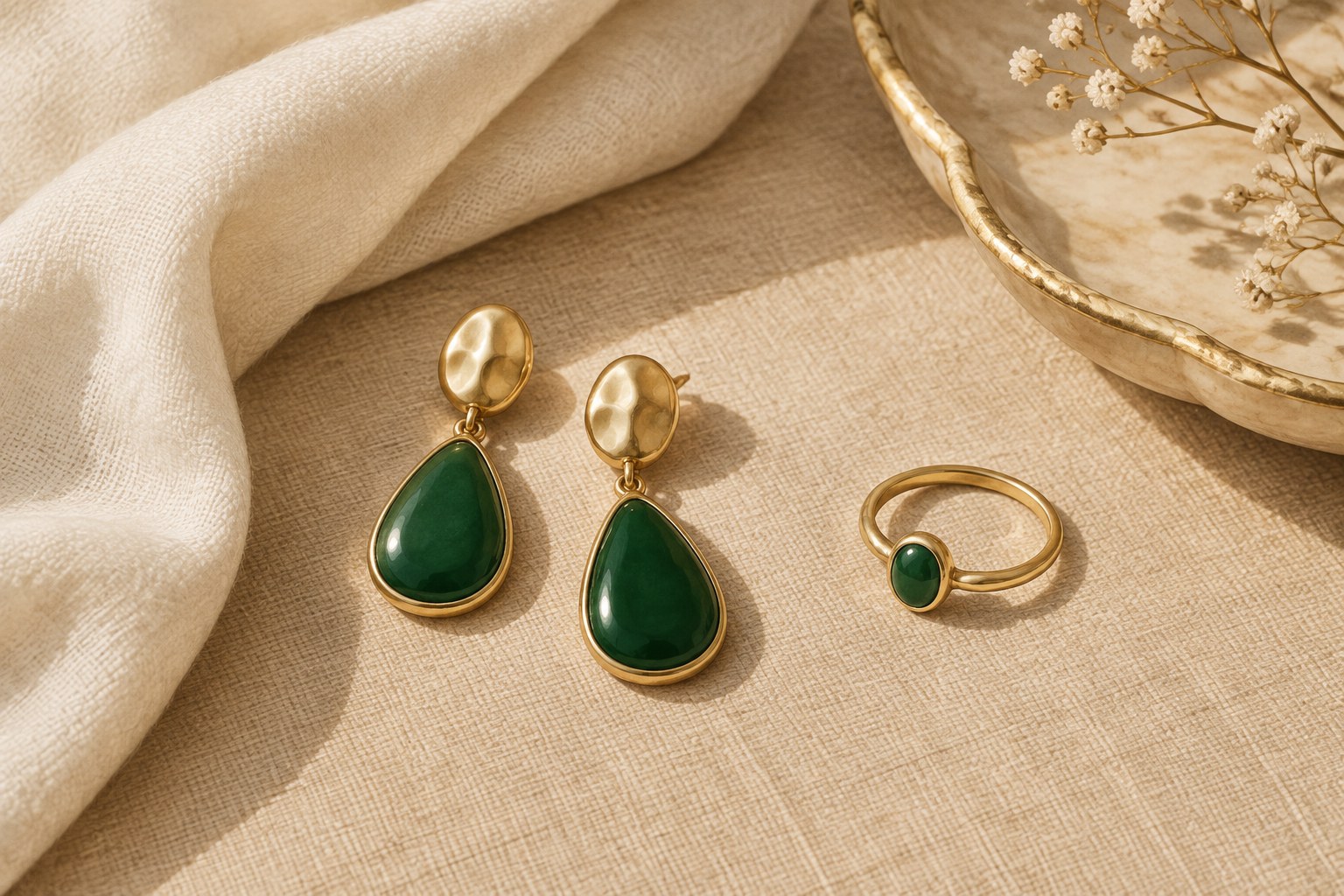
AI-generated illustration; not a Shewah product or a scale measurement.
SHEWAH Editorial Concept Illustration (Non-Catalogue)
Sources
- Vitreous enamel - Wikipedia
- Cloisonne - Wikipedia
- Cloisonne: Chinese, Artistic, Craftsmanship - Britannica
The Maison Shewah Atelier Standard
Every creation referenced across our journal essays is made individually to order using solid 18K gold and independently certified diamonds (IGI & GIA). We uphold complete material transparency and zero synthetic plating.
Research & Gemological References
- [1]Vitreous enamel — Wikipedia (Verified: 2026-10-31)
- [2]Cloisonne — Wikipedia (Verified: 2026-10-31)
- [3]Cloisonne: Chinese, Artistic, Craftsmanship — Britannica (Verified: 2026-10-31)