Polished, Matte or Hammered: Jewellery Finishes Explained
“The finish on gold changes how it looks, how it wears and how much upkeep it needs. Polish, matte, brushed, hammered and coatings explained for buyers.”
AI-generated illustration; not a Shewah product or a scale measurement.
SHEWAH Editorial Concept Illustration (Non-Catalogue)
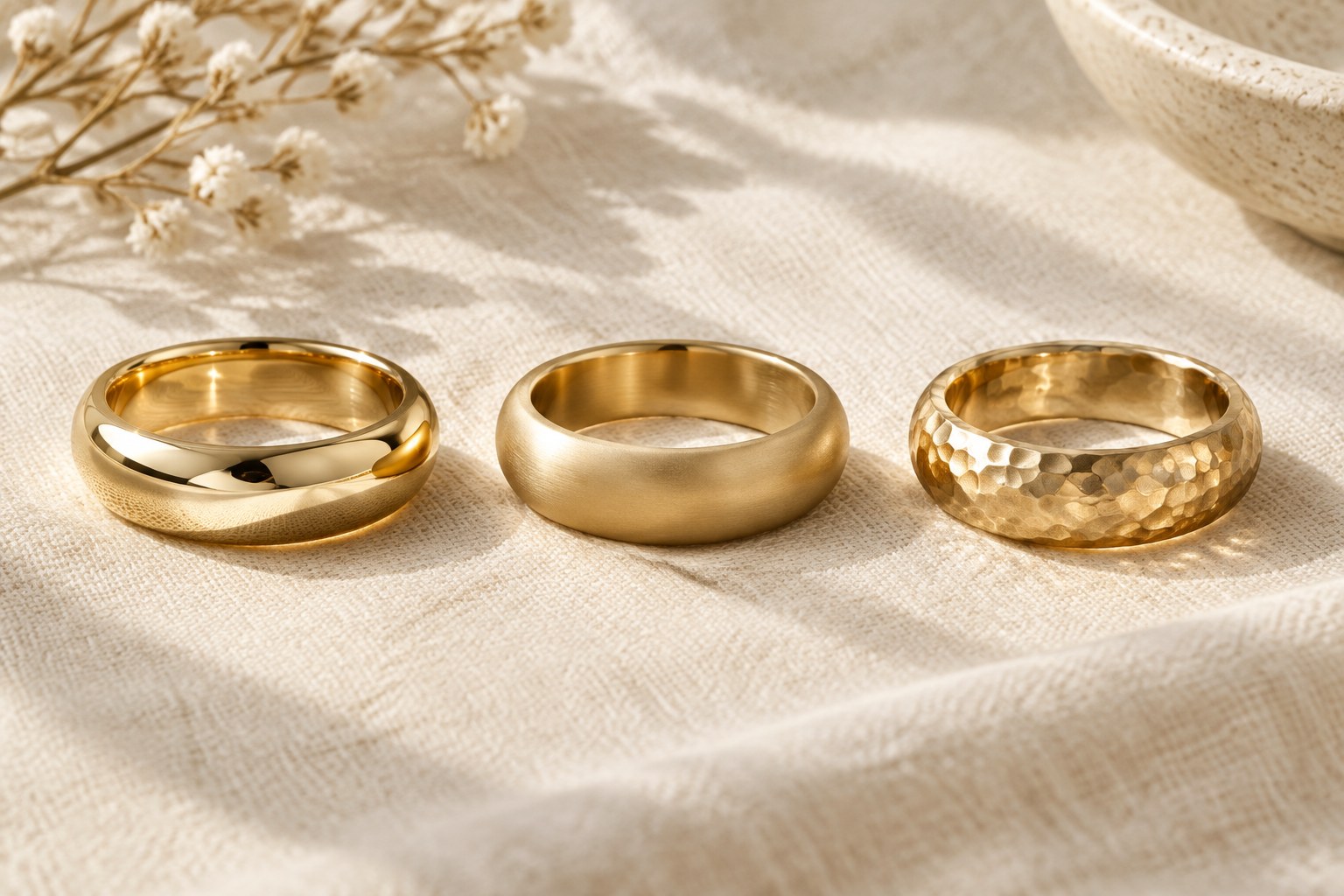
Two rings cast from the same gold, in the same shape, can look completely different - one mirror-bright, one soft and frosted, one covered in tiny dents that catch the light. That difference is the finish: the final surface treatment applied to the metal. It changes how a piece looks, how it wears and how much upkeep it asks of you.
High polish
The classic mirror shine, achieved by progressively finer abrasives until the surface reflects like still water. Polish shows off gold's colour and makes diamonds look brighter beside it. The trade-off: it shows everything. Fine scratches appear quickly on polished surfaces, especially on rings, and the mirror dulls into a soft sheen with daily wear. Repolishing restores it, but each polish removes a whisper of metal, so it is maintenance, not a one-time state.
Matte, satin and brushed
These finishes trade reflection for softness. A brushed finish is made by scoring the surface in one direction with an abrasive, leaving fine parallel lines; matte and satin describe progressively smoother versions of the same idea. They hide everyday scratches beautifully, which is why they suit daily-wear rings, and they read as modern and understated. The catch runs the other way: knocks and burnishing can create shiny spots, and restoring an even matte surface means refinishing the whole piece, not just one mark.
Hammered and textured
A hammered surface is exactly that - the metal worked with a small rounded hammer so each facet catches light differently. Other textures are engraved, punched or cast in. Texture is the most forgiving finish of all: new dents disappear into the landscape of old ones. It also hides the thickness of the metal less honestly than a polish does, which is usually a virtue.
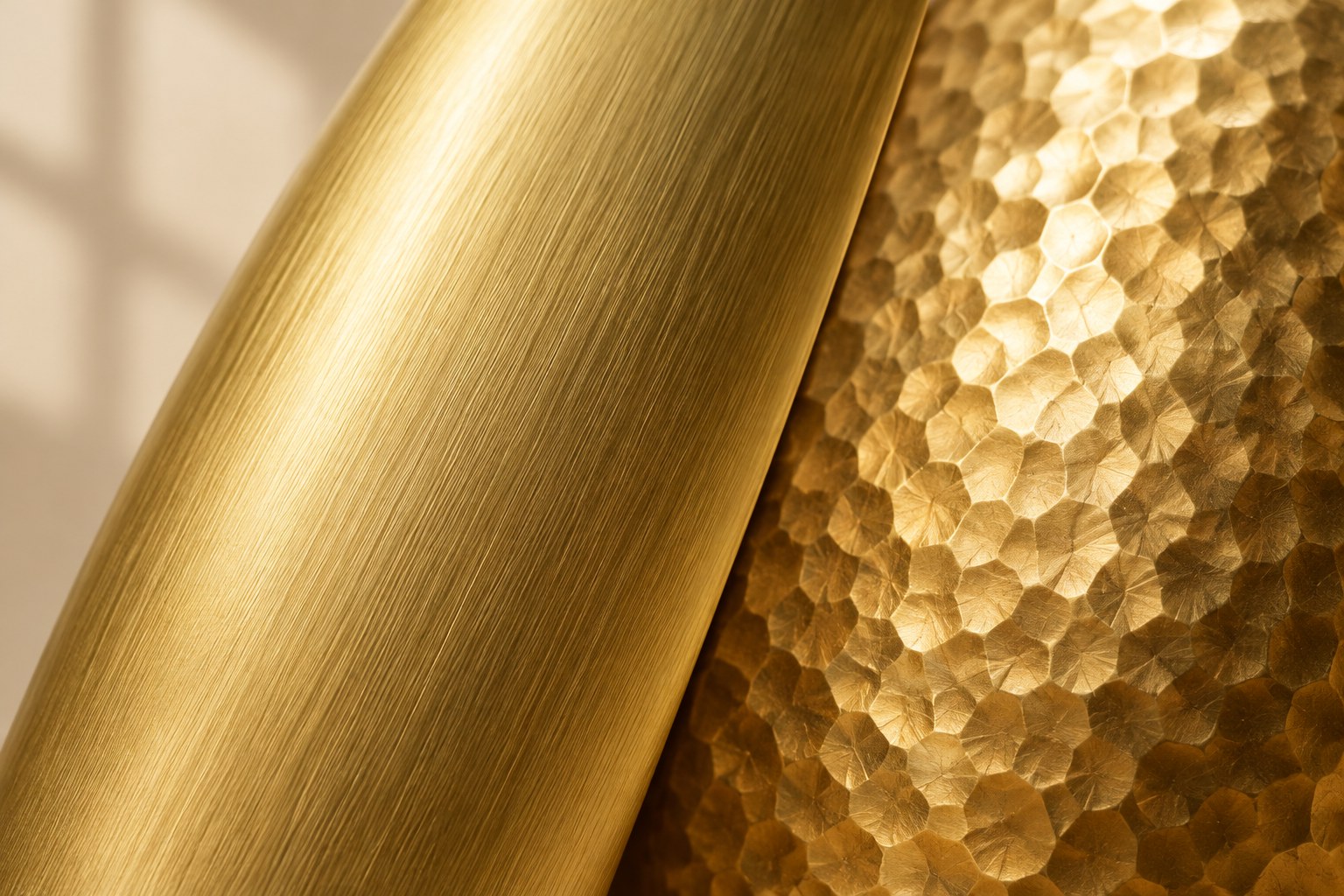
AI-generated illustration; not a Shewah product or a scale measurement.
SHEWAH Editorial Concept Illustration (Non-Catalogue)
Plated and coated finishes
Some finishes are not the metal itself but a coating: rhodium over white gold for extra whiteness, or gold plating over silver or steel. These wear away - rhodium typically needs refreshing every year or two on a ring worn daily. Ask what is underneath any unusually bright white or yellow surface, because the coating's lifespan is part of what you are buying.
Mixing finishes on one piece
Many well-designed pieces combine finishes deliberately: a polished edge framing a brushed centre, a matte band with a glossy groove. The contrast does the visual work, letting a plain gold band carry detail without a single stone. When you see this done cleanly - crisp borders between one texture and the next - you are looking at careful bench work, and it is one of the easiest quality signals to read with the naked eye.
What to ask before you choose
How will this finish age on the piece I am buying, given how I will wear it? Can it be refreshed, and is that a quick polish or a full refinish? Is the surface the metal itself or a coating over something else? A finish you love that matches your habits will outlast a finish you love in the abstract.
Finished to order, with Shewah
Shewah finishes each made-to-order piece by hand in Surat, and we will happily make the same design polished, matte or hammered so you can compare. Explore Shewah's jewellery or message us on WhatsApp at +91 96622 66360 to talk through which finish suits your daily life.
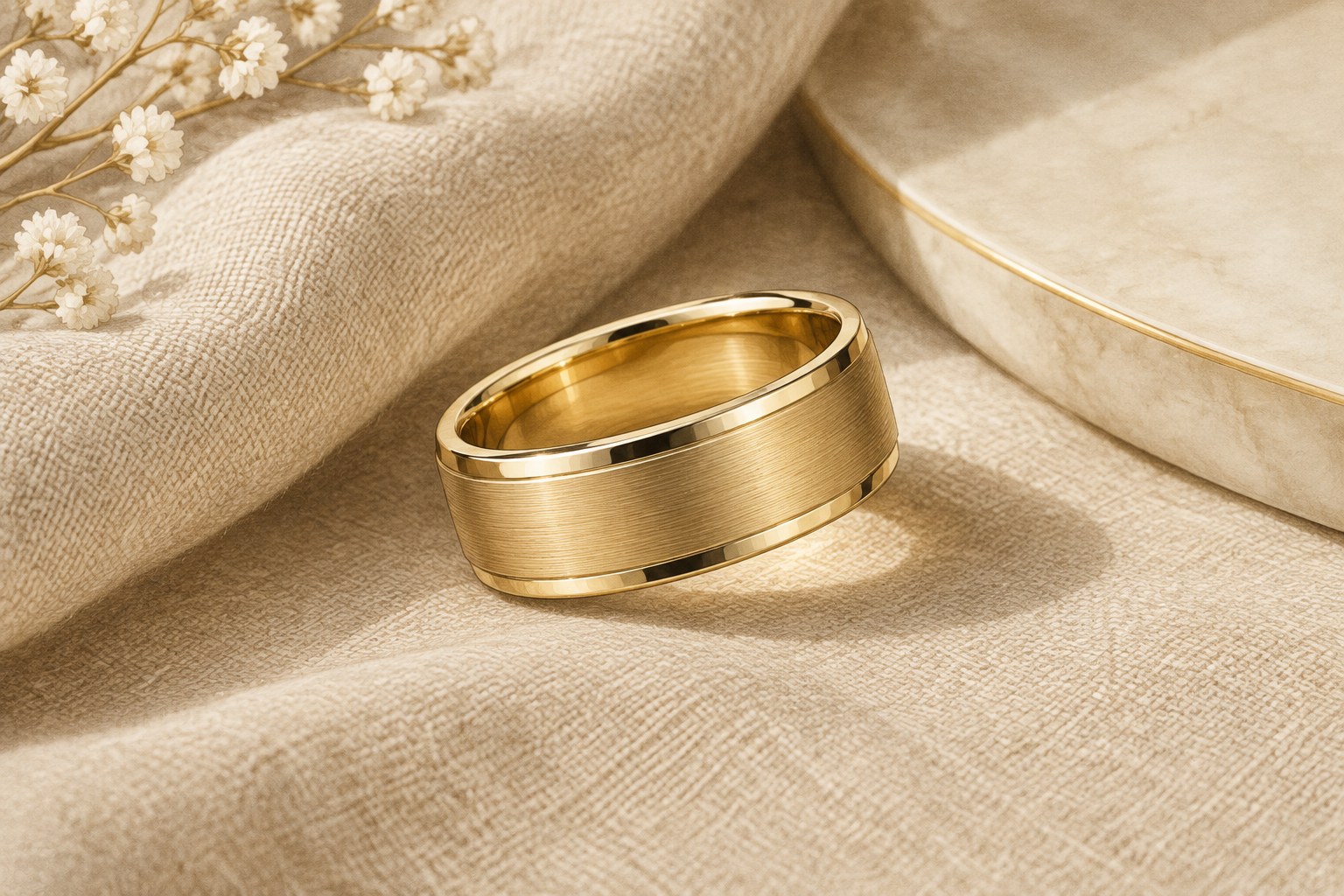
AI-generated illustration; not a Shewah product or a scale measurement.
SHEWAH Editorial Concept Illustration (Non-Catalogue)
Sources
- Jewellery - Wikipedia
- Repousse and chasing - Wikipedia
- Goldsmith - Wikipedia
The Maison Shewah Atelier Standard
Every creation referenced across our journal essays is made individually to order using solid 18K gold and independently certified diamonds (IGI & GIA). We uphold complete material transparency and zero synthetic plating.
Research & Gemological References
- [1]Jewellery — Wikipedia (Verified: 2026-10-31)
- [2]Repousse and chasing — Wikipedia (Verified: 2026-10-31)
- [3]Goldsmith — Wikipedia (Verified: 2026-10-31)