When Prongs Need Attention: Snags, Wear and Retipping
“Prongs are the hardest-working part of a ring and the first to wear. How they age, the gentle snag test, and what retipping involves.”
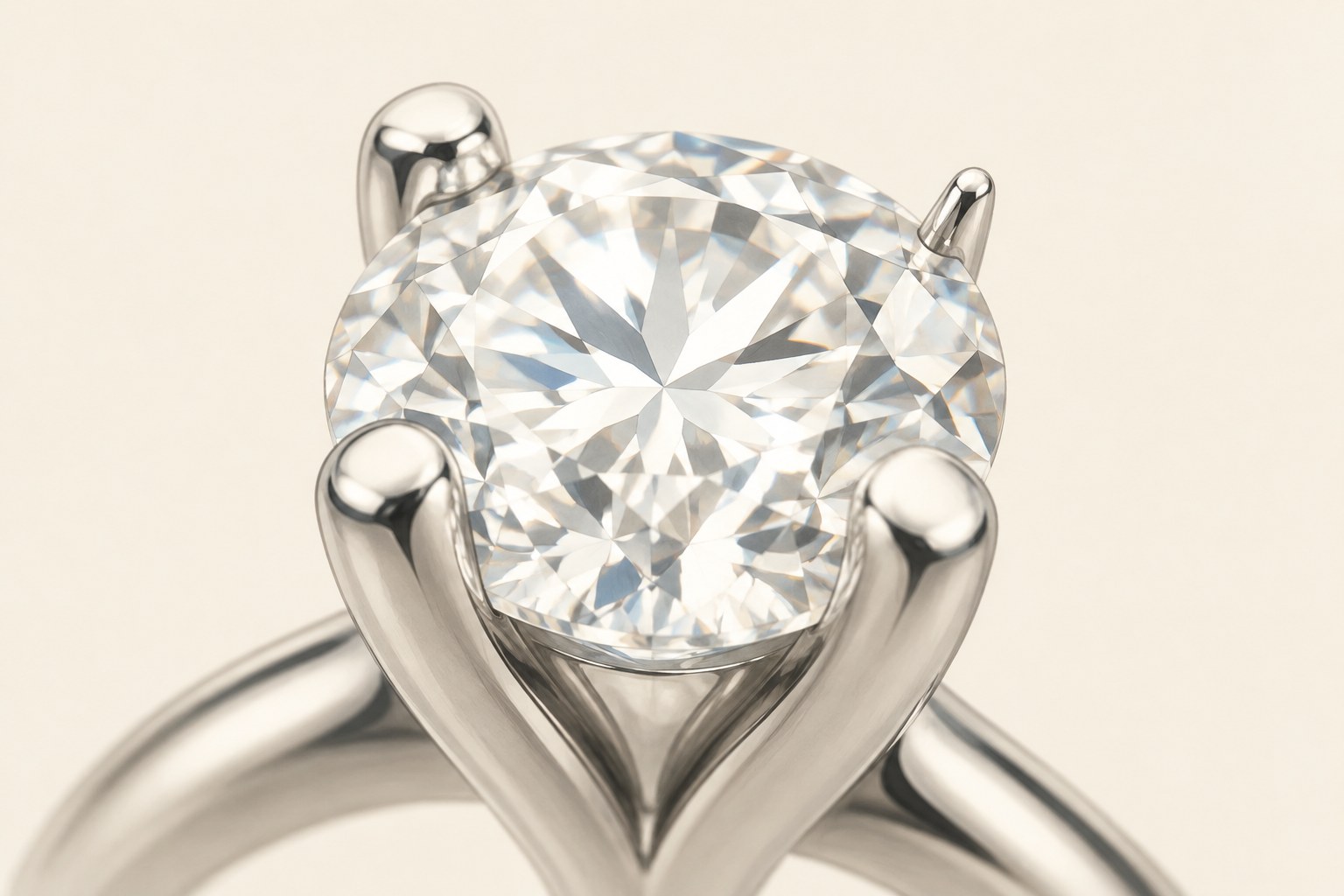
AI-generated illustration; not a Shewah product or a scale measurement.
SHEWAH Editorial Concept Illustration (Non-Catalogue)
The prongs holding your diamond are tiny claws of metal doing a job far bigger than their size. They are also the part of a ring that wears first, because they stand proud of everything else and meet the world all day. Knowing how they age - and what a jeweller can do about it - is the difference between a routine repair and a lost stone.
How prongs wear down
Prongs thin in predictable ways. The tips flatten from years of contact with desks, pockets and door handles. The sides wear where they rub against clothing. Gold is a comparatively soft metal, so this happens slowly but steadily; platinum wears differently, displacing rather than losing metal, but it still thins at the tips over enough years. A prong that began as a rounded bead can end as a sliver.
The snag test, done gently
The classic early warning is snagging: a prong that catches on knitwear or hair has usually lifted slightly or worn a sharp edge. Run the ring lightly over a fine fabric - if it snags, the prongs deserve a look. This is a prompt to visit a jeweller, not a diagnosis: only a loupe in trained hands can say how much metal remains. The reliable routine is a professional check every year or so, and sooner after any hard knock.
What retipping and re-tipping mean
When tips wear thin, a jeweller adds fresh metal to rebuild them - retipping - a straightforward repair that restores the claw over the stone. If one prong is badly damaged or the setting is old throughout, a prong or the whole head can be replaced. Either way, the work is measured in a workshop visit, not a new ring. Ask to see the before and after under magnification; a good jeweller will happily show you.
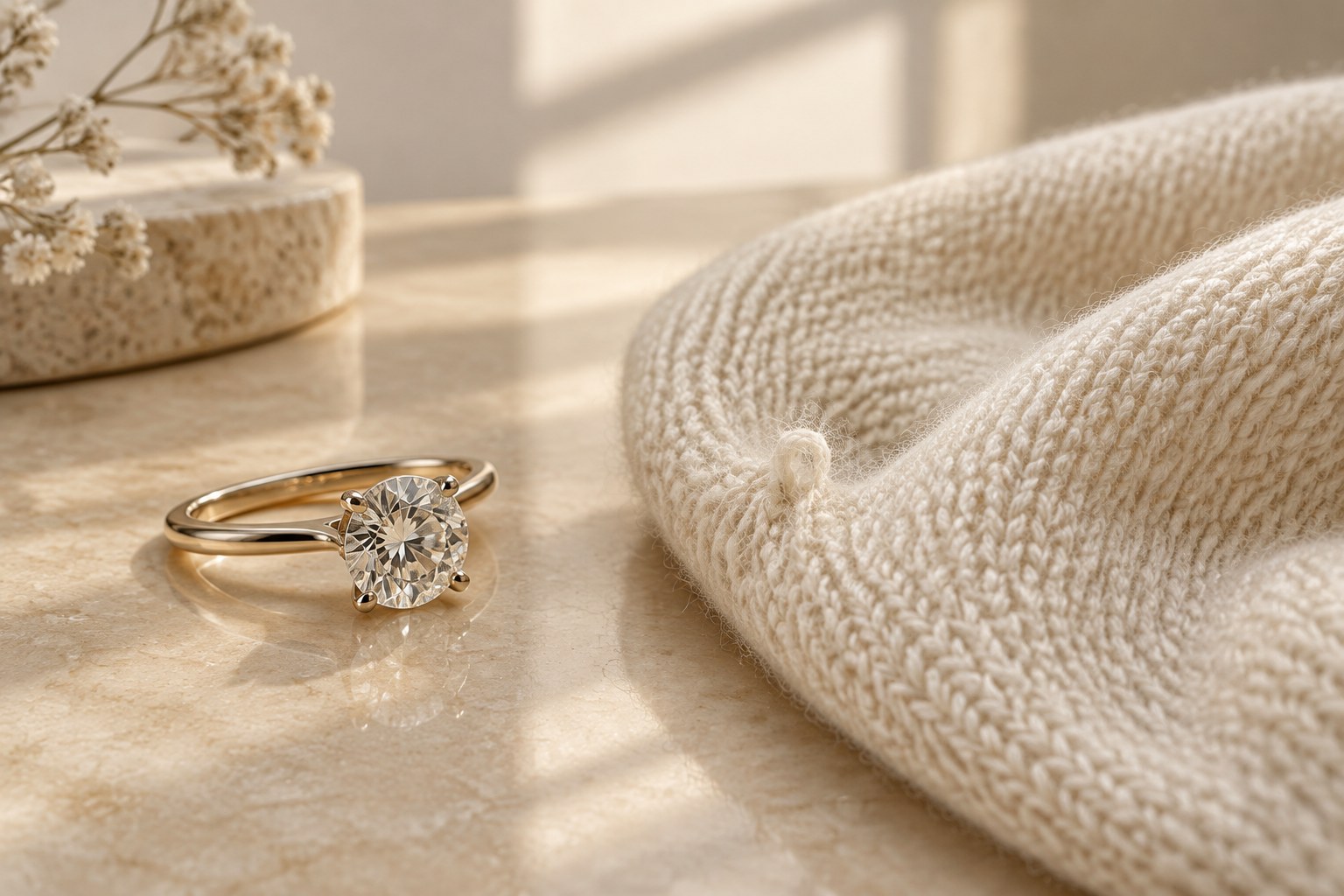
AI-generated illustration; not a Shewah product or a scale measurement.
SHEWAH Editorial Concept Illustration (Non-Catalogue)
Settings that wear differently
Not all settings age the same. Bezel settings wrap the stone's edge in metal and have no prongs to wear. Six prongs share the work more generously than four, so each can stay finer for longer. Pavé-set stones use tiny beads of metal and reward gentler wear. None of this makes prongs fragile - it makes them maintainable, like heels on good shoes.
Habits that stretch the interval
Small habits buy years. Take rings off for the gym, the garden and the washing-up bowl. Store them apart from other jewellery so metal never grinds on metal. And put the ring on last, after lotions and perfume, which leave films that dull the stone and hide early wear you would otherwise catch.
What to ask about upkeep
Before you buy, ask: how often should this setting be checked, and is the check free? What does retipping involve for this design, and does the maker cover early wear? Then keep the rhythm: a yearly inspection, a prompt visit after snags or knocks, and the stone should outlive us all.
Settings we stand behind, with Shewah
Shewah makes its settings to order in Surat and inspects, retips and services what it makes - bring your piece back any time. Explore Shewah's jewellery or message us on WhatsApp at +91 96622 66360 to book a check.
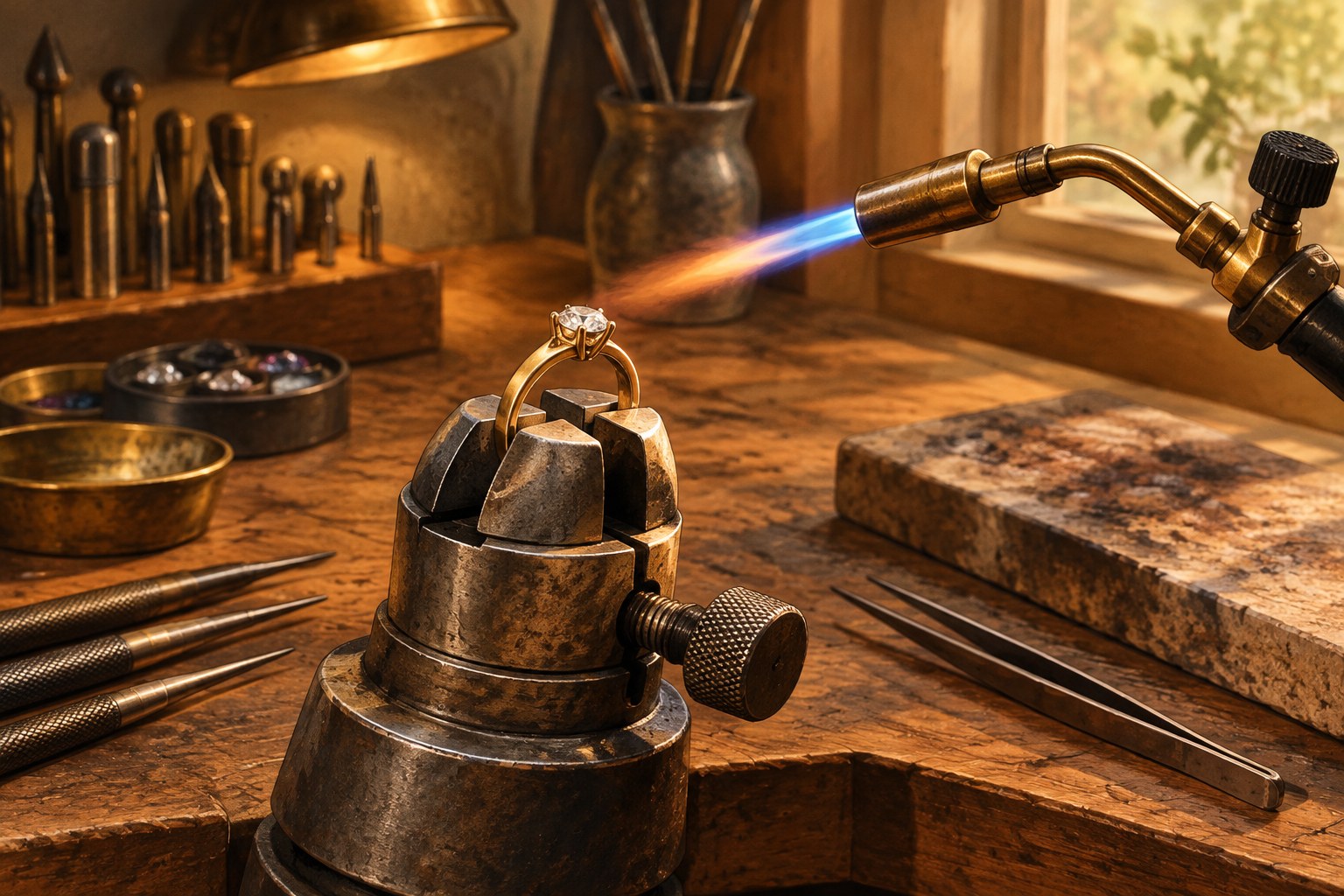
AI-generated illustration; not a Shewah product or a scale measurement.
SHEWAH Editorial Concept Illustration (Non-Catalogue)
Sources
- Ring (jewellery)) - Wikipedia
- Jewellery - Wikipedia
- Gemstone - Wikipedia
The Maison Shewah Atelier Standard
Every creation referenced across our journal essays is made individually to order using solid 18K gold and independently certified diamonds (IGI & GIA). We uphold complete material transparency and zero synthetic plating.
Research & Gemological References
- [1]Ring (jewellery) — Wikipedia (Verified: 2026-11-02)
- [2]Jewellery — Wikipedia (Verified: 2026-11-02)
- [3]Gemstone — Wikipedia (Verified: 2026-11-02)