What Happens to Your Old Gold When You Exchange It
“Exchanging old gold is a process, not magic: how purity is tested, what net weight means, where the metal actually goes, and the deductions to question.”
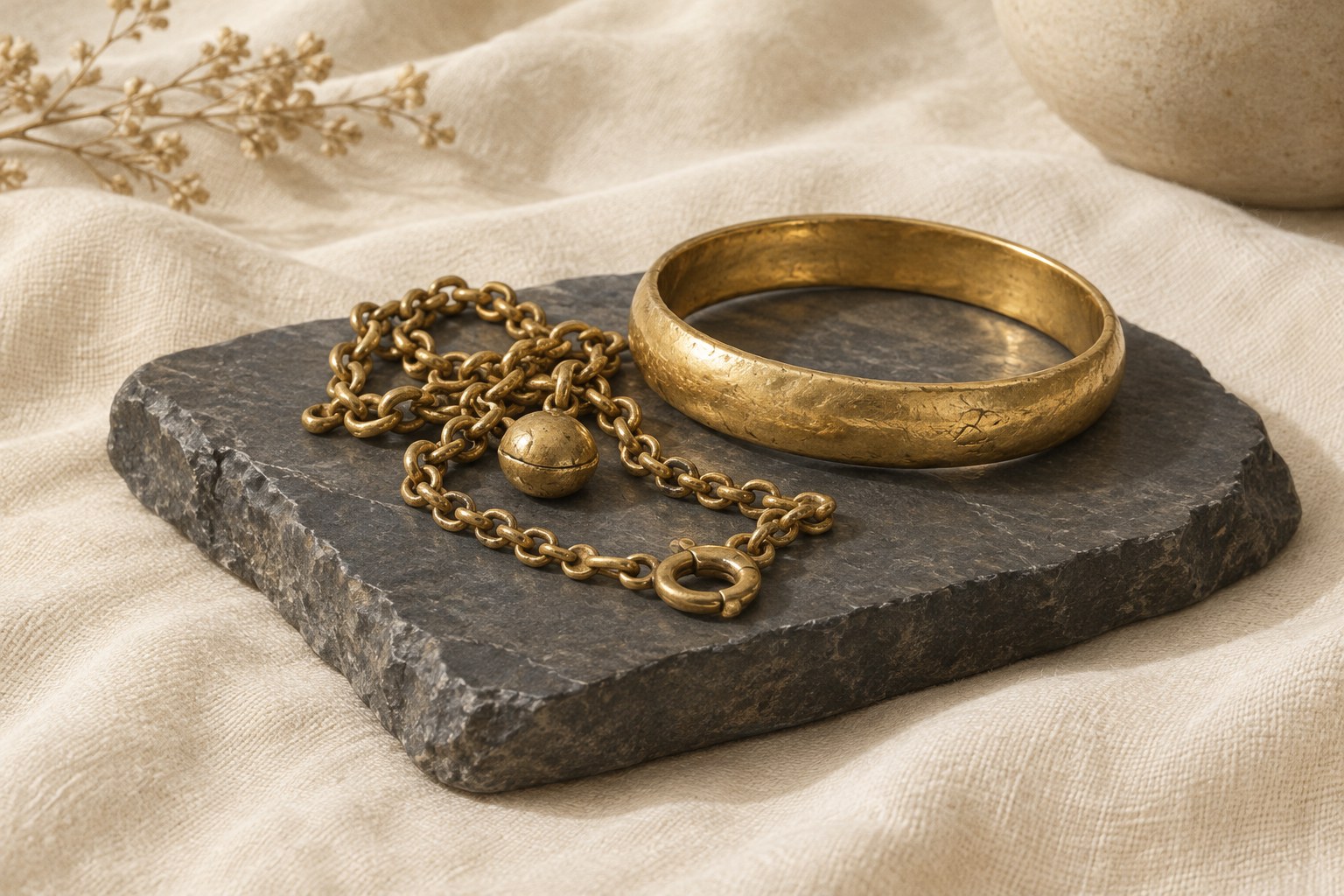
AI-generated illustration; not a Shewah product or a scale measurement.
SHEWAH Editorial Concept Illustration (Non-Catalogue)
Walking in with a chain you no longer wear and walking out with something new feels a little like magic. It is not - it is a well-understood process, and knowing the steps puts you in charge of the exchange instead of at its mercy. Here is what actually happens to your old gold, and what to watch at each step.
Step one: testing what you have
Before anything else, the jeweller establishes purity. The traditional method is the touchstone: the piece is rubbed on a dark stone and the streak is compared against known samples. Modern counters increasingly use XRF machines, which read the metal's composition in seconds without damaging anything. The oldest and most exact method is fire assay - melting a sample with lead and flux to separate the pure gold - but that is destructive and reserved for serious lots. Ask which method will be used and ask to watch it.
Step two: weighing, honestly
Your piece is weighed, usually in grams to three decimals. Stones, springs in clasps and any non-gold parts are excluded or removed, because only the gold counts. What matters is the net gold weight multiplied by its purity - a 22k piece contains more pure gold per gram than an 18k one of the same weight. That pure-gold figure is the basis of everything that follows.
Where your gold actually goes
Here is the part most people get wrong: your old bangle is not melted into your new ring in the back room. Old gold enters a stream - it is refined, often at specialist facilities, purified back to fine gold, and alloyed fresh for new manufacturing. Your new piece comes from the jeweller's normal stock of fresh metal. The exchange is really two transactions: you sell metal, you buy jewellery.
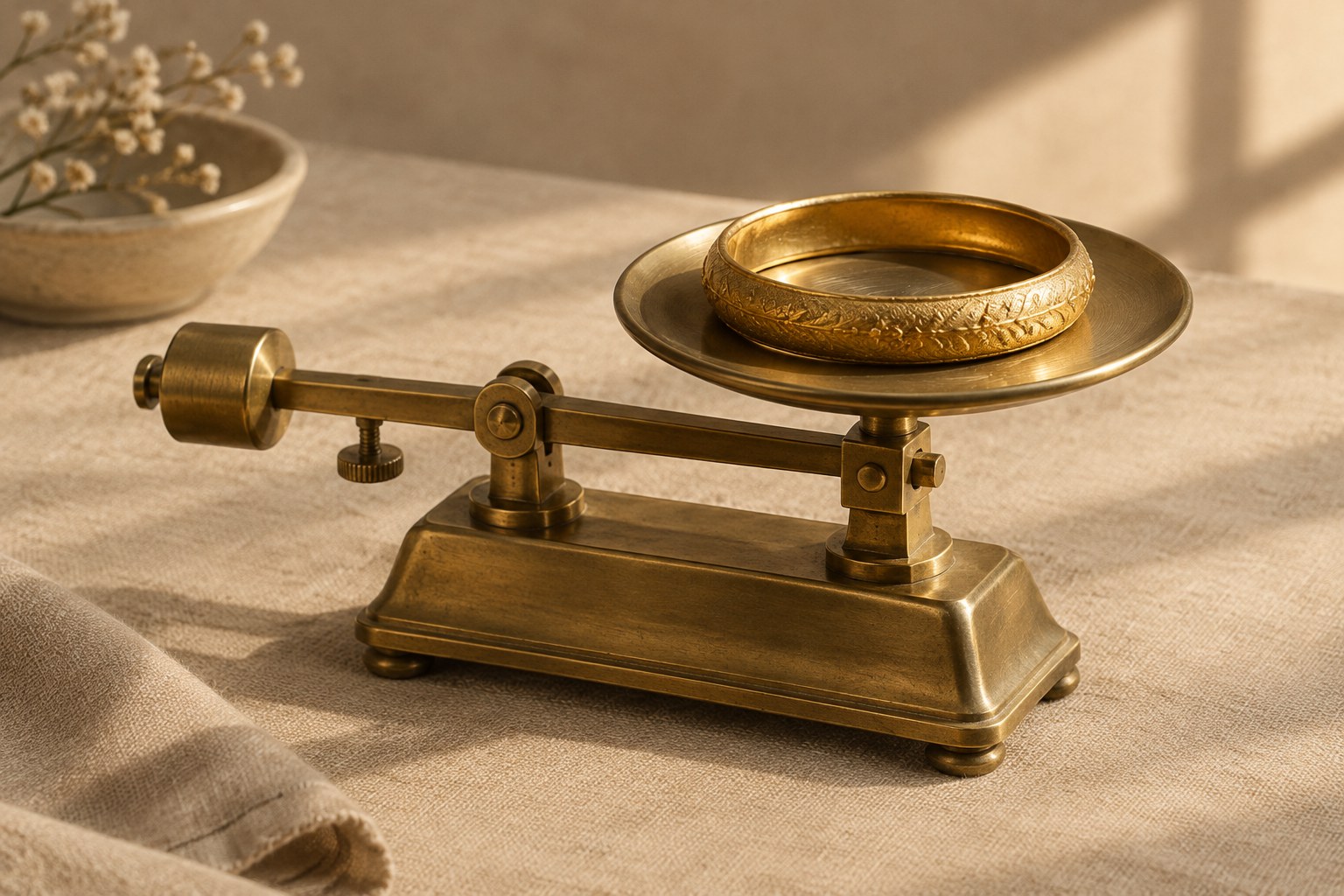
AI-generated illustration; not a Shewah product or a scale measurement.
SHEWAH Editorial Concept Illustration (Non-Catalogue)
The deductions to ask about
Expect transparent deductions, stated in writing: a testing or melting charge, and sometimes a "wastage" or handling allowance. Any deduction you cannot get explained in plain words is one to question. Also ask how stones and non-gold components are handled and returned, and get the final calculation - weight, purity, rate applied, deductions - on paper before you agree.
Selling outright versus exchanging
Exchanging against a new piece and selling for cash are treated differently almost everywhere, and the terms for the same gold can differ between the two routes. If you are undecided, ask for both figures in writing on the same visit - a transparent counter will give them without pressure. And never feel rushed: gold keeps, and a quote you understand tomorrow beats a deal you do not understand today.
Should you exchange at all?
Sometimes the better answer is neither exchange nor sale: a piece with sentimental weight can be restyled, resetting its stones and reworking its gold into something you will actually wear. Exchange makes sense for pieces with no attachment; restyling often wins for inherited ones. A good jeweller will lay out both routes.
A transparent exchange, with Shewah
Shewah accepts old gold toward made-to-order pieces in Surat, with testing in front of you, the full calculation in writing, and honest advice on whether restyling serves you better. Explore Shewah's jewellery or message us on WhatsApp at +91 96622 66360 to start the conversation.
AI-generated illustration; not a Shewah product or a scale measurement.
SHEWAH Editorial Concept Illustration (Non-Catalogue)
Sources
- Metallurgical assay - Wikipedia
- Gold extraction - Wikipedia
- All About Gold - World Gold Council
The Maison Shewah Atelier Standard
Every creation referenced across our journal essays is made individually to order using solid 18K gold and independently certified diamonds (IGI & GIA). We uphold complete material transparency and zero synthetic plating.
Research & Gemological References
- [1]Metallurgical assay — Wikipedia (Verified: 2026-11-01)
- [2]Gold extraction — Wikipedia (Verified: 2026-11-01)
- [3]All About Gold — World Gold Council (Verified: 2026-11-01)