How to Care for Gold Jewellery: The Complete Routine
“Gold does not tarnish, but it dulls, scratches and hates chlorine. The simple habits, safe cleaning method and storage rules that keep gold looking new.”

AI-generated illustration; not a Shewah product or a scale measurement.
SHEWAH Editorial Concept Illustration (Non-Catalogue)
Gold does not tarnish, which is exactly why people are surprised when their gold jewellery starts looking tired. The real enemies are dulling films from lotions and soap, scratches from harder metals and gemstones, chlorine, and simple knocks. Caring for gold jewellery is mostly a set of small habits, and none of them requires special products.
Here is the routine that keeps gold looking new for decades, drawn on the UK National Association of Jewellers' care guidance.
The golden rules of wearing it
- Last on, first off. Gold goes on after lotions, perfume and hairspray, and comes off before bed, the gym, gardening and DIY. If an activity could scratch, knock or damage the piece, take it off and keep it safe.
- Keep it away from chemicals, especially chlorine. Pools and hot tubs are the classic offenders: chlorine attacks the alloys in gold and can weaken settings over time. If a piece does meet chemicals, rinse it in clean water straight away.
- Remove it for cooking, cleaning and washing up. Grease films dull the surface, and household cleaners are harsher than most people think.
Cleaning gold at home, safely
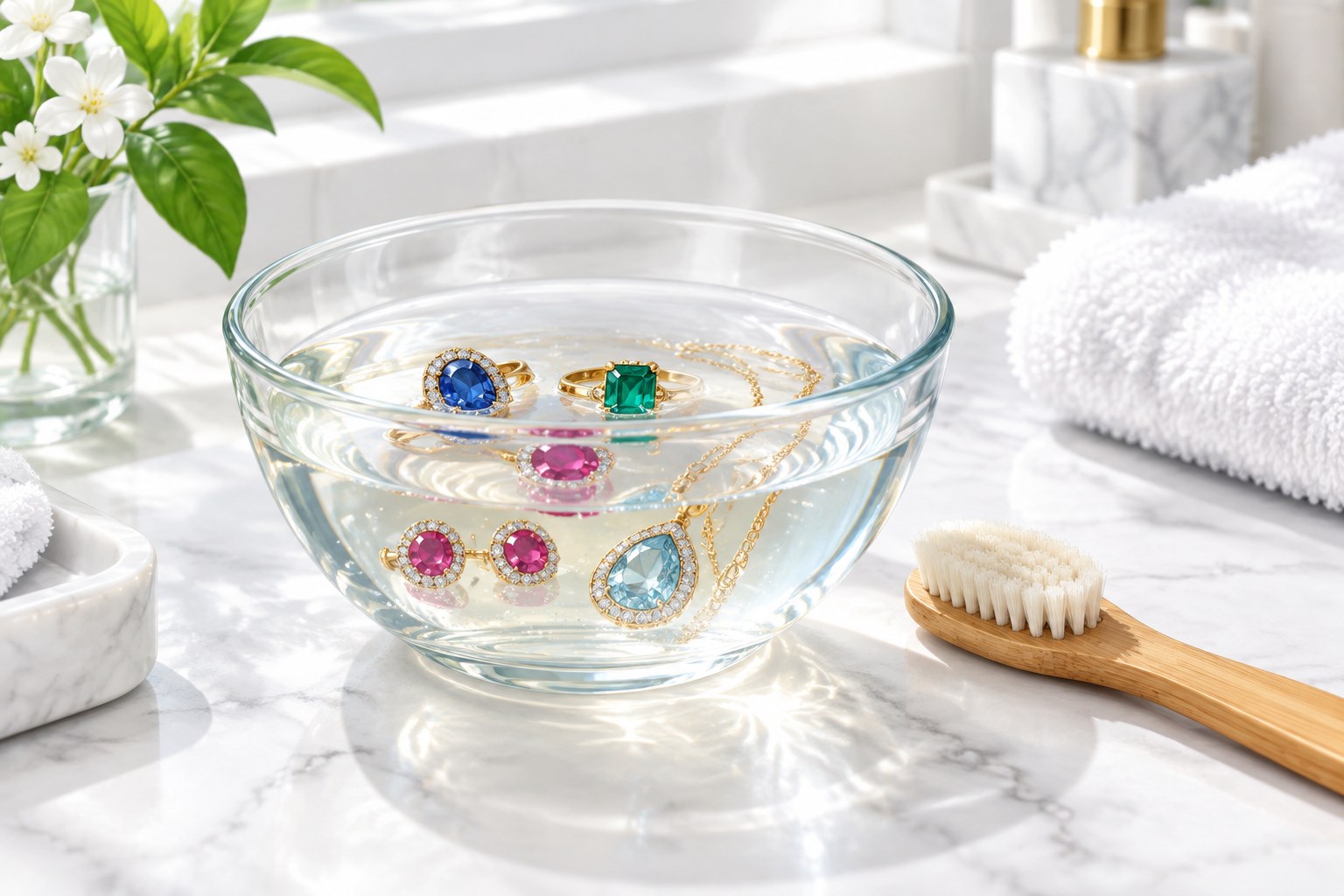
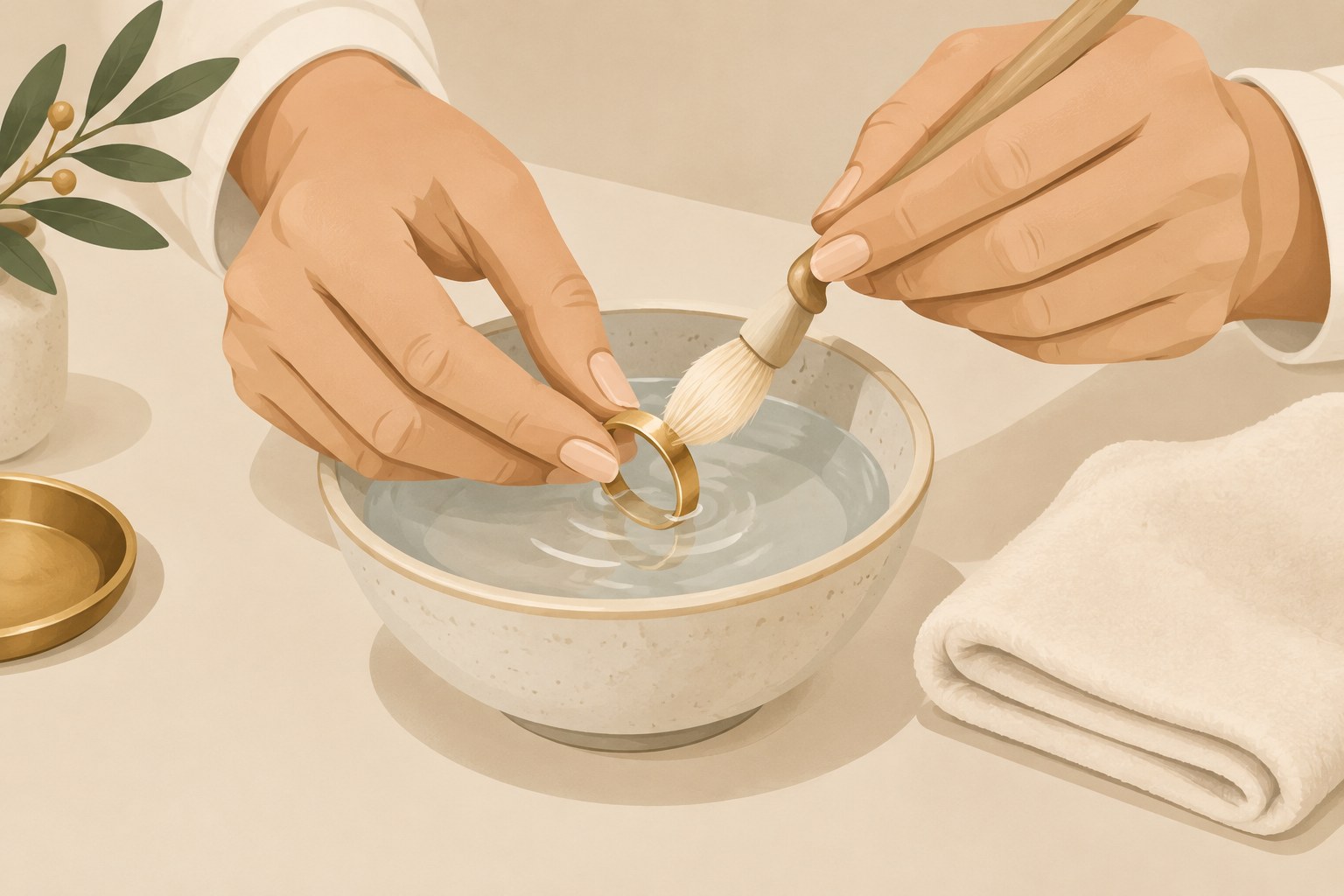
For plain gold and hard stone-set pieces, warm water with a drop of mild washing-up liquid is the whole method. Soak for a few minutes, work around settings with a very soft brush, rinse in clean water, and pat dry with a soft lint-free cloth. That is it.
What to skip: toothpaste, baking soda pastes and anything abrasive, which scratch polished gold; boiling water, which can shock included gemstones; and steam or ultrasonic cleaners for treated or fragile stones. Emeralds, often oiled to improve their colour, can be damaged by exactly those mechanical methods. When in doubt about a stone, ask a jeweller before cleaning it.
A note on white gold
White gold's brightness comes from its rhodium plating, and plating wears with time. If your white gold ring starts showing a faint warm tint, it has not gone bad: the coating has simply thinned. A jeweller can re-plate it quickly and inexpensively, typically every one to three years depending on wear.
AI-generated illustration; not a Shewah product or a scale measurement.
SHEWAH Editorial Concept Illustration (Non-Catalogue)
Storing gold so it stays perfect
Gold is softer than it looks, and the scratches on a favourite piece usually come from other jewellery, not from wear. Store each piece separately, ideally in a soft-lined box or case, so chains do not tangle and harder stones do not rub against softer metal. Keep pieces with pearls or opals especially separate: those organic gems scratch easily and dislike acids, even perspiration.
The professional check-up
Once a year or so, have a jeweller look over the pieces you wear most. They will catch the things you cannot see: thinning prongs, loosening stones, worn clasps, and settings that need attention before a stone goes missing. It is the cheapest insurance in jewellery.
Travelling with gold
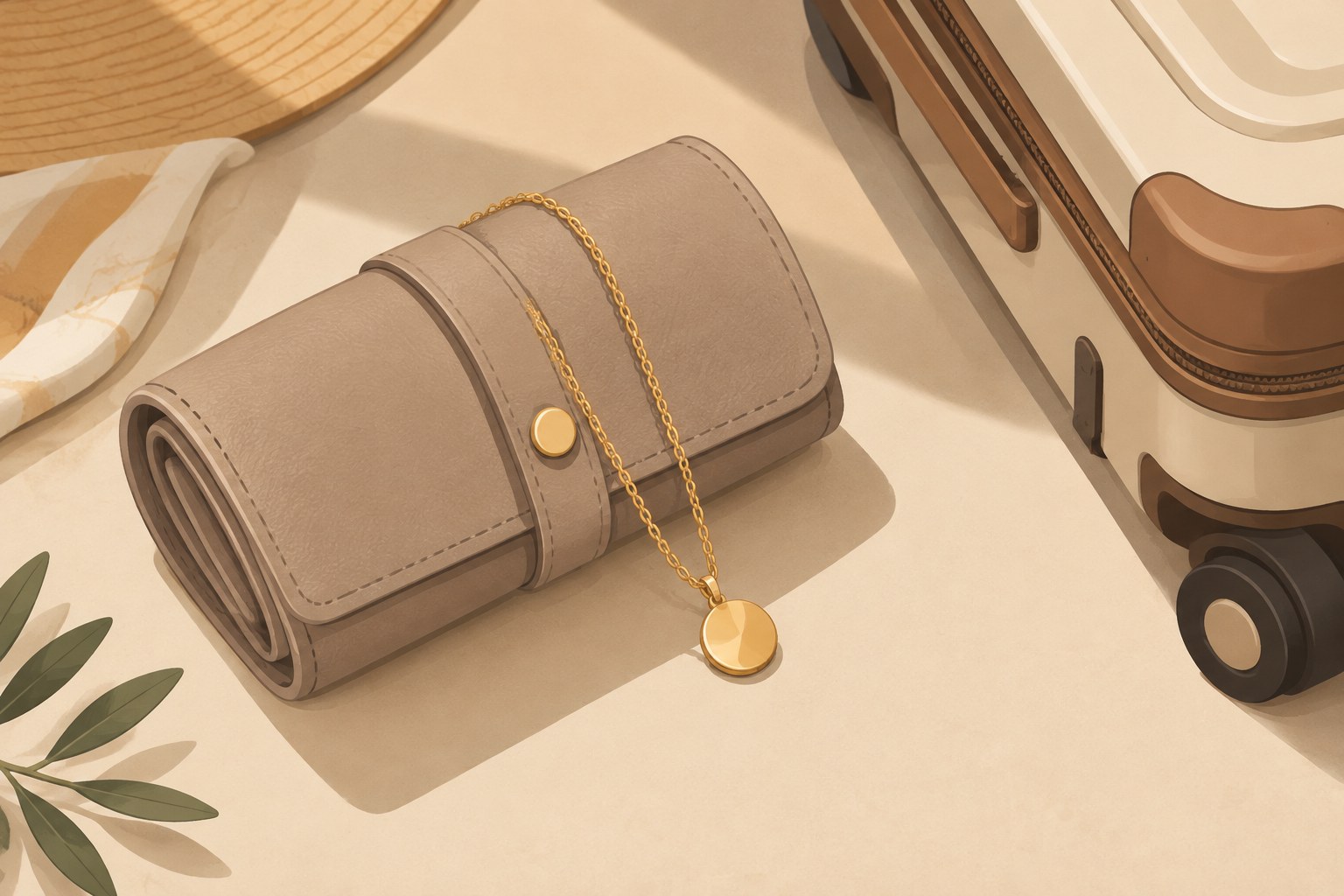
On the road, the same rules apply with extra care. Pack pieces individually in soft pouches rather than loose in one case, keep them in hand luggage, and leave the most sentimental pieces at home if the trip involves beaches or pools. Sun cream and chlorinated water together are a hard combination on gold and settings.
Made to last with Shewah
Every Shewah piece is made to order and built for daily wear, and we are happy to advise on caring for yours for the long term.
Explore Shewah's jewellery or contact us on WhatsApp at +91 96622 66360 with your care questions.
AI-generated illustration; not a Shewah product or a scale measurement.
SHEWAH Editorial Concept Illustration (Non-Catalogue)
Sources
- Caring for Your Jewellery - National Association of Jewellers (UK)
The Maison Shewah Atelier Standard
Every creation referenced across our journal essays is made individually to order using solid 18K gold and independently certified diamonds (IGI & GIA). We uphold complete material transparency and zero synthetic plating.
Research & Gemological References
- [1]Caring for Your Jewellery — National Association of Jewellers (UK) (Verified: 2026-10-16)