Cast, Handmade or CAD: How Your Jewellery Is Actually Made
“Casting, hand fabrication and CAD design each shape how a piece wears, repairs and ages. What each method really means, and the three questions to ask.”
AI-generated illustration; not a Shewah product or a scale measurement.
SHEWAH Editorial Concept Illustration (Non-Catalogue)
Two rings can look identical in a photograph and be made in completely different ways. How a piece is made shapes how it wears, how it repairs and how much of its character is the maker's hand. Here is what cast, handmade and CAD-made actually mean when you are the one buying.
Cast: shaped in a mould
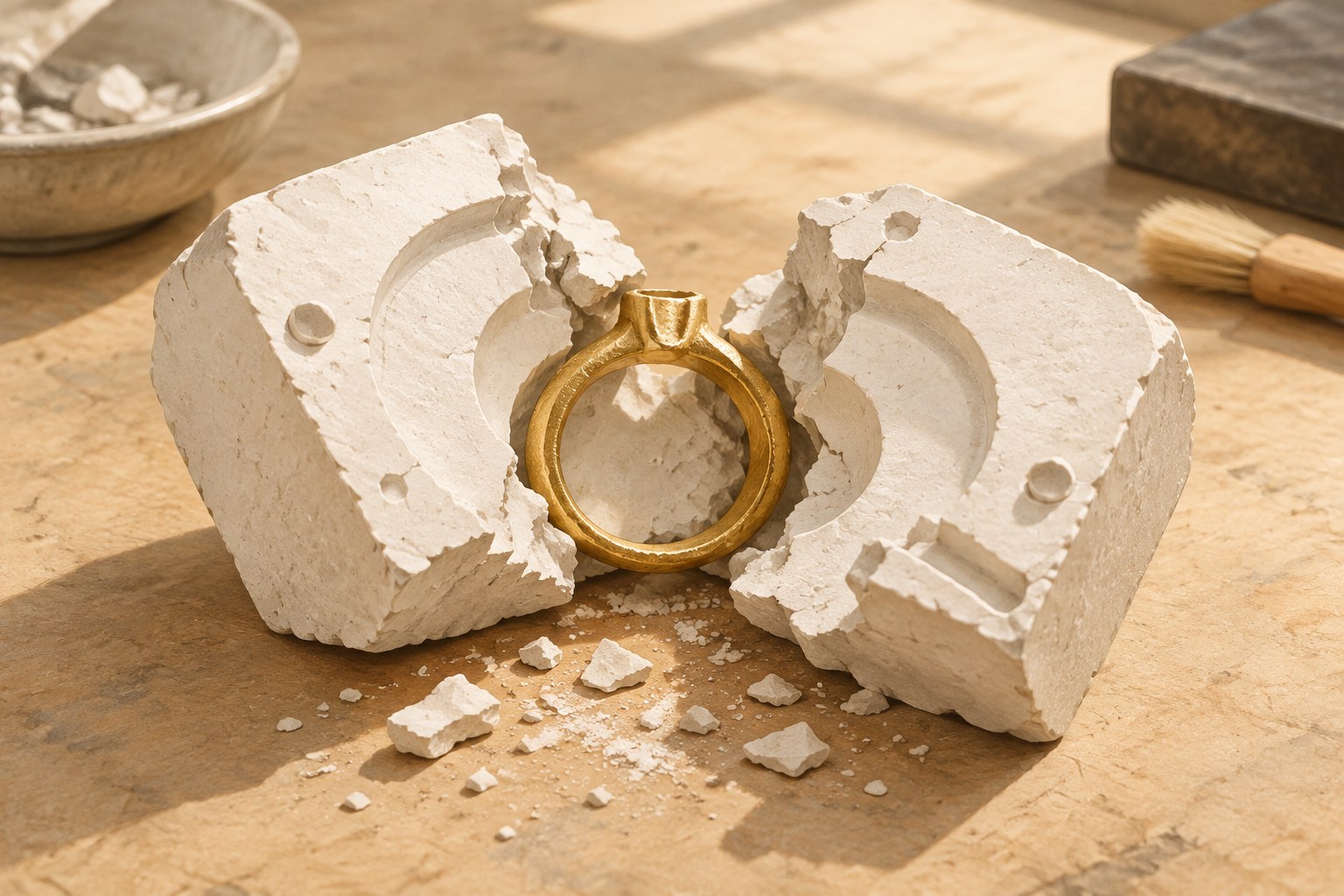
Casting pours molten metal into a mould - for fine jewellery, almost always the lost-wax method: a wax model of the piece is encased, melted out, and metal takes its place. Casting excels at repeated designs and intricate shapes that would take days to carve in metal. The trade-off is structural: cast metal can contain tiny porosity - microscopic voids left as it solidified - which is why a cast shank worn hard for years can crack where a denser one would only bend. Ask whether a piece is cast and, for everyday rings, whether the shank has been checked for porosity.
Handmade: worked in metal
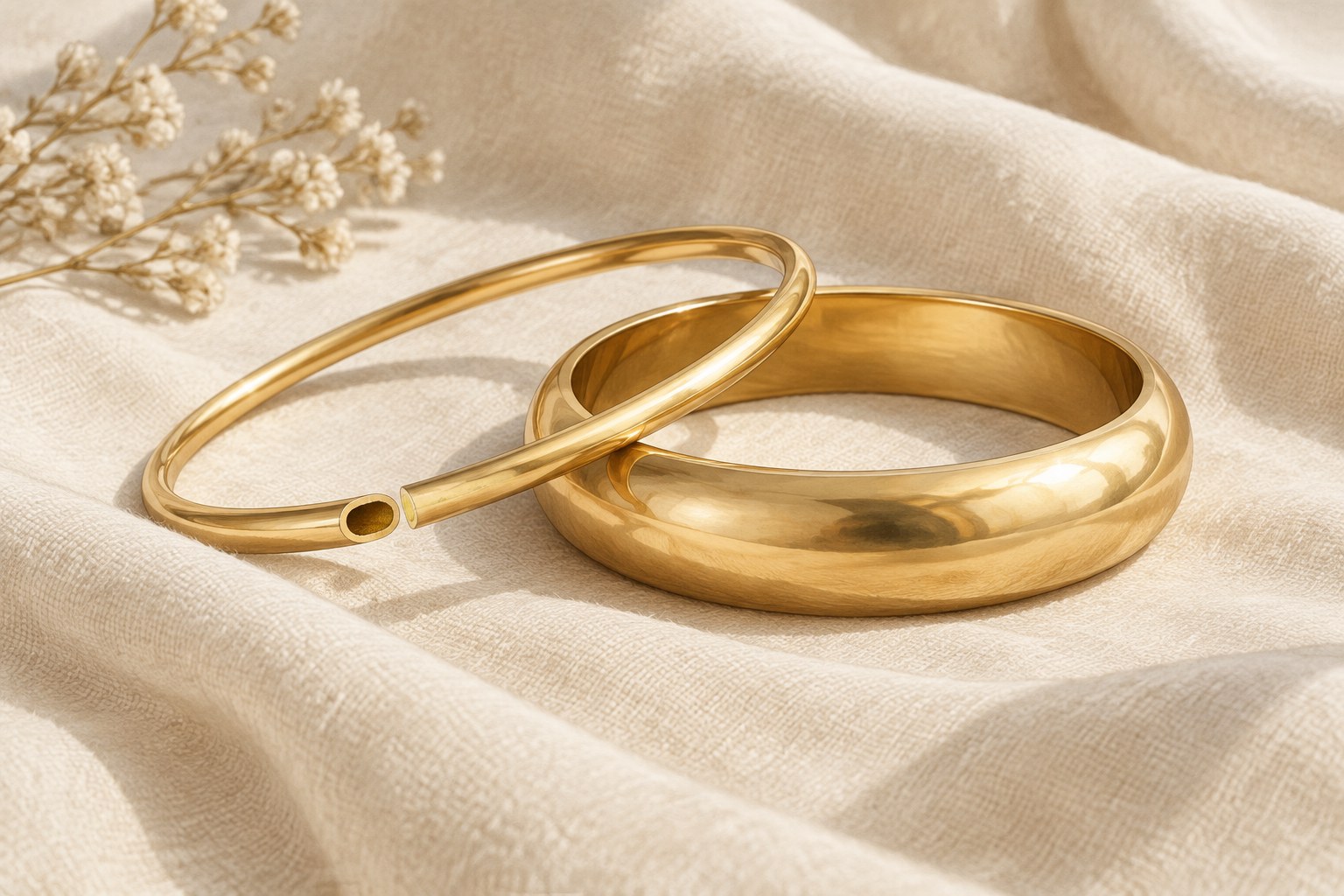
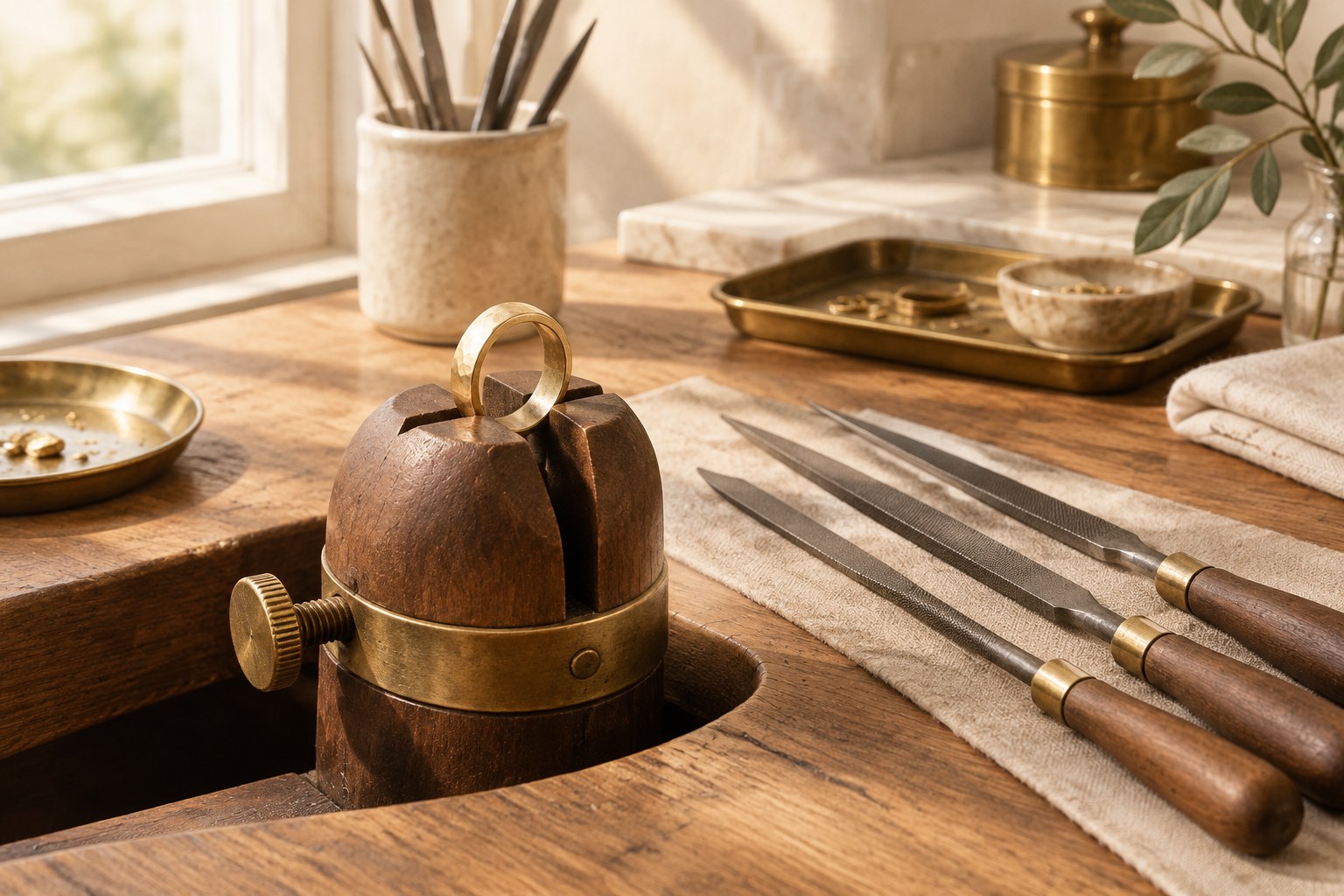
Hand-fabricated pieces are built from sheet and wire - rolled, sawn, filed and soldered into shape. Worked metal is compressed and dense, so handmade shanks tend to resist wear and take resizing well. The trade-off runs the other way: ultra-fine, repeating detail is slower and harder to achieve by hand, and no two handmade pieces are perfectly identical. That slight irregularity is not a flaw; it is the signature of the method. Ask to look closely - clean solder seams and even finishing tell you more than the label.
CAD: designed on a screen, grown in wax
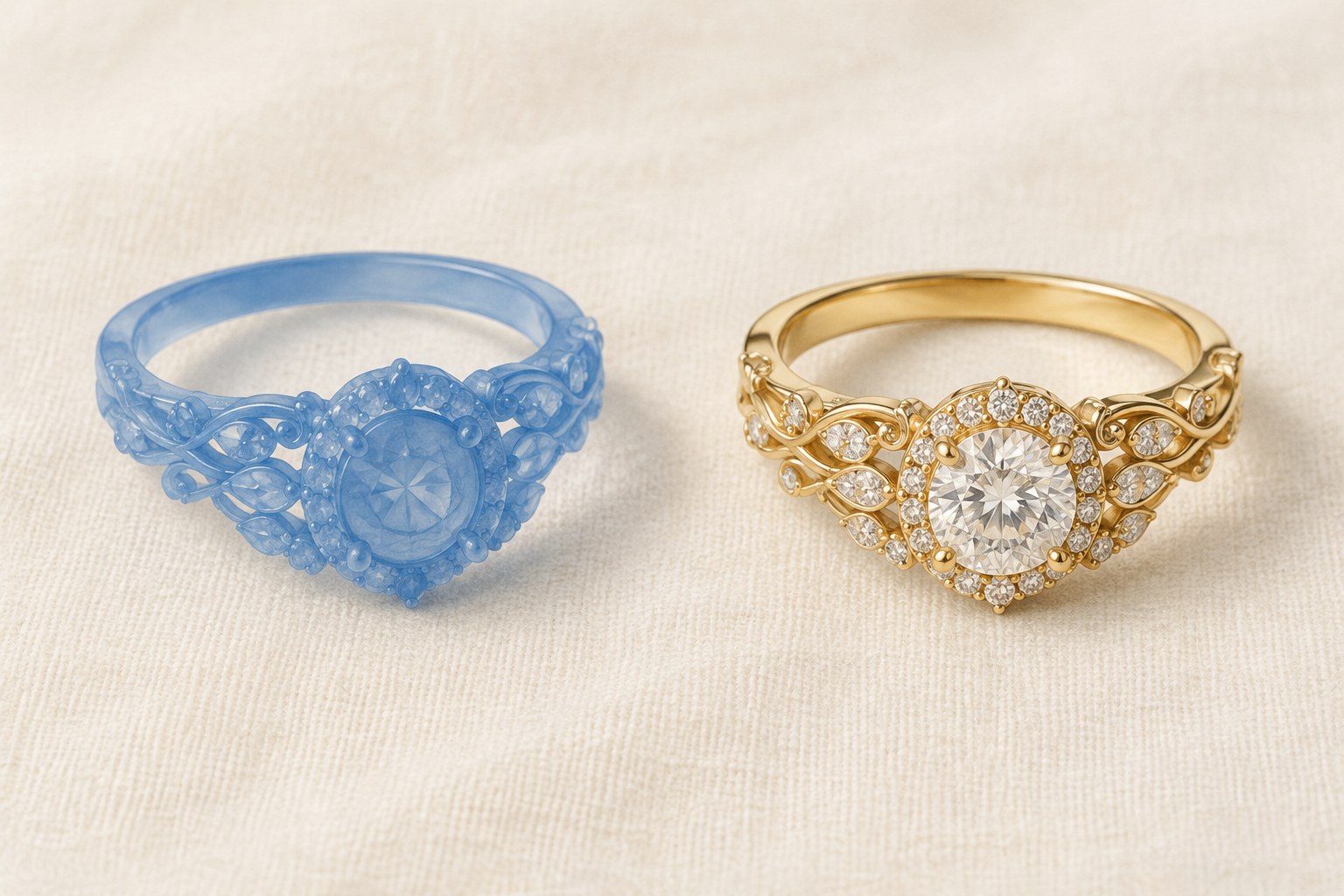
CAD design builds the piece as a 3D model, then prints it in wax for casting. It shines at precision - exact symmetry, fine filigree, pieces engineered to fit a specific stone to the fraction of a millimetre - and it lets you approve the design visually before any metal is poured. The finished piece is still cast, so the same porosity question applies, but the design accuracy is unmatched. If you have a precise reference or want to see exactly what you will get, CAD-made is the honest route.
AI-generated illustration; not a Shewah product or a scale measurement.
SHEWAH Editorial Concept Illustration (Non-Catalogue)
Where quality really shows
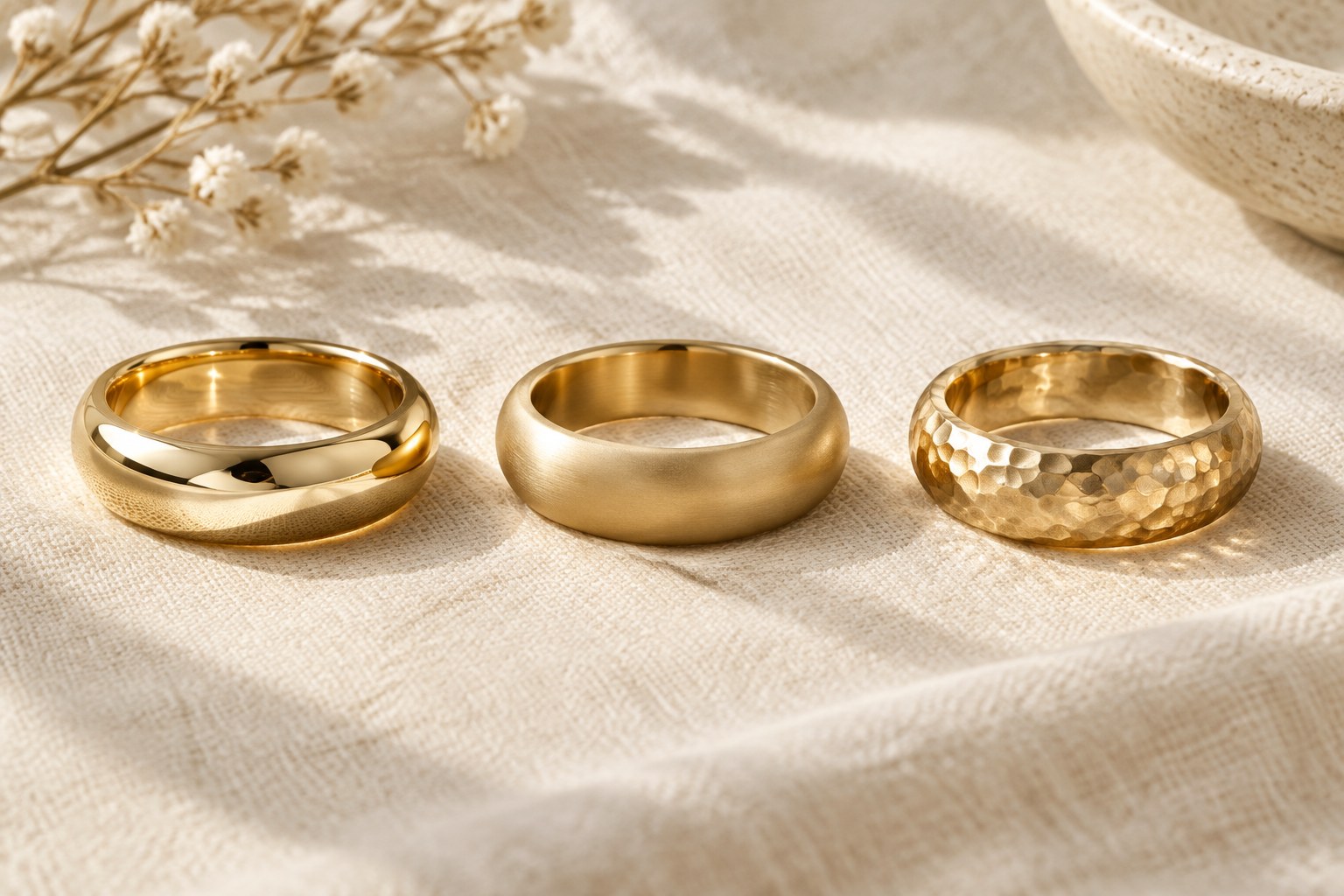
Whatever the method, finishing is where care becomes visible: crisp edges that should be crisp, soft curves where skin touches metal, even texture across the whole surface. Turn the piece over. The underside and the inside of a shank, which nobody sees at the counter, tell you how much attention the whole piece received.
Which method suits which buyer
None of the three is simply better. Choose cast for intricate designs at accessible making charges. Choose handmade for daily-wear durability and one-of-a-kind character. Choose CAD when precision and preview matter more than romance. Many fine pieces combine methods - a CAD model cast and then hand-finished - so the real question is not which one, but which parts.
What to ask before you decide
Three questions cut through the mystery: How was this made? Which parts were hand-finished? And how will it repair - can this design be resized, retipped or repolished later? A jeweller who can answer plainly is telling you something as valuable as the answer itself.
Made the way you choose, with Shewah
Shewah makes each piece to order in Surat - cast, hand-finished or CAD-designed - and will walk you through which method fits your design and your daily life. Explore Shewah's jewellery or message us on WhatsApp at +91 96622 66360.
AI-generated illustration; not a Shewah product or a scale measurement.
SHEWAH Editorial Concept Illustration (Non-Catalogue)
Sources
- Lost-wax casting - Wikipedia
- Computer-aided design - Wikipedia
- Jewellery - Wikipedia
The Maison Shewah Atelier Standard
Every creation referenced across our journal essays is made individually to order using solid 18K gold and independently certified diamonds (IGI & GIA). We uphold complete material transparency and zero synthetic plating.
Research & Gemological References
- [1]Lost-wax casting — Wikipedia (Verified: 2026-11-01)
- [2]Computer-aided design — Wikipedia (Verified: 2026-11-01)
- [3]Jewellery — Wikipedia (Verified: 2026-11-01)