Yellow vs White vs Rose Gold: Which Colour Is Yours?
“Gold's colour is its recipe, not a coating. How yellow, white and rose gold differ in alloy, upkeep, durability and look, and how to choose.”

AI-generated illustration; not a Shewah product or a scale measurement.
SHEWAH Editorial Concept Illustration (Non-Catalogue)
Yellow, white and rose: gold comes in three classic colours, and choosing between them is one of the first decisions in any ring or custom piece. The colour is not a coating or a grade, it is the recipe of the alloy itself, and each recipe has its own look, upkeep and personality. Here is the honest comparison, grounded in GIA's buying guidance.
Why gold has colours at all
Pure gold is 24 karat, rich yellow, and too soft for everyday jewellery. To make it durable, gold is alloyed with other metals, and those added metals shift the colour as well as the hardness. That is why the karat and the colour are separate choices: 18K gold is 75% gold whatever its colour, and 14K is 58.3%, stamped 750 or 585 inside the band.
Yellow gold: the classic
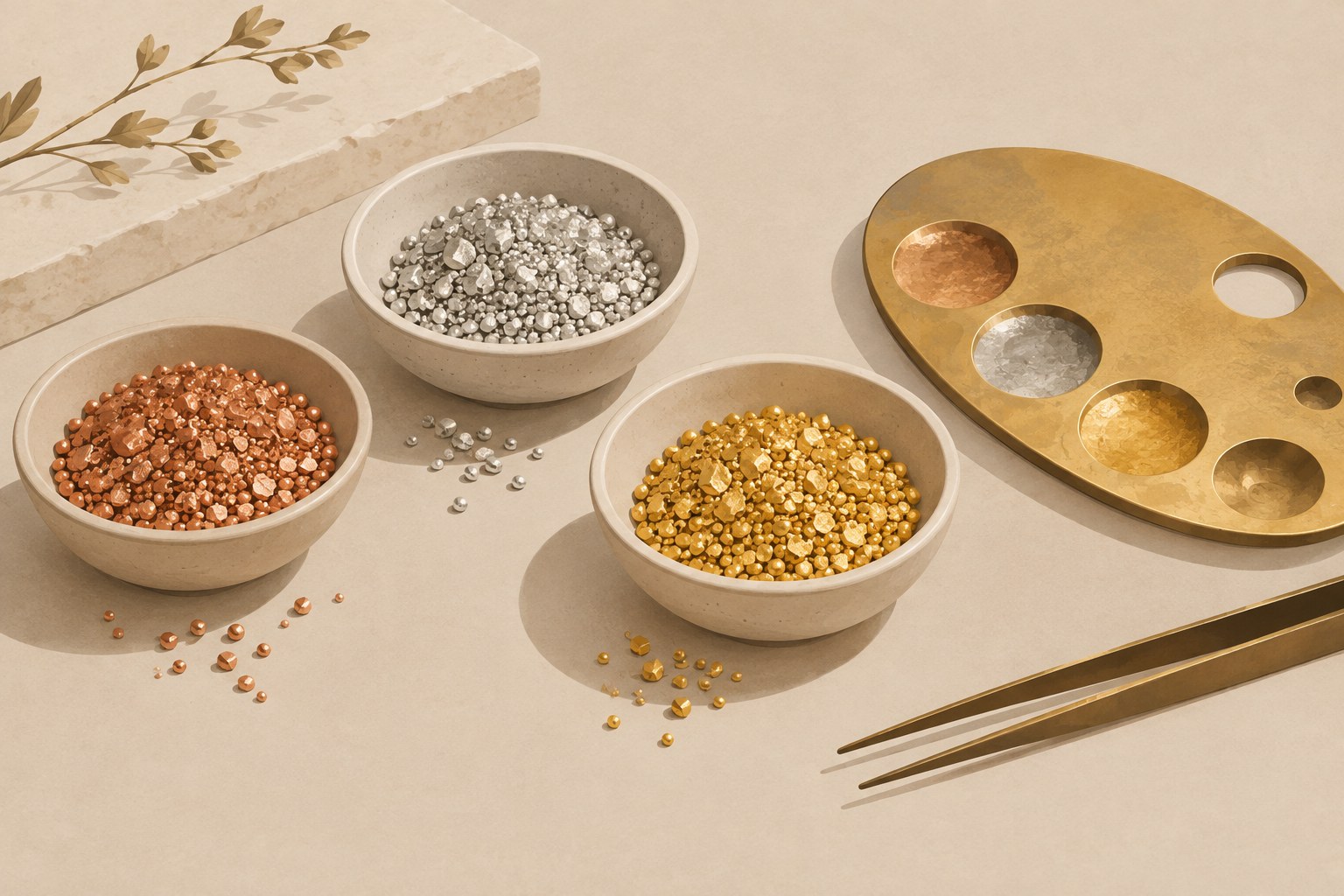
Yellow gold keeps the metal's natural hue, alloyed with metals like silver and copper in proportions that preserve the warm colour while adding strength. It is the most traditional choice, the most forgiving of low maintenance, and the most flattering against warm skin tones. It also makes near-colourless diamonds look slightly warmer by reflection, which some buyers love and others avoid; against a coloured gemstone, it adds warmth and richness.
White gold: the cool modern
White gold mixes gold with white metals such as palladium, nickel and zinc for a silvery look. Because the alloy alone carries a faint warm tint, most white gold jewellery is finished with rhodium plating for a bright, hard white surface. The plating wears with time, so white gold asks for re-plating every one to three years depending on wear. In exchange you get a platinum-like look at a lower price, and a cool backdrop that keeps white diamonds looking icy. If you have a nickel sensitivity, ask for a palladium-based alloy.
AI-generated illustration; not a Shewah product or a scale measurement.
SHEWAH Editorial Concept Illustration (Non-Catalogue)
Rose gold: the romantic
Rose gold blends gold with copper and a touch of silver; the copper gives the pink blush. It is the most durable of the three in everyday knocks thanks to that copper content, needs no plating, and has a vintage warmth that flatters most skin tones. It has moved firmly from trend to classic over the past decade.
The honest trade-offs
- Upkeep: yellow and rose are polish-and-go; white wants periodic re-plating.
- Durability: rose and 14K alloys are the toughest; higher karats are softer and richer in colour.
- Look: yellow is traditional, white is cool and diamond-friendly, rose is warm and romantic. None is objectively better; the right one is the one you will love in ten years.
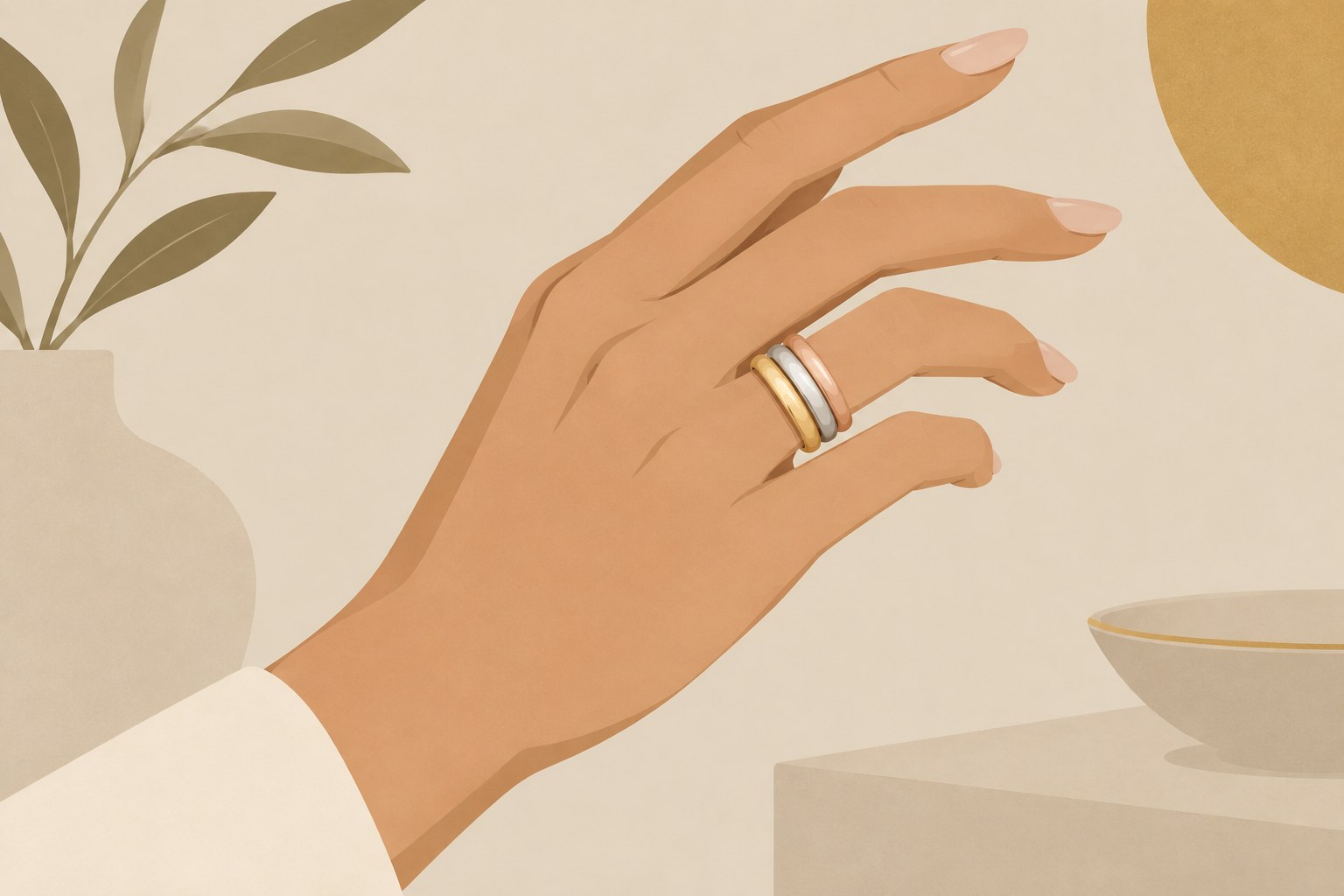
- Mixing is allowed. Two-tone and three-tone designs use the colours deliberately against each other, and a mixed-metal piece makes a jewellery wardrobe easier to build.
Colour and karat: two separate dials
Remember that colour and purity move independently. You can have 18K rose gold or 14K white gold; the karat sets the gold content and the alloy sets the colour. Higher karat means richer colour and softer metal; lower karat means tougher wear and a gentler price. Most everyday rings land on 14K or 18K for exactly that balance.
Made in your gold with Shewah
Tell us yellow, white or rose, in 14K or 18K, and we will make your piece to order in it, quoted in full before work begins.
Explore Shewah's jewellery or contact us on WhatsApp at +91 96622 66360 to talk metals.
AI-generated illustration; not a Shewah product or a scale measurement.
SHEWAH Editorial Concept Illustration (Non-Catalogue)
Sources
- Buying Guide for White, Yellow and Rose Gold Engagement Rings - GIA 4Cs
- About Gold Jewellery - World Gold Council
The Maison Shewah Atelier Standard
Every creation referenced across our journal essays is made individually to order using solid 18K gold and independently certified diamonds (IGI & GIA). We uphold complete material transparency and zero synthetic plating.
Research & Gemological References
- [1]Buying Guide for White, Yellow and Rose Gold Engagement Rings — GIA 4Cs (Verified: 2026-10-17)
- [2]About Gold Jewellery — World Gold Council (Verified: 2026-10-17)


