What Is a Signet Ring? History, Meaning and How to Wear One
“For 4,000 years the signet ring worked as a personal seal and signature. Its history from ancient Egypt to royal pinkies, and how to choose one today.”

AI-generated illustration; not a Shewah product or a scale measurement.
SHEWAH Editorial Concept Illustration (Non-Catalogue)
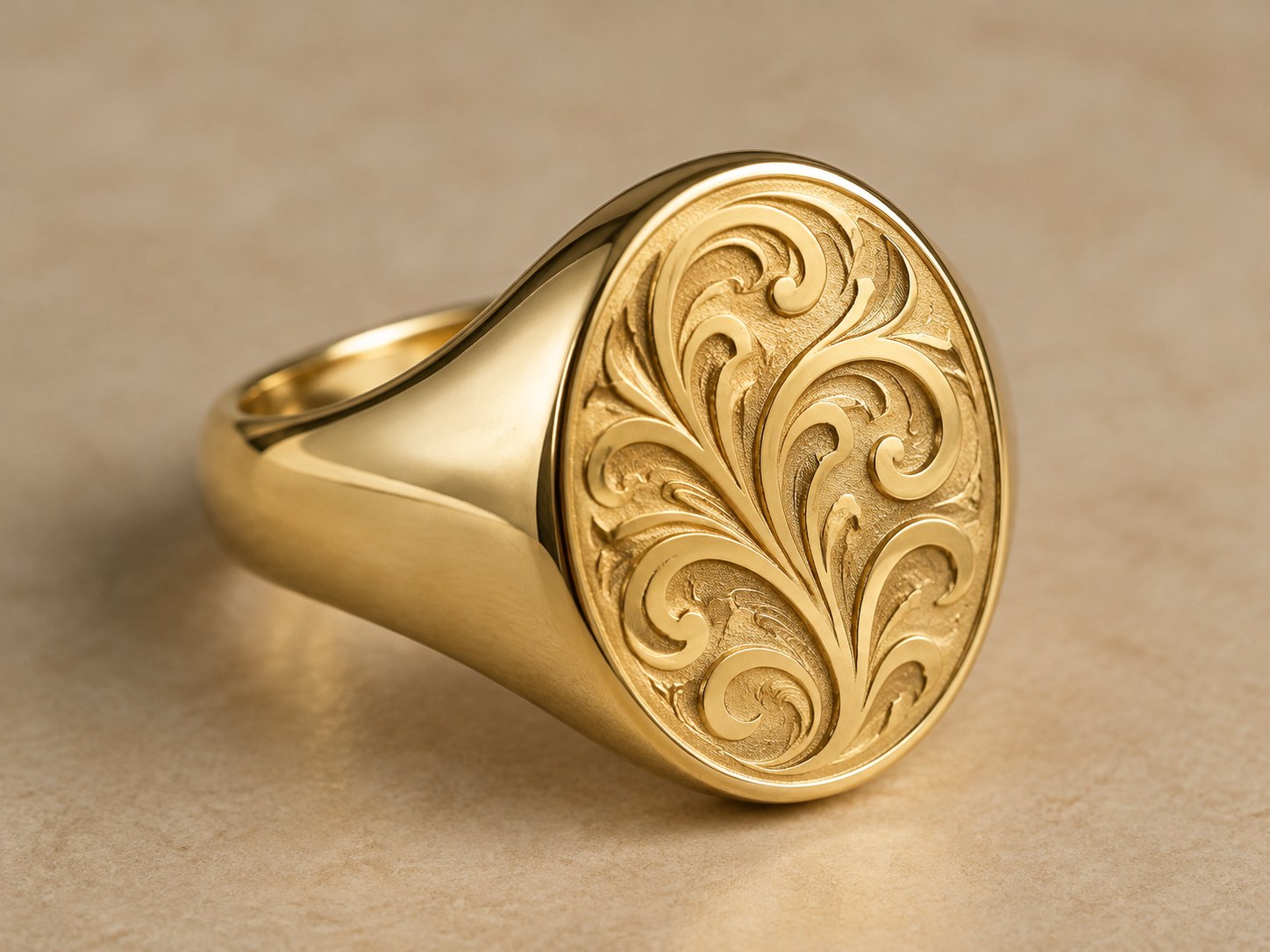
A signet ring is a ring with a flat face, called the bezel, engraved with a design in reverse so it can stamp that design into soft wax. For thousands of years that stamp worked as a signature: proof of identity, authority and authorship pressed straight into a document.
Today the seal is ceremonial, but the ring never stopped meaning something. Here is the history, and how to choose one now.
Ancient origins
Some of the earliest signet rings come from ancient Egypt and are roughly 4,000 years old. According to the International Gem Society, Egyptians carved hieroglyphs with the wearer's name and rank deep into the bezel, sometimes on a swivelling oblong face decorated on both sides. Pressing the carved surface into soft wax sealed and signed a document in one motion.
Greece and Rome
The Greeks adopted the design around the 6th century BCE, often wearing signet rings in gold, silver or bronze simply as adornment, with motifs drawn from nature.
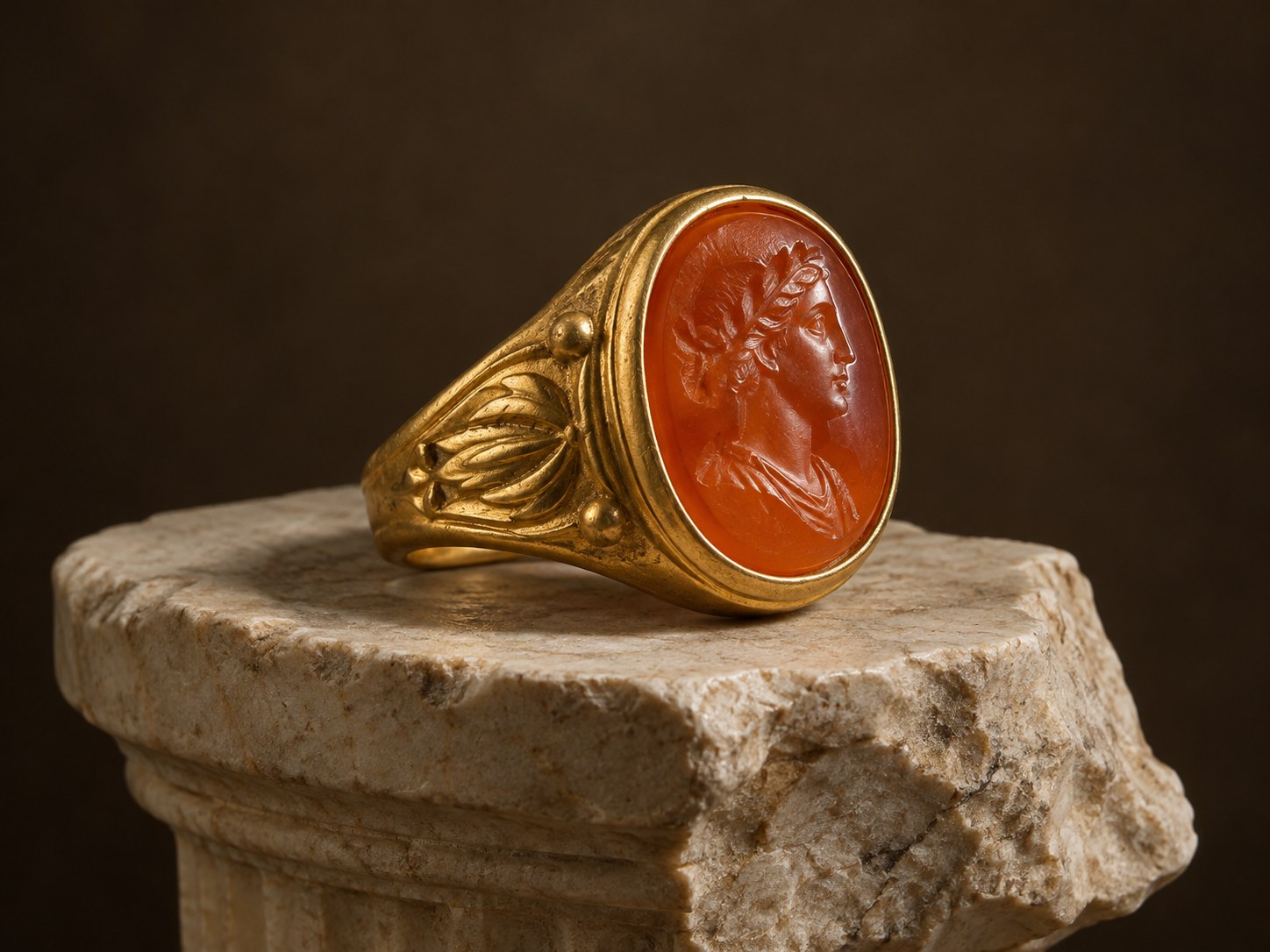
The Romans restored the ring's authority. At one point, senators wore gold rings while citizens of lower rank wore iron. Romans also moved the seal onto gemstones: carnelian, garnet and agate, stones soft enough to carve yet durable enough for daily wear and repeated stamping. The rings were so closely tied to identity that Hannibal famously collected them from Roman soldiers slain in battle as proof of their deaths.
Renaissance to the modern era
During the Renaissance, a growing merchant class commissioned rings bearing seals, initials and marks of their professions, using them to sign contracts and close letters. Personalised rings became both working tools and status symbols.
The most famous working signet is the Ring of the Fisherman, worn by popes. First mentioned in the 13th century, it was used to seal papal documents until 1842, and a new ring is still made for each pope while the previous one is defaced so it can never stamp again.
AI-generated illustration; not a Shewah product or a scale measurement.
SHEWAH Editorial Concept Illustration (Non-Catalogue)
Royal signet rings
Signet rings still mark rank. The Prince of Wales's signet, reportedly made from Welsh gold and bearing the prince's crest, was worn by King Charles III on the little finger of his left hand for 64 years before passing to Prince William when he took the title.
That pinky placement became a look of its own, but as the International Gem Society notes, there are no real rules about how to wear a signet ring.
How people wear signet rings today
- Pinky or ring finger, left or right hand. The pinky is the classic choice, not the required one.
- Family crests and coats of arms, where a family has them.
- Initials and monograms, the most popular modern engraving.
- Symbols with personal meaning: a star, an animal, a date, a place.
- Plain polished faces, worn for the shape alone.
A signet also makes a considered gift, because it can carry the recipient's initials or a mark chosen for them.
Choosing or engraving a signet ring
- Face shape. Oval and cushion shapes are traditional; round and hexagonal faces read more modern.
- Size. Larger faces carry engraving better; smaller faces suit slimmer hands.
- Metal. Yellow gold is the heritage choice; white gold and platinum look sharper; all of them engrave well.
- The engraving. Decide between a raised relief and a cut intaglio. If the ring will ever stamp wax, the design must be cut in reverse.
- Stone-set faces. Onyx, bloodstone and carnelian are the historic choices; a made-to-order ring can hold almost any stone, including a lab-grown diamond.
Frequently asked questions
Do you need a family crest to wear a signet ring?
No. Most modern signet rings carry initials, a monogram, a personal symbol or nothing at all.
Which finger should a signet ring go on?
Whichever you like. The little finger is traditional, especially in the UK, but ring and index fingers are just as common now.
Can a signet ring still seal wax?
Yes, if the design is engraved in reverse intaglio. Tell your jeweller you want a working seal when you commission the engraving.
Create a signet ring with Shewah
Send us your initials, a crest or a design idea, and we will prepare a made-to-order signet in your chosen metal with the engraving quoted before work begins.
Explore Shewah's jewellery, or contact us on WhatsApp at +91 96622 66360 to design a custom signet ring.
AI-generated illustration; not a Shewah product or a scale measurement.
SHEWAH Editorial Concept Illustration (Non-Catalogue)
Sources
The Maison Shewah Atelier Standard
Every creation referenced across our journal essays is made individually to order using solid 18K gold and independently certified diamonds (IGI & GIA). We uphold complete material transparency and zero synthetic plating.
Research & Gemological References
- [1]History of signet rings — International Gem Society (Verified: 2026-10-13)
- [2]The history of the signet ring: from ancient Egypt to Eton schoolboys — Tatler (Verified: 2026-10-13)


