White Sapphire vs Lab-Grown Diamond: An Honest Comparison
“Both clear, both real gems, and completely different in daily wear: sparkle, durability, care and how to choose between them.”
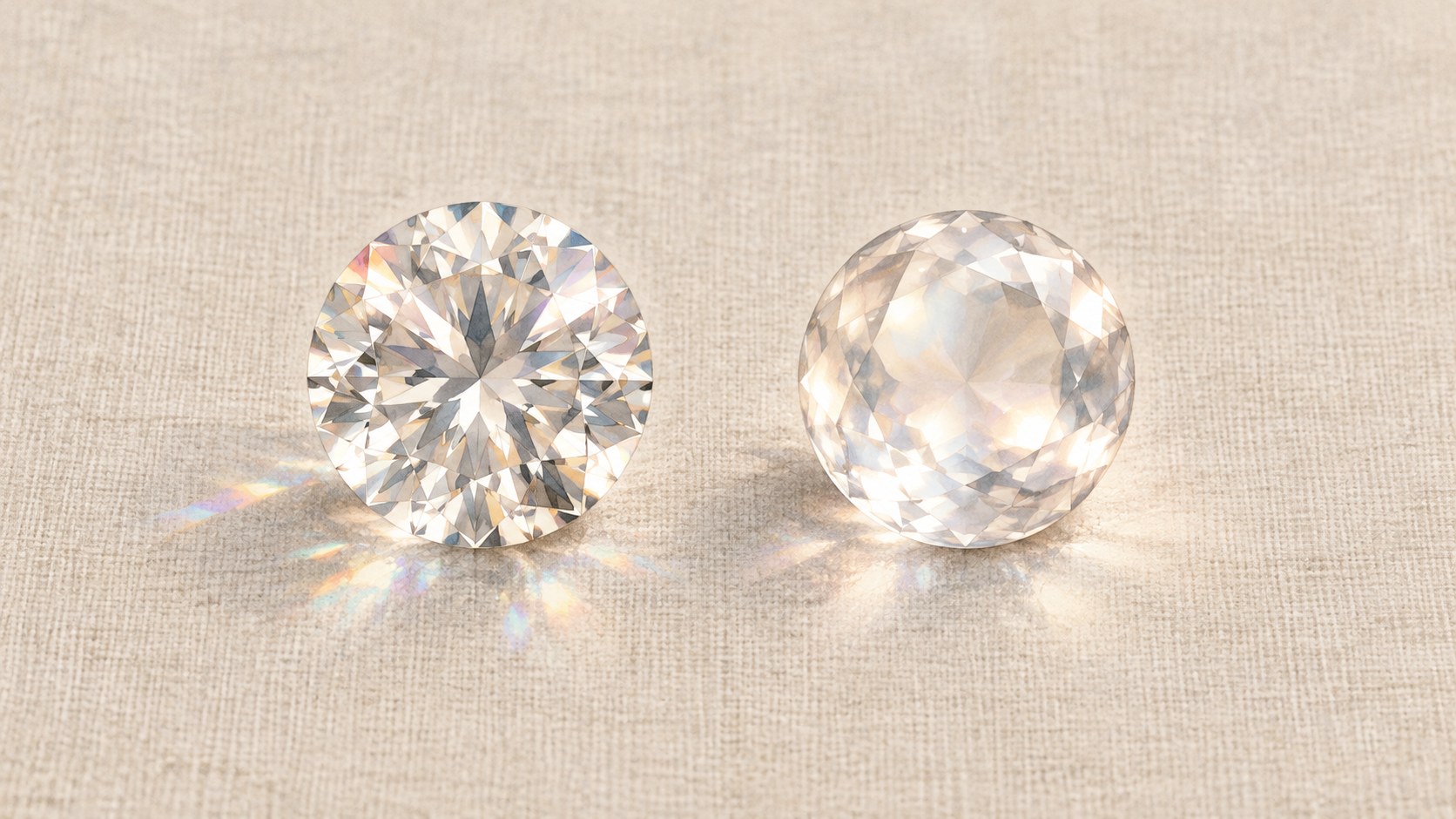
AI-generated illustration; not a Shewah product or a scale measurement.
SHEWAH Editorial Concept Illustration (Non-Catalogue)
White sapphire and lab-grown diamond both give you a clear, colourless stone, and both are genuine gemstones rather than imitations. Yet they behave so differently in daily wear that choosing between them is really choosing between two personalities. Here is the honest comparison, without a favourite.
What each stone is
White sapphire is the colourless form of corundum, the same mineral family as blue sapphire and ruby, rating 9 on the Mohs hardness scale. A lab-grown diamond is pure crystalline carbon, grown in controlled conditions and chemically identical to a mined diamond, rating 10. Both are real. Neither is a fake diamond; a white sapphire is simply a different gem entirely.
How they look, day to day
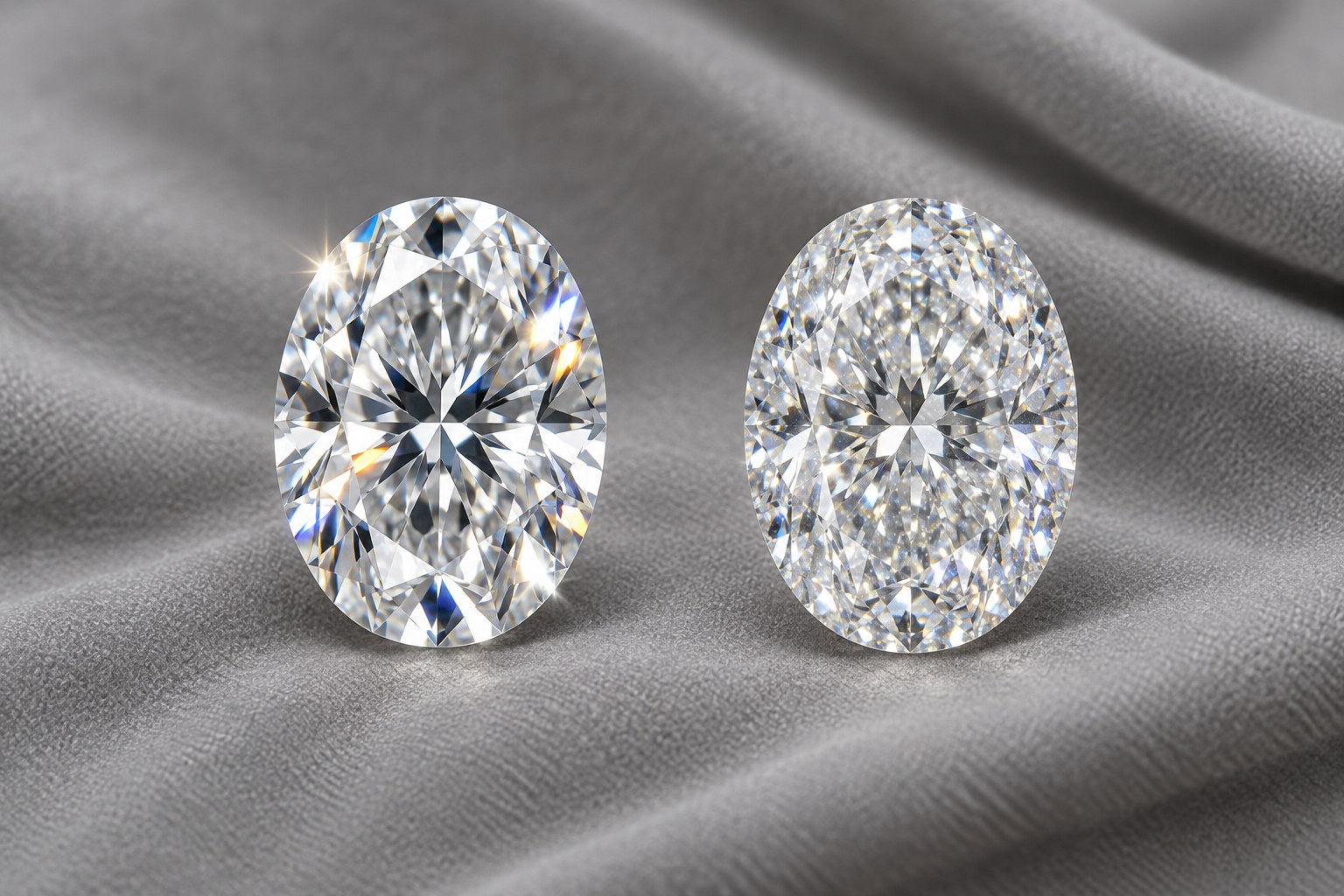
This is where the paths split. Diamond has a higher refractive index and stronger dispersion, which produces the crisp, bright sparkle and rainbow flashes people instinctively read as "diamond". White sapphire has a softer, quieter, slightly glassy appearance. It also tends to look dull sooner between cleans, because surface film and lotion residue mute its gentler lustre faster. If you love a subtle look, that softness is the appeal. If you expect diamond-like fire, a white sapphire will not pretend to deliver it.
Durability in daily wear
Both stones cope well with everyday rings. Sapphire is very hard and tough, though after years of wear its facet edges can soften and may eventually benefit from re-polishing. Diamond is the hardest gemstone of all, though "hardest" means resistant to scratching, not immune to chipping; a sharp knock on a pointed edge can chip any diamond. Either choice, set sensibly, will serve for decades.
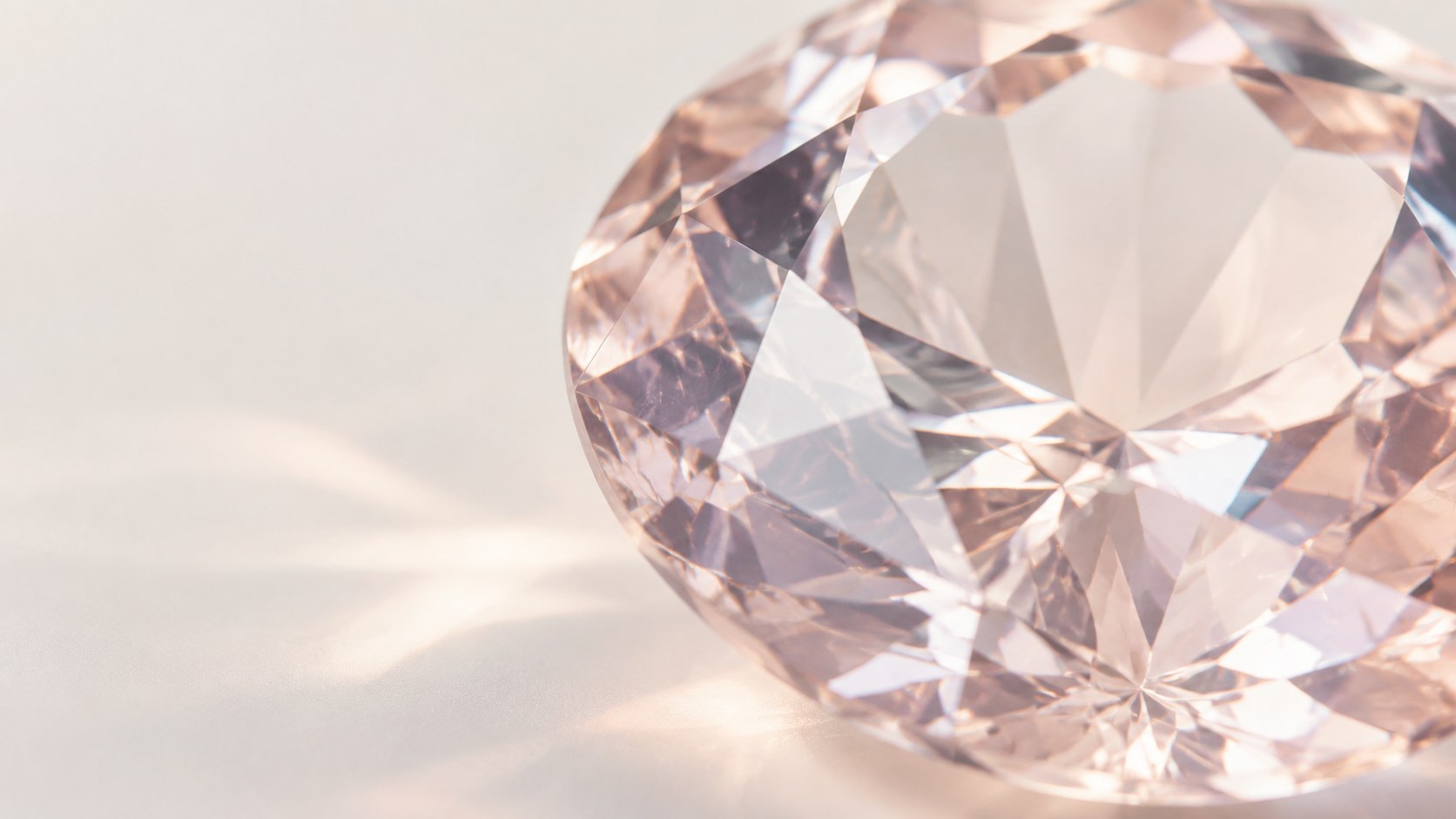
AI-generated illustration; not a Shewah product or a scale measurement.
SHEWAH Editorial Concept Illustration (Non-Catalogue)
Care and upkeep
Both stones clean the same way: warm water, a drop of mild washing-up liquid and a soft brush, then a rinse and a pat dry. The difference is rhythm. A white sapphire rewards more frequent cleaning, because its gentler lustre shows everyday film sooner. A lab-grown diamond shrugs off the same film for longer and keeps flashing between cleans. Neither needs specialist products, and harsh chemical dips are best left to a jeweller for both.
What to check and ask
Ask whether a white sapphire is natural or lab-grown, since both exist and either should be disclosed in writing. Ask how the stone will be set and whether the setting protects its edges. If you are weighing the two gems against each other, ask to see them side by side in daylight; the difference in sparkle is obvious in person and hard to judge from photographs.
Who each suits
Choose lab-grown diamond if you want maximum brilliance and the classic look. Choose white sapphire if you prefer a softer, understated character and enjoy the idea of a less conventional centre stone. Neither is the wrong answer; buying the wrong one for your taste is the only real mistake. One more honest note: because white sapphire is less familiar to many buyers, it is sometimes sold as a stand-in for diamond. Seen clearly for what it is, it is a lovely gem in its own right, and it deserves to be chosen, not settled for.
The choice made clear, with Shewah
At Shewah, we work with lab-grown diamonds and can talk you through how they compare with other colourless stones, honestly and without pressure. Explore Shewah's jewellery or message us on WhatsApp at +91 96622 66360 to see stones side by side.
AI-generated illustration; not a Shewah product or a scale measurement.
SHEWAH Editorial Concept Illustration (Non-Catalogue)
Sources
- Sapphire (Wikipedia) - https://en.wikipedia.org/wiki/Sapphire
- Corundum (Wikipedia) - https://en.wikipedia.org/wiki/Corundum
- Diamond simulant (Wikipedia) - https://en.wikipedia.org/wiki/Diamond_simulant
The Maison Shewah Atelier Standard
Every creation referenced across our journal essays is made individually to order using solid 18K gold and independently certified diamonds (IGI & GIA). We uphold complete material transparency and zero synthetic plating.
Research & Gemological References
- [1]Sapphire — Wikipedia (Verified: 2026-11-03)
- [2]Corundum — Wikipedia (Verified: 2026-11-03)
- [3]Diamond simulant — Wikipedia (Verified: 2026-11-03)