Why Your Ring Spins (and How to Fix It)
“A spinning ring is physics, not a defect: why top-heavy designs rotate, and the fixes from sizing beads to euro shanks.”
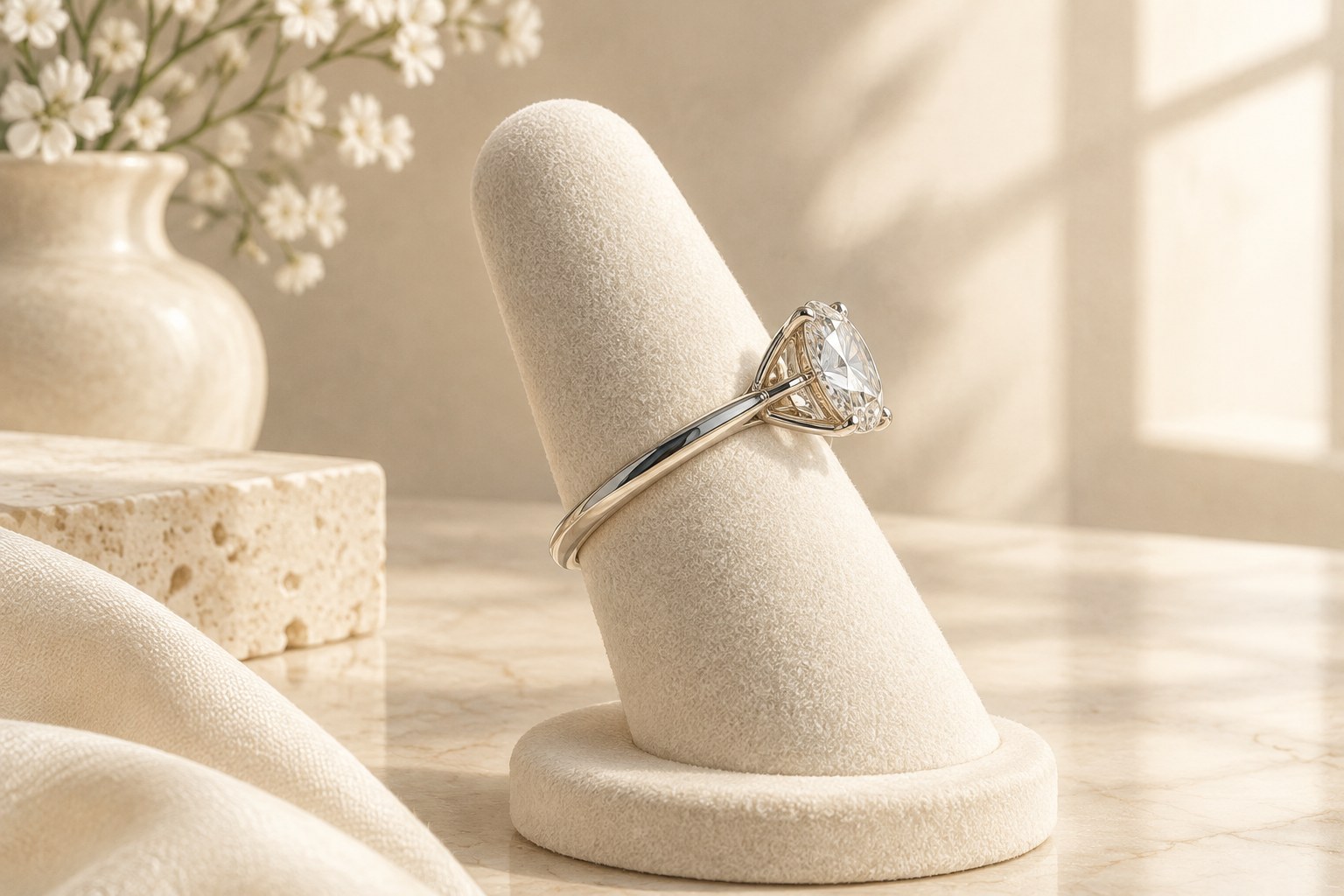
AI-generated illustration; not a Shewah product or a scale measurement.
SHEWAH Editorial Concept Illustration (Non-Catalogue)
You chose the design, the stone, the metal - and then the ring spends the day rotating until the diamond faces your palm. A spinning ring is one of the most common complaints in jewellery, and it is almost never a defect. It is physics, and physics has fixes. Here is why it happens and what actually works.
Top-heavy by design
Most rings are weighted unevenly: a stone and its setting sit on top of a plain band. If the band fits with any room at all, gravity pulls the heavy side down. Knuckles make it worse. Fingers are not cylinders - the knuckle is wider than the fleshy base where the ring rests, so a ring sized to pass the knuckle is slightly loose once it arrives. The wider the gap between knuckle and finger base, the more a ring can turn.
Sizing closer is not always the answer
The instinct is to size down. Sometimes that works, but a ring tight enough never to move can be uncomfortable in heat, after salty food, or on days when fingers swell - which they do, daily. A good fit is snug at the knuckle and easy at the base, and that combination can still allow rotation. So when a jeweller suggests sizing down, ask how much, and whether the design itself can carry the fix instead.
The fixes a jeweller can offer
Sizing beads - two small metal bumps added inside the shank - grip the finger and let the ring sit snugly at the base while still clearing the knuckle. A euro shank replaces the round bottom of the band with a slightly squared one, which braces against the finger and resists turning; it also hides minor size changes well. For larger mismatches, a jeweller can add a hinged or adjustable shank, or reshape the band entirely. Each fix is routine work; none requires replacing the ring.
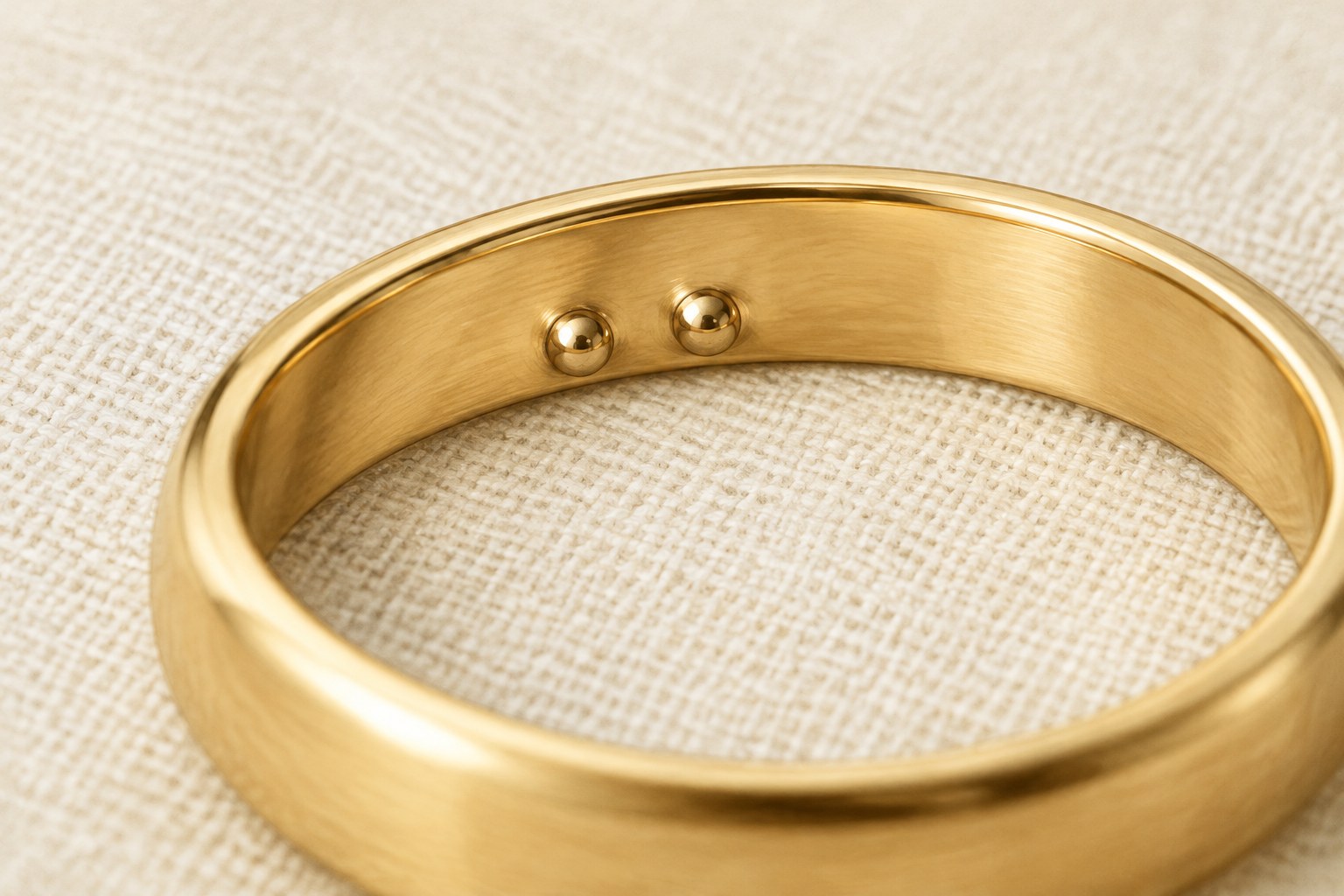
AI-generated illustration; not a Shewah product or a scale measurement.
SHEWAH Editorial Concept Illustration (Non-Catalogue)
Design choices that prevent spinning
If you have not bought yet, you can design the problem away. Wider bands rotate less than thin ones. Lower-set stones keep the weight closer to the finger. Heavier shanks balance a larger centre stone. And if your knuckles are much larger than your finger base, mention it before the piece is made - the shank shape can be chosen with your hand in mind, not corrected after.
A note on wider bands and seasons
Finger size shifts with weather, time of day and even diet, so expect a ring to fit slightly differently in summer and winter. Judge the fit over a few normal days, not one cold morning.
What to ask before you decide
Try the ring and shake your hand gently, then turn a doorknob - everyday motion, not a wiggle at the counter. Ask: is this size snug at my knuckle and comfortable at the base? Can sizing beads or a euro shank be added later if needed? And will adding them affect the band's finish or any engraving inside? The answers are quick, and they save a lifetime of twisting a ring back into place.
Rings that stay put, with Shewah
Shewah makes rings to order in Surat, and shank shape, band width and sizing options are all part of the conversation before anything is cast. Explore Shewah's jewellery or message us on WhatsApp at +91 96622 66360 - tell us if your rings spin, and we will design around it.
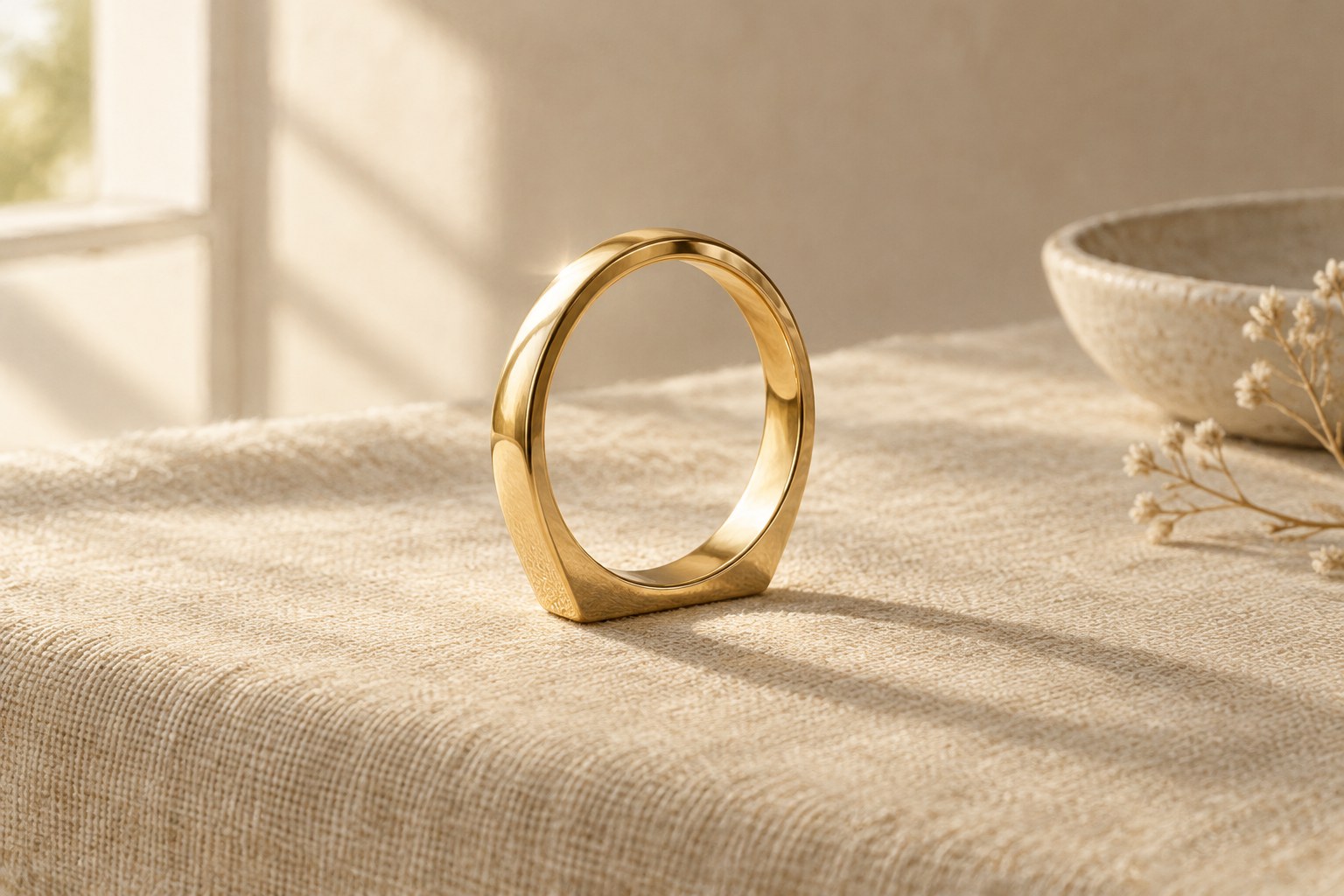
AI-generated illustration; not a Shewah product or a scale measurement.
SHEWAH Editorial Concept Illustration (Non-Catalogue)
Sources
- Ring size - Wikipedia
- Ring (jewellery)) - Wikipedia
- Wedding ring - Wikipedia
The Maison Shewah Atelier Standard
Every creation referenced across our journal essays is made individually to order using solid 18K gold and independently certified diamonds (IGI & GIA). We uphold complete material transparency and zero synthetic plating.
Research & Gemological References
- [1]Ring size — Wikipedia (Verified: 2026-11-02)
- [2]Ring (jewellery) — Wikipedia (Verified: 2026-11-02)
- [3]Wedding ring — Wikipedia (Verified: 2026-11-02)