Which Hand Does a Wedding Ring Go On? A Practical Guide
“Find out which hand and finger commonly hold a wedding ring in the US, UK and Australia, how to wear a ring set and what to check for a comfortable fit.”

AI-generated illustration; not a Shewah product or a scale measurement.
SHEWAH Editorial Concept Illustration (Non-Catalogue)
In the United States, the United Kingdom and Australia, a wedding ring is commonly worn on the ring finger of the left hand. That is the finger next to the little finger.
This is a common custom, not a rule everyone must follow. Your culture, family traditions, ceremony and personal preference may lead you to the right hand or another arrangement.
Before ordering a ring, decide how you want to wear it. The choice affects which finger needs measuring and whether the band should fit beside an engagement ring.
Which finger is the ring finger?
The ring finger sits between the middle finger and the little finger. When people refer to the left ring finger, they mean that finger on the left hand.
It may sound obvious, but naming the hand as well as the finger matters when you order. A ring intended for the right hand should not be sized using a measurement from the left without checking the fit.
If you are sharing measurements with a jeweller, say "left ring finger" or "right ring finger" rather than simply "my wedding finger". That avoids relying on an assumption about your customs.
Wedding-ring placement in the US, UK and Australia
A left-hand ring-finger placement is familiar in all three markets. Ben Garelick's guide describes it as the customary arrangement in the US, UK and Australia.
Some people wear an engagement ring on the same finger, while others wear only a wedding band. You can also wear the two rings separately if that feels more comfortable or suits their designs.
There is no need to use your ring placement to explain your relationship to strangers. Choose the arrangement that fits your own tradition and daily life.
Is wearing a wedding ring on the right hand wrong?
No. Customs differ, and wearing a wedding ring on the right hand is not a mistake. Do not treat one country's common arrangement as a universal standard.
If your ceremony follows a particular religious or cultural practice, ask your officiant which hand and finger will be used during the ring exchange. That is more useful than relying on a broad country list that may overlook regional or family differences.
Partners can also have different preferences. You do not have to use matching hands to choose matching rings or to share the same commitment.
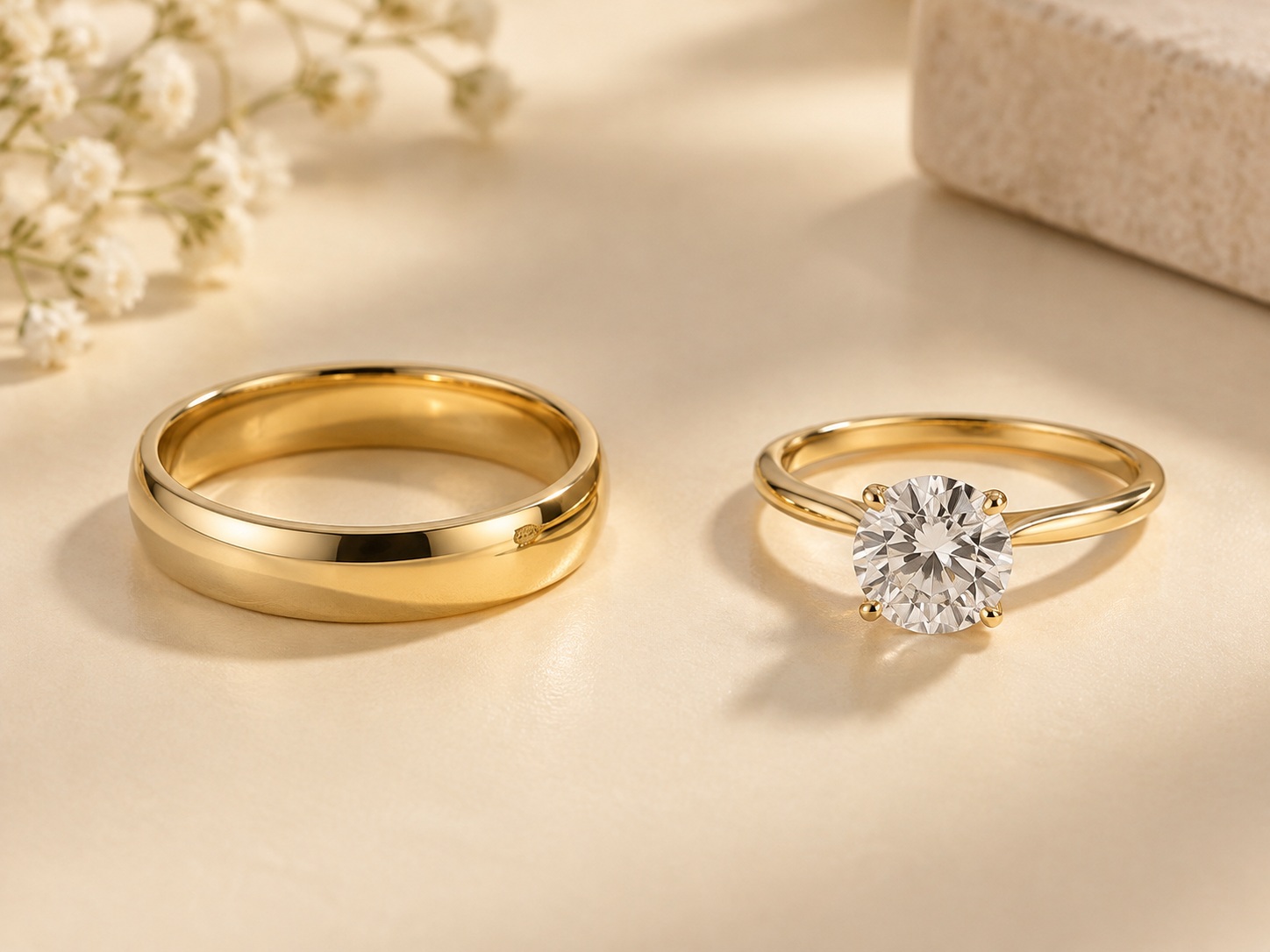
AI-generated illustration; not a Shewah product or a scale measurement.
SHEWAH Editorial Concept Illustration (Non-Catalogue)
Which goes first: the wedding band or engagement ring?
In the common left-hand arrangement, the wedding band is often placed first, nearer the base of the finger, with the engagement ring above it. Brides describes this as a traditional order while making clear that the final choice is personal.
You can reverse the order, separate the rings or wear only one if you prefer. A tradition is not a reason to accept an uncomfortable stack.
Try the actual rings together where possible. Look at how they sit from the side, whether there is a gap and whether the arrangement is comfortable when you bend your finger.
What should you do with the engagement ring during the ceremony?
Plan this before the wedding day. You might temporarily move it to another finger or have it kept safely while the wedding band is placed.
Only move it if it fits the other finger comfortably. Do not force it onto a finger that is too large, and do not wear it loosely where it could fall off.
Agree on who will keep it if you remove it. A simple plan avoids last-minute uncertainty during the ceremony. Ask your officiant whether any ring-exchange details need to be rehearsed.
Choose a wedding band that works with your ring
If you plan to wear a set, consider the shape of the engagement-ring setting before choosing the band. A straight band may sit with a gap; a shaped band may create a different look. Neither is automatically better.
Ask to see the combination from above and from the side. A photograph of each ring separately does not show how they meet when worn together.
For a custom band, confirm the reference measurements and ask how the design will accommodate the engagement ring. If the jeweller is working from photographs, discuss what can and cannot be confirmed without the physical ring.
The aim is an arrangement you understand before you approve the design, rather than an assumption that every wedding band will sit flush.
Measure the exact finger you will use
Have the intended finger measured with a proper sizer. Share the planned band width and explain whether you will wear it alone or as a stack.
A wider band or combined set can feel more snug than a narrow ring. Ask for a similar-width sizing check instead of automatically adding a whole size.
For international orders, give the sizing system alongside the size. US numbers and UK or Australian letters are different labels. Include millimetre measurements where available and ask the jeweller to confirm the final order size in writing.
Do not rely on a string or paper estimate as the final fit for a made-to-order wedding ring. If that is all you have, explain the method and arrange a proper check before committing.
Think about how you will wear the ring each day
Consider your work, hobbies and the other jewellery you wear. Ask the jeweller what precautions apply to the materials and setting you choose.
Do not force yourself to keep a ring on during an activity where it is unsafe or likely to be damaged. Follow workplace rules and relevant safety guidance. Wearing a wedding ring is a personal practice, not a requirement to ignore those rules.
If you remove it regularly, choose a consistent safe storage place. Check that the fit remains comfortable rather than assuming it will never need reassessment.
Before you order your wedding rings
Confirm the metal alloy, band width, size and any stones. If you want matching rings, clarify whether "matching" means the same design, the same metal colour or a shared detail in otherwise different bands.
For engraving, review the exact spelling and date. Then confirm the full quote, delivery estimate, alteration options and return terms for the order. Leave time for a fit check rather than assuming the first measurement resolves every detail.
Frequently asked questions
Do men and women wear wedding rings on different hands?
In the common US, UK and Australian left-hand tradition, the usual placement does not depend on gender. Individual and cultural preferences can still differ.
Can I wear only the wedding band?
Yes. Wearing an engagement ring with it is optional. Choose the arrangement you want rather than buying a set because you think both rings are required.
Can I move my wedding ring to the other hand?
You can choose to, but check the fit first. The corresponding finger on the other hand may need a different size.
Must the wedding band sit flush against the engagement ring?
No. A gap can be part of the look. If a flush fit matters to you, discuss it during design selection and check the rings together.
Is the left-hand custom a rule for every wedding?
No. Ask about the practice relevant to your ceremony and family, then choose a comfortable arrangement for daily wear.
Plan your wedding rings with Shewah
Start with your intended hand, finger and ring arrangement. Share the engagement-ring profile if you want a band designed to sit beside it, along with your preferred width and metal details.
Explore Shewah's jewellery, or contact us on WhatsApp at +91 96622 66360 to discuss custom wedding rings.
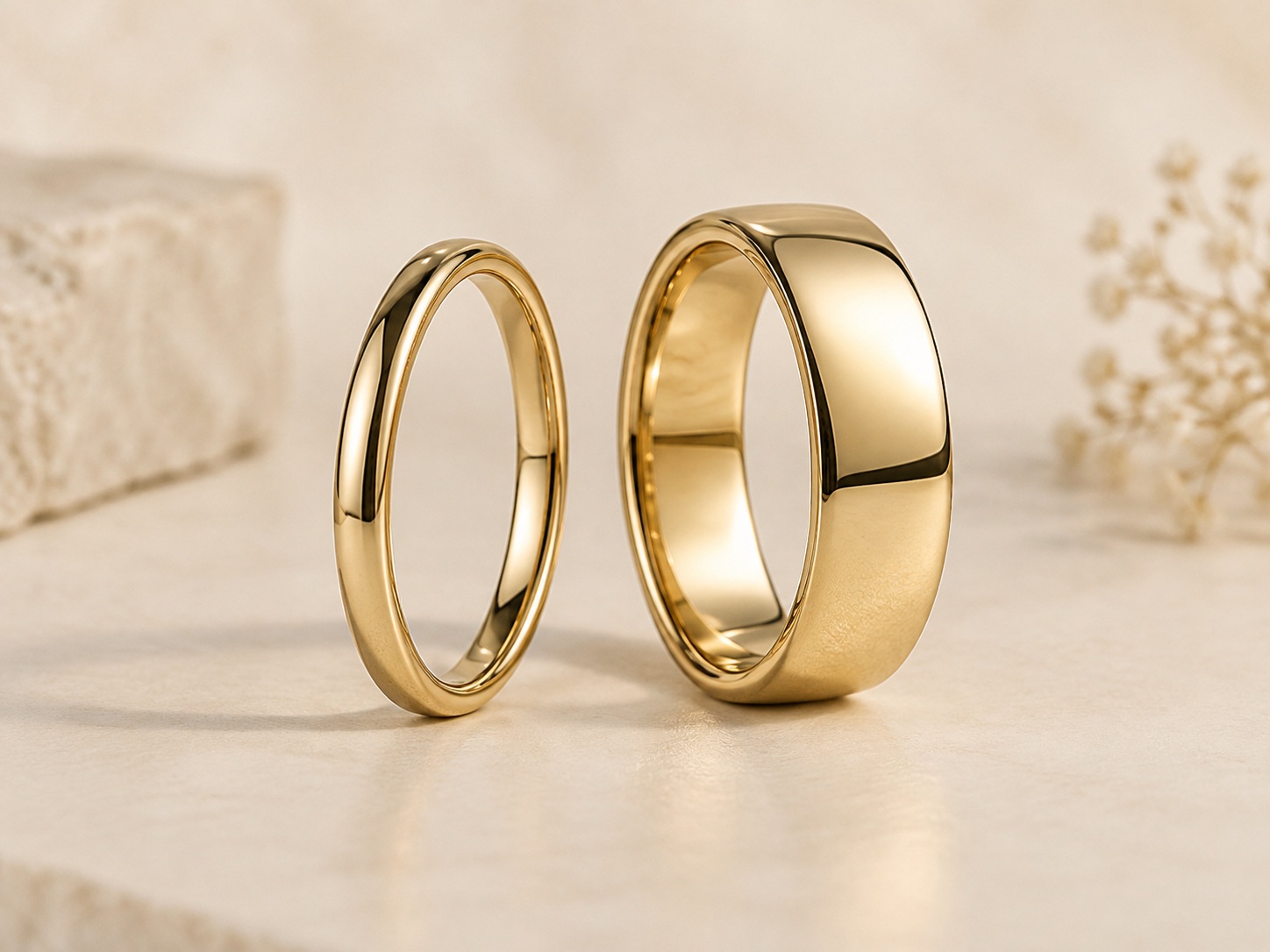
AI-generated illustration; not a Shewah product or a scale measurement.
SHEWAH Editorial Concept Illustration (Non-Catalogue)
Sources
The Maison Shewah Atelier Standard
Every creation referenced across our journal essays is made individually to order using solid 18K gold and independently certified diamonds (IGI & GIA). We uphold complete material transparency and zero synthetic plating.
Research & Gemological References
- [1]Ben Garelick: Which Hand Does the Wedding Ring Go On? — Ben Garelick (Verified: 2026-10-11)
- [2]The Knot: How to Wear an Engagement Ring and Wedding Band — The Knot (Verified: 2026-10-11)
- [3]GIA: Ring Size Guide — GIA (Verified: 2026-10-11)


