What Is a Tennis Bracelet? History and Buying Guide
“A continuous line of diamonds with a sporting name: the real story of the tennis bracelet, what to check when buying, and how it should fit.”

AI-generated illustration; not a Shewah product or a scale measurement.
SHEWAH Editorial Concept Illustration (Non-Catalogue)
Few pieces earn their place in a jewellery wardrobe like the tennis bracelet: a single continuous line of individually set diamonds or gemstones, simple enough for every day and brilliant enough for any evening. If you are considering one, here is where the name comes from, what to look at when buying, and how it should fit.
Why it is called a tennis bracelet
The style is far older than the name. Since the 1920s, Art Deco jewellers made "line bracelets", rows of matched square-cut stones worn by film stars and luxury shoppers alike. The modern name arrived decades later when tennis champion Chris Evert famously lost her diamond bracelet mid-match at the US Open and asked for play to pause while it was found. The incident gave the line bracelet its sporty new name and a surge of popularity that never really faded. Today it turns up on everyone from Rihanna to Jennifer Lawrence, and "tennis core" styling has made it a genuine everyday essential.
What defines the style
A tennis bracelet is a continuous, flexible line of individually set stones, usually diamonds, each in its own mounting. That is the whole formula, and its simplicity is exactly why quality differences show. When every stone and every link is identical, any weak stone or sloppy setting stands out immediately.
What to check when buying
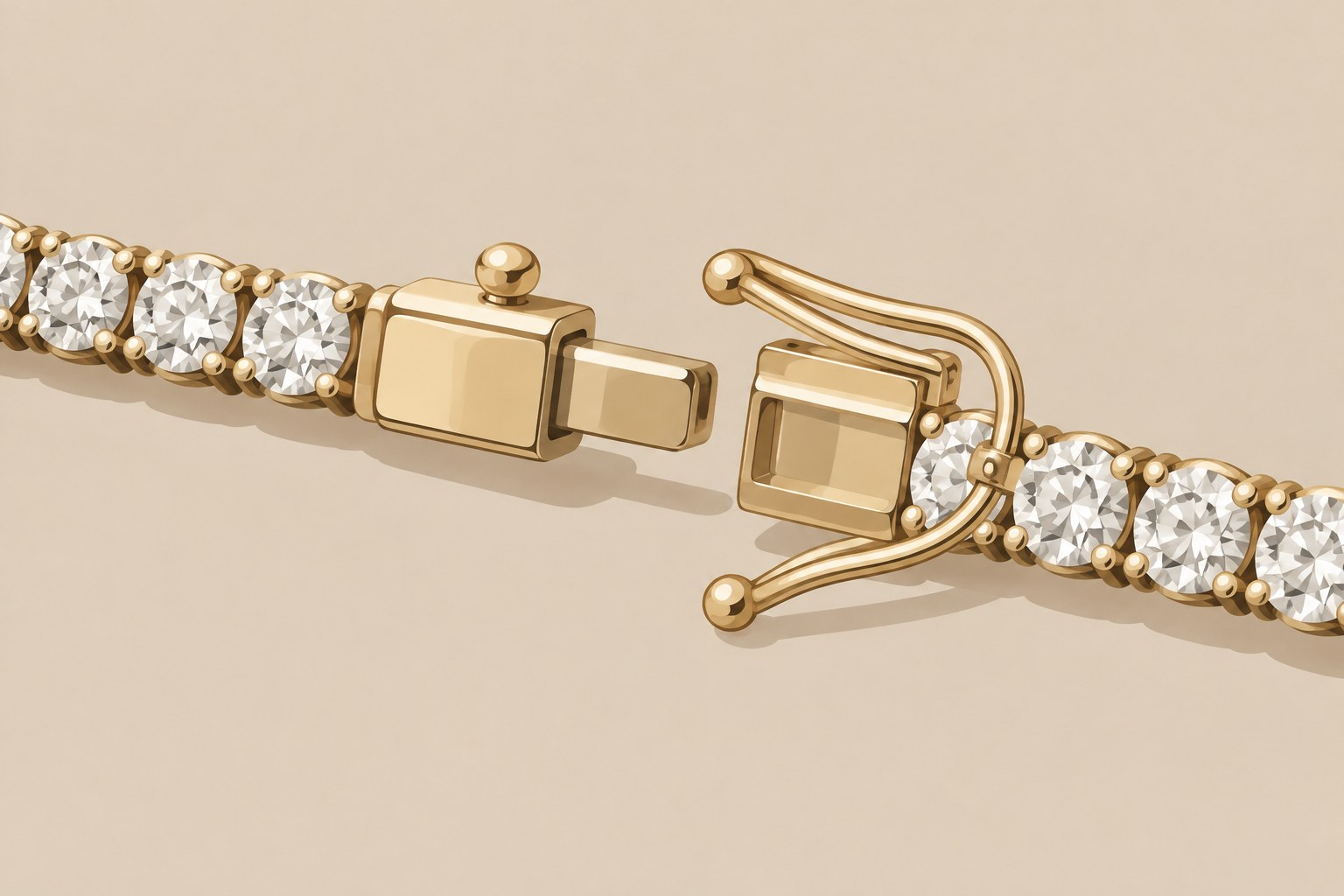
- The setting style. Prong settings show the most stone and sparkle; bezel and channel settings smooth the profile and protect the edges, which matters on a piece that bumps desks and doorways daily.
- Stone quality across the whole line. Ask about the average grade of the stones, not the best one. With lab-grown diamonds, a full bracelet of well-cut, bright stones has become dramatically more attainable than it was even a few years ago.
- The clasp, twice over. A tennis bracelet lives or dies by its clasp. Look for a secure box or concealed clasp with a safety catch or figure-eight lock. The original incident happened for a reason.
- Total carat weight vs stone size. A 5-carat bracelet might be twenty larger stones or forty smaller ones. Larger stones read bolder; smaller ones give a finer, more flexible line.
AI-generated illustration; not a Shewah product or a scale measurement.
SHEWAH Editorial Concept Illustration (Non-Catalogue)
How it should fit
A tennis bracelet should move, but not roam. The classic guidance: loose enough to slide over the wrist bone slightly and slip a finger beneath, snug enough that it cannot rotate off over the hand. Too tight stresses the links; too loose risks exactly the mid-match moment that named it.
Styling a tennis bracelet
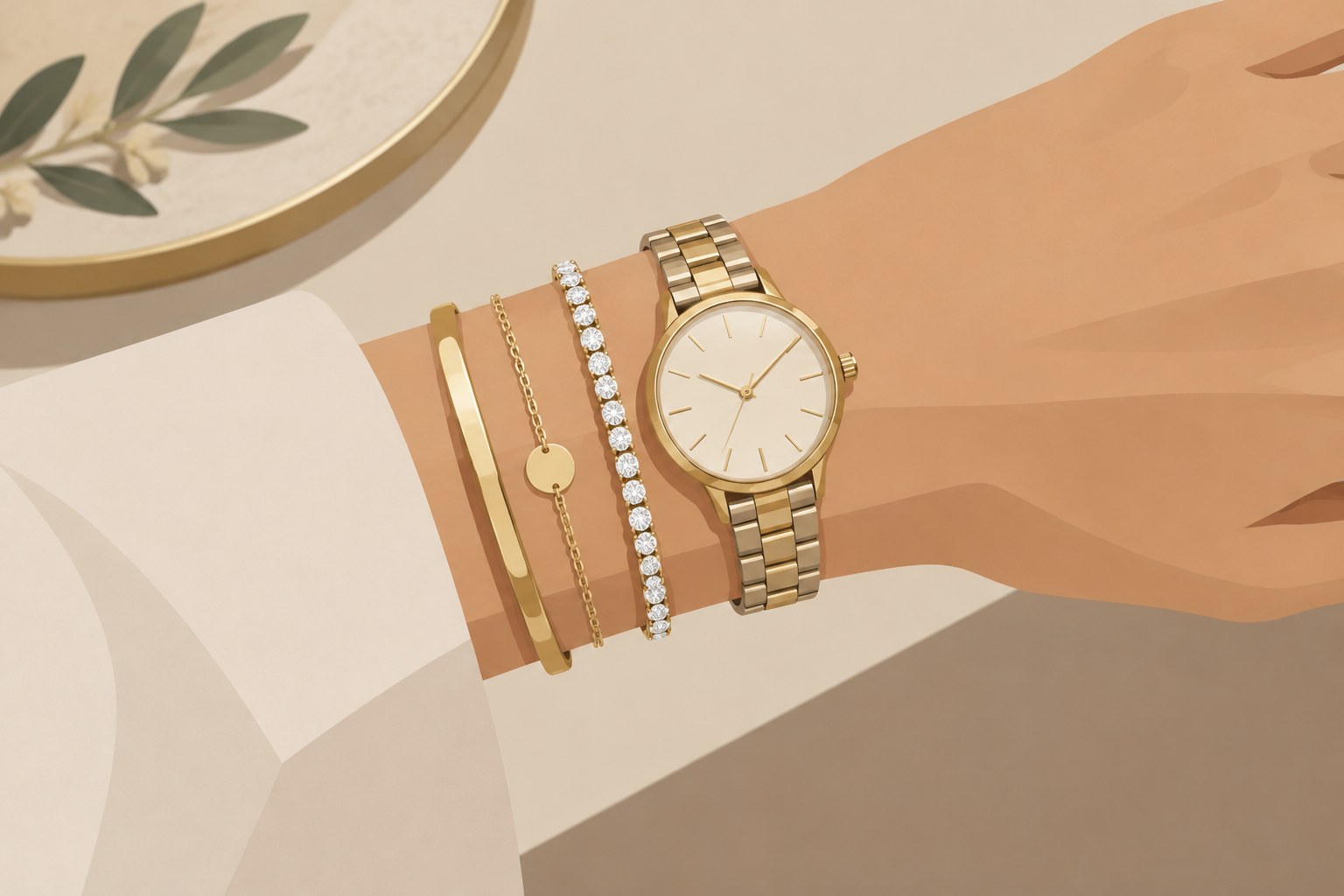
The bracelet's strength is range. Worn alone it reads quiet and expensive; stacked with a watch or a slimmer bangle it becomes the anchor of a wrist stack. It dresses a t-shirt up and never fights an evening dress. If you buy one "forever" bracelet, this is the shape most jewellers would put forward, precisely because it never asks what you are wearing.
Natural or lab-grown stones?
The tennis bracelet is where lab-grown diamonds make the most visible difference to a budget. A bracelet needs dozens of matched stones, so the per-stone saving multiplies across the whole line, often bringing a full diamond bracelet into the range of what a single natural solitaire pendant once cost. The look on the wrist is identical; the difference is on the invoice.
Made to measure with Shewah
Tell us your wrist, your stone and your metal, and we will make your tennis bracelet to order, with lab-grown diamonds certified and the full quote before work begins.
Explore Shewah's jewellery or contact us on WhatsApp at +91 96622 66360 to start yours.
AI-generated illustration; not a Shewah product or a scale measurement.
SHEWAH Editorial Concept Illustration (Non-Catalogue)
Sources
The Maison Shewah Atelier Standard
Every creation referenced across our journal essays is made individually to order using solid 18K gold and independently certified diamonds (IGI & GIA). We uphold complete material transparency and zero synthetic plating.
Research & Gemological References
- [1]Tennis Bracelet Buying Guide: Diamonds & Gemstones — GIA 4Cs (Verified: 2026-10-17)
- [2]Essential Buyer's Guide to Tennis Bracelets — Sotheby's (Verified: 2026-10-17)


