What Is a Solitaire Ring? A Guide to Settings, Stones and Fit
“Learn what a solitaire ring is, compare prong and bezel settings and check stone details, proportions and fit before choosing a custom design.”

AI-generated illustration; not a Shewah product or a scale measurement.
SHEWAH Editorial Concept Illustration (Non-Catalogue)
A solitaire ring puts one stone at the centre of the design. In a diamond solitaire, a single diamond is the focal point, rather than a cluster or a three-stone arrangement.
The word does not describe a particular diamond shape, carat weight or metal. A solitaire can look very different depending on its stone, setting and band.
If you are choosing one, start with the whole ring rather than the centre-stone number alone. This guide explains the main decisions and the questions to ask before ordering.
What does solitaire mean in jewellery?
GIA defines a diamond solitaire as a piece of jewellery with a single diamond. That can be a ring, pendant or another piece; "solitaire" is not exclusive to engagement rings.
For rings, the cleanest example is one stone on a plain band. Retail descriptions can also use "solitaire-style" for designs focused on one centre stone with additional details. Ask for the actual stone count instead of relying on the label.
If there are accent stones, confirm their identity and whether the advertised weight describes the centre stone alone or all stones combined.
Solitaire vs halo vs three-stone ring
A solitaire places the focus on one stone. A halo adds a surrounding arrangement of smaller stones. A three-stone design puts three principal stones together.
These are different design choices, not a ranking from basic to better. A plain solitaire may suit someone who wants a clear outline; a halo may suit someone who enjoys a more detailed appearance.
Compare photographs of the complete designs and request dimensions. Do not assume a ring with more stones will be more comfortable, more durable or more appropriate for the wearer.
Choose the stone shape you want to see
Round, oval, emerald-cut, pear and other shapes create different outlines. Choose a shape because you enjoy how it looks, not because the word solitaire requires one particular cut.
Ask for the stone's length and width in millimetres. Carat weight describes mass, while the visible dimensions help explain its proportions on the hand.
Look at the actual stone in a video as well as still photographs. A highly magnified image is useful for detail, but it is not the same as seeing the ring at normal viewing size.
For an elongated or pointed shape, discuss how the setting will hold and protect its edges. The design should suit the stone rather than simply copy a setting chosen for a different shape.
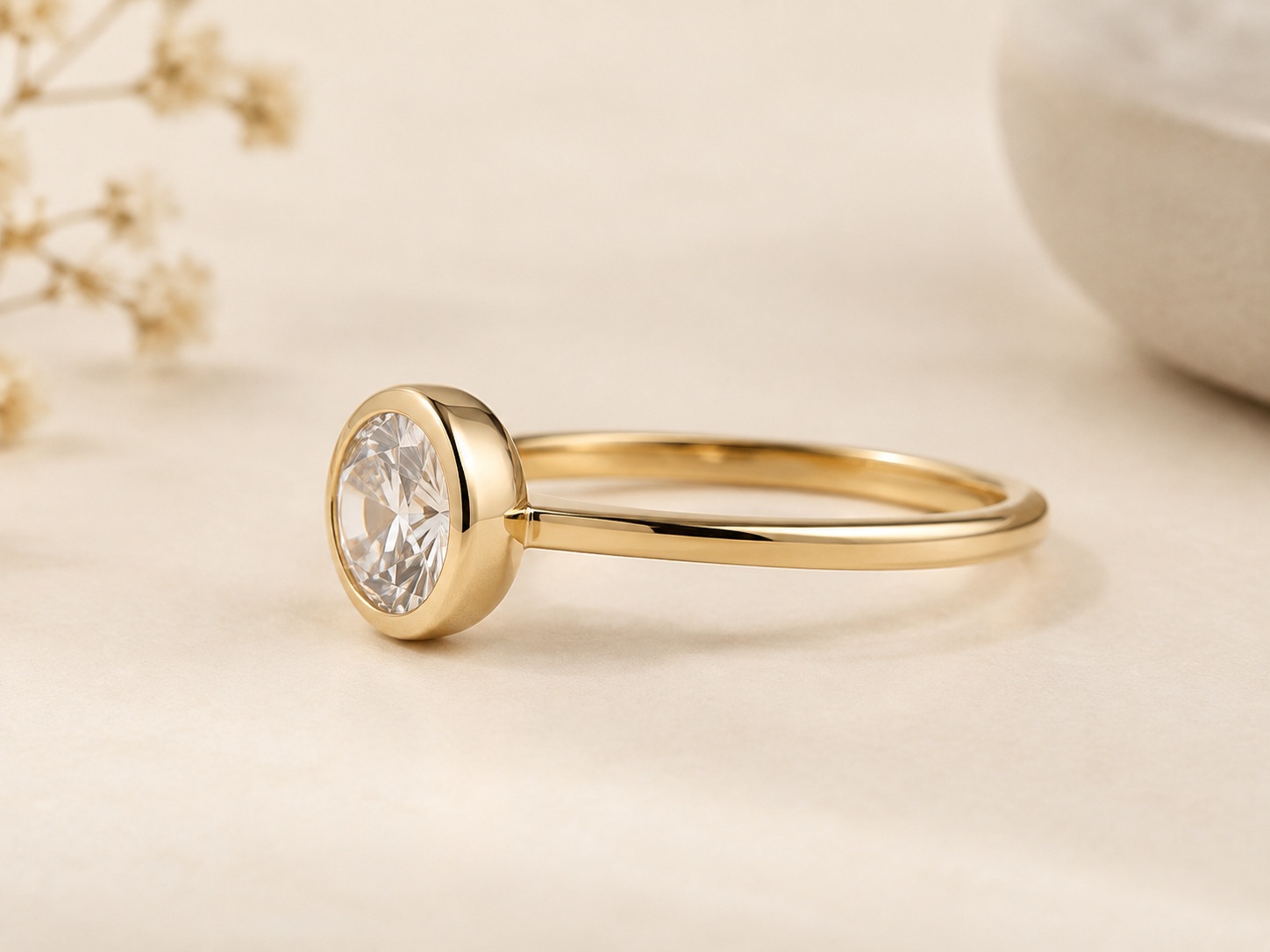
AI-generated illustration; not a Shewah product or a scale measurement.
SHEWAH Editorial Concept Illustration (Non-Catalogue)
Prong settings: an open look
Prongs are narrow metal supports that hold a stone in place. GIA describes four- and six-prong arrangements among common options, with different effects on the outline and exposed stone area.
Ask to see the setting from the side and underneath. The front view does not tell you how high the stone sits or how the supports are arranged.
Discuss the prong shape, the stone's corners and the inspection routine. Do not choose a setting solely because it uses the least visible metal. The practical question is whether the construction suits your stone and wear habits.
Bezel settings: a surrounding rim
A bezel uses a rim of metal around the stone. GIA's buying guide describes it as a protective setting style and notes that the absence of projecting prongs can help avoid snagging on gloves.
The rim changes the look of the stone's outline and how much of its side is visible. Compare an actual bezel example with a prong example before deciding which appearance you prefer.
A bezel is not a promise that a ring cannot be damaged. Ask how the specific design is made, what care it needs and how it will sit beside other jewellery.
Cathedral and other design descriptions
You may see terms describing raised shoulders, setting height or the way the band supports the centre. Those details can be as important to the finished ring as the stone itself.
Ask the jeweller to explain the design in plain language and show a side view. "Low profile" or "cathedral" on a listing is not enough to establish the exact height in millimetres.
For a custom design, review the top, side and underside views before approval. If a drawing is an illustration rather than a finished product photograph, keep that distinction clear.
Natural, laboratory-grown or a coloured gemstone?
A solitaire design does not establish the stone's origin. If you choose a diamond, ask whether it is natural or laboratory-grown and have that stated in the quote.
Request the available laboratory documentation and check the report with the issuer. Confirm that the document relates to the stone or jewellery being offered and understand what it describes.
A coloured gemstone can also be the single centre stone in a ring. Ask for its identity, any disclosed treatments and the care needs of the finished piece. Choose personal symbolism separately from unsupported claims about healing or luck.
Do not assume every solitaire sold by a brand has the same metal purity or laboratory documentation. Verify the details for your actual order.
Balance the stone and band
The band width changes the look and feel of the ring. Ask for it in millimetres and compare it with jewellery you already enjoy wearing.
A very close-up image can exaggerate both the stone and the band. Request a normal-scale hand photograph or video alongside the detailed views.
Tell the jeweller whether you want the ring to stand alone or be worn with a wedding band. Ask how the settings meet and whether your preferred combination creates a gap. A gap is not necessarily a problem, but it should be a choice rather than a surprise.
Check size and comfort before ordering
Have the intended finger measured with a proper sizer. Share the band width and whether you plan a stack, since the combined fit deserves its own check.
For an international order, label your size as US, UK or the relevant local system. Millimetre measurements can help clarify it, but they should not replace the jeweller's final fit confirmation.
Ask about alteration options for the specific ring. Do not assume all settings can be resized by the same amount or that resizing is included in the price.
Read the quote as a complete ring description
Confirm the stone's identity, origin and stated specifications; the setting and metal; the ring size; and the stone and band dimensions. Separate centre-stone weight from total weight if accents are included.
Then check the total payable price, expected delivery, approval process, alteration terms and return policy. For a custom order, ask what happens if you request a design change after approval.
Keep the final agreed details together so you can compare the finished ring with what you ordered.
Frequently asked questions
Does solitaire mean a round diamond?
No. The term refers to the single-stone focus, not a required shape. Ask which shape and setting are being offered.
Is a solitaire always an engagement ring?
No. It can be chosen for an engagement, an anniversary or simply as jewellery you enjoy wearing. Its occasion is separate from its design.
Are prongs or a bezel better?
They offer different appearances and practical features. Compare the actual designs and ask how each suits your stone, daily activities and care preferences.
Does a bigger carat weight mean a bigger-looking ring?
Carat measures weight. Compare the stone's millimetre dimensions, proportions and finished setting rather than assuming weight alone predicts the appearance.
How should I care for a solitaire?
Request instructions for the complete ring. Have a loose stone or damaged setting assessed by a jeweller; do not assume a cleaning method is suitable for every stone and construction.
Design your solitaire with Shewah
Start with the stone shape, setting style and band proportions you prefer. Share your intended finger, budget and whether you want the ring to sit beside a wedding band.
Explore Shewah's jewellery, or contact us on WhatsApp at +91 96622 66360 to discuss a custom solitaire ring.
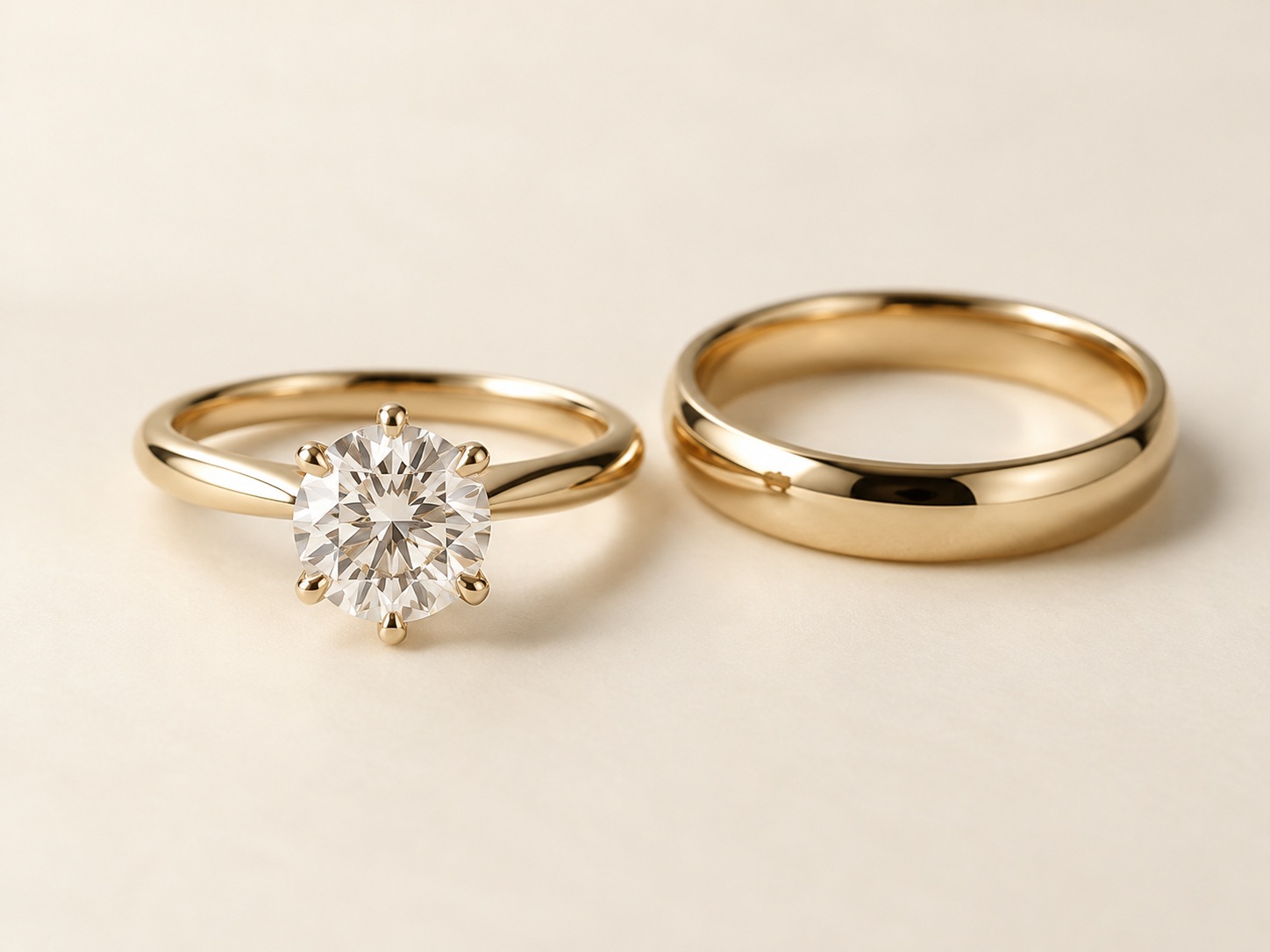
AI-generated illustration; not a Shewah product or a scale measurement.
SHEWAH Editorial Concept Illustration (Non-Catalogue)
Sources
The Maison Shewah Atelier Standard
Every creation referenced across our journal essays is made individually to order using solid 18K gold and independently certified diamonds (IGI & GIA). We uphold complete material transparency and zero synthetic plating.
Research & Gemological References
- [1]GIA: What Is a Solitaire Setting? — GIA (Verified: 2026-10-11)
- [2]GIA: 10 Tips for Buying an Engagement Ring — GIA (Verified: 2026-10-11)
- [3]GIA: Ring Size Guide — GIA (Verified: 2026-10-11)


