What Is a Pendant? Types, Meaning and Care
“Pendants are among the oldest forms of adornment, and still the most personal. What a pendant is, the main types, and how to choose one you will not tire of.”

AI-generated illustration; not a Shewah product or a scale measurement.
SHEWAH Editorial Concept Illustration (Non-Catalogue)
A pendant is the piece of jewellery that does the talking. The chain is the sentence structure; the pendant is the word everyone remembers. Understanding what a pendant is, and is not, makes buying necklaces far less confusing.
The definition
A pendant is a decorative piece that hangs from a chain, cord or other jewellery element. The name comes from the Latin pendere, to hang down. While pendants are most often associated with necklaces, they can also hang from bracelets, earrings and brooches. Materials run the full range: metals, gemstones, wood, even glass, in designs from minimalist to deeply personal.
Pendant versus necklace
The two are not the same thing. A necklace is what you wear around your neck, and it comes in endless styles and lengths. A pendant is the ornament that hangs from it. You can wear a necklace with no pendant at all, and you can move one pendant between several chains, which is exactly why pendants are such a flexible way to vary a look. In practice the line blurs, since some necklaces have a decorative element built in, but when you shop it helps to be precise: you are usually choosing the chain and the pendant as two separate decisions.
An ancient habit
Pendants are among the oldest recorded forms of bodily adornment, made over millennia from stone, shell and pottery. Ancient Egyptians wore them commonly, some shaped like hieroglyphs. Across history they have served as amulets for protection, marks of faith, awards, declarations and simple ornament, often several of those at once.
AI-generated illustration; not a Shewah product or a scale measurement.
SHEWAH Editorial Concept Illustration (Non-Catalogue)
The main types
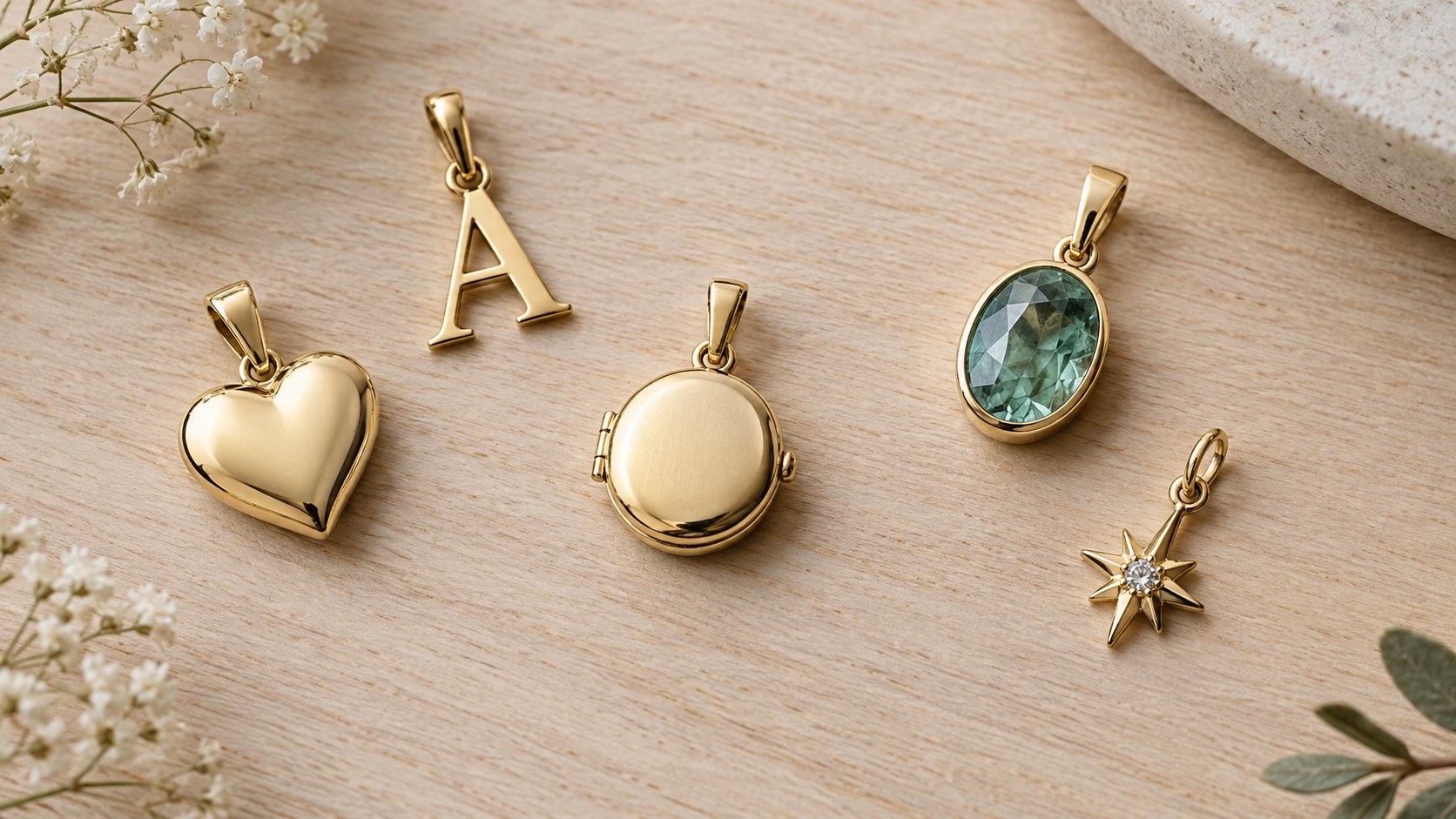
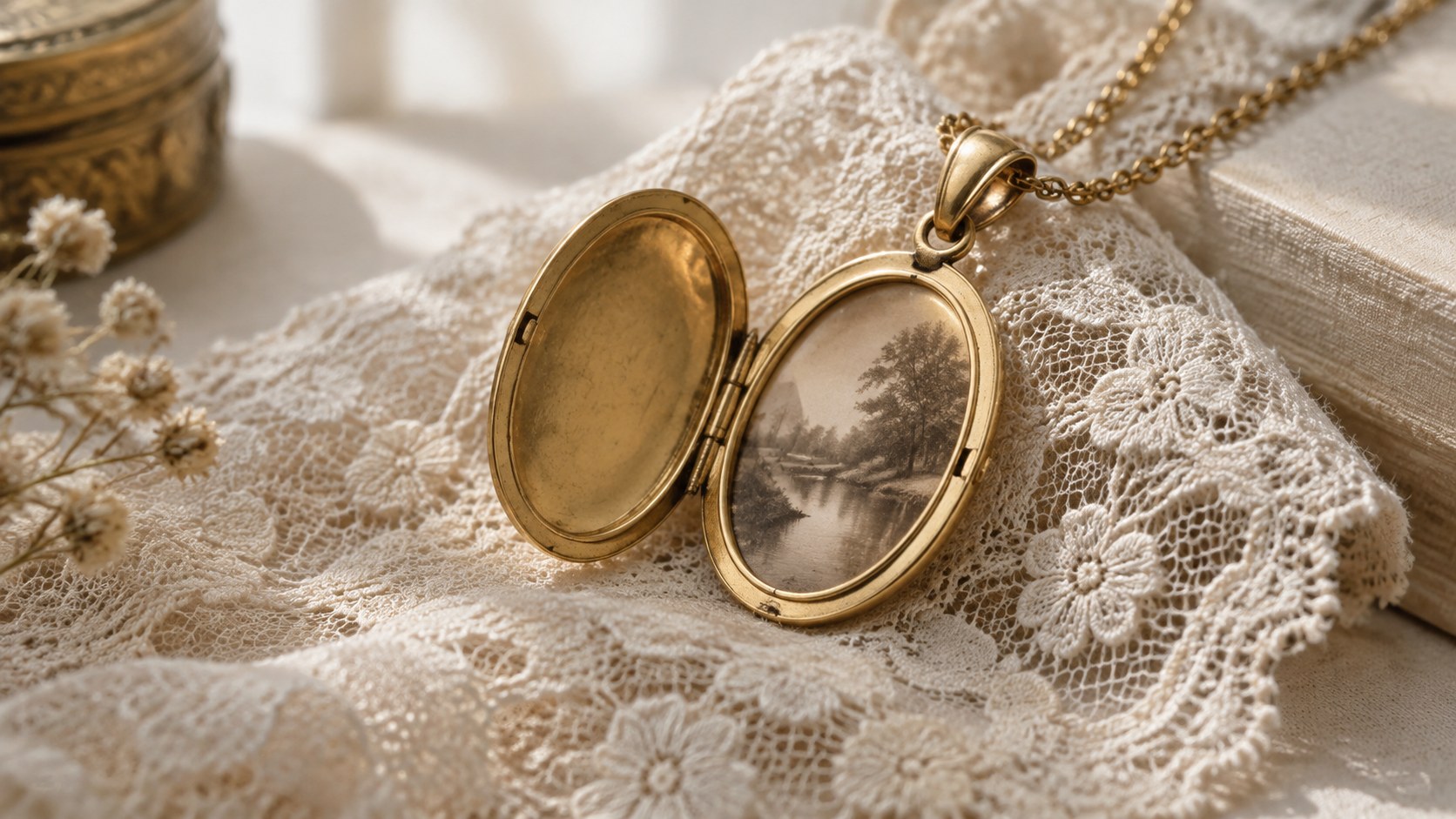
Stone pendants put colour at the centre: popular choices include moonstone and rose quartz, and each stone carries its own symbolism, so a stone pendant can say something without spelling anything out. Personalised pendants go further, customised with initials, names or dates that mean something to the wearer, which is why they make such reliable gifts. Heart pendants are the perennial romantic gesture, always in style and always readable. Lockets open to reveal a small compartment, traditionally for a photo or tiny keepsake, which makes them the most sentimental type of all. And the oldest types are the protective ones: amulets and talismans, worn to ward off harm, are where the whole idea of the pendant began.
Materials run the full range, gold, silver, gemstones, even wood or glass, so there is no rule beyond what suits the wearer.
Choosing one
Decide first whether the pendant is for every day or for occasions; an everyday pendant wants a durable stone and a setting with no snaggy corners. Match the chain to the pendant's weight and its bail, the loop it hangs from, so it hangs straight and moves freely. And think about length, since where the pendant rests on the neckline changes the whole effect.
One pendant, many chains
The quiet superpower of a pendant is that it detaches. A single much-loved pendant on a short chain reads polished for work; moved to a longer chain it sits differently against an evening neckline; layered with other necklaces it becomes part of a bigger composition. When you buy a pendant, you are really buying several looks, so it pays to choose a design you will not tire of and a bail generous enough to take more than one chain thickness.
A pendant that says it with Shewah
Tell us the stone, the symbol or the initial you have in mind and we will make the pendant to order, quoted in full before work begins.
Explore Shewah's jewellery or contact us on WhatsApp at +91 96622 66360 to talk pendants.
Care
Pendants worn daily collect dust and skin oils, so wipe yours with a soft cloth regularly. A little mild soap and water suits most stone and metal pendants; skip harsh chemicals. Store pendants in a jewellery box or pouch, away from direct sunlight and moisture, and check the bail and setting now and then for wear. Catching a loose stone early beats losing it.
AI-generated illustration; not a Shewah product or a scale measurement.
SHEWAH Editorial Concept Illustration (Non-Catalogue)
Sources
- What is a Necklace Pendant? - Abbott Lyon
- Pendant - Wikipedia
The Maison Shewah Atelier Standard
Every creation referenced across our journal essays is made individually to order using solid 18K gold and independently certified diamonds (IGI & GIA). We uphold complete material transparency and zero synthetic plating.
Research & Gemological References
- [1]What is a Necklace Pendant? — Abbott Lyon (Verified: 2026-10-18)
- [2]Pendant — Wikipedia (Verified: 2026-10-18)


