What Is a Locket? Meaning, History and How to Wear One
“A locket is jewellery as a container for memory: a hinged pendant holding photographs, hair or keepsakes. Six centuries of history, and how to choose and wear one today.”
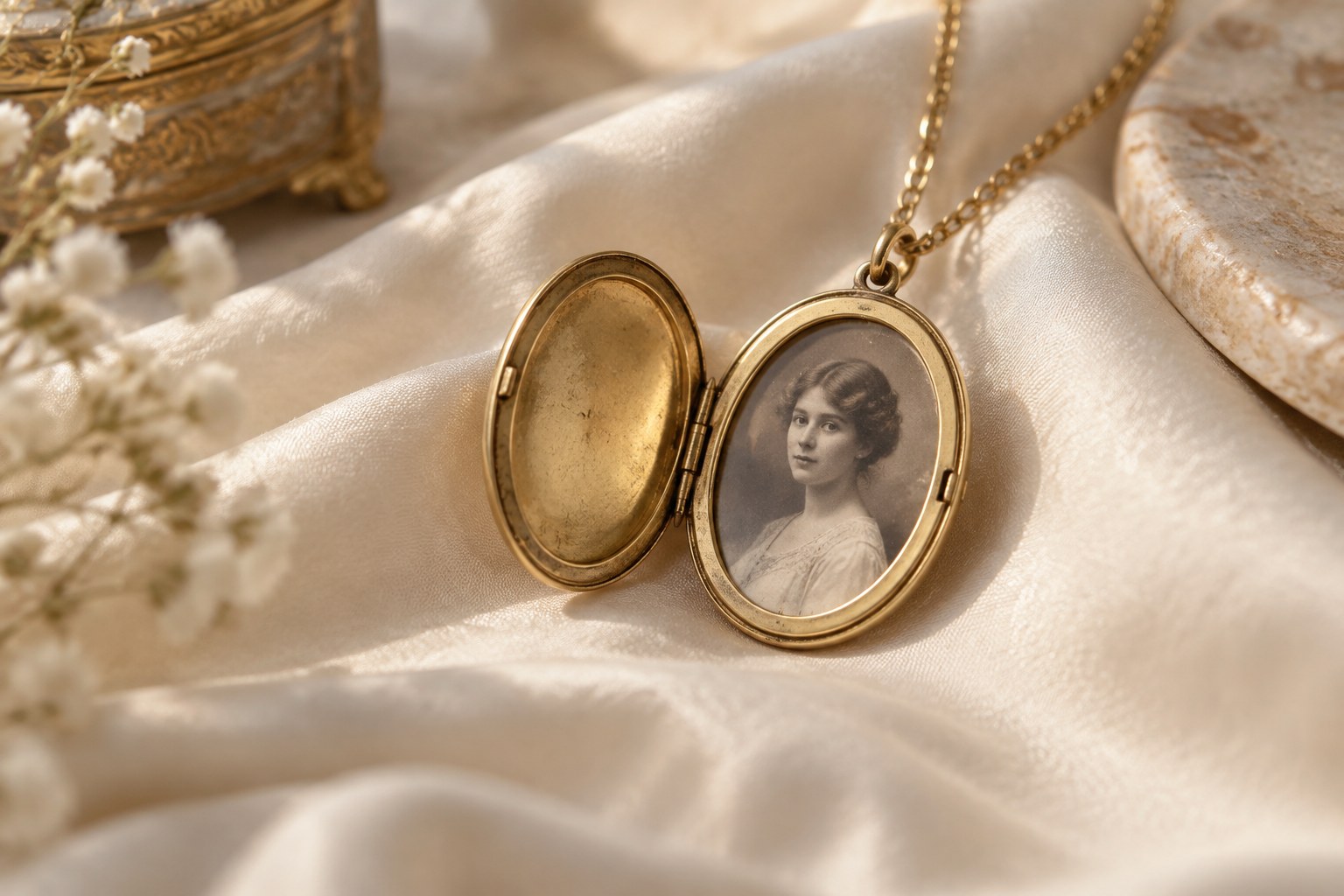
AI-generated illustration; not a Shewah product or a scale measurement.
SHEWAH Editorial Concept Illustration (Non-Catalogue)
Some jewellery sparkles; a locket keeps a secret. For six centuries this small hinged pendant has carried portraits, locks of hair and tiny keepsakes against the wearer's heart, which is exactly why it has never really gone away. Here is where the locket comes from, what it means, and how to choose and wear one today.
What a locket is
A locket is a pendant that opens, usually on a small hinge, to reveal a space inside made for holding something personal: a photograph, a lock of hair, a folded note. Most hold one or two photographs, though specially made examples have held as many as eight. Some keepsake lockets replace the solid front with a glass pane so the contents stay visible without opening. However it is built, the idea is the same: jewellery as a container for memory.
Six centuries of keepsakes
The locket's history reaches back to the 15th century, when both men and women wore pendants, brooches and rings holding portraits of loved ones or monarchs. The 18th century brought the fashion for "eye" lockets, framing a closely painted miniature of a loved one's eye: an intimate portrait only the wearer could identify. But the locket's golden age was the Victorian era. Queen Victoria herself wore a bracelet hung with eight lockets, each holding a lock of hair from one of her children, and where the Queen led, an era followed. The Victorians also wove the locket into mourning customs, keeping a loved one's hair inside as a tactile, lasting memento.
Why the locket endures
Every decade reinvents it. The 1980s revived engraved Victorian styles, the 1990s stripped it back to minimal hearts, and the early 2000s added birthstones and sparkle. The constant is personalisation: a locket is one of the few jewels defined entirely by what its owner puts inside. That flat front also engraves beautifully, so a locket can carry a message outside and a secret inside at once. Few gifts say "this is yours alone" so completely, which is why lockets remain a classic for anniversaries, Valentine's Day, new babies and graduations.
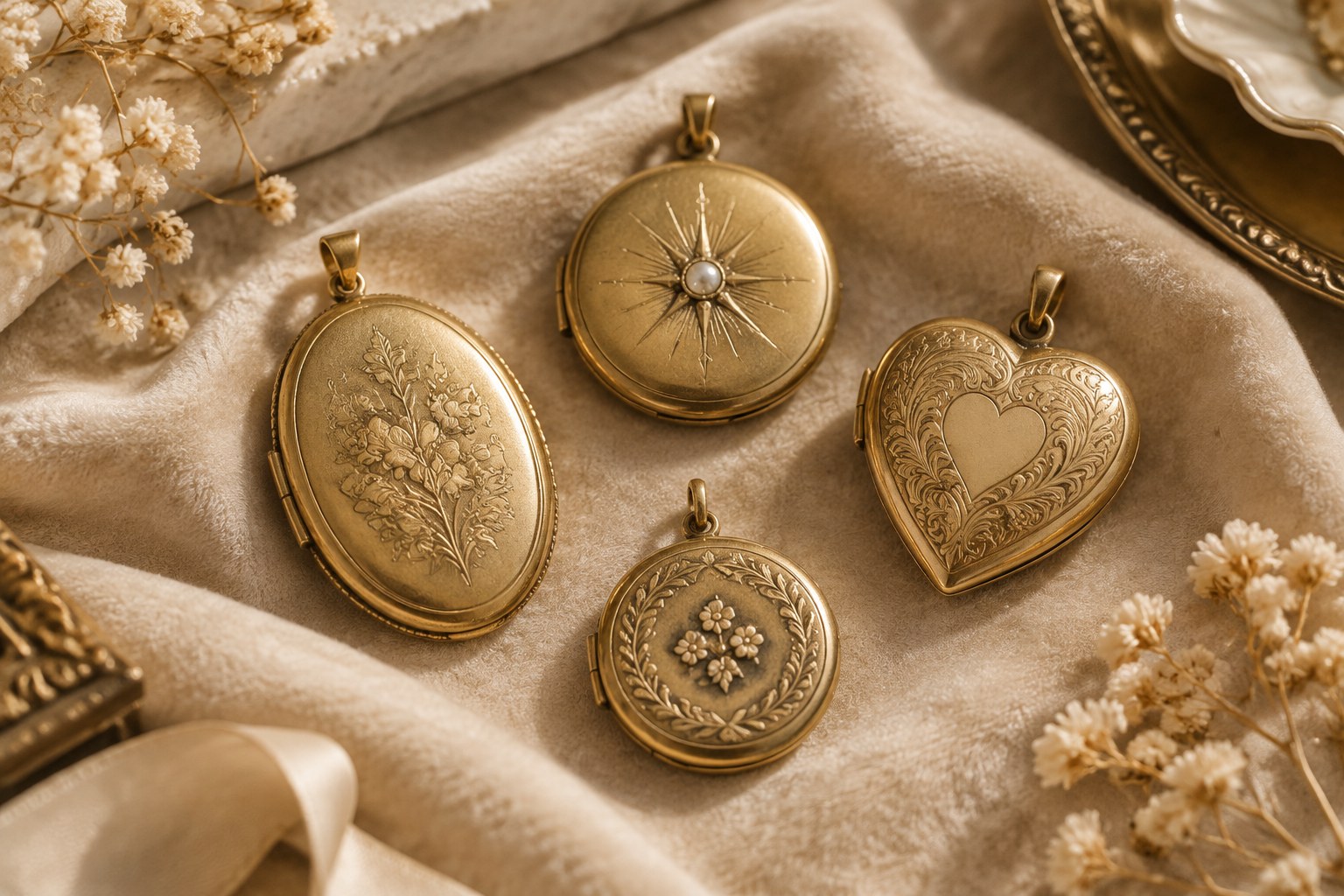
AI-generated illustration; not a Shewah product or a scale measurement.
SHEWAH Editorial Concept Illustration (Non-Catalogue)
Choosing a locket today
Start with size and shape. Oval and heart shapes are the classics; round and shield shapes read more modern. Check the hinge and clasp: a well-made locket opens smoothly and closes with a confident snap, because its job is to protect something irreplaceable. Consider the interior layout too, one frame or two, and whether the back can be engraved. Solid gold wears best for a piece meant to be opened daily for decades.
Wearing it well
A locket wants visibility, so give it a chain that lets it sit at the collarbone or just below, clear of necklines. It layers happily with finer, shorter chains as long as it stays the focal piece. And because a locket holds meaning rather than matching anything, it suits everything.
What to put inside
The classic contents still win: a photograph trimmed to the frame, or two for a pair. A lock of hair remains the oldest tradition, older than photography itself. But a locket can hold almost anything small and flat: a folded note, a dried petal, a scrap of fabric from a wedding dress or a baby's blanket. Some wearers leave one side empty on purpose, a space reserved for someone or something still to come. The only rule is that whatever goes in should survive being carried every day.
Keep someone close with Shewah
Shewah crafts lockets in solid gold with certified lab-grown diamond accents, made to order in Surat and shipped to the US, UK and Australia. Explore Shewah's jewellery or message us on WhatsApp at +91 96622 66360 to create a locket ready for your photograph, engraving or both.
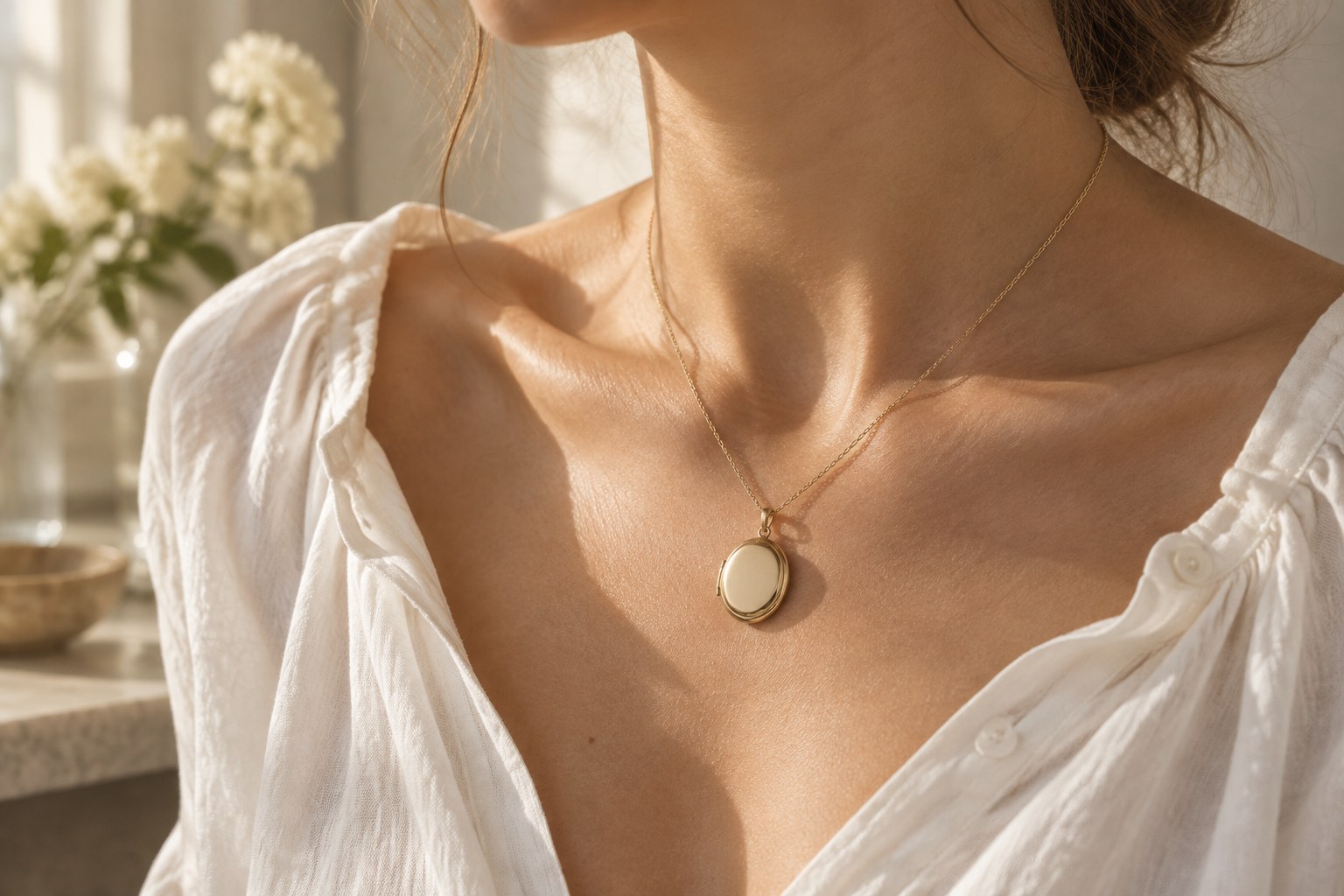
AI-generated illustration; not a Shewah product or a scale measurement.
SHEWAH Editorial Concept Illustration (Non-Catalogue)
Sources
The Maison Shewah Atelier Standard
Every creation referenced across our journal essays is made individually to order using solid 18K gold and independently certified diamonds (IGI & GIA). We uphold complete material transparency and zero synthetic plating.
Research & Gemological References
- [1]Locket — Wikipedia (Verified: 2026-10-23)
- [2]Love and Mourning: What's Inside of a Locket? — Wenham Museum (Verified: 2026-10-23)


