What Is a Finger Ring? The Simple Term, Explained
“The precise term for the world's oldest accessory: what a finger ring is, where it comes from, and the families every ring belongs to.”

AI-generated illustration; not a Shewah product or a scale measurement.
SHEWAH Editorial Concept Illustration (Non-Catalogue)
A finger ring is exactly what it sounds like: a ring made to be worn on a finger. The term exists because not every ring is a finger ring. Curtain rings, key rings, napkin rings and O-rings are all rings, but only the ones sized and shaped for a human finger earn the name. In archaeology, museum catalogues and the jewellery trade, "finger ring" is the precise, unambiguous label for the object most of us simply call a ring.
Here is what the term covers, where the object comes from, and why the oldest piece of jewellery in daily use is still going strong.
The formal definition
Britain's Portable Antiquities Scheme, which records archaeological finds across England and Wales, defines a finger ring as a circular object worn on the finger, usually as an ornament. It can be a complete circle or penannular, meaning a ring with open ends, and it can be a plain hoop or carry a bezel, the flat or raised top that holds a seal or a stone.
The same scheme names the parts every jeweller still uses today: the hoop (the band that circles the finger), the bezel (the top face), the shoulders (the sides rising towards the bezel) and the setting (whatever holds a stone in place). If you have ever described a ring to a jeweller, you have used this vocabulary without knowing it was formalised over centuries of finds.
One of humanity's oldest accessories
Finger rings are among the oldest personal ornaments archaeologists know. Ancient Egyptian examples survive in faience, bone and gold, often carved with protective symbols. The Romans made rings ubiquitous: iron and gold bands marked status, signet rings sealed documents, and betrothal rings announced engagements. Roman craftspeople even made keys shaped like finger rings, so the wearer carried a working key on one finger.
Because plain ring designs change slowly, archaeologists note that an undecorated hoop can be genuinely hard to date. A simple gold band found in the ground could be Roman, medieval or Victorian. The finger ring's basic form has been settled for so long that it barely needed to evolve.
The main families of finger rings
Almost every ring sold today belongs to one of a few long-established families:
- Bands. Plain hoops, from slim 2 mm wedding bands to broad cigar-band styles.
- Signet rings. A bezel engraved with a crest, initials or symbol, historically used to stamp wax seals.
- Stone-set rings. A single centre stone or a cluster, held by prongs, a bezel rim or other settings, including engagement and cocktail rings.
- Eternity rings. A continuous line of stones around the hoop, given to mark anniversaries and milestones.
- Meaning-led rings. Promise rings, purity rings, Claddagh rings and mood rings, where the symbolism is the point.
Each family has its own conventions, and our guides to signet rings, eternity rings and cluster rings go deeper on each.
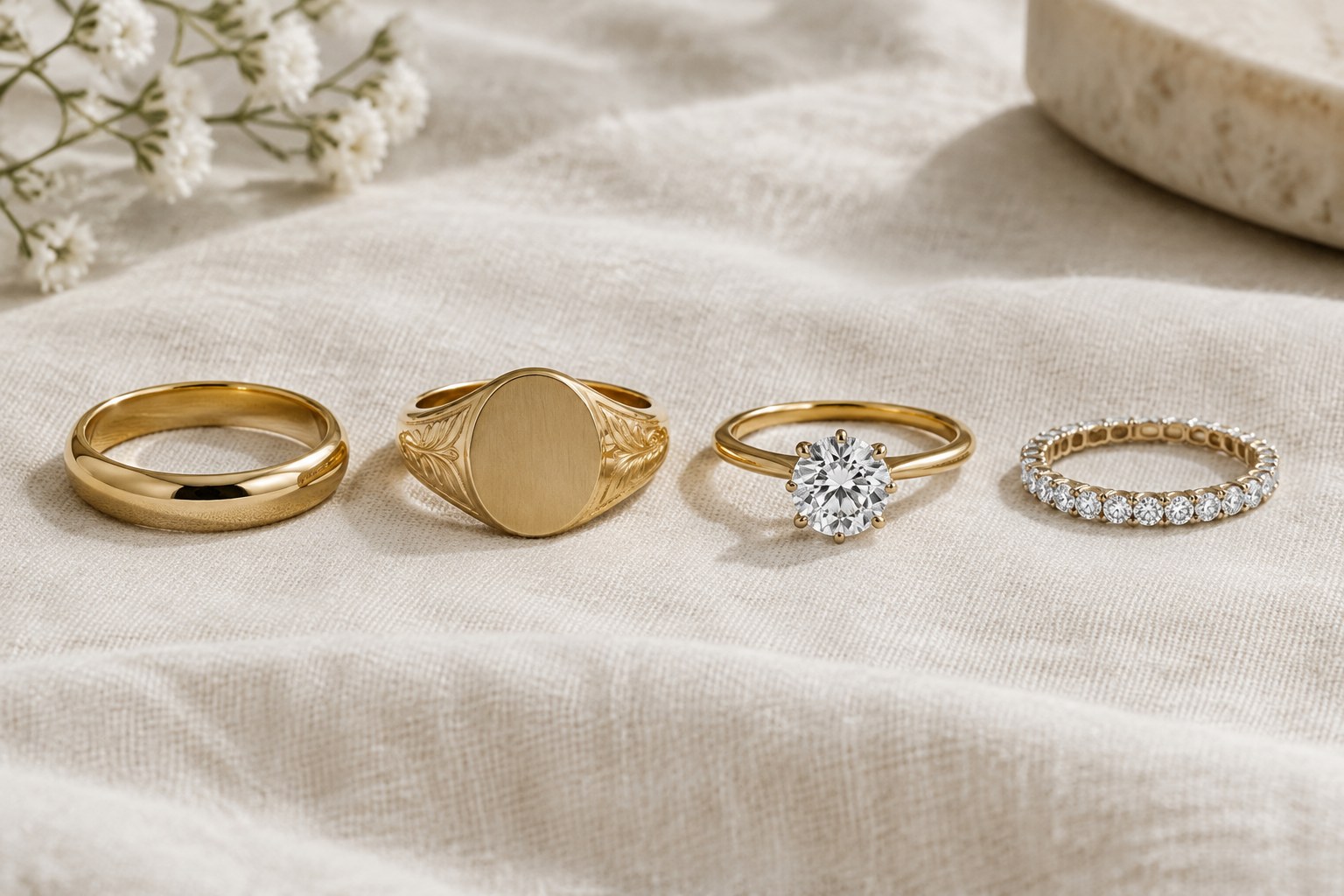
AI-generated illustration; not a Shewah product or a scale measurement.
SHEWAH Editorial Concept Illustration (Non-Catalogue)
Not every ring goes on a finger
The "finger" part of the name does real work. Thumb rings are still finger rings in the strict sense, since the thumb counts as a digit, but archaeologists usually treat archers' thumb rings as their own class because of their distinct shape and function. Toe rings, by contrast, are a separate category entirely: sized for toes, often open-backed, and worn mostly in South Asian traditions and in casual summer styles elsewhere.
Choosing a finger ring that fits your life
Because a finger ring lives on the most-used part of your body, fit and durability matter more than in any other jewellery. Get the exact finger measured, think about your work and hobbies, and match the metal to your habits: platinum and 18K gold for softness and prestige, 14K gold for a balance of colour and toughness, harder metals like tungsten for rough daily wear.
Create your finger ring with Shewah
Whether you want a plain band, a signet, or a stone-set ring built around a lab-grown diamond, we will design it made-to-order and quote before work begins.
Explore Shewah's jewellery or contact us on WhatsApp at +91 96622 66360 to start your ring.
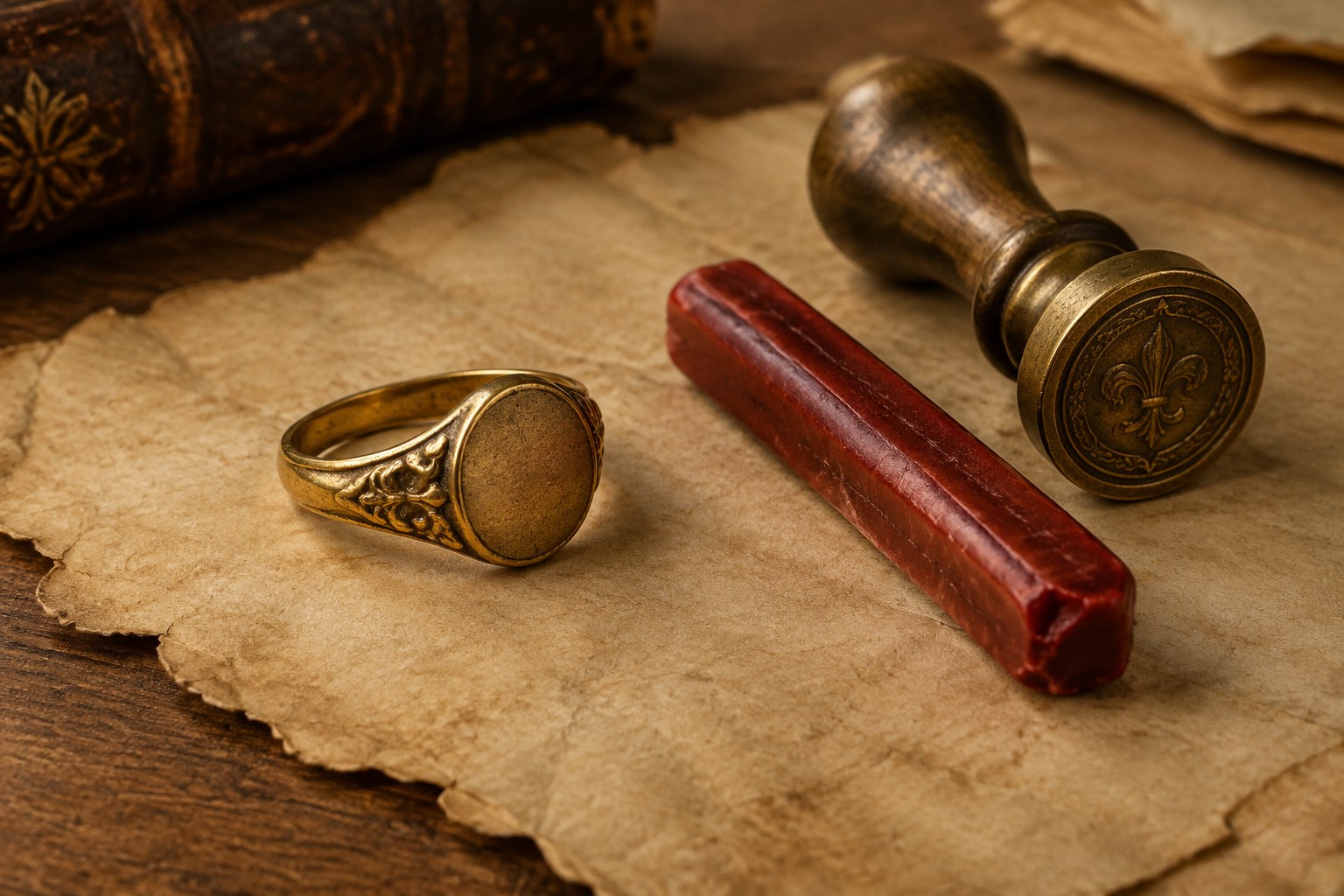
AI-generated illustration; not a Shewah product or a scale measurement.
SHEWAH Editorial Concept Illustration (Non-Catalogue)
Sources
- Finger-rings - Portable Antiquities Scheme
- Finger ring definition - Vocabulary.com
The Maison Shewah Atelier Standard
Every creation referenced across our journal essays is made individually to order using solid 18K gold and independently certified diamonds (IGI & GIA). We uphold complete material transparency and zero synthetic plating.
Research & Gemological References
- [1]Finger-rings — Portable Antiquities Scheme (Verified: 2026-10-15)
- [2]Finger ring definition — Vocabulary.com (Verified: 2026-10-15)


