Turquoise Meaning and Properties: December's Birthstone
“The only gem that is also a colour, treasured since ancient Egypt. What December's traditional birthstone means and how to wear it well.”
AI-generated illustration; not a Shewah product or a scale measurement.
SHEWAH Editorial Concept Illustration (Non-Catalogue)
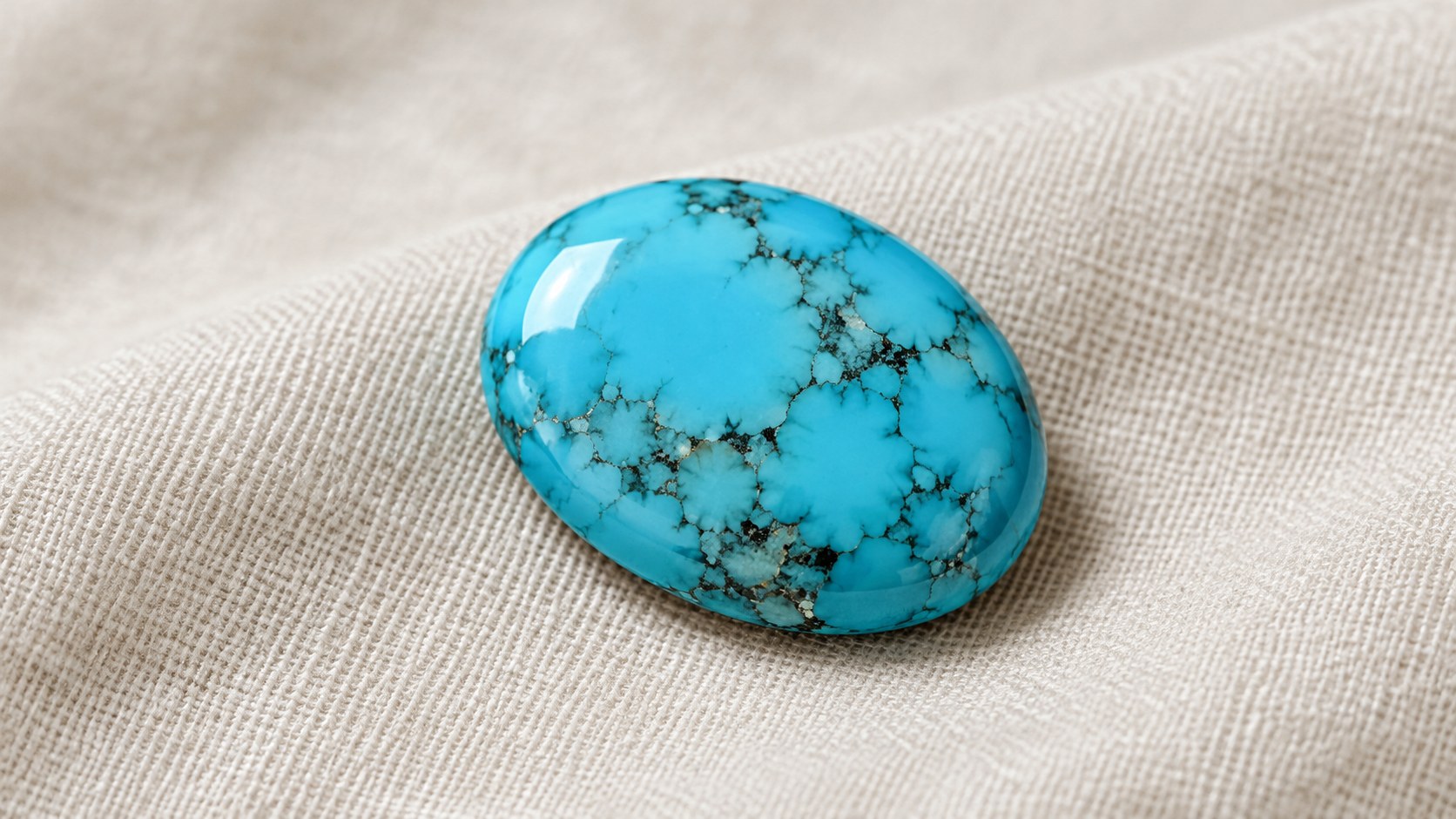
Turquoise is the only gemstone that is also a colour. Azure sky, robin's egg blue: the vivid shades of the stone define the colour named after it, and few gems have been loved for longer or by more cultures.
Born of dry ground and copper
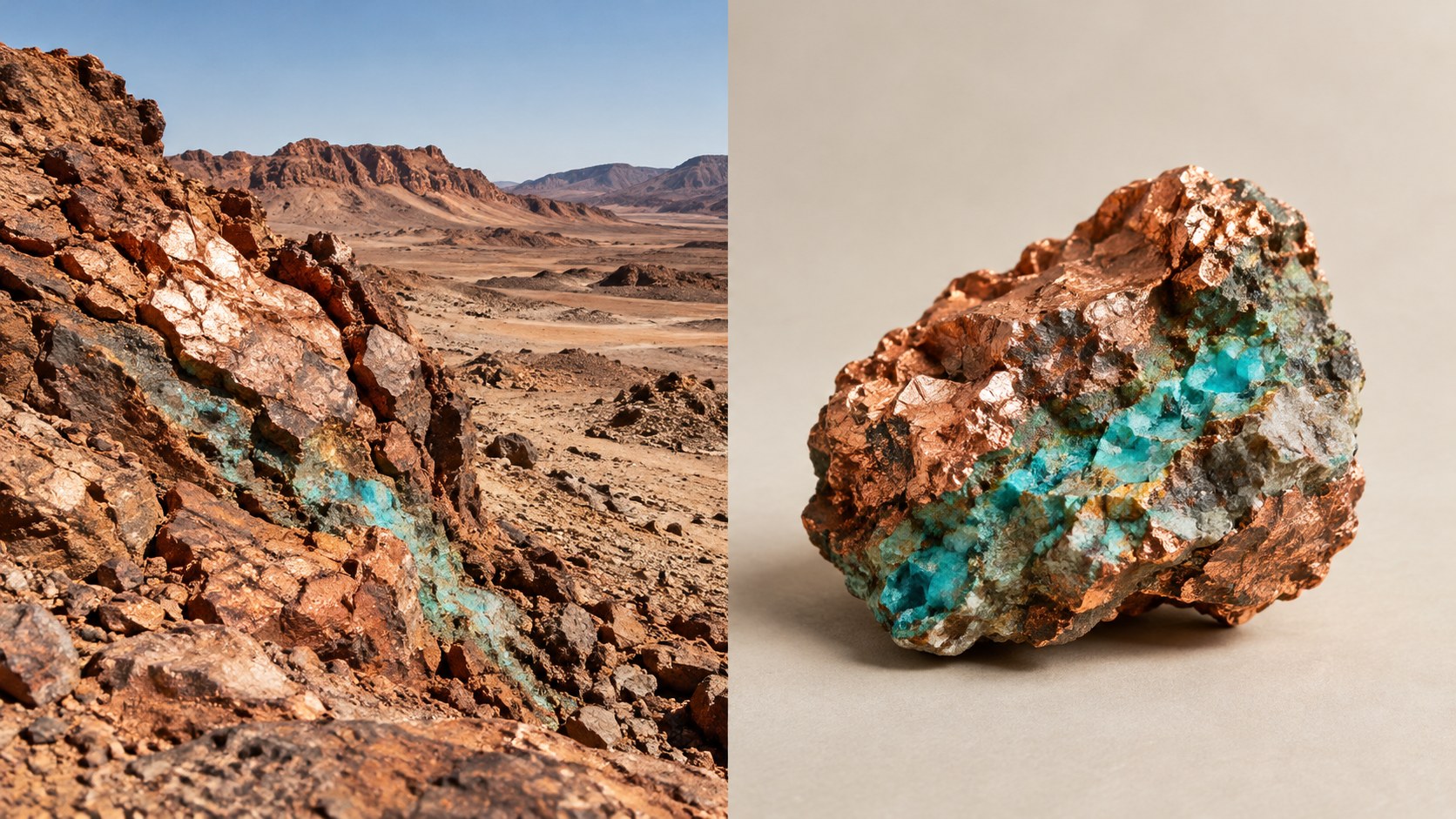
Turquoise forms in only a few places on earth, dry and barren regions where acidic, copper-rich groundwater seeps downward and reacts with minerals containing phosphorus and aluminium. The result is a porous, semitranslucent to opaque hydrated copper aluminium phosphate. That origin story explains both its beauty and its character: the copper supplies the blue, and the porosity is why turquoise asks for gentler care than harder gems.
Older than almost everything
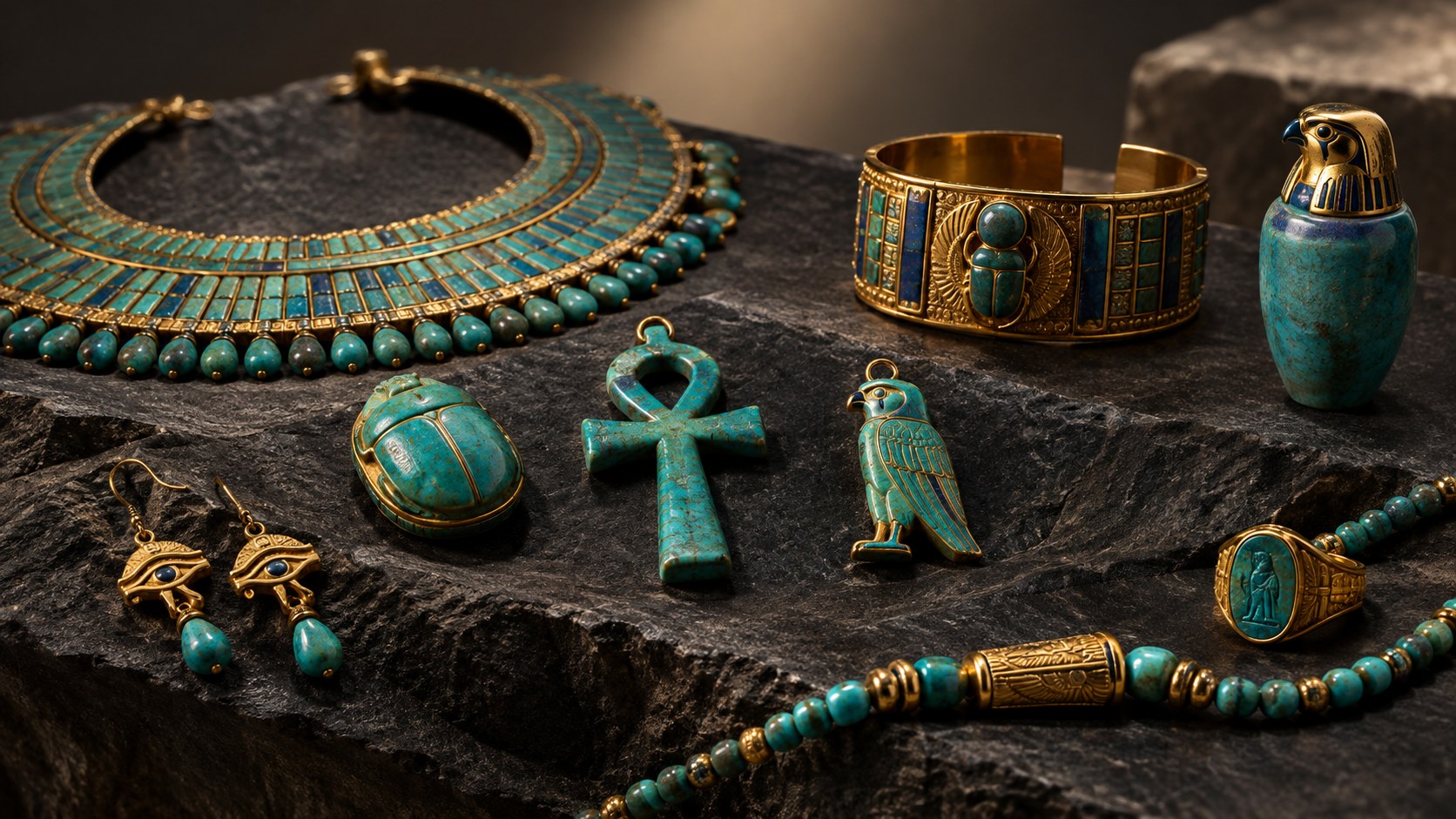
Turquoise buried in ancient Egyptian tombs ranks among the world's oldest jewellery, and the Egyptians called it mefkat, a word that also meant joy and delight. It is the traditional birthstone for December and the gem of the 11th wedding anniversary.
What to look for
The classic standard is an even, intense sky blue, though plenty of beautiful material carries matrix, the dark webbing of host rock that gives each stone a fingerprint. Choose the blue that speaks to you first, then decide whether you want it clean or webbed. On the Mohs scale turquoise runs 5 to 6, so it is a stone for pendants, earrings and carefully worn rings rather than daily knockabout use. Keep it away from perfumes, lotions and household chemicals, because that porosity means the stone can absorb what it touches and discolour over time.
AI-generated illustration; not a Shewah product or a scale measurement.
SHEWAH Editorial Concept Illustration (Non-Catalogue)
Wearing a softer stone
Turquoise has survived in jewellery for thousands of years, so its softness is a prompt for care, not a reason to avoid it. Choose earrings and pendants for worry-free daily wear, and if you want a ring, a low bezel or a protective halo of harder stones makes a real difference. Put turquoise on after perfume and moisturiser, take it off before swimming or cleaning, and store it alone in a soft pouch. Treated that way, the stone that adorned ancient tombs will easily outlast its next owner and the one after that.
Turquoise through history
Few gems carry this much cultural weight. Turquoise buried in ancient Egyptian tombs ranks among the oldest jewellery anywhere, and the stones were valued enough to travel with their owners into the afterlife. The name mefkat doubled as the word for joy and delight, which says everything about how the stone was received. That long affection makes sense: before diamonds were cut and sapphires were traded, turquoise was already the blue people reached for.
Choosing turquoise
Decide first between clean and webbed. Clean, even sky blue is the classic jewellery standard and the safer gift. Matrix, the dark host-rock veining, gives each stone a one-of-a-kind pattern that many collectors prefer. Either way, favour stones with a good polish and a colour that reads vivid rather than chalky, and buy from sellers who say plainly whether the material is natural, stabilised or reconstituted, because all three exist and the price difference is real. A good seller answers the treatment question before you ask it.
A blue with a heartbeat with Shewah
If turquoise's sky-blue is the colour you keep coming back to, tell us the piece you are imagining and we will make it to order, quoted in full before work begins.
Explore Shewah's jewellery or contact us on WhatsApp at +91 96622 66360 to talk stones.
AI-generated illustration; not a Shewah product or a scale measurement.
SHEWAH Editorial Concept Illustration (Non-Catalogue)
Sources
- Turquoise Gemstone - GIA
The Maison Shewah Atelier Standard
Every creation referenced across our journal essays is made individually to order using solid 18K gold and independently certified diamonds (IGI & GIA). We uphold complete material transparency and zero synthetic plating.
Research & Gemological References
- [1]Turquoise Gemstone — GIA (Verified: 2026-10-19)


