Tanzanite Meaning and Properties: December's Birthstone
“Found only near Mount Kilimanjaro and discovered in 1967, tanzanite shifts between blue and violet. What December's rarest birthstone means and how to buy it.”
AI-generated illustration; not a Shewah product or a scale measurement.
SHEWAH Editorial Concept Illustration (Non-Catalogue)
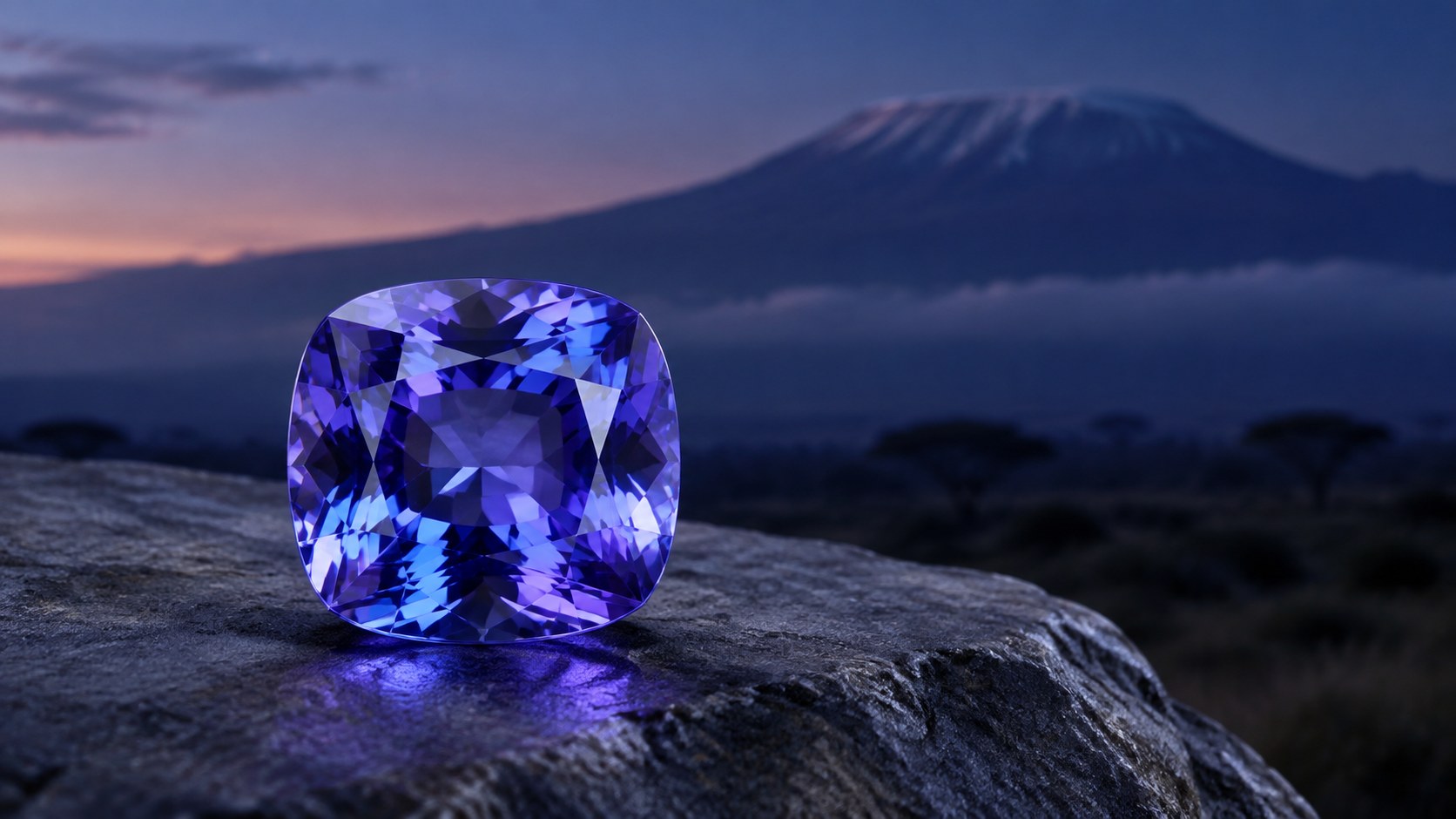
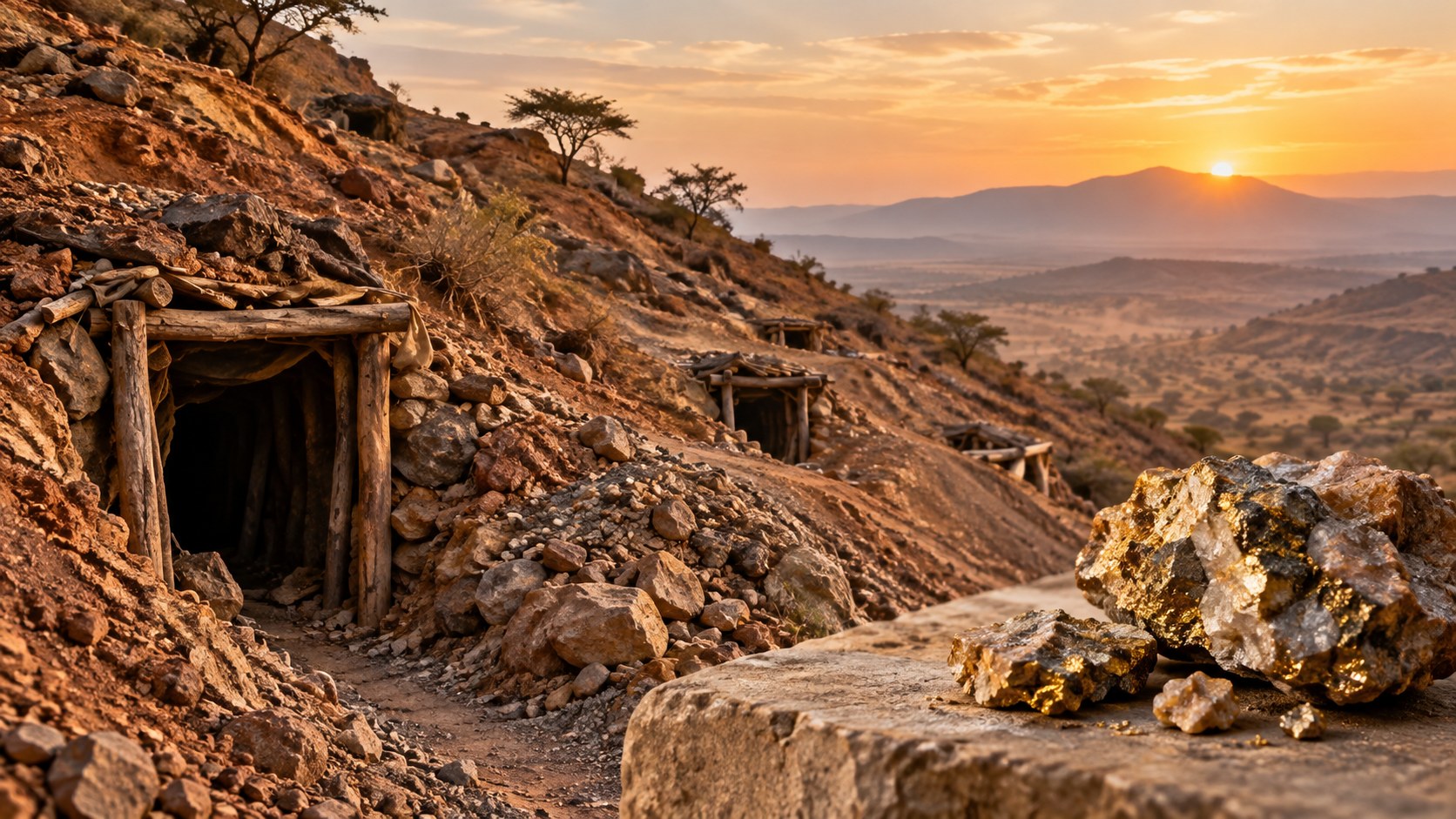
Some gems are rare because they are hard to find. Tanzanite is rare because there is exactly one place to look: a few square kilometres of hillside near Mount Kilimanjaro in northern Tanzania. Everything the world knows as tanzanite comes out of that single spot, which makes it a thousand times more geographically restricted than diamond.
A very modern gem
For a stone with an ancient look, tanzanite is strikingly new. It was first unearthed in 1967, and Tiffany and Co named this blue-violet variety of the mineral zoisite in honour of Tanzania, its only source, in the Merelani hills. In a single generation it went from unknown to one of the most wanted coloured stones in the world.
Three colours in one stone
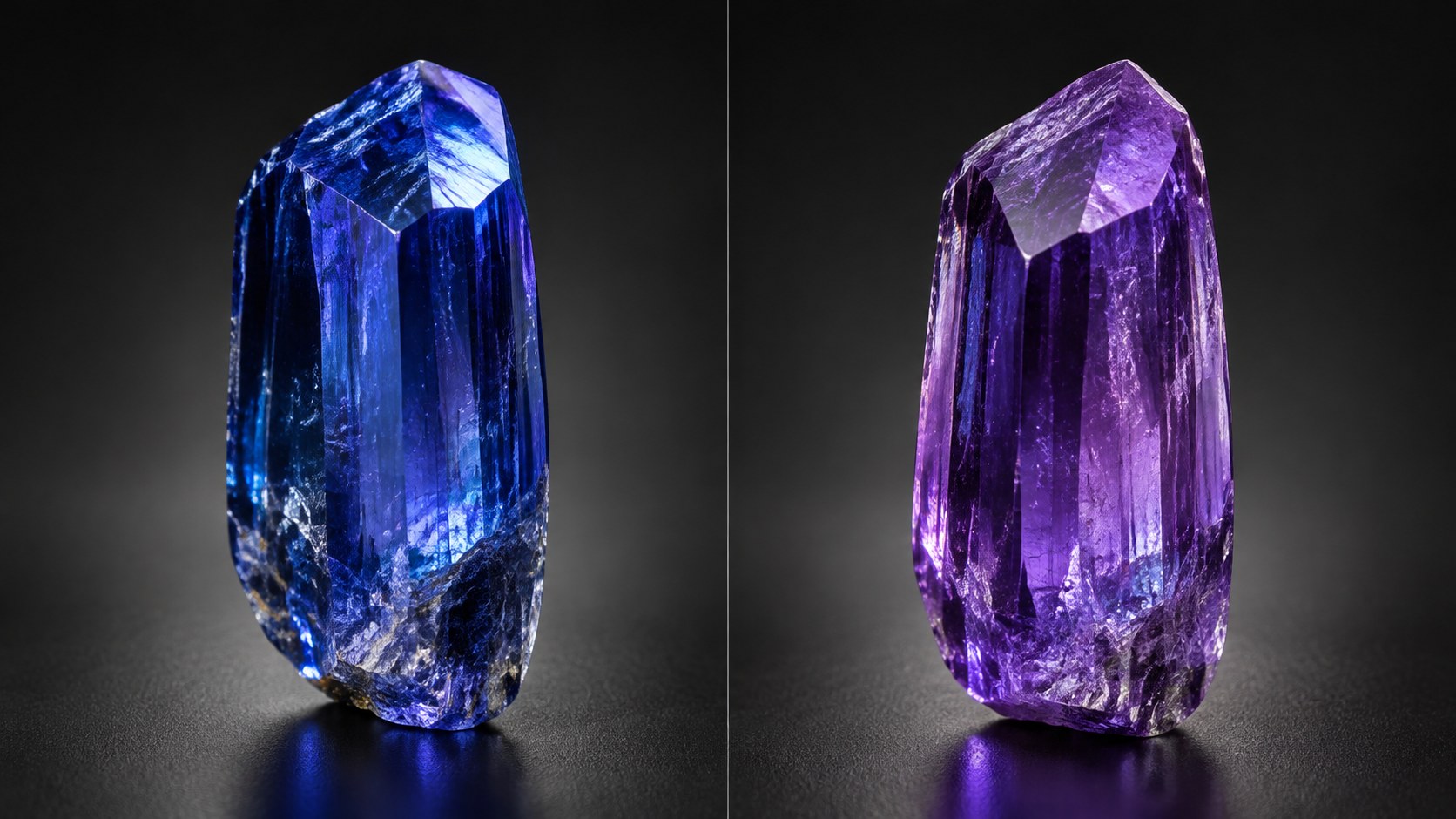
Tanzanite is strongly pleochroic: the same crystal shows different colours from different directions, poised between lush blue, vibrant violet and rich purple. This is where the cutter's art decides everything. Orienting the rough one way yields a violetish blue, another way a bluish violet, and the choice is always balanced against how much weight the finished gem keeps from the rough. When you compare two tanzanites face-up, you are comparing two sets of decisions.
What to look for
Colour first: the most prized stones are a deep, saturated violet-blue, and larger stones tend to show richer colour. Clarity matters in the usual way, though tanzanite is generally kind to the eye. On hardness, tanzanite runs 6 to 7 on the Mohs scale, softer than sapphire, so it belongs in earrings, pendants and rings worn with a little consideration rather than knocked about daily.
AI-generated illustration; not a Shewah product or a scale measurement.
SHEWAH Editorial Concept Illustration (Non-Catalogue)
A December stone with presence
Tanzanite is one of December's birthstones, alongside zircon, turquoise and blue topaz, and the gem of the 24th wedding anniversary. Its single-source story also gives it an unusual position in the gem world: when a stone comes from one hillside on Earth, every piece carries a little of that scarcity with it.
Buying with your eyes
Judge tanzanite in the light you actually live in. Look at the stone face-up in daylight and under warm indoor bulbs; the balance of blue to violet shifts, and the right balance is personal taste, not a rule. Check the colour across the whole face for evenness, and remember that bigger stones tend to show the deepest saturation, so tanzanite rewards going up a size when the budget allows. A protective setting is a sensible request for any tanzanite ring.
Why the single source matters
Most fine gems come from many countries, which keeps supply flexible and prices steady. Tanzanite's entire world supply comes from one small mining area, so its long-term story is written into every stone: the material in circulation today is all there will be unless that hillside gives up more. Owners often find that part of the appeal, the knowledge that the gem on their hand comes from one specific patch of East Africa and nowhere else.
Caring for tanzanite
At Mohs 6 to 7, tanzanite is a gem that prefers a gentle life. Earrings and pendants are its natural home for everyday wear, while rings do best as occasion pieces or in settings that shield the edges. Clean it with warm water, mild soap and a soft cloth, skip ultrasonic cleaners and sudden temperature shocks, and store it apart from harder stones like sapphire and diamond that can scratch it.
Your violet-blue with Shewah
If tanzanite's shifting blue-violet is your colour, tell us the piece you are picturing and we will make it to order, quoted in full before work begins.
Explore Shewah's jewellery or contact us on WhatsApp at +91 96622 66360 to talk stones.
AI-generated illustration; not a Shewah product or a scale measurement.
SHEWAH Editorial Concept Illustration (Non-Catalogue)
Sources
- Tanzanite Gemstone - GIA
The Maison Shewah Atelier Standard
Every creation referenced across our journal essays is made individually to order using solid 18K gold and independently certified diamonds (IGI & GIA). We uphold complete material transparency and zero synthetic plating.
Research & Gemological References
- [1]Tanzanite Gemstone — GIA (Verified: 2026-10-19)


