Sterling Silver vs White Gold: Which Should You Choose?
“Sterling silver and white gold look alike but wear very differently. Compare composition, durability, tarnish, price and hallmarks before you buy.”
AI-generated illustration; not a Shewah product or a scale measurement.
SHEWAH Editorial Concept Illustration (Non-Catalogue)
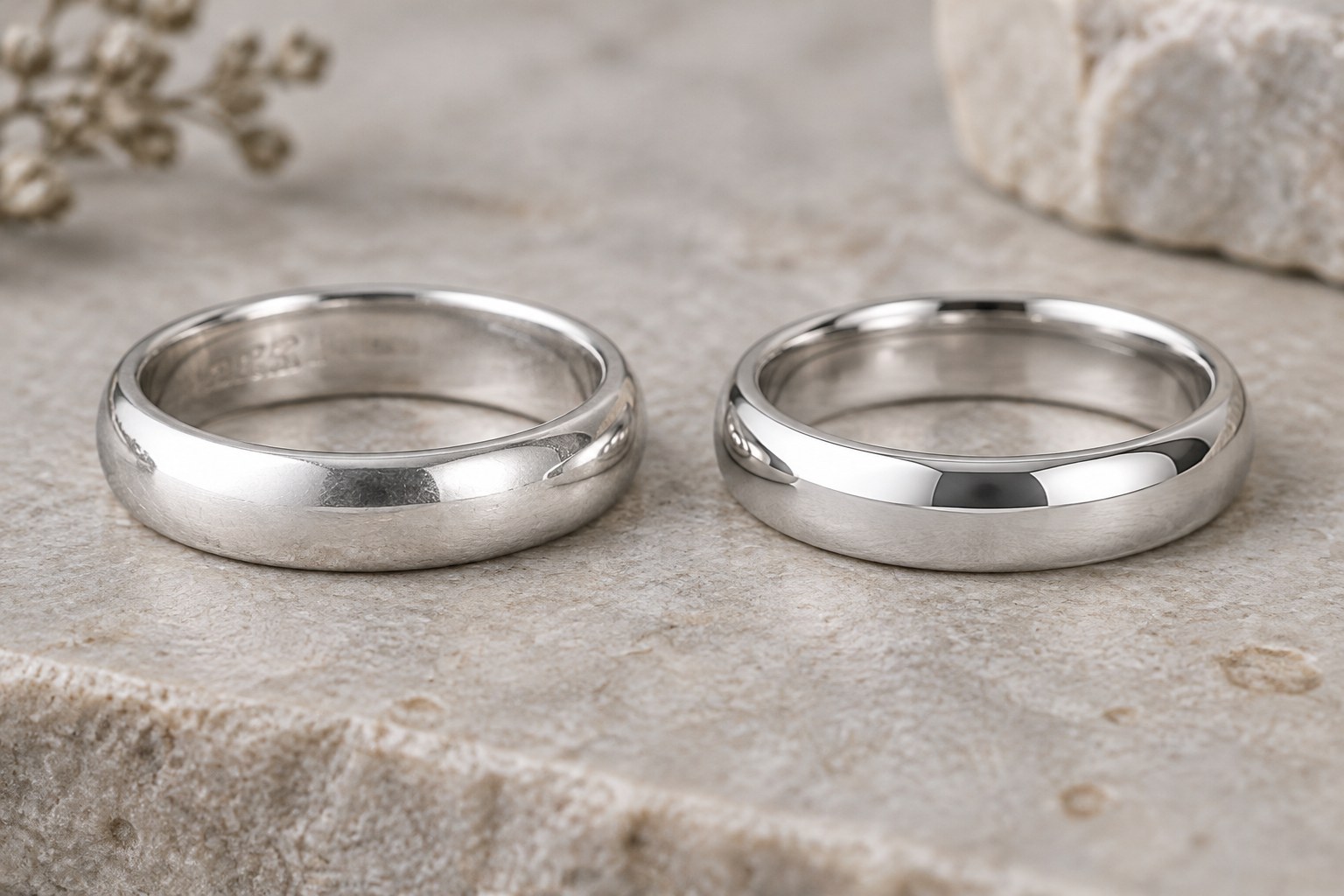
They sit side by side in the cabinet, both cool white metals, and the price gap between them is enormous. Sterling silver and white gold can look nearly identical on day one; five years later they tell very different stories. Here is how the two compare on what they are, how they wear, and which one deserves your money.
What each metal actually is
Sterling silver is an alloy of 92.5 per cent pure silver with 7.5 per cent other metals, usually copper, added to make a naturally soft metal strong enough for daily wear; the 925 stamp is its passport. White gold is pure gold mixed with white metals such as nickel or palladium to bleach out the yellow, most commonly in 14k or 18k, and usually coated with rhodium for a bright, hard, mirror-white finish.
Looks: close at first, different over time
Fresh from the box, rhodium-plated white gold and polished silver both shine bright white. Silver has a cooler, crisper tone with faint grey undertones, and it develops a patina with age that many wearers love. Unplated white gold always carries a faint warmth from its gold content; the rhodium is what makes it icy. That rhodium wears off over years and needs occasional re-plating to stay brilliant white.
Durability and upkeep
White gold, helped by its alloy and rhodium armour, resists scratches better and shrugs off tarnish. Silver is softer, picks up scratches and dents more readily, and tarnishes with air and moisture, so it asks for regular polishing and careful storage. Silver can also be rhodium-plated to gain a white-gold look at a lower cost, though the plating wears here too. In practical terms: white gold is the low-maintenance metal, silver the rewarding but higher-care one.
AI-generated illustration; not a Shewah product or a scale measurement.
SHEWAH Editorial Concept Illustration (Non-Catalogue)
Price: the real divide
Silver is abundant and simple to work, so sterling pieces cost a fraction of white gold; it is the accessible route to precious metal. White gold carries the price of its gold content plus more complex processing, and the cost rises with karat. As a rough orientation in US dollars, a simple sterling band might run tens of dollars while its 14k white gold counterpart runs into the hundreds.
Skin sensitivity
If your skin is reactive, the alloy metals matter more than the headline metal. Sterling silver's copper can bother a small number of wearers, while traditional white gold often contains nickel, a common allergen; palladium-based white gold and rhodium plating avoid the issue for most people. Neither metal is automatically hypoallergenic, so sensitive skin should ask what is in the alloy before buying.
Hallmarks: check the stamp
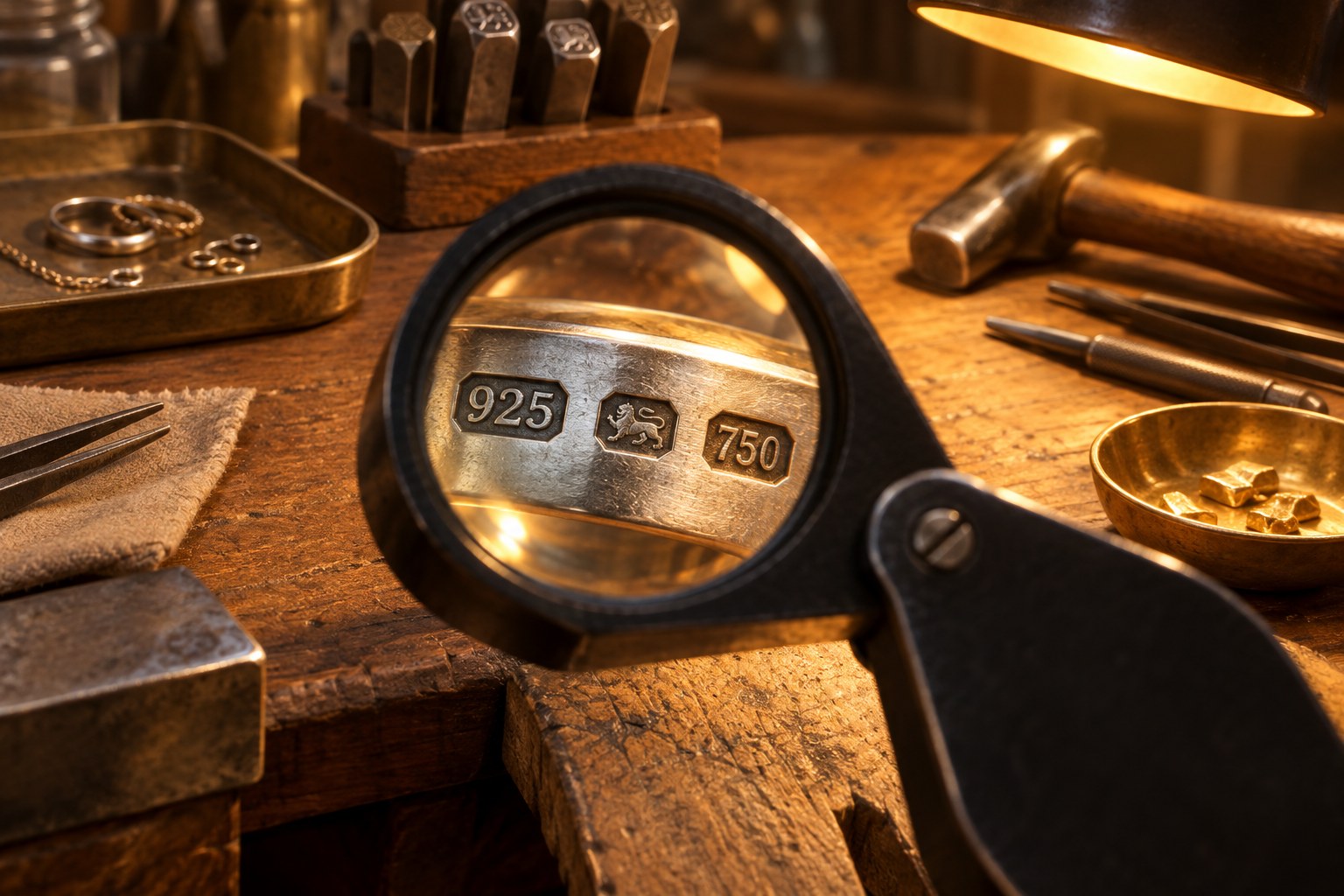
White gold is stamped 14k, 18k or 750 for its gold content. Sterling carries 925 or the word sterling, and 999 marks fine silver, purer but too soft for most rings and bracelets. The stamp inside the band is the quickest way to know which metal you are actually holding.
Which should you choose?
Choose sterling silver for fashion pieces, larger statement designs and accessible everyday wear you will happily polish. Choose white gold for engagement rings, wedding bands and anything meant for decades of daily wear: the durability and tarnish resistance pay for themselves many times over.
White gold, made to last, with Shewah
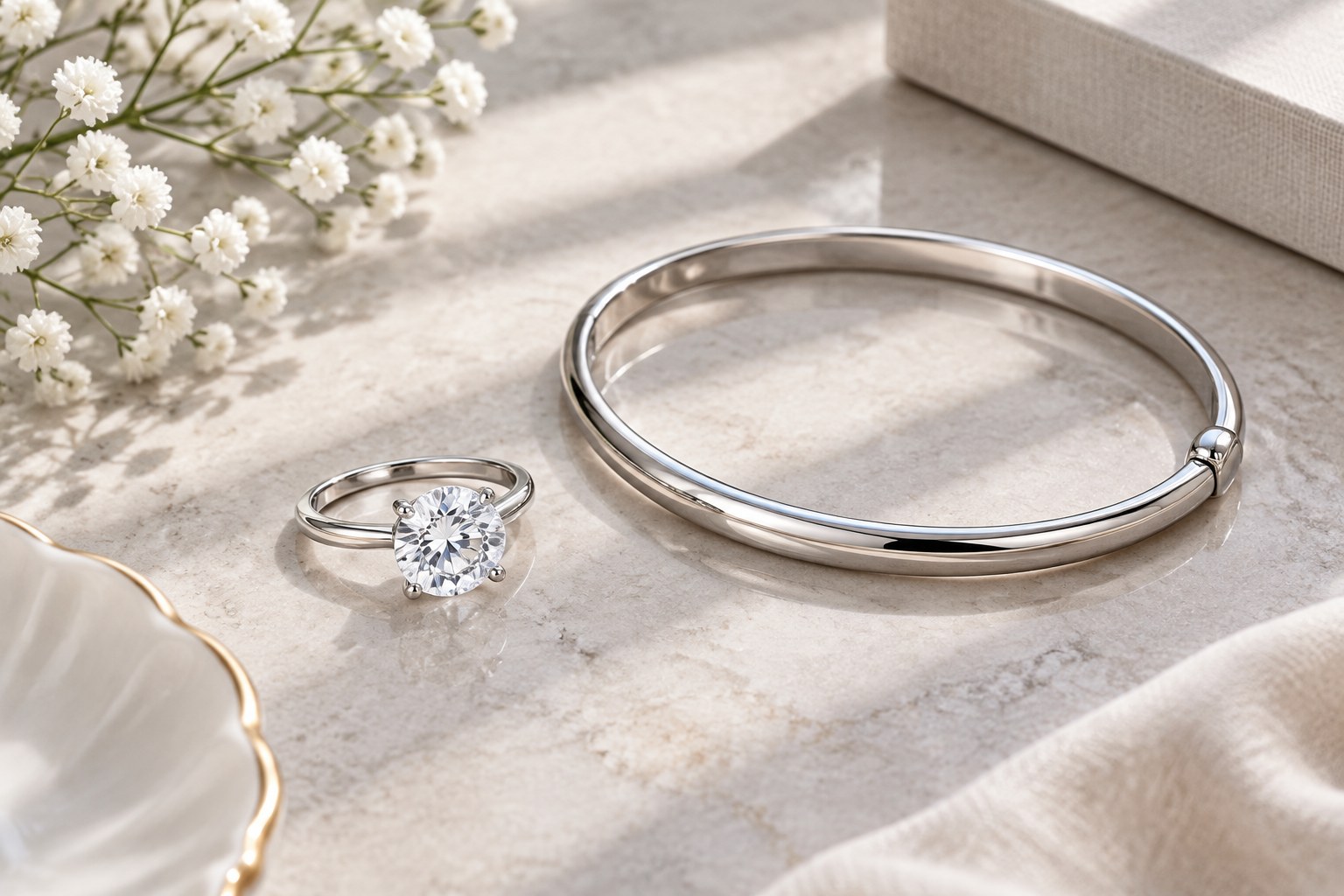
Shewah crafts rings in 14k and 18k white gold with certified lab-grown diamonds, made to order in Surat and shipped to the US, UK and Australia. Explore Shewah's jewellery or message us on WhatsApp at +91 96622 66360.
AI-generated illustration; not a Shewah product or a scale measurement.
SHEWAH Editorial Concept Illustration (Non-Catalogue)
Sources
The Maison Shewah Atelier Standard
Every creation referenced across our journal essays is made individually to order using solid 18K gold and independently certified diamonds (IGI & GIA). We uphold complete material transparency and zero synthetic plating.
Research & Gemological References
- [1]White Gold vs. Silver: What's the Difference? — GIA (Verified: 2026-10-21)
- [2]Sterling Silver vs White Gold: The Key Differences — The Knot (Verified: 2026-10-21)


