High vs Low Settings: How Setting Height Changes Daily Wear
“The least discussed choice in a ring, and one of the most felt: what high and low settings trade, and how to pick yours.”
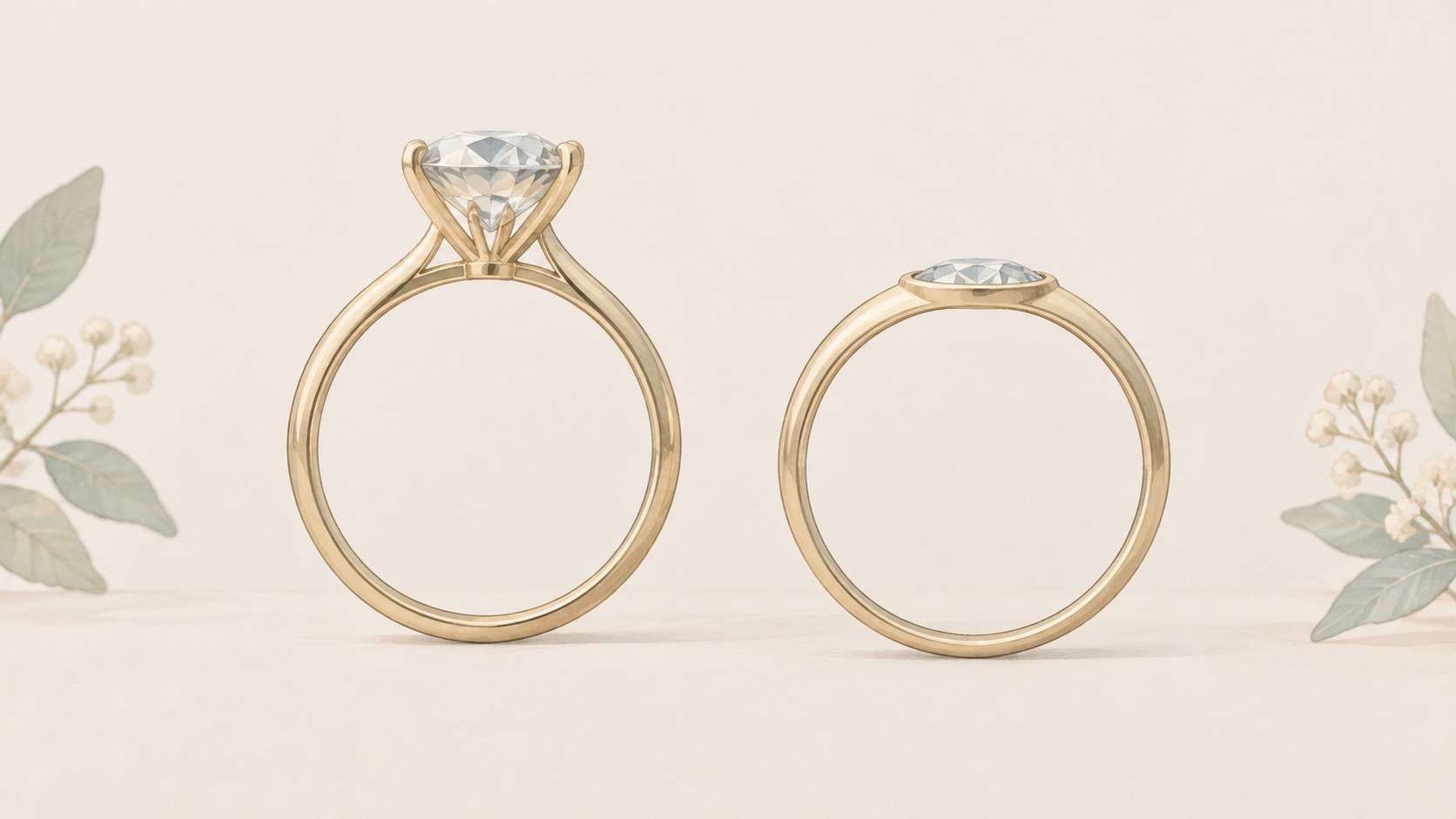
AI-generated illustration; not a Shewah product or a scale measurement.
SHEWAH Editorial Concept Illustration (Non-Catalogue)
Two rings can hold the same stone in the same metal and still live completely different lives, simply because one sits high and the other sits low. Setting height is one of the least discussed choices in a ring purchase, and one of the most felt. Here is how to think about it before you commit.
What setting height means
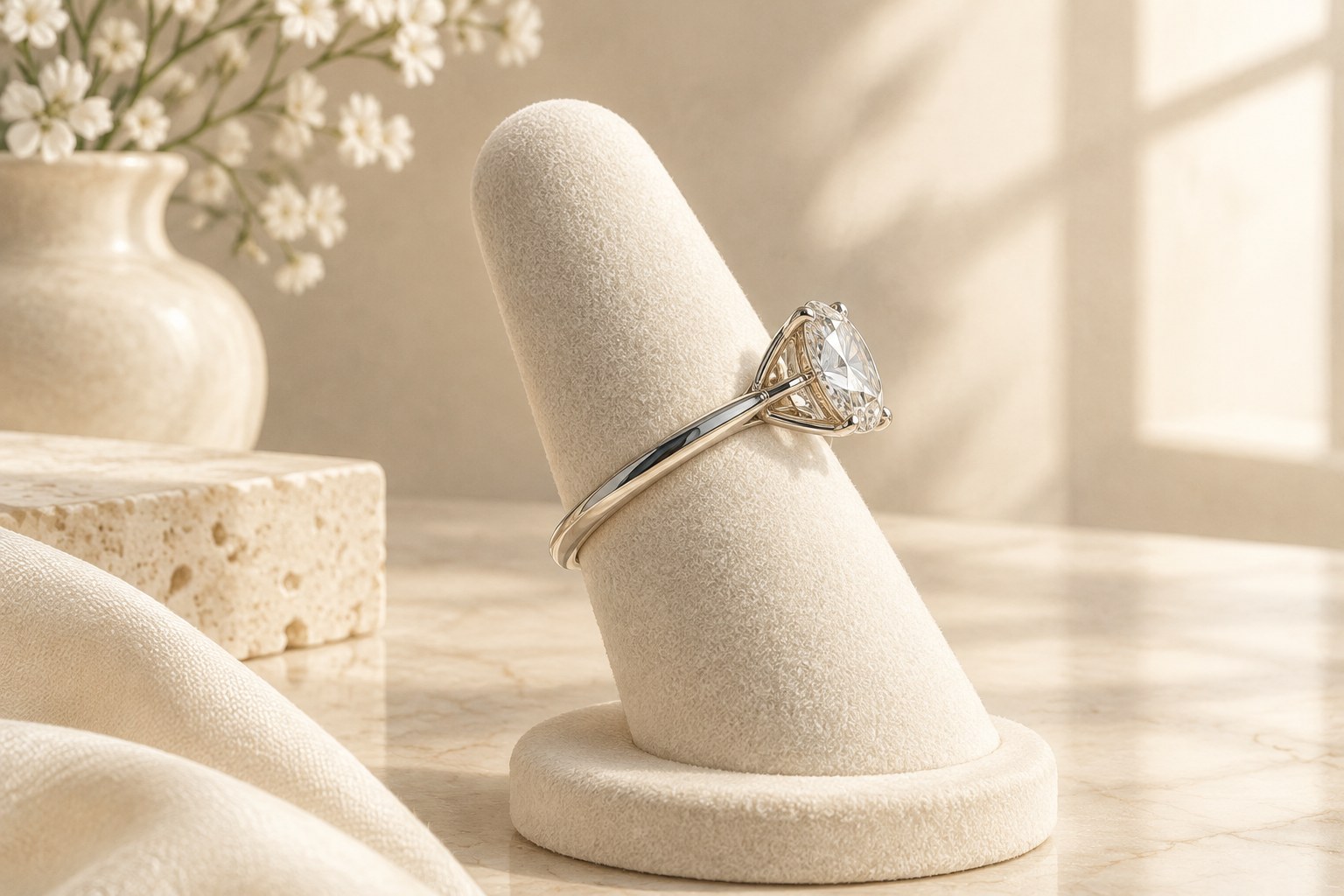
Setting height is how far the stone and its head rise above the band. Look at a ring from the side and you will see it immediately: a high setting lifts the stone on a visible stem of metal, while a low setting tucks the stone down close to the finger. Neither is better in principle. They trade different things.
The case for a higher setting
Height gives a stone presence. More of it is visible from across a room, more light can enter from the sides, and the ring reads as classically bridal. A taller head also usually leaves room for a straight wedding band to slide underneath and sit flush against the engagement ring, which matters if you plan to wear a pair without a gap.
The case for a lower setting
A low profile is the practical choice. It knocks against desks and doorframes less, snags less on knitwear, hair and pockets, and slips under gloves more easily. If your days involve typing, gym sessions, gardening, small children or frequent hand-washing, a low setting quietly removes a hundred small irritations. Many people who swap from high to low say they stopped thinking about their ring, which is exactly the point.

AI-generated illustration; not a Shewah product or a scale measurement.
SHEWAH Editorial Concept Illustration (Non-Catalogue)
The honest trade-offs
A higher setting catches more light and more attention, and catches on more things too. A lower setting protects the stone and your patience, but gives up some presence and can limit which wedding bands sit flush. A mid-height setting splits the difference and suits many hands, which is why trying profiles on in person beats judging from photographs. Ring size plays a quiet role too: on a smaller finger a high setting reads taller still, while on a larger hand the same head looks more modest, so judge height against your own hand rather than a product photograph.
A note on stone shape
Shape changes how height feels. Step cuts such as emerald and Asscher tend to sit flatter and read as sleek even in a slightly higher head, while deep fancy shapes can ride higher than you expect. Pointed shapes like pear and marquise add length along the finger more than height above it. When you try rings on, look at the side profile of the exact stone shape you are considering, not just the style name.
What to check and ask
Look at the ring from the side, not just from above. Ask how high the stone sits, whether the head could be changed later (often it cannot without remaking that part), and try the ring with the wedding band you have in mind. Then be honest about your actual week, not your imagined one. The right height is the one that fits your life as it is.
Set for your life, with Shewah
At Shewah, we talk through profile and daily wear before anything is made, so the ring you choose suits the life you actually lead. Explore Shewah's jewellery or message us on WhatsApp at +91 96622 66360 to discuss settings.
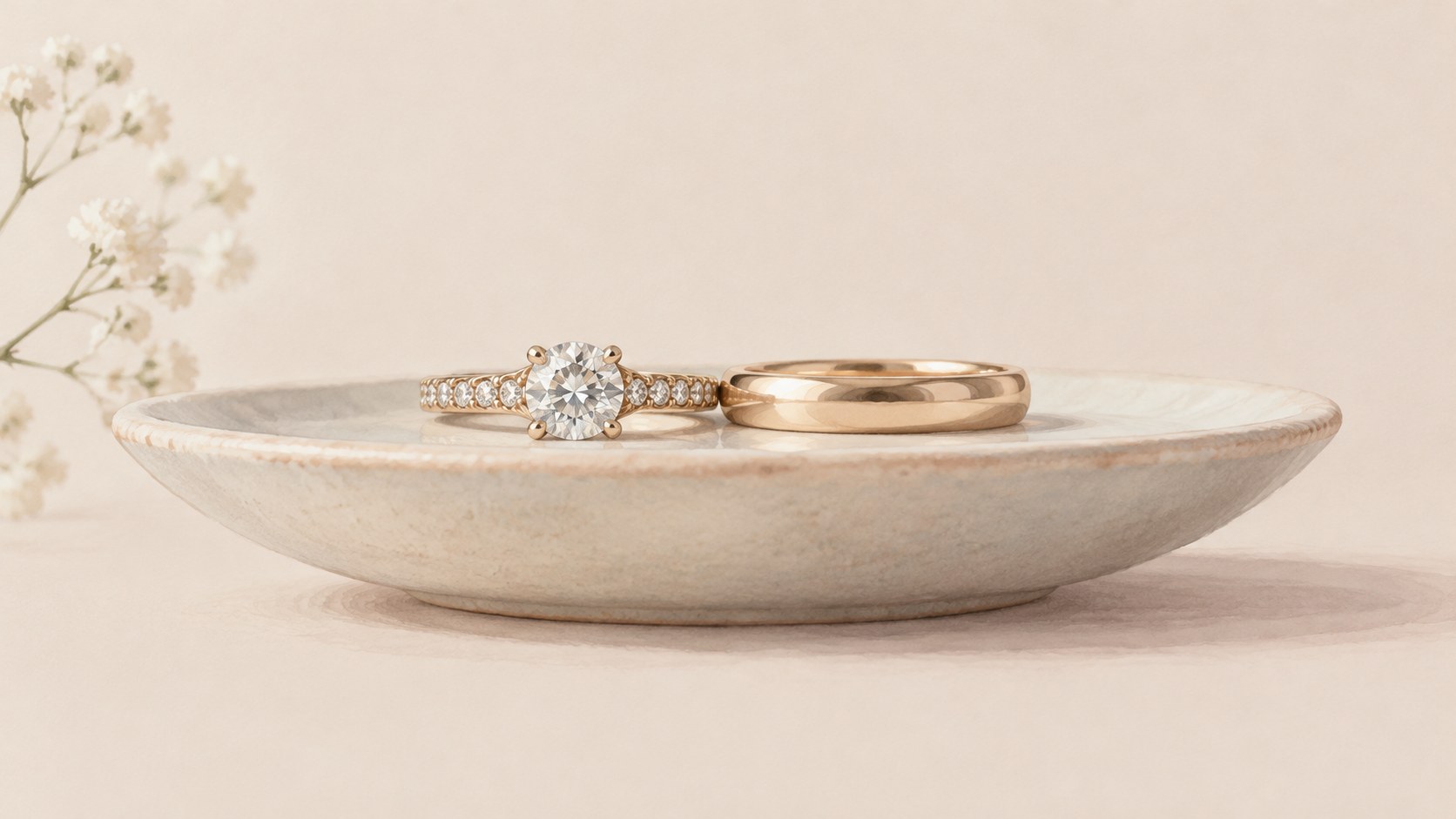
AI-generated illustration; not a Shewah product or a scale measurement.
SHEWAH Editorial Concept Illustration (Non-Catalogue)
Sources
- Engagement ring (Wikipedia) - https://en.wikipedia.org/wiki/Engagement_ring
- Prong setting (Wikipedia) - https://en.wikipedia.org/wiki/Prong_setting
- Ring (jewellery) (Wikipedia) - https://en.wikipedia.org/wiki/Ring_(jewellery)
The Maison Shewah Atelier Standard
Every creation referenced across our journal essays is made individually to order using solid 18K gold and independently certified diamonds (IGI & GIA). We uphold complete material transparency and zero synthetic plating.
Research & Gemological References
- [1]Engagement ring — Wikipedia (Verified: 2026-11-03)
- [2]Prong setting — Wikipedia (Verified: 2026-11-03)
- [3]Ring (jewellery) — Wikipedia (Verified: 2026-11-03)