Pearl Types Explained: How to Choose the Right Pearl
“Freshwater, akoya, Tahitian and South Sea pearls are four different products at four price points. What separates them, and why lustre matters most.”

AI-generated illustration; not a Shewah product or a scale measurement.
SHEWAH Editorial Concept Illustration (Non-Catalogue)
Pearls are having a genuine moment, from classic strands to modern single-pearl pendants, and they make one of the most giftable pieces of jewellery there is. But "pearl" covers four very different types at four very different price points, and the difference between a $150 strand and a $15,000 one is mostly type, size and lustre. Here is how to choose with confidence.
The four types you will meet
Almost every pearl sold today is cultured, grown on farms with human help, and the four main types behave like four different products:
- Freshwater. Grown mainly in China, in lakes and rivers. The most affordable and the most varied: whites, pinks, lavenders, near-round to baroque shapes. A lovely freshwater strand can start around $100 to $300.
- Akoya. The classic white, round, mirror-lustred pearl of traditional strands, grown mainly in Japan. Smaller, typically 6 to 8 mm, with the sharpest shine of the group.
- Tahitian. Naturally dark pearls from French Polynesia: peacock greens, silvers and deep charcoals. Exotic without any dyeing, and priced accordingly.
- South Sea. The giants, grown in Australia, Indonesia and the Philippines: white and golden pearls of 10 mm and well beyond, with a soft, satiny glow. These anchor the top of the market, where fine strands reach five figures.
Lustre: the one factor that matters most
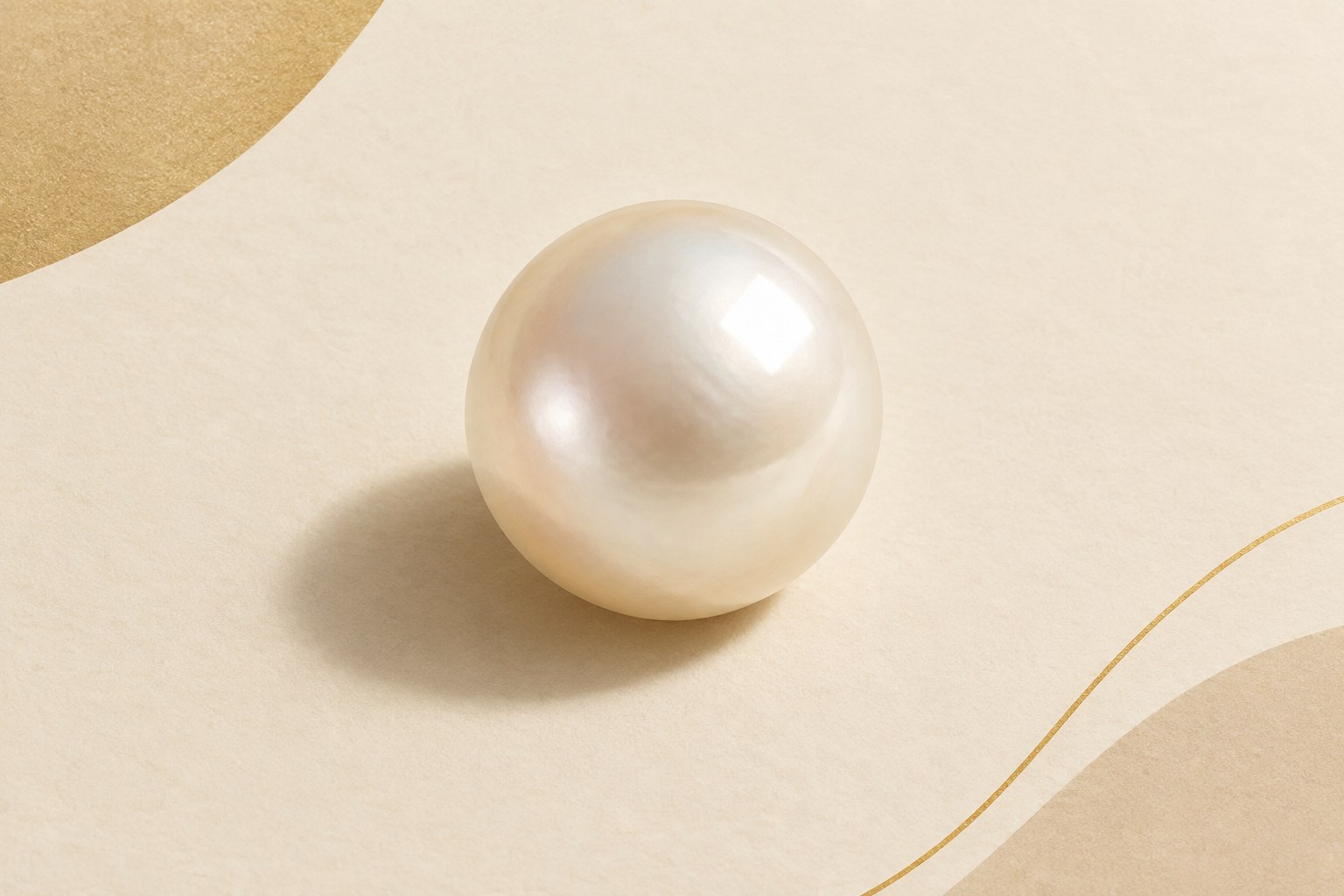
GIA grades pearls on seven value factors: size, shape, colour, lustre, surface quality, nacre quality and, for pieces with multiple pearls, matching. Of all of them, lustre carries the beauty. It is the sharpness of the reflection on the pearl's surface: high-lustre pearls throw back bright, crisp reflections, while low-lustre pearls look chalky.
The quick test: hold the pearl up and look for your own reflection. The sharper you look back at yourself, the better the pearl. Lustre is tied to nacre, the pearly coating itself. Thin nacre shows the nucleus underneath and will not last; decent nacre is what you are paying for in akoya and South Sea pearls.
Size, shape and surface
Bigger means rarer and dearer, and each type has its natural range. Perfectly round is the classic ideal and the priciest shape; baroque pearls, the free-form ones, are fashionable, full of character and easier on the wallet. For surface, small marks are normal; judge whether they are visible at conversational distance rather than under a lamp.
AI-generated illustration; not a Shewah product or a scale measurement.
SHEWAH Editorial Concept Illustration (Non-Catalogue)
Why freshwater costs so much less
It is mostly arithmetic: freshwater mussels can grow many pearls at once, while saltwater oysters typically grow one. More pearls per shell means more supply, and supply sets the floor. That makes freshwater the smart buy for everyday wear and first pieces, akoya the classic strand, and Tahitian or South Sea the statement.
Caring for pearls
Pearls are organic and softer than any gemstone. Last on, first off, always after perfume and lotions. Wipe them with a soft cloth after wearing, store them separately so harder pieces cannot scratch them, and never soak them or put them near ultrasonics.
A quick price map
As a rough orientation for a fine strand: freshwater runs from around $100 into the hundreds, akoya from the mid-hundreds into the low thousands, Tahitian from the high hundreds upward, and South Sea from around $1,000 to well past $10,000 for exceptional matched strands. Single-pearl pendants and stud earrings bring every type into reach, which is why they make such good first pearls.
Choosing with Shewah
Tell us the look and the budget, and we will help you choose the right type, then set your pearls in a made-to-order design, quoted before work begins.
Explore Shewah's jewellery or contact us on WhatsApp at +91 96622 66360 to talk pearls.
AI-generated illustration; not a Shewah product or a scale measurement.
SHEWAH Editorial Concept Illustration (Non-Catalogue)
Sources
- Pearl Buyer's Guide - GIA
The Maison Shewah Atelier Standard
Every creation referenced across our journal essays is made individually to order using solid 18K gold and independently certified diamonds (IGI & GIA). We uphold complete material transparency and zero synthetic plating.
Research & Gemological References
- [1]Pearl Buyer's Guide — GIA (Verified: 2026-10-16)


