Oval vs Round Diamonds: Which Shape Is Right for You?
“Sparkle, finger effect, size illusion and the bow-tie question: the honest oval versus round diamond comparison.”
AI-generated illustration; not a Shewah product or a scale measurement.
SHEWAH Editorial Concept Illustration (Non-Catalogue)
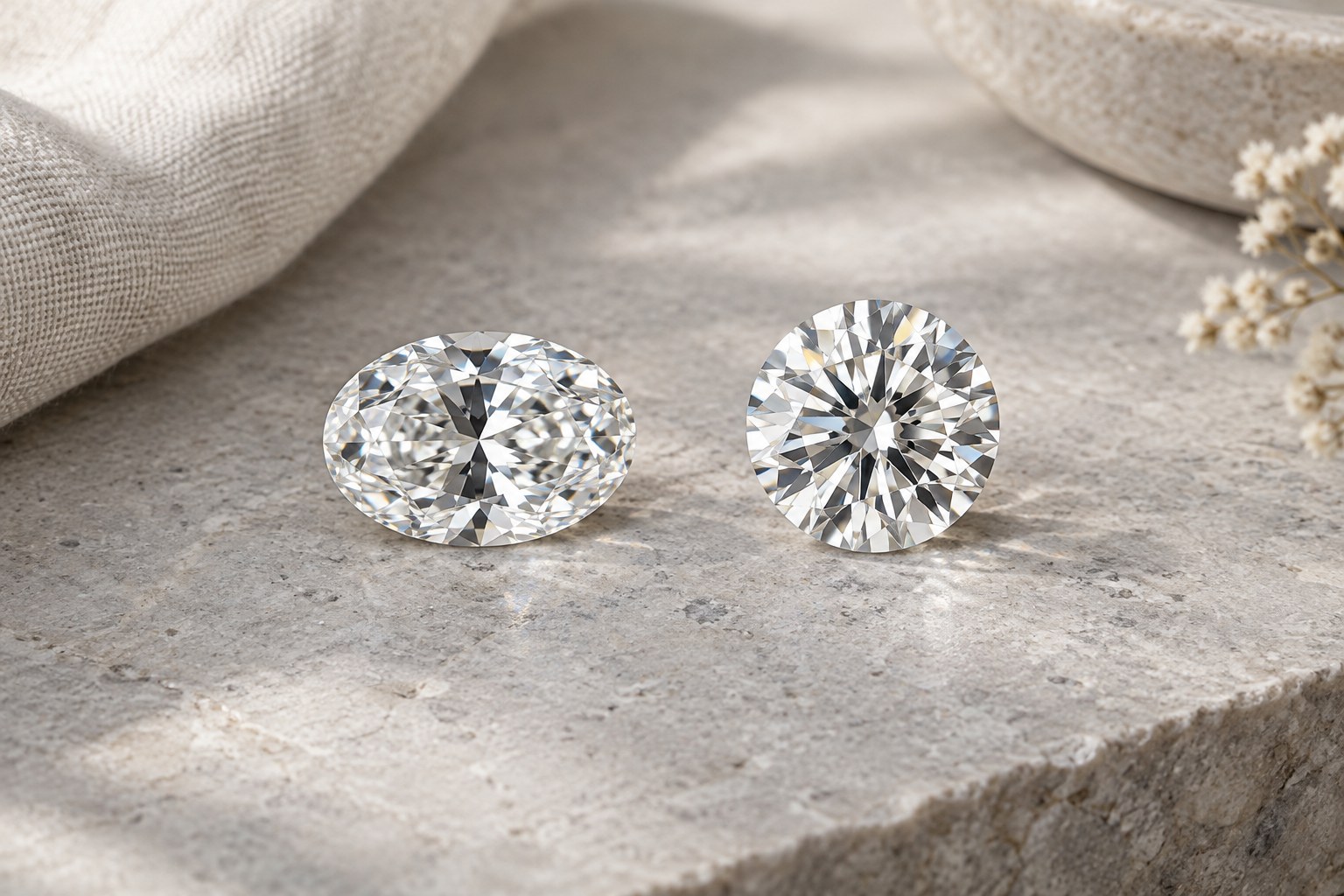
Round is the classic, oval is the challenger, and together they account for an enormous share of engagement ring conversations. Both are brilliant cuts - triangular and kite-shaped facets engineered for sparkle - so the choice between them is less about quality and more about outline, finger effect and personality. Here is the honest comparison.
Sparkle: near equals, different character
A round brilliant is the most studied cut in the world, perfected over a century to return the maximum possible light. An oval is a modified brilliant with a similar facet pattern, and a well-cut oval comes remarkably close - lively, bright and fiery. The round wins on paper; on the hand, the difference is subtle. What matters far more than shape is the quality of the individual cut, so insist on excellent proportions either way.
The finger effect
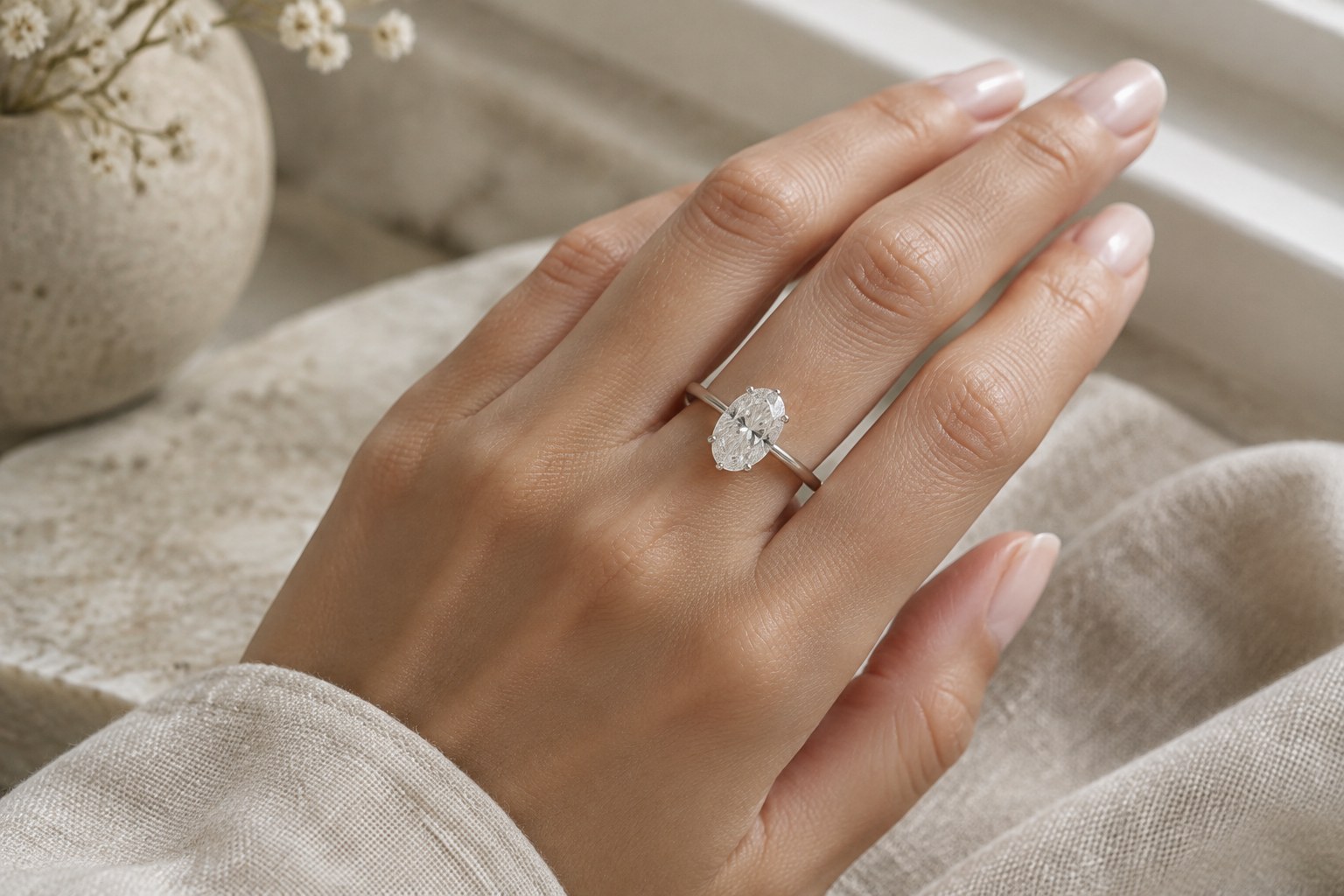
Ovals elongate. Their stretched outline covers more of the finger's width and draws the eye along it, making fingers look longer and slimmer - one reason the shape has surged. Rounds sit centred and symmetrical, classic and balanced on every hand. Neither effect is a flaw or a fix; it is simply a question of which look you love when you glance down.
Size for the eye
Per carat, an oval presents a larger face-up outline than a round - the weight is spread across a bigger surface, so a one-carat oval looks bigger than a one-carat round. Rounds counter with unmatched brilliance. If visible presence matters, the oval quietly over-delivers; if scintillation matters, the round is untouchable.
AI-generated illustration; not a Shewah product or a scale measurement.
SHEWAH Editorial Concept Illustration (Non-Catalogue)
The bow-tie question
Most ovals show a soft dark band across their middle, called a bow-tie, caused by light obstruction in elongated brilliant cuts. In the best stones it is faint and lively; in poorer cuts it is a dull stripe. Rounds never have one. This is the one oval-specific check: view the actual stone - video at minimum - and make sure its bow-tie is gentle rather than dead. A reputable seller will show you happily.
Settings and styles
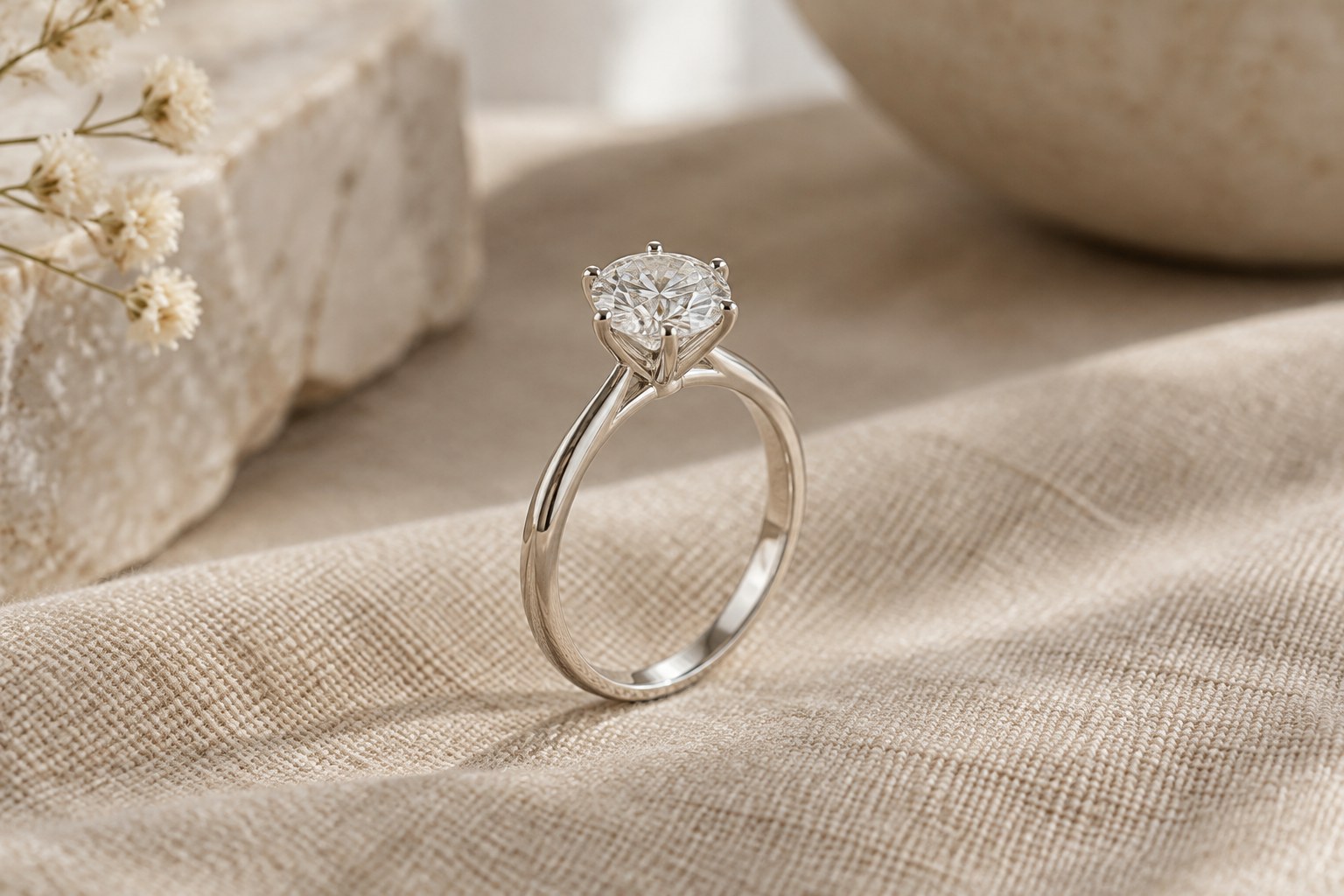
Rounds suit literally everything: solitaires, halos, three-stones, vintage and modern mounts, any prong count. Ovals are nearly as versatile but shine brightest in a few signatures: a slim solitaire that lets the outline speak, a halo that traces the elongation, or an east-west setting that turns the oval sideways for a contemporary look. Ovals have pointed ends to protect, so look for V-tipped or well-positioned prongs at the poles.
Trends versus timelessness
The round has never gone out of style in a century. The oval has cycled - huge in some decades, quiet in others, and strongly ascendant right now. If you want the ring that fashion magazines currently love, that is the oval; if you want the ring that has never needed a trend cycle, that is the round. Both are lab-grown favourites, which means either shape in a substantial size is comfortably within reach.
Which one is yours?
Choose the round if you want maximum brilliance, perfect symmetry and a design that will never date. Choose the oval if you want a larger-looking stone, an elongating effect and a shape that feels current without being strange in thirty years - it has been loved since the 1960s. Try both on the hand if possible; most people know within seconds.
Compare shapes with Shewah
Shewah crafts lab-grown diamond rings in round, oval and every major fancy shape, each certified and made to order. If you are torn between the classic and the challenger, explore Shewah's jewellery or message us on WhatsApp at +91 96622 66360 - we will show you both shapes honestly.
AI-generated illustration; not a Shewah product or a scale measurement.
SHEWAH Editorial Concept Illustration (Non-Catalogue)
Sources
The Maison Shewah Atelier Standard
Every creation referenced across our journal essays is made individually to order using solid 18K gold and independently certified diamonds (IGI & GIA). We uphold complete material transparency and zero synthetic plating.
Research & Gemological References
- [1]Oval vs Round Diamonds: Shape Comparison Guide — MOH London (Verified: 2026-10-29)
- [2]Guide to Diamond Engagement Ring Shapes — GIA 4Cs (Verified: 2026-10-29)
- [3]Round vs Oval Diamond: Which is right for you? — Taylor & Hart (Verified: 2026-10-29)


