Moissanite vs Diamond: What Nobody Tells You Before You Buy
“Moissanite is not a diamond, and that is fine, as long as you know it. Sparkle, durability, price and honesty: the real comparison with lab-grown diamonds.”

AI-generated illustration; not a Shewah product or a scale measurement.
SHEWAH Editorial Concept Illustration (Non-Catalogue)
Moissanite and diamond sit at the centre of the same decision: you want a white, sparkling stone, and both deliver the look at very different prices. But they are not the same thing, and the differences are worth understanding before you spend anything. Moissanite is a distinct gemstone with its own character; a lab-grown diamond is an actual diamond. Here is how to think about it.
What moissanite actually is
Moissanite is silicon carbide, first discovered in a meteor crater and now grown in laboratories for jewellery. It belongs to a family GIA calls simulants: stones that imitate the look of diamond but are completely unrelated to it at the atomic level. Cubic zirconia and white sapphire live in the same family. A simulant is not a fake anything; it is its own gem, and it is a perfectly good choice when it is an informed one.
A lab-grown diamond, by contrast, is diamond: pure crystallised carbon with the same hardness, optics and chemistry as a mined stone, just grown above ground.
How they look different on the hand
Put them side by side and most people notice one thing: moissanite throws more rainbow flashes. It has a higher dispersion than diamond, so its sparkle breaks into more colourful fire, especially in larger sizes and bright light. Diamond's sparkle is a sharper mix of white and coloured light. Some people love moissanite's disco brilliance; others find it gives the stone away. Neither is wrong, but see both in person if you can.
Durability is closer than you might think. Diamond is a 10 on the Mohs hardness scale; moissanite is 9.25, harder than any sapphire, and entirely suitable for a ring worn every day.
The price difference
This is the argument for moissanite. A one-carat lab-grown diamond currently lists at a median of about $510; a comparable one-carat moissanite typically runs well under that, often in the $300 to $600 range for top grades at larger sizes. Moissanite gets you the most sparkle per dollar of any white stone, full stop.
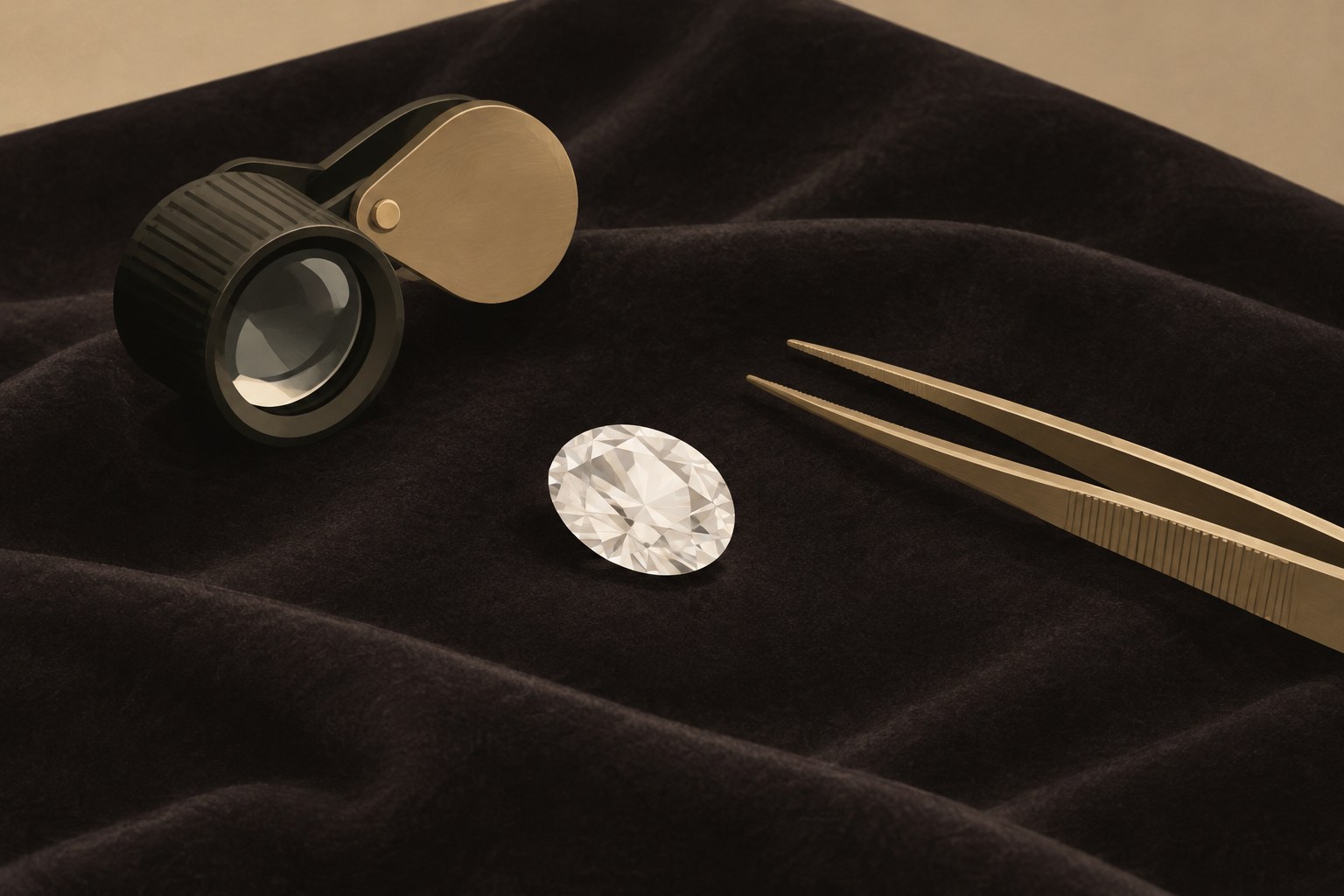
AI-generated illustration; not a Shewah product or a scale measurement.
SHEWAH Editorial Concept Illustration (Non-Catalogue)
What you give up
Identity and certification, mostly. A moissanite is not a diamond and does not grade on diamond scales, so if a diamond is what you want, no moissanite satisfies the brief. Resale is thin for both simulants and lab-grown stones, so buy either to wear, not to sell. And while lab-grown diamonds come with independent laboratory reports, moissanite grading is less standardised across sellers.
Which one is yours
Choose moissanite if maximum size and sparkle per dollar is the whole game and you are happy wearing a beautiful gem that is its own thing. Choose a lab-grown diamond if you want a true diamond, with its exact optics and an independent certificate, at a fraction of the mined price. Both are honest choices. The only bad outcome is paying diamond money for a stone nobody explained to you.
Where the other simulants fit
Cubic zirconia is the budget option: very low cost, but softer, prone to scratching and clouding within a few years of daily wear. White sapphire is a natural gemstone and tougher, but its sparkle is sleepier than either moissanite or diamond. For an engagement ring meant to last decades, the real contest stays between moissanite and lab-grown diamond.
Made honestly with Shewah
Shewah works in certified lab-grown diamonds, and we will always tell you exactly what your stone is and what it cost. That is the point of made to order.
Explore Shewah's jewellery or contact us on WhatsApp at +91 96622 66360 to compare stones.
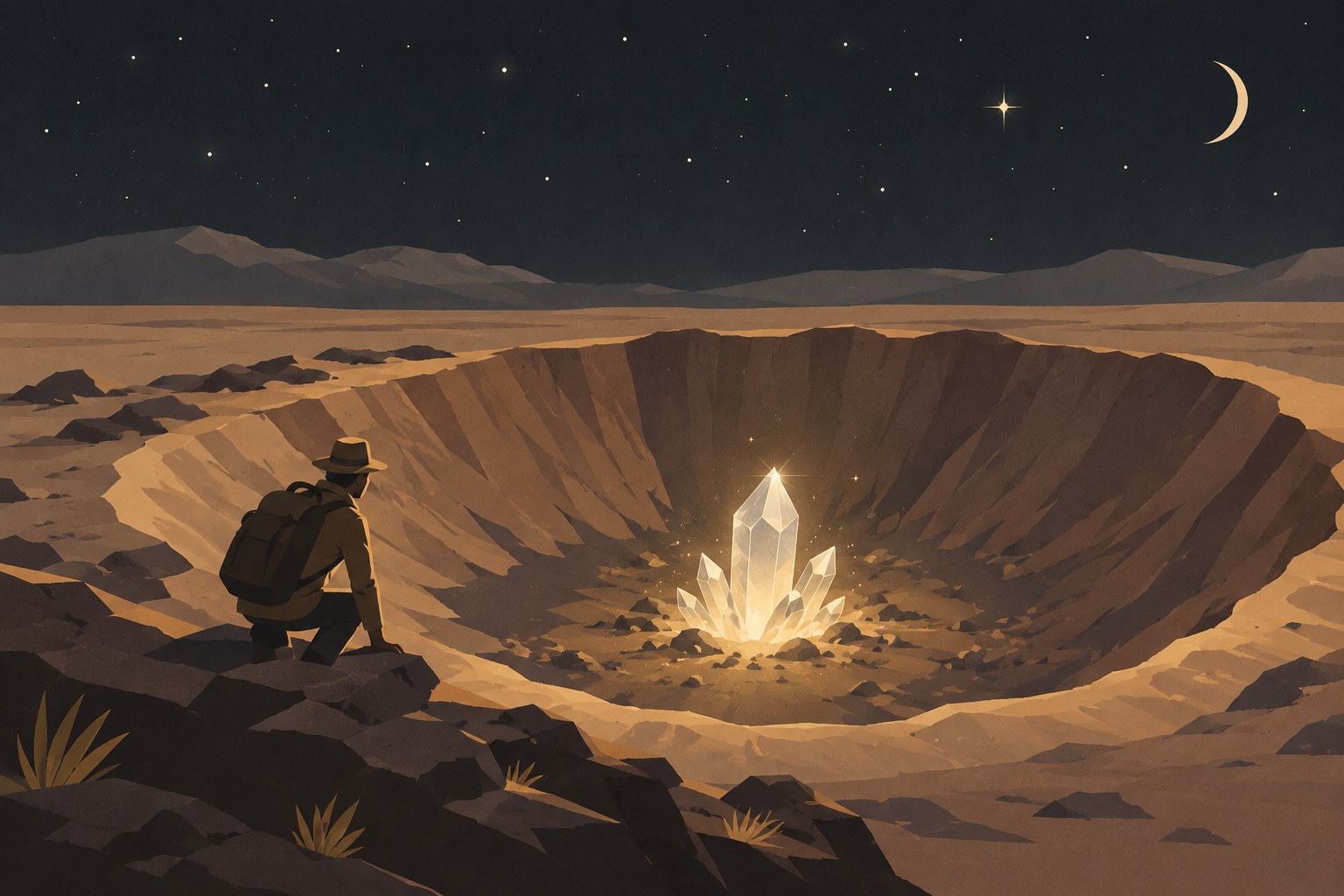
AI-generated illustration; not a Shewah product or a scale measurement.
SHEWAH Editorial Concept Illustration (Non-Catalogue)
Sources
The Maison Shewah Atelier Standard
Every creation referenced across our journal essays is made individually to order using solid 18K gold and independently certified diamonds (IGI & GIA). We uphold complete material transparency and zero synthetic plating.
Research & Gemological References
- [1]Simulants, Moissanite and Lab-Grown Diamonds — GIA 4Cs (Verified: 2026-10-16)


