Lab-Grown Diamonds vs Cubic Zirconia: The Real Differences
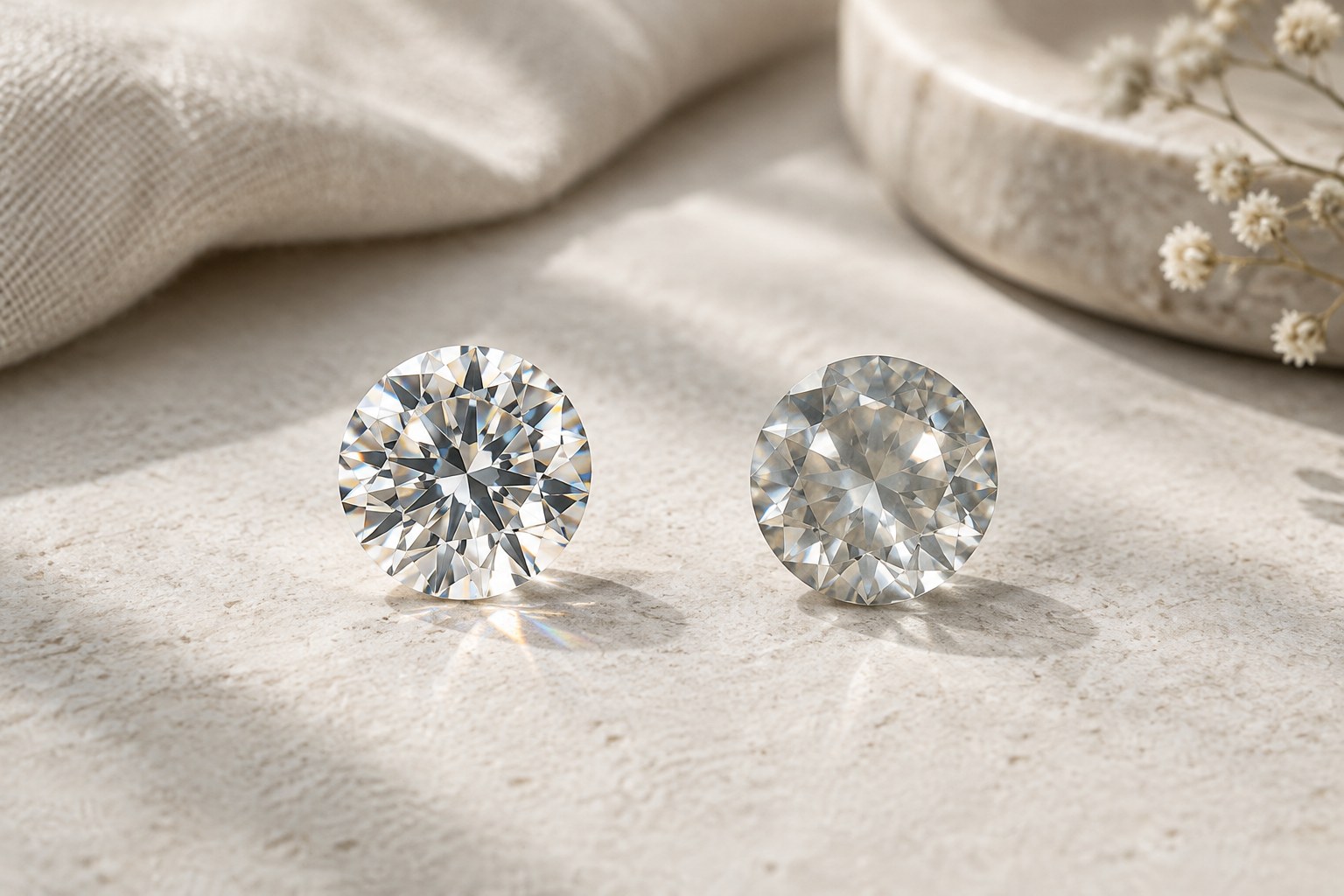
“Same photograph, different futures: what separates a lab-grown diamond from cubic zirconia in wear, sparkle and meaning.”
AI-generated illustration; not a Shewah product or a scale measurement.
SHEWAH Editorial Concept Illustration (Non-Catalogue)
They can look alike in a shop photograph, and both are made in laboratories, which is where the resemblance ends. A lab-grown diamond is a diamond - same carbon crystal, same hardness, same fire - grown above ground instead of mined. Cubic zirconia is a different material entirely, a zirconium dioxide simulant that imitates a diamond's look without sharing its nature. If you are choosing between them, these are the differences that matter.
What each one actually is
Lab-grown diamonds are crystallised carbon, created by replicating the conditions under which diamonds form. Major gemmological laboratories grade them as diamonds, because they are. Cubic zirconia - CZ - is a synthesised oxide with a completely different chemistry and crystal structure. It is a simulant: a stand-in for the appearance, not the substance.
Hardness and daily life
Diamond sits at 10 on the Mohs scale, the hardest natural material, and lab-grown diamonds share that fully. A diamond ring shrugs off decades of daily wear; its facet edges stay crisp. CZ ranks around 8 to 8.5, which sounds close but behaves very differently: it scratches, clouds and dulls with regular wear, often within a few years, and its edges round off. For an everyday piece like an engagement ring, this is the decisive gap.
Sparkle: fire versus brilliance
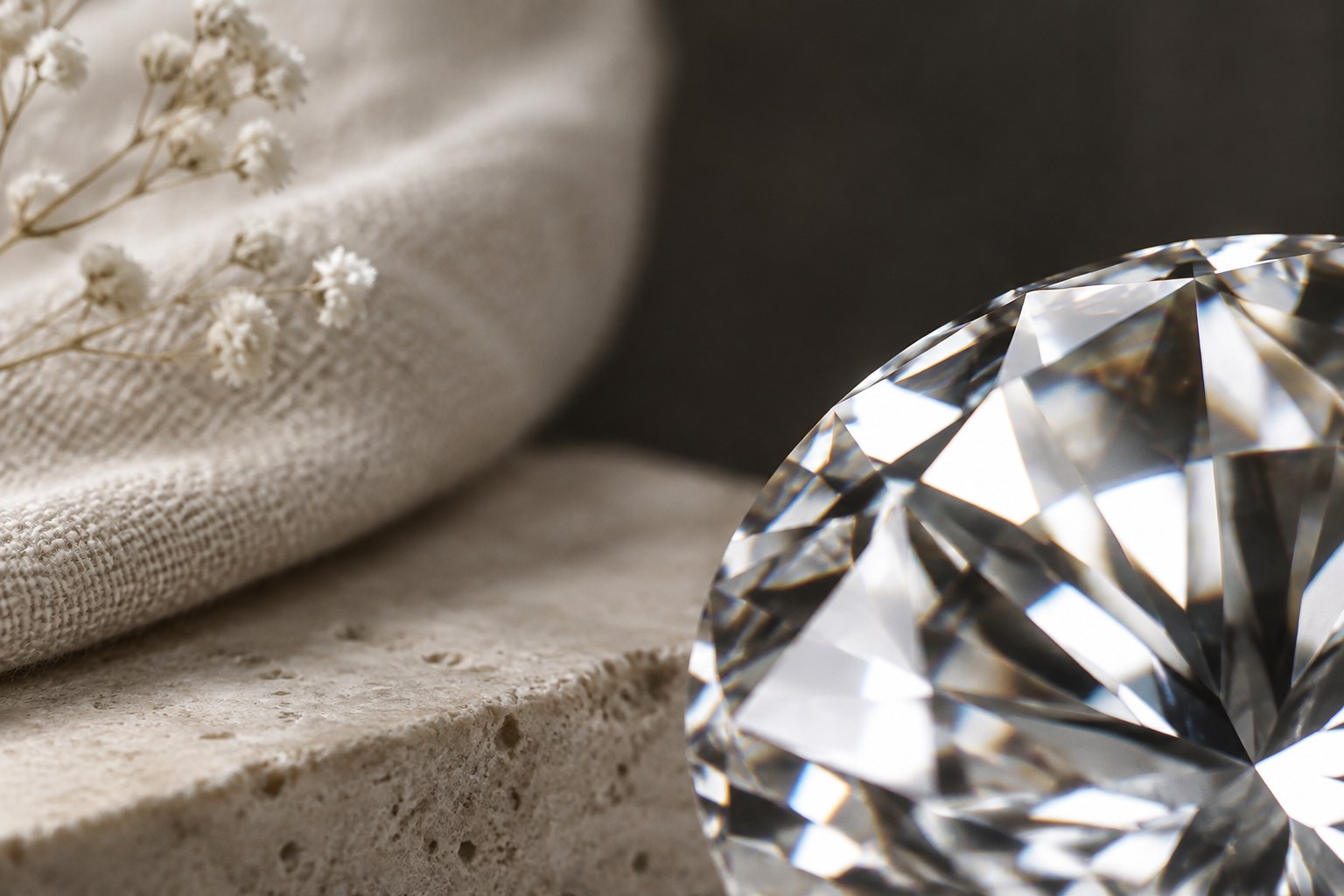
CZ actually shows more fire - those rainbow flashes - than diamond, which reads as slightly too colourful to a trained eye. Diamond balances fire with brilliance, the white light return that gives it that clean, crisp glitter. CZ also has a lower refractive index, so its overall brightness is softer. Side by side in daylight, the diamond looks sharp; the CZ looks sleepy once you know what you are seeing.
AI-generated illustration; not a Shewah product or a scale measurement.
SHEWAH Editorial Concept Illustration (Non-Catalogue)
Weight, size and other tells
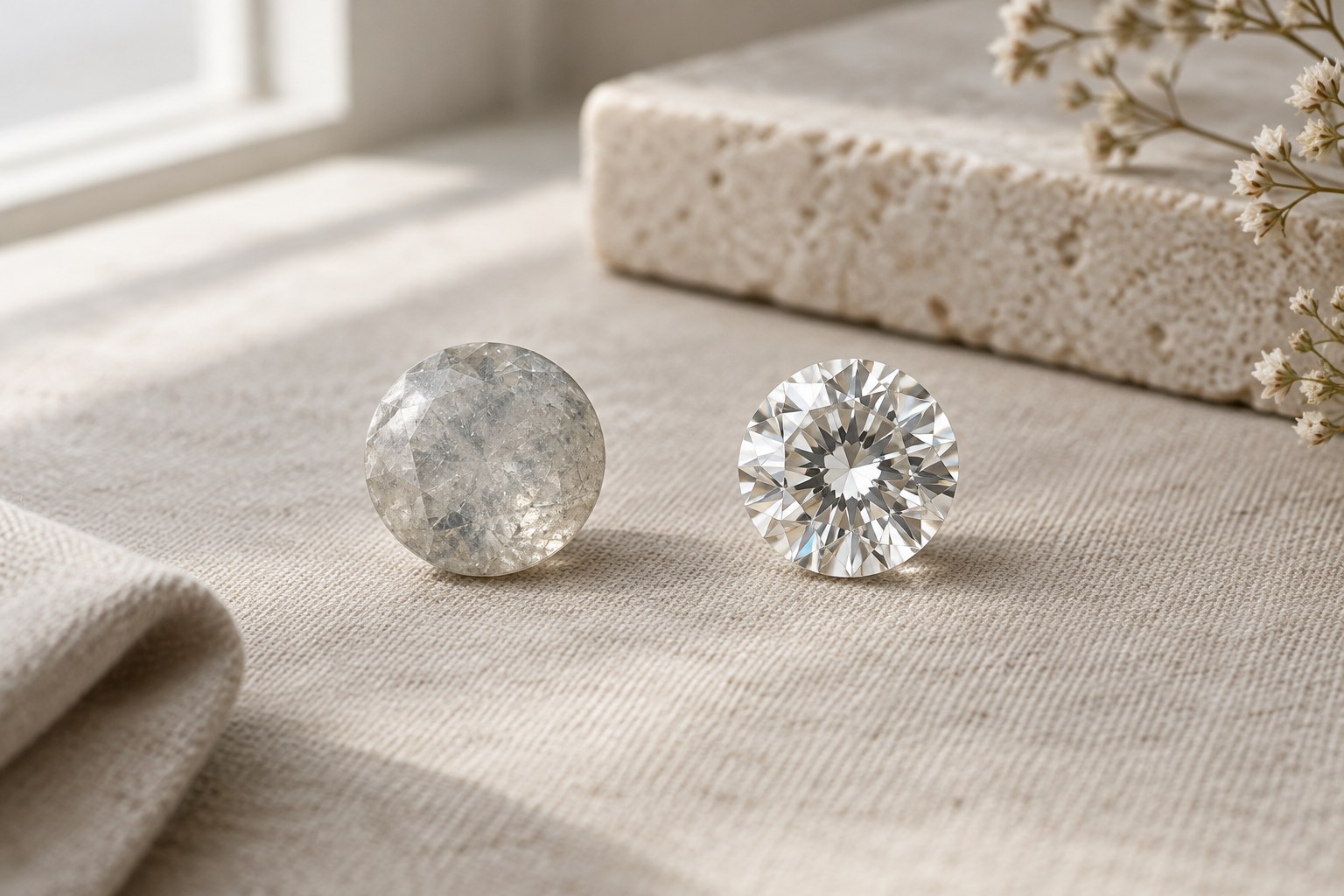
CZ is noticeably denser than diamond, so a CZ and a diamond of identical dimensions will not weigh the same - the CZ is heavier. CZ is also typically flawless and colourless in a way that natural and lab diamonds rarely are, which sounds like praise but is often the giveaway. Professional testers distinguish the two in seconds, because their thermal properties differ completely.
Longevity and meaning
A lab-grown diamond is forever in the literal, physical sense: it will look the same on a fiftieth anniversary as on the first day, and it can be insured, resold, reset and inherited as a diamond. CZ is best understood as fashion jewellery - enjoyable, replaceable and temporary. There is nothing wrong with that when it is what you want; the mistake is buying one while believing you have the other.
What the gap actually buys
CZ sits at the gentlest end of the spectrum, and lab-grown diamonds in turn made genuine diamonds dramatically more reachable than mined ones. So the real modern choice is not diamond-versus-substitute but what kind of forever you want. If the piece marks something permanent - an engagement, an anniversary, a milestone - the case for the real stone is exactly its permanence.
The bottom line
Choose CZ for fun, travel and trend pieces you will not grieve. Choose a lab-grown diamond for anything meant to last, with an independent grading report to confirm what you hold. Same photograph, different futures.
Real diamonds, honestly labelled, with Shewah
Shewah works exclusively with certified lab-grown diamonds - real diamonds, graded by recognised laboratories and disclosed completely. To see what genuine sparkle looks like at everyday-wear scale, explore Shewah's jewellery or message us on WhatsApp at +91 96622 66360.
AI-generated illustration; not a Shewah product or a scale measurement.
SHEWAH Editorial Concept Illustration (Non-Catalogue)
Sources
The Maison Shewah Atelier Standard
Every creation referenced across our journal essays is made individually to order using solid 18K gold and independently certified diamonds (IGI & GIA). We uphold complete material transparency and zero synthetic plating.
Research & Gemological References
- [1]Simulants, Moissanite and Lab-Grown Diamonds — GIA 4Cs (Verified: 2026-10-29)
- [2]Properties of Diamond Simulants — International Gem Society (Verified: 2026-10-29)
- [3]Lab-Grown Diamonds Versus Cubic Zirconia: What’s the Difference? — Brides (Verified: 2026-10-29)


