How to Choose a Lab-Grown Diamond Pendant
“Shape, setting, size, chain and certification: everything that matters when choosing a lab-grown diamond pendant you will wear every day.”
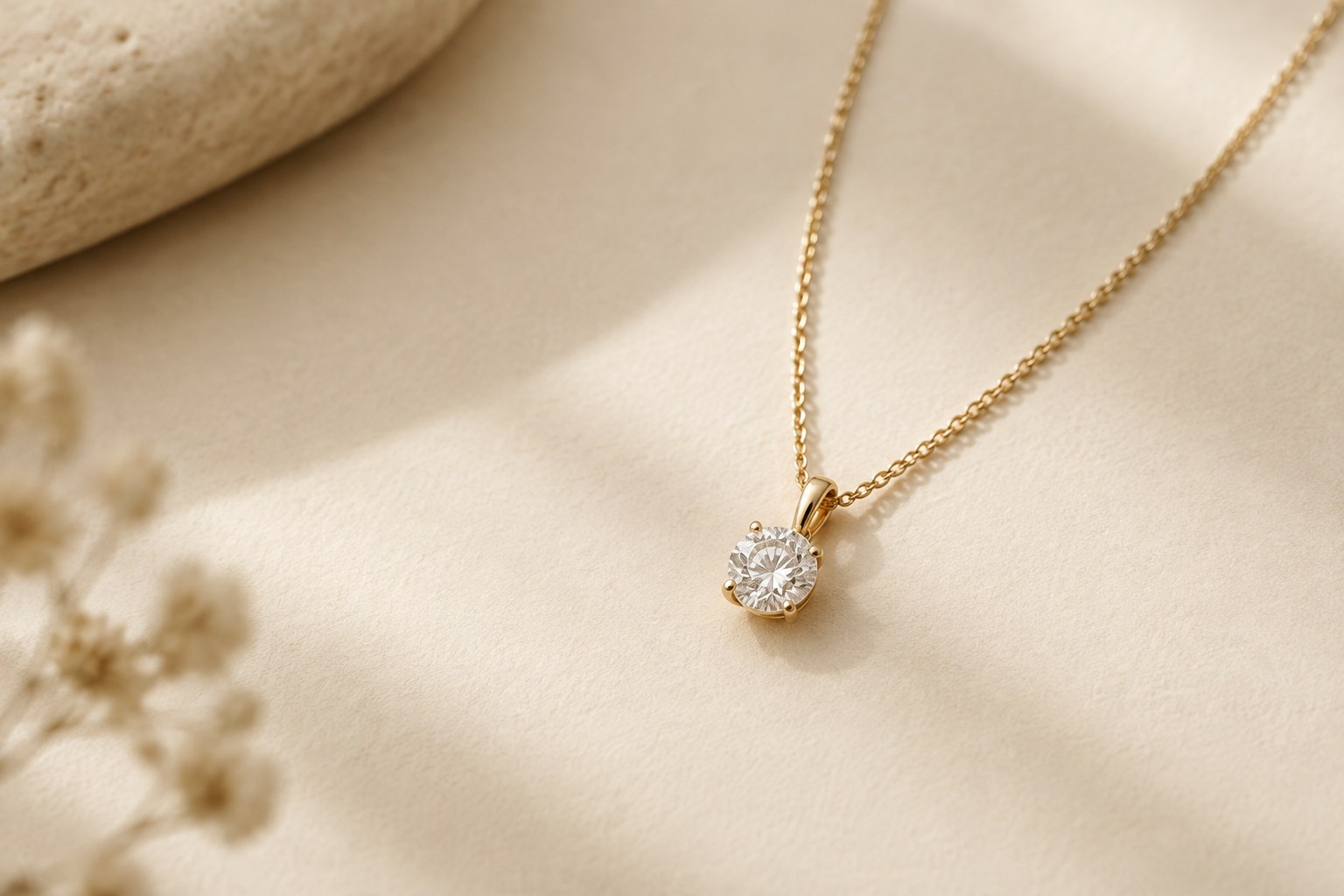
AI-generated illustration; not a Shewah product or a scale measurement.
SHEWAH Editorial Concept Illustration (Non-Catalogue)
A diamond pendant is the quiet workhorse of fine jewellery: it sits at the centre of every outfit, layers with everything and asks almost nothing of your routine. Lab-grown diamonds have made the category genuinely attainable - the same carbon, the same brilliance, graded by the same laboratories. Here is how to choose one well.
Start with the shape
Round brilliants are the classic: maximum sparkle, endlessly versatile. Ovals read a touch larger for their carat weight and elongate the neckline. Emerald cuts trade scintillation for calm, mirror-like flashes and suit minimalists. Pears and marquises make elegant drops, though their points need a protective V-prong or bezel. There is no wrong answer - choose the silhouette you keep saving in photographs.
Understand the setting styles
A solitaire pendant holds one stone, usually in four prongs or a smooth bezel; prongs maximise light, a bezel protects and modernises. A halo surrounds the centre stone with a ring of smaller diamonds, making the whole piece read noticeably larger. A floating or dancing pendant suspends the stone so it moves with you. Fixed bails keep the pendant centred; a sliding bail lets it travel along the chain.
Size: how carat weight reads on the neck
On the neck, diamonds read smaller than on the hand. As a rough guide, half a carat is a delicate everyday glint, one carat is a confident classic, and two carats is unmistakably a statement. With lab-grown diamonds, the jump from half a carat to a full carat is an accessible upgrade rather than a leap, so buy the presence you actually want rather than the compromise. Hold a ruler to your collarbone while you decide, because millimetre diameter matters more to the eye than the number on the certificate.
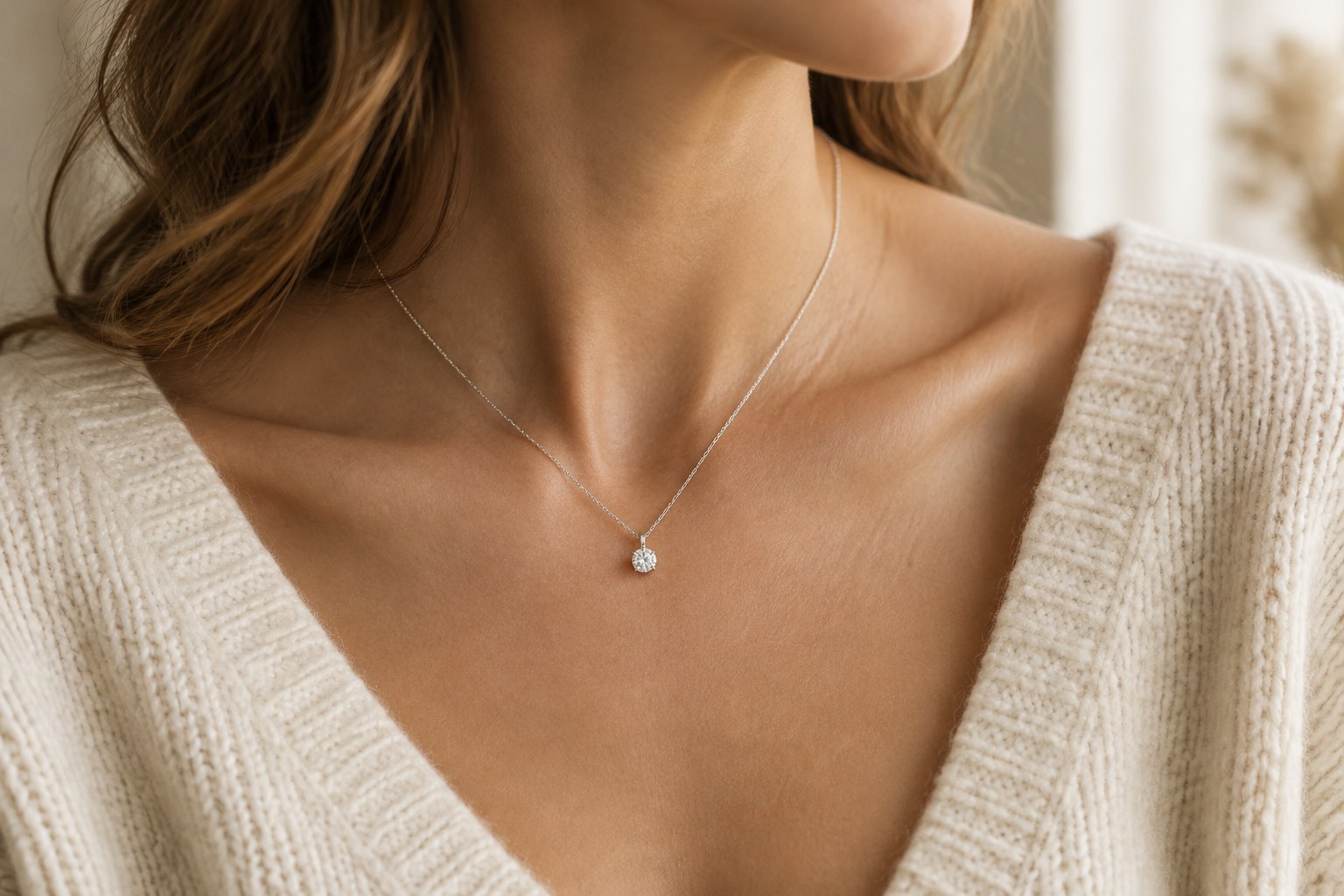
AI-generated illustration; not a Shewah product or a scale measurement.
SHEWAH Editorial Concept Illustration (Non-Catalogue)
Colour and clarity: where to insist, where to relax
Pendant diamonds are viewed at arm's length, never under a loupe. Colour in the near-colourless range faces up beautifully in white metals; clarity grades in the VS to SI range are typically eye-clean at viewing distance. Put the budget into cut first - an excellent cut is what throws light back at people across the room. Insist on an independent certificate from a recognised laboratory such as GIA.
Chain length and style
The classic pendant length is 45 centimetres (18 inches), sitting just below the collarbone; 40 centimetres sits higher and layers well, 50 centimetres drops lower for evening. Cable and box chains are the dependable choices - strong enough to trust, quiet enough to forget. A diamond pendant deserves a sturdy lobster clasp and a chain weight matched to the stone.
Fixed or adjustable
An adjustable chain with sliding rings at 40 and 45 centimetres is the unsung hero of pendant buying - one necklace that works with a crew neck and a V-neck alike. If you plan to layer, adjustable lengths are nearly mandatory.
A pendant is a beginning
Unlike most jewellery purchases, a diamond pendant is a foundation: it will be joined by studs, a bracelet, perhaps a ring, and it anchors every future combination. Choose the shape you love at the size you will actually wear, and it will spend its life on your neck rather than in a box.
Begin with Shewah
Shewah's lab-grown diamond pendants are made to order with certified stones and chains matched to the piece. Explore Shewah's jewellery or message us on WhatsApp at +91 96622 66360 - we will help you land the size and setting that suit you.
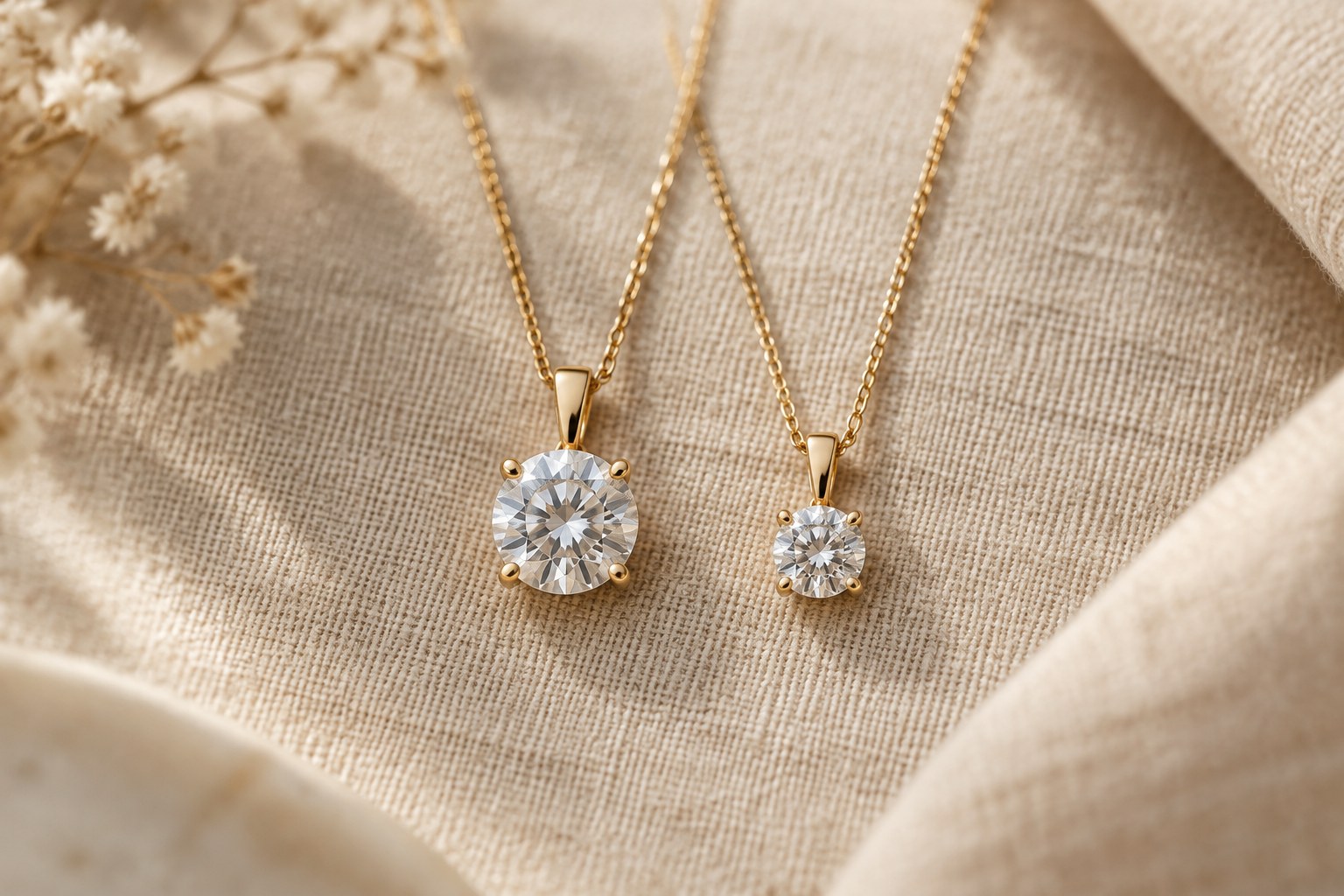
AI-generated illustration; not a Shewah product or a scale measurement.
SHEWAH Editorial Concept Illustration (Non-Catalogue)
Sources
The Maison Shewah Atelier Standard
Every creation referenced across our journal essays is made individually to order using solid 18K gold and independently certified diamonds (IGI & GIA). We uphold complete material transparency and zero synthetic plating.
Research & Gemological References
- [1]Diamond Pendant Necklaces: Buying Guide — VRAI (Verified: 2026-10-28)
- [2]An Essential Guide to Diamond Pendants & Necklaces — Whiteflash (Verified: 2026-10-28)
- [3]How to Buy a Diamond — GIA 4Cs (Verified: 2026-10-28)


