IGI vs GIA for Lab-Grown Diamonds: What Changed in 2025
“Two laboratories, two systems: how IGI and GIA grade lab-grown diamonds after GIA's October 2025 change, and how to read either report.”

AI-generated illustration; not a Shewah product or a scale measurement.
SHEWAH Editorial Concept Illustration (Non-Catalogue)
If you are shopping for a lab-grown diamond, the two names you will meet on certificates are IGI and GIA. Both are major international gem laboratories. Both will reliably confirm that your stone is a real, laboratory-grown diamond and describe its quality. But they grade lab-grown stones differently, and since October 2025 the difference has become bigger. Understanding it stops you comparing apples with oranges.
Here is what each laboratory does, what changed at GIA, and how to read either report.
IGI: full 4Cs grading for lab-grown stones
The International Gemological Institute pioneered the grading of lab-grown diamonds in 2005 and remains the most common certificate behind lab-grown stones at retail. An IGI Laboratory Grown Diamond Report looks much like a classic diamond report: shape and cutting style, measurements, and full 4Cs assessments, including the familiar D-to-Z colour grades and clarity grades from Flawless downwards. On request, the report also notes the growth process, HPHT or CVD, and any treatments.
For buyers, that means an IGI report lets you compare a lab-grown stone against any other diamond on exactly the terms you already know: you can ask for an F colour, VS1 stone and know precisely what those letters mean.
GIA: a new system since October 2025
The Gemological Institute of America, which created the 4Cs for natural diamonds, has taken a different path for lab-grown stones. Since 1 October 2025, GIA's Laboratory-Grown Diamond Quality Assessment does not use its D-to-Z colour and clarity nomenclature at all. Instead, qualifying stones receive a descriptive rating: Premium or Standard.
The thresholds are demanding. Premium requires D colour with at least VVS clarity, excellent polish and symmetry, and an excellent cut grade for round brilliants. Standard covers E to J colour with VS clarity and slightly lower finish grades. Stones that fall below Standard receive no report at all. Each qualifying stone's girdle is laser-inscribed "laboratory-grown" with its assessment number, and reports cost $15 per carat with a $15 minimum.
GIA's reasoning, per its own announcement, is that lab-grown diamonds cluster in a narrow range of colour and clarity, so descriptive terms suit a manufactured product better than the scales built for natural stones.
So which certificate should you want?
It depends on what you need the report to do:
- You want precise, traditional grades. IGI's report gives you exact D-to-Z colour and clarity grades, which makes fine comparisons between two specific stones easy.
- You want the strictest quality gate. GIA's Premium band is narrower than any single letter grade; a Premium stone is definitively top-tier. But a Standard label covers a wide E-to-J range, so two "Standard" stones can differ noticeably.
- You want to know exactly what you paid for. Either way, read the report next to the stone's price and ask questions. A certificate is a description, not a verdict on value.
For natural diamonds, nothing has changed: GIA still issues full 4Cs grading reports, and its natural-diamond certificates remain the industry's reference standard.
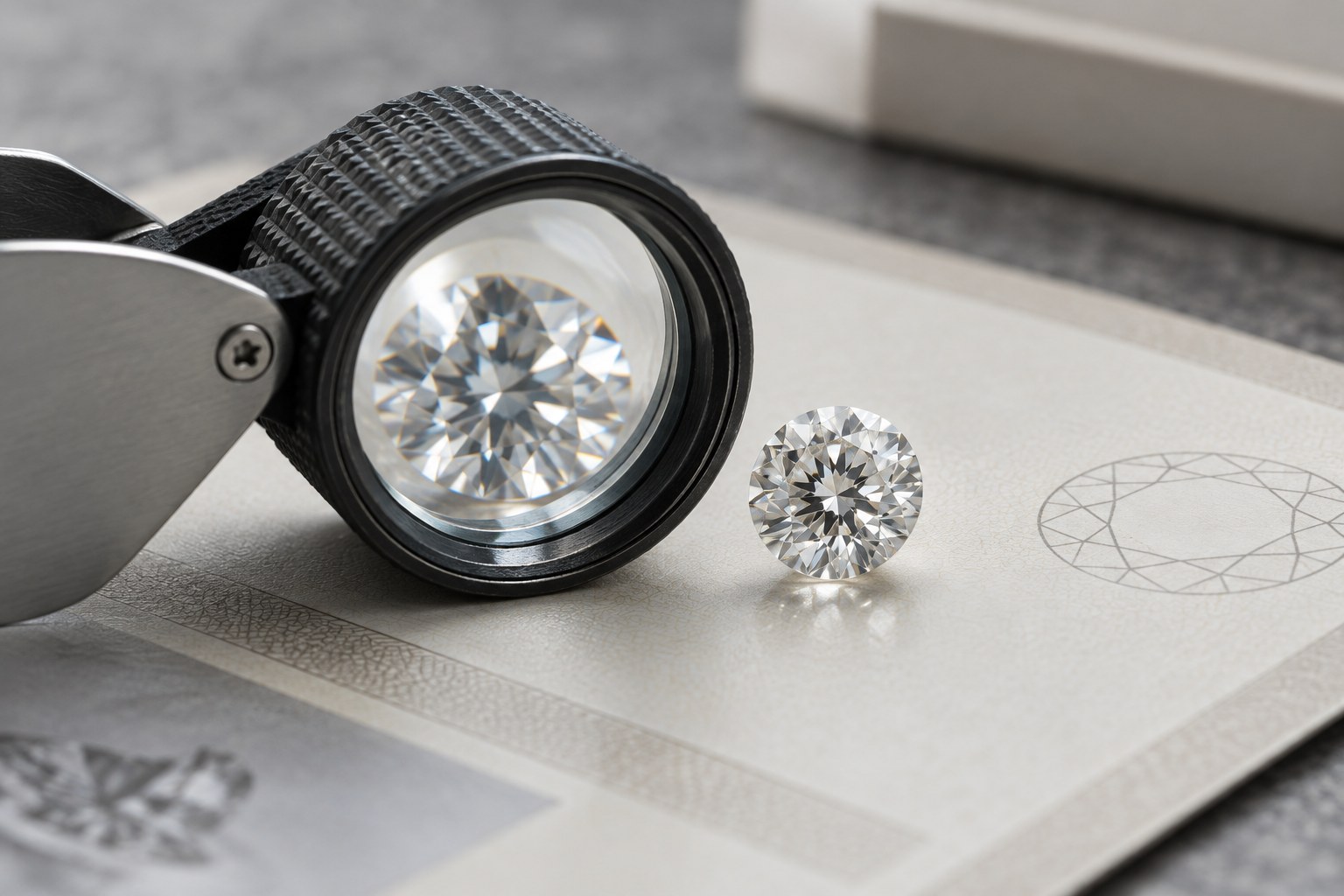
AI-generated illustration; not a Shewah product or a scale measurement.
SHEWAH Editorial Concept Illustration (Non-Catalogue)
How to read any report in five minutes
Confirm the report number matches the stone's laser inscription, check the carat weight and measurements against the listing, read the colour and clarity (or the Premium/Standard rating), and look for the growth method and treatment comments. If anything on the report is unclear, ask before you pay, not after.
Certified lab-grown diamonds with Shewah
Every Shewah ring comes with an independent laboratory certificate for its lab-grown diamonds, and we will explain exactly what it says before you commit.
Explore Shewah's jewellery or contact us on WhatsApp at +91 96622 66360 with your questions.
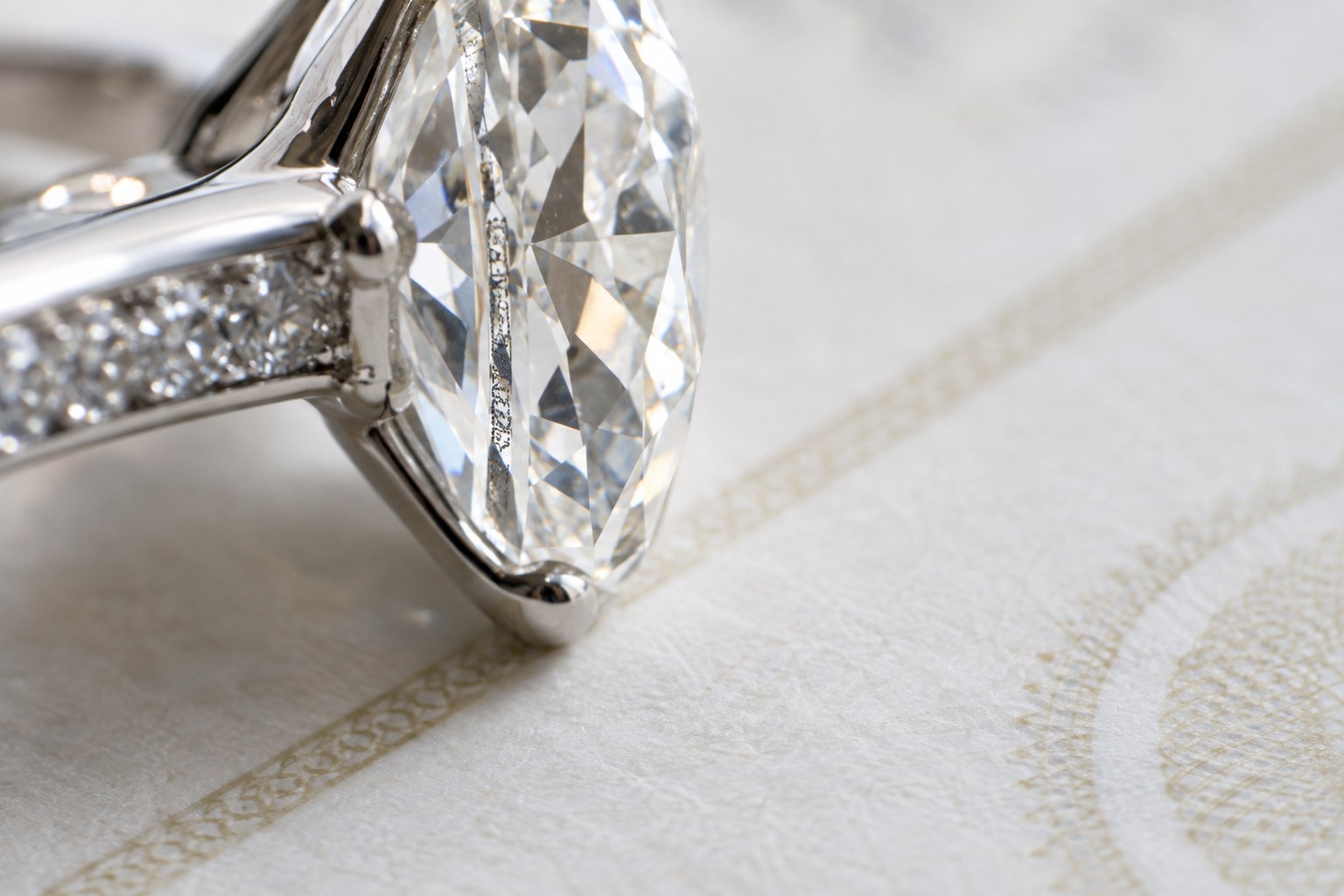
AI-generated illustration; not a Shewah product or a scale measurement.
SHEWAH Editorial Concept Illustration (Non-Catalogue)
Sources
The Maison Shewah Atelier Standard
Every creation referenced across our journal essays is made individually to order using solid 18K gold and independently certified diamonds (IGI & GIA). We uphold complete material transparency and zero synthetic plating.
Research & Gemological References
- [1]GIA Clarifies New Guidelines for Lab-Grown Certificates — Rapaport (Verified: 2026-10-15)
- [2]Laboratory Grown Diamond Report — IGI (Verified: 2026-10-15)
- [3]Laboratory-Grown Diamond Services — GIA (Verified: 2026-10-15)


