How to Wear an Engagement Ring and Wedding Band Together
“Wedding band first, engagement ring on top: where the stacking order comes from, ceremony-day logistics, and how to make two rings comfortable.”

AI-generated illustration; not a Shewah product or a scale measurement.
SHEWAH Editorial Concept Illustration (Non-Catalogue)
The short answer: in the US, UK and Australia, both rings usually live on the fourth finger of the left hand, with the wedding band going on first so it sits closest to the heart, and the engagement ring stacked on top of it. That is the tradition. It is also completely optional.
Here is where the order comes from, what the alternatives are, and how to make the pair comfortable for everyday wear.
The traditional order: wedding band first
The classic arrangement puts the wedding band on the finger first, nearest the palm, with the engagement ring above it toward the fingertip. The symbolism is that the wedding band, representing the marriage vows themselves, sits closest to the heart.
The custom reaches back to ancient Rome, where it was believed that the fourth finger of the left hand contained the vena amoris, the vein of love, running directly to the heart. The anatomy has been disproved, but the stacking order it inspired has lasted centuries.
The ceremony-day switch
The traditional order creates a small practical problem on the wedding day: the engagement ring is already on the finger where the band needs to go. The standard solution is to move the engagement ring to the right hand before the ceremony. Your partner can then slide the wedding band onto the bare left ring finger, and you move the engagement ring back on top afterwards.
Some people prefer to leave the engagement ring off entirely for the day and admire the new band on its own for a while. Both approaches are normal.
The chronological order and other arrangements
Plenty of people wear the engagement ring first and the wedding band on top, simply because that is the order the rings arrived in. Others skip the stack altogether:
- Different hands. Engagement ring on the left, wedding band on the right, or the reverse. Common where the two rings are visually different or where right-hand wearing is the cultural tradition, as in Russia, Germany, Poland, Greece and India.
- One ring at a time. A wedding band for daily wear and the engagement ring for occasions, which suits hands-on work and hobbies.
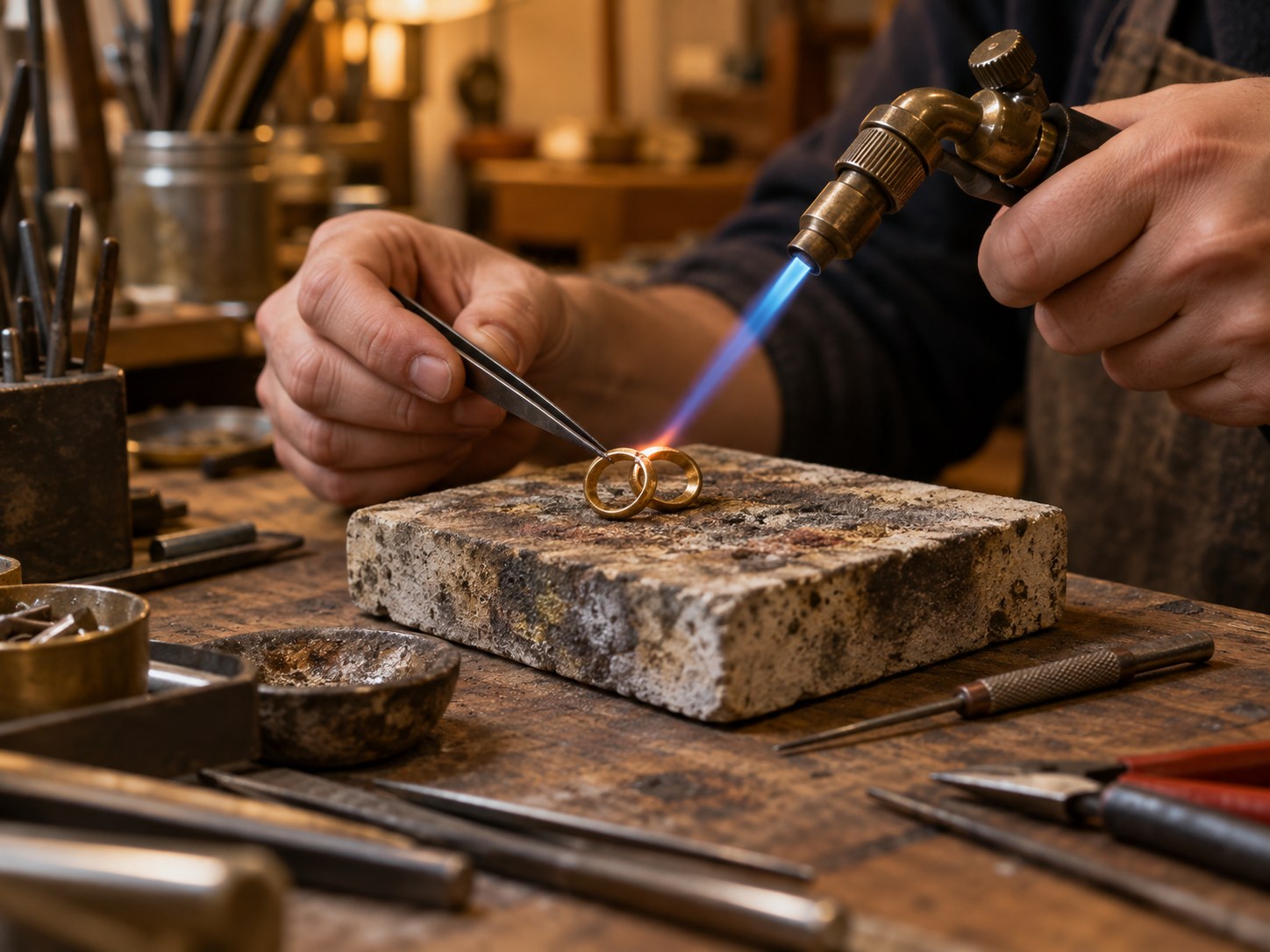
- Soldered together. A jeweller can join the two rings into a single piece so they always sit perfectly aligned. This is permanent, so it suits people certain they will always wear the pair together.
- Ring guards and enhancers. A shaped band that wraps the engagement ring, holding the stack in place and framing the centre stone.
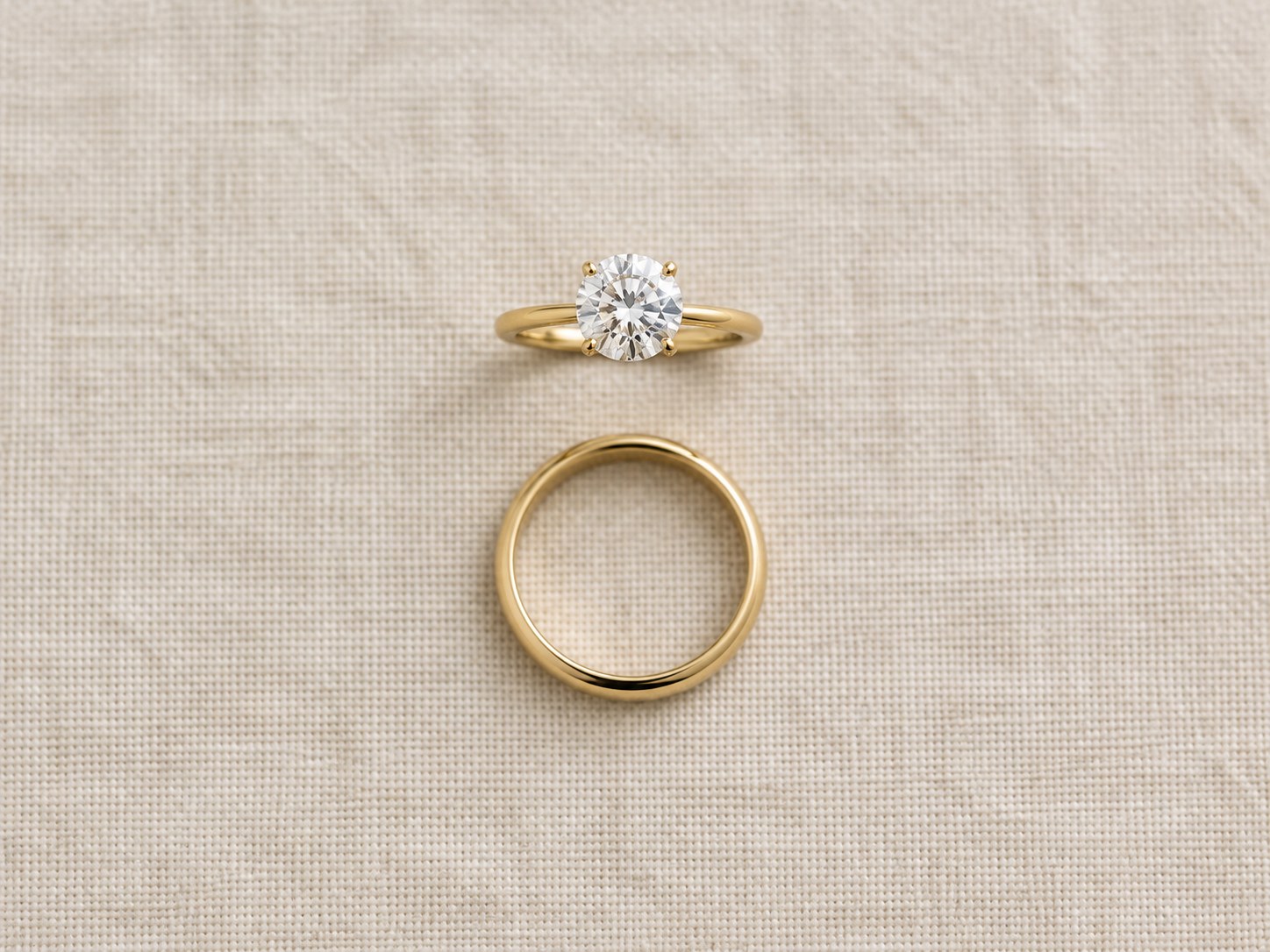
AI-generated illustration; not a Shewah product or a scale measurement.
SHEWAH Editorial Concept Illustration (Non-Catalogue)
Making the stack comfortable
Two rings on one finger is a fit question as much as a style question. A few things worth knowing:
- Match the profiles. A flat band sits flush against a flat engagement ring shank. A rounded band next to a knife-edge shank will rock and rub. If you are buying the band after the engagement ring, bring the engagement ring with you.
- Watch for rubbing. Two rings that twist against each other will wear the metal and loosen stones over years. A snugger fit, a shaped band or soldering prevents it.
- Size for the pair. Two rings together fit tighter than either alone. Many people go up a quarter to a half size for a stack.
- Right hand is fine. There is no rule against moving the whole stack to the right hand if it is more comfortable or more meaningful.
Plan your ring pair with Shewah
The best time to think about the stack is before either ring exists. Send us the engagement ring style you have or want, and we will design a wedding band that sits flush against it, in matched metal, quoted before work begins.
Explore Shewah's jewellery or contact us on WhatsApp at +91 96622 66360 to plan a pair that fits together from day one.
AI-generated illustration; not a Shewah product or a scale measurement.
SHEWAH Editorial Concept Illustration (Non-Catalogue)
Sources
The Maison Shewah Atelier Standard
Every creation referenced across our journal essays is made individually to order using solid 18K gold and independently certified diamonds (IGI & GIA). We uphold complete material transparency and zero synthetic plating.
Research & Gemological References
- [1]How to Wear Your Engagement Ring and Wedding Band — GIA 4Cs (Verified: 2026-10-14)
- [2]Here's How to Wear Your Engagement Ring and Wedding Band — The Knot (Verified: 2026-10-14)


