How to Tell if Silver Is Real: Hallmarks, Magnets, Ice and More
“Genuine silver announces itself to anyone who knows where to look. The stamps, the physics and the simple checks that sort real from plated.”
AI-generated illustration; not a Shewah product or a scale measurement.
SHEWAH Editorial Concept Illustration (Non-Catalogue)
Silver jewellery is everywhere, and so is silver-coloured jewellery that contains no silver at all. The good news: genuine silver announces itself to anyone who knows where to look. A handful of simple checks, most of them free and all of them doable at home, will sort the real from the plated.
Read the hallmarks first
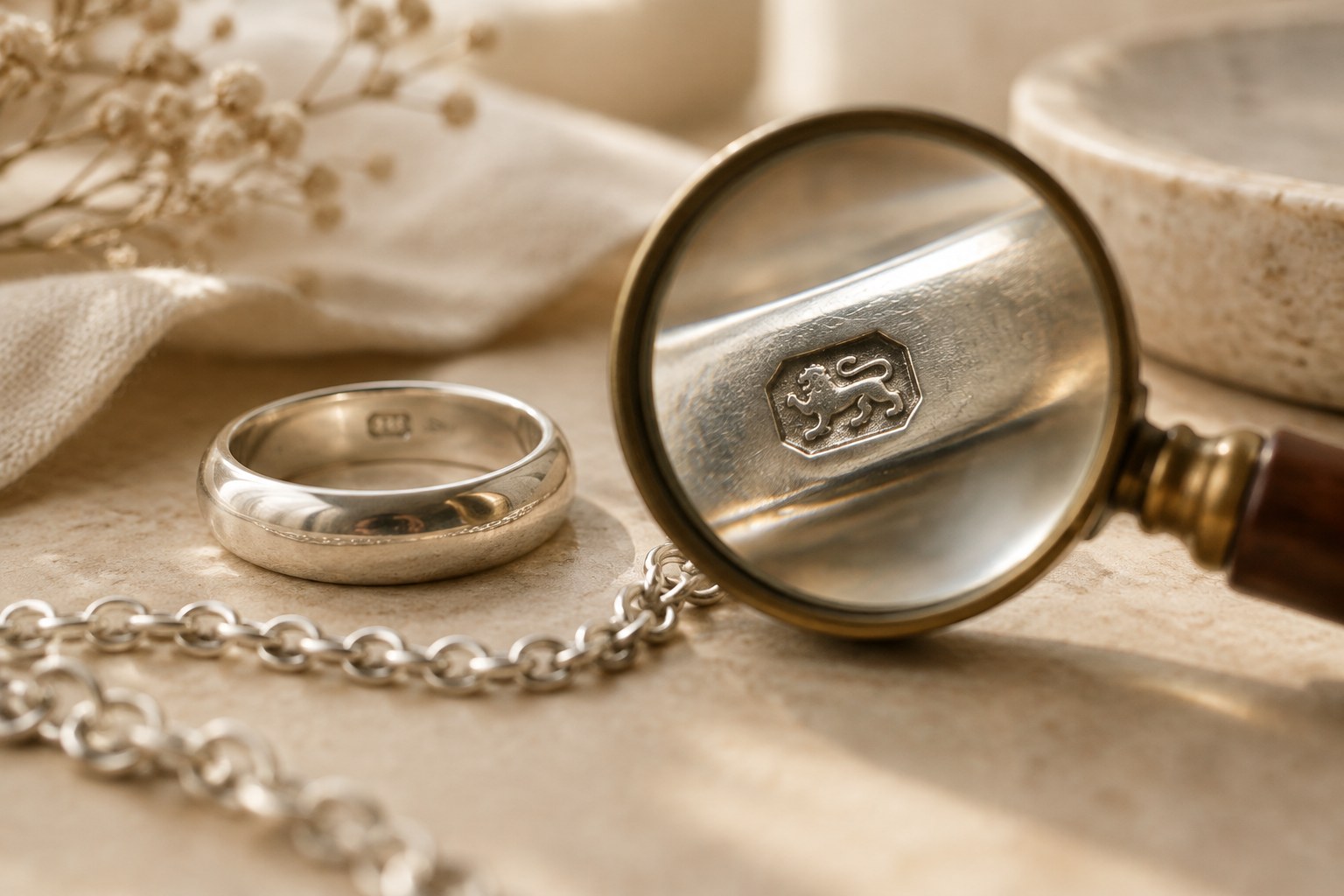
The fastest test is a stamp. Genuine sterling silver is 92.5 per cent pure silver, so look for "925", "Sterling" or "Sterling Silver" marked discreetly on the piece - inside rings, on clasps, on the back of pendants. British and European pieces may carry a full hallmark set from an assay office, including a maker's mark and sometimes a lion passant for sterling. Fine silver is marked 999, and older or continental pieces may show 800 or 835. No stamp at all does not prove a fake - vintage and handmade pieces can be unmarked - but a stamp is the first thing a jeweller checks, and you should too. Be alert to plating terms: "silver plated", "EPNS" or "German silver" all mean base metal underneath.
The magnet test
Silver is not magnetic. Hold a strong magnet (a neodymium magnet from a hardware shop is ideal) near the piece: if it snaps to it, the core is steel or nickel and the piece is not solid silver. A gentle pull or none at all is what you want. Caveat: clasps sometimes contain small steel springs, so test the body of the piece, and remember the test rules things out rather than proving them - several non-silver metals are also non-magnetic.
The ice test
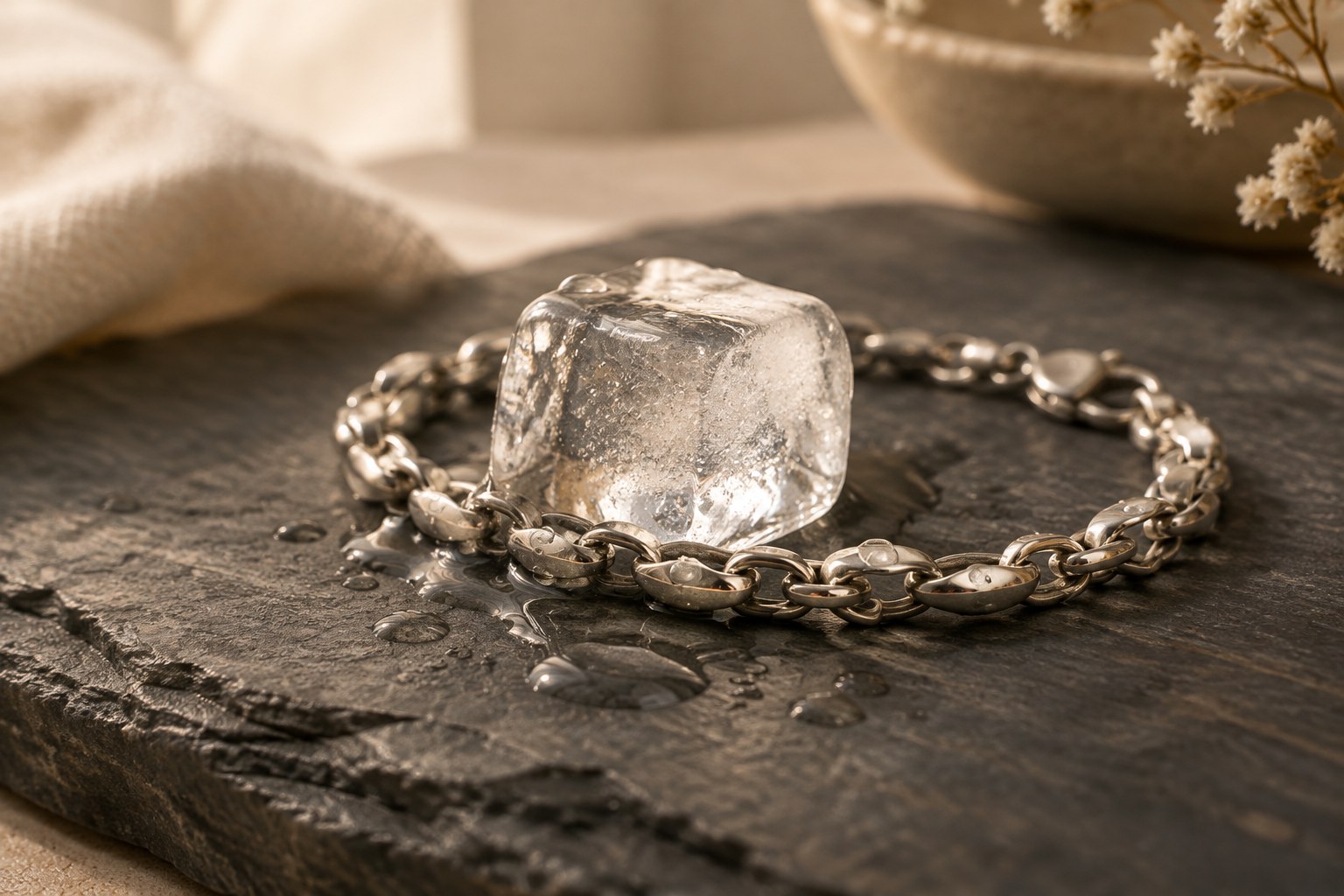
Silver has the highest thermal conductivity of any common metal - it moves heat astonishingly fast. Place an ice cube on the piece and watch: on real silver the ice starts melting almost immediately, visibly faster than on a table surface or a coin of another metal. It is a simple party trick that exploits real physics, and it is hard for imitations to fake.
AI-generated illustration; not a Shewah product or a scale measurement.
SHEWAH Editorial Concept Illustration (Non-Catalogue)
The sound and smell checks
Tap the piece gently with another metal item and listen: silver answers with a bright, high, ringing tone that lingers, while plated or base metals thud dull and short. Then the stranger-sounding but reliable smell test: rub the piece and sniff your fingers. Real silver is odourless; a metallic, sulphurous or "coiny" smell betrays brass, copper or cheap alloys beneath a silvery surface.
The cloth test
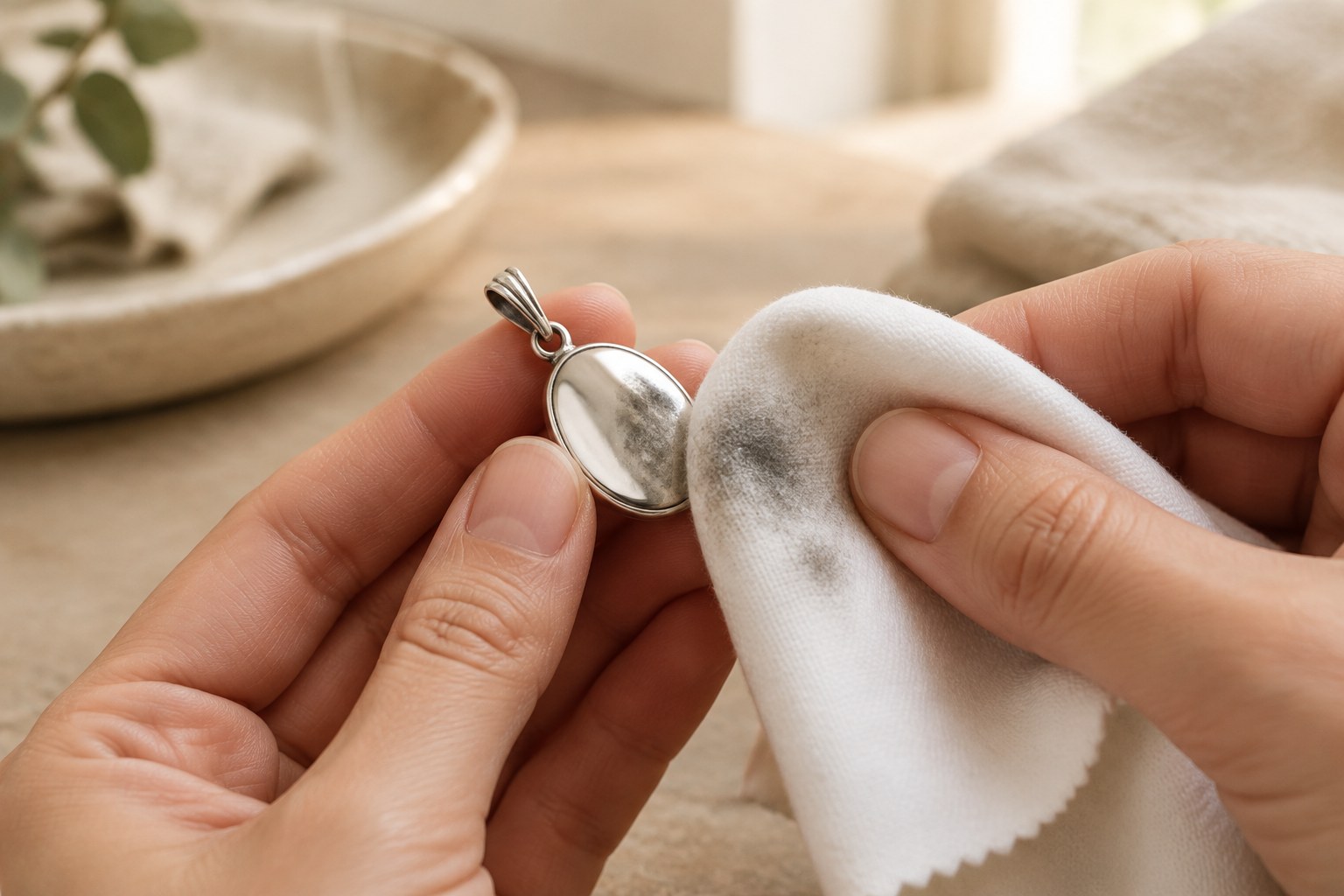
Real silver tarnishes - that dark film is silver sulphide, and it transfers. Rub the piece briskly with a soft white cloth: genuine silver often leaves faint black marks on the cloth. No marks at all on a piece that has clearly been worn can actually be suspicious, since plated items have nothing to oxidise.
When home tests are not enough
Each of these checks is a filter, not a verdict; a clever fake can pass several. For pieces of real value, a jeweller or assay office can test precisely - XRF analysis reads metal composition in seconds without touching the surface. When buying, the strongest protection is the seller: established jewellers who stamp, describe and stand behind their metal.
Wear metal you can trust with Shewah
Shewah works in hallmarked gold and certified lab-grown diamonds, made in Surat and described honestly, so tests are a formality rather than a gamble. Explore Shewah's jewellery, or message us on WhatsApp at +91 96622 66360 with any question about metals.
AI-generated illustration; not a Shewah product or a scale measurement.
SHEWAH Editorial Concept Illustration (Non-Catalogue)
Sources
The Maison Shewah Atelier Standard
Every creation referenced across our journal essays is made individually to order using solid 18K gold and independently certified diamonds (IGI & GIA). We uphold complete material transparency and zero synthetic plating.
Research & Gemological References
- [1]How to Test Silver at Home: 7 Easy Ways to Tell if Silver Is Real — Angara (Verified: 2026-10-26)
- [2]Ice Test, Bleach Test, Ring Test: Which Silver Test Is Most Reliable? — Antique Identifier (Verified: 2026-10-26)
- [3]A Buyer's Guide: How to Spot Genuine 925 Silver — GIVA (Verified: 2026-10-26)


