Hearts and Arrows Diamonds: What the Pattern Really Tells You
“The pattern is real and it means something, just not everything: a calm guide to hearts-and-arrows diamonds for buyers.”
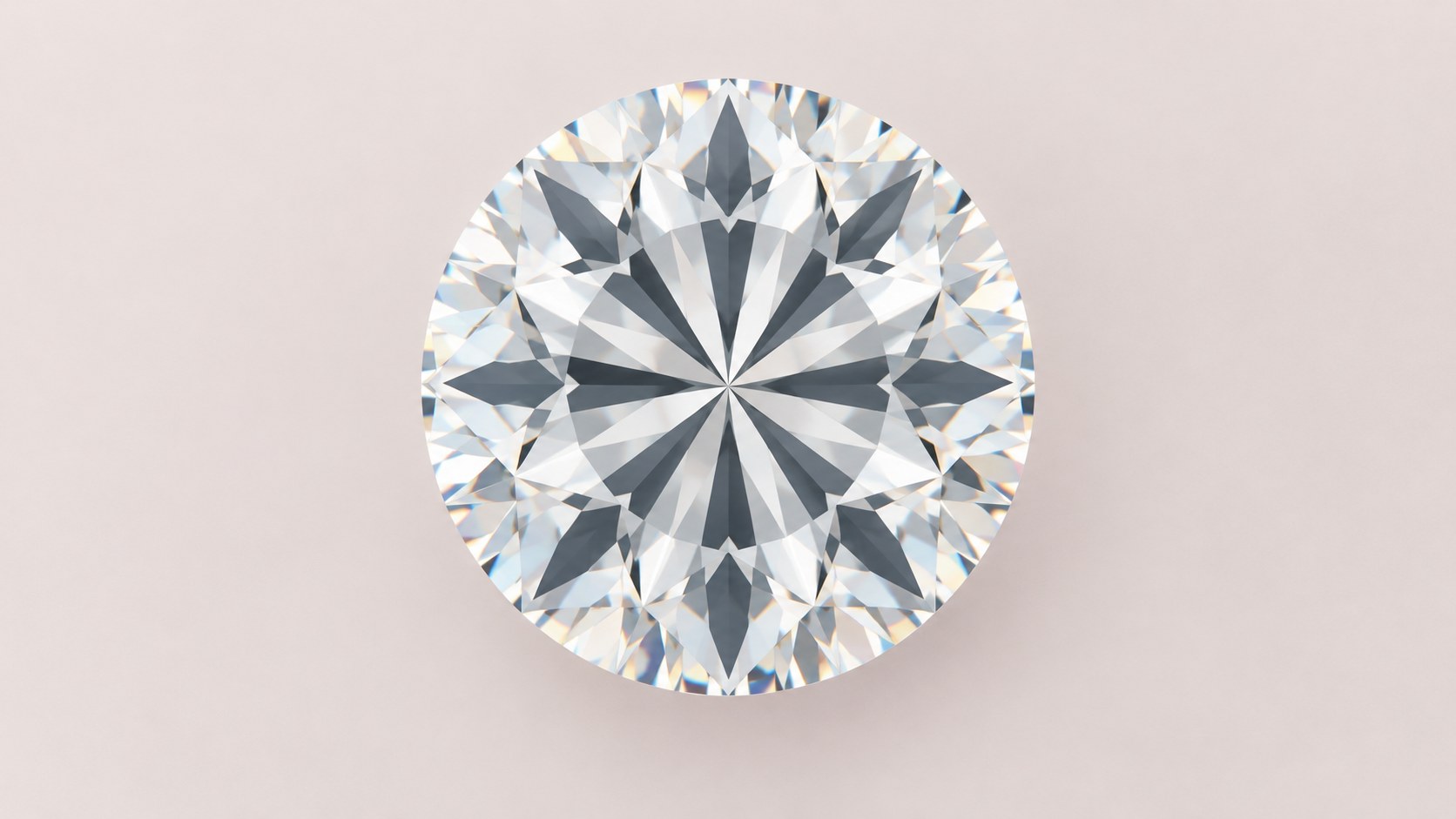
AI-generated illustration; not a Shewah product or a scale measurement.
SHEWAH Editorial Concept Illustration (Non-Catalogue)
If you have shopped for a round diamond, you may have come across the phrase "hearts and arrows", usually accompanied by mesmerising photographs and confident claims. The pattern is real, it does mean something, and it does not mean everything. Here is a calm explanation.
What the pattern is
Hearts and arrows is an optical effect seen in round brilliant diamonds cut with extremely precise facet alignment. Viewed from above through a special viewer, the diamond shows a pattern of eight arrows; flipped over, it shows eight hearts. The effect comes from symmetry so exact that light reflects off the facets in an orderly, repeating design, first documented in Japanese diamonds in the 1980s and now used worldwide as a quick check of cutting precision.
What it tells you
A crisp hearts-and-arrows pattern is good evidence of careful cutting. Producing it requires tight control over facet angles and placement, so the pattern signals that the cutter prioritised optical precision, not just weight retention. For a buyer, it is a quick, visual way to see that a stone's symmetry has been taken seriously.
What it does not tell you
The pattern is not a complete verdict on beauty. It lives inside a viewer, not in everyday viewing, and a diamond can show a textbook pattern while other aspects of its cut still fall short. Equally, an attractive, lively diamond does not have to display perfect hearts and arrows; plenty of well-cut stones show a partial pattern. Treat it as one encouraging signal sitting alongside the cut assessment on the grading report, not as a substitute for it. Proportions, polish and the way the stone handles light in the room in front of you still decide whether a diamond is genuinely beautiful.
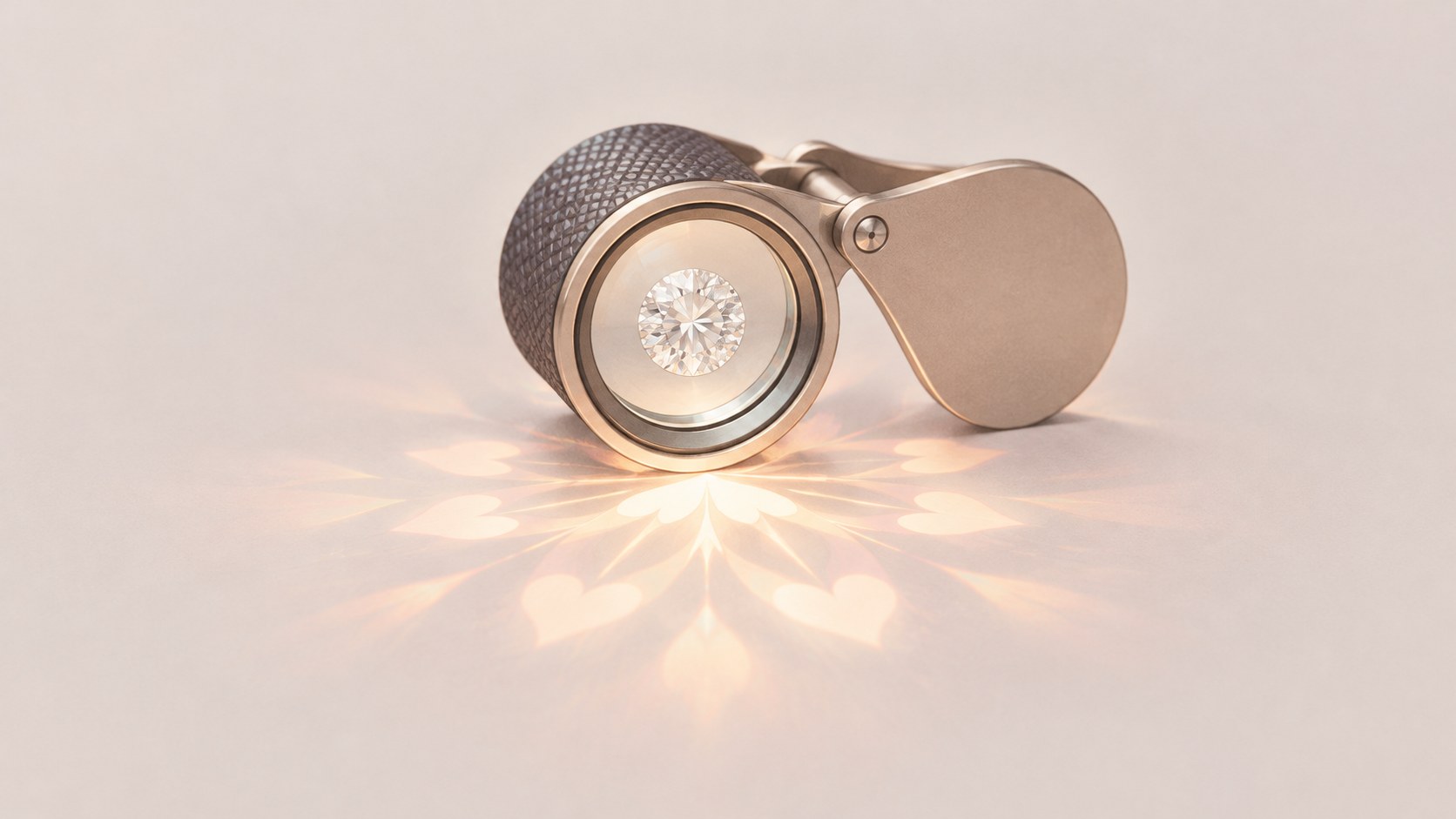
AI-generated illustration; not a Shewah product or a scale measurement.
SHEWAH Editorial Concept Illustration (Non-Catalogue)
How to judge it well
If a stone is presented as hearts and arrows, ask to see the viewer images for that exact diamond, not stock photographs. Look for evenness: the hearts should match each other in size and shape, and the arrows should be crisp and consistent. A slightly fuzzy pattern is common and not automatically a problem; simply weigh it together with how the stone performs in real light in front of you.
Lab-grown and the pattern
Because lab-grown rough is produced in controlled conditions, cutters can plan a stone for optical precision from the start, and plenty of lab-grown round brilliants show clean hearts and arrows. Nothing about the pattern is exclusive to mined diamonds. The same buying approach applies: ask for viewer images of the specific stone, check the evenness, and weigh the pattern next to the overall cut assessment.
What to check and ask
Ask whether the pattern was photographed from the actual stone, ask about the cut assessment overall, and always finish by looking at the diamond itself in daylight. The best test of beauty is still your own eye, with the pattern as supporting evidence rather than the headline.
Cut with care, with Shewah
At Shewah, cut quality is where we start every conversation about a lab-grown diamond, and we are glad to walk you through what each detail on the report really means. Explore Shewah's jewellery or message us on WhatsApp at +91 96622 66360.
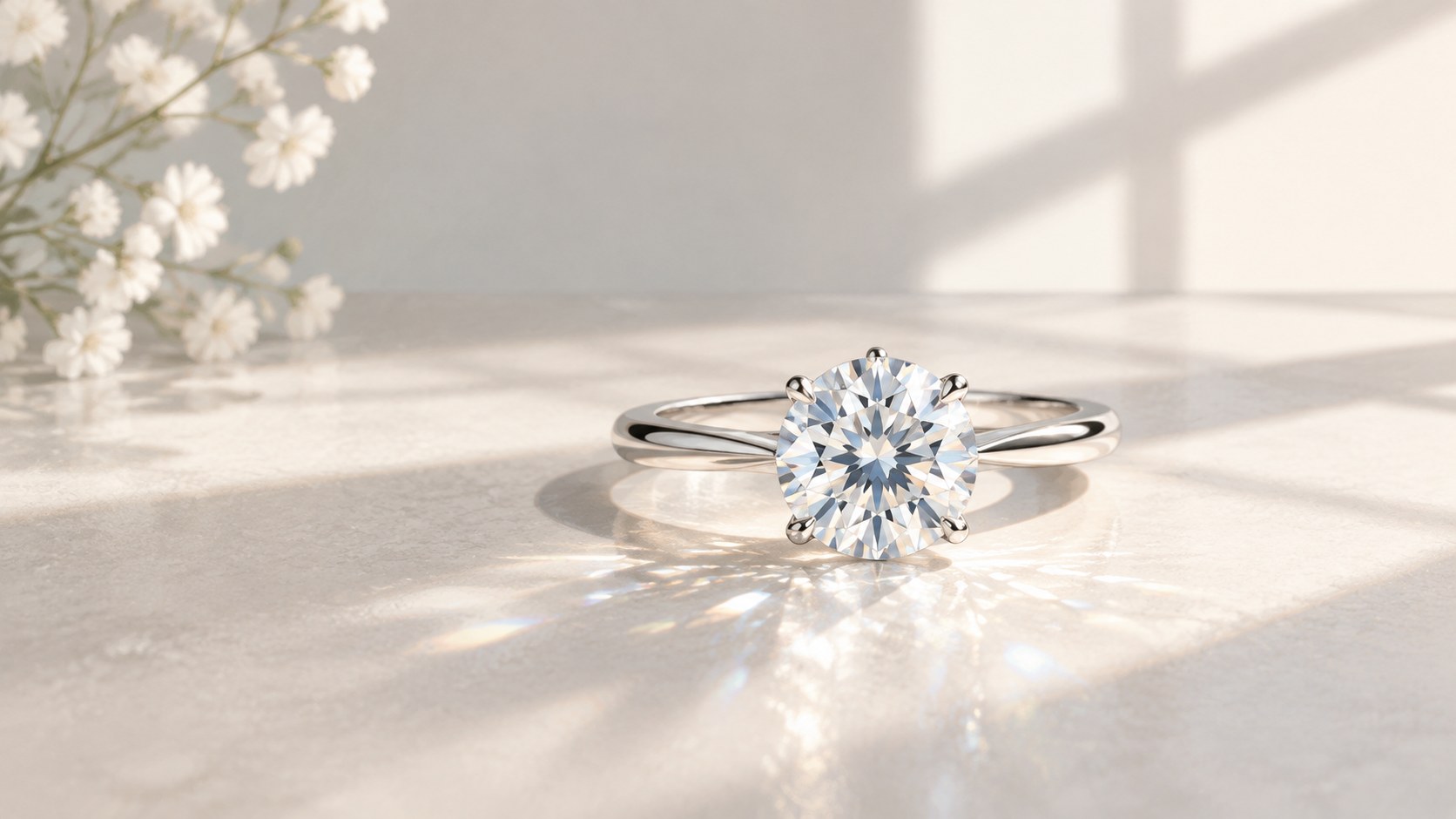
AI-generated illustration; not a Shewah product or a scale measurement.
SHEWAH Editorial Concept Illustration (Non-Catalogue)
Sources
- Diamond cut (Wikipedia) - https://en.wikipedia.org/wiki/Diamond_cut
- Brilliant (gemstone cut) (Wikipedia) - https://en.wikipedia.org/wiki/Brilliant_(diamond_cut)
- Diamond (gemstone) (Wikipedia) - https://en.wikipedia.org/wiki/Diamond_(gemstone)
The Maison Shewah Atelier Standard
Every creation referenced across our journal essays is made individually to order using solid 18K gold and independently certified diamonds (IGI & GIA). We uphold complete material transparency and zero synthetic plating.
Research & Gemological References
- [1]Diamond cut — Wikipedia (Verified: 2026-11-03)
- [2]Brilliant (gemstone cut) — Wikipedia (Verified: 2026-11-03)
- [3]Diamond (gemstone) — Wikipedia (Verified: 2026-11-03)