10K, 14K, 18K or 22K Gold? Purity Explained
“The number decides the colour, hardness and price of your gold. A plain guide to 10K, 14K, 18K and 22K, and which one suits your piece.”

AI-generated illustration; not a Shewah product or a scale measurement.
SHEWAH Editorial Concept Illustration (Non-Catalogue)
Walk into any jeweller in the US, UK or Australia and you will be offered gold in 10K, 14K, 18K or 22K. The number tells you how much of the metal is actually gold, and it quietly decides almost everything else: the colour, the hardness, the price and how the piece wears over a lifetime. Choosing between them is not about "best." It is about which trade-off suits the piece and your habits.
Here is what each purity means and how to choose.
What the number means
Gold purity is measured in carats (spelled karat in the US when talking about gold), out of 24. Pure gold is 24 carat. Divide the number by 24 and you have the gold content:
- 10K - 41.7% gold
- 14K - 58.3% gold
- 18K - 75% gold
- 22K - 91.7% gold
The rest is alloy: copper, silver, zinc, palladium or nickel, added because pure gold is too soft for most jewellery. The World Gold Council notes that the legal minimum to call something "gold" varies by country: 10K in the US, and 9K (37.5%) in the UK, Ireland and France. You may also see a three-digit stamp, like 750 or 585. That is fineness, the same purity expressed in parts per thousand.
10K: the tough one
At 41.7% gold, 10K is the hardest and most scratch-resistant of the common golds, and the most affordable. The trade-off is a paler colour and, for some people, a higher chance of skin reaction to the alloy metals. In the US it is a popular, practical choice for everyday rings. A simple 10K gold band might retail around $250 to $400 where the same band in 18K could run $600 to $900.
14K: the everyday sweet spot
At 58.3% gold, 14K balances colour, durability and price better than any other purity, which is why it is the most popular gold in the United States. It is rich enough to read as unmistakably gold, hard enough for daily wear, and forgiving for hands that work. For engagement rings and wedding bands worn every day for decades, 14K is the default recommendation in much of the trade.
AI-generated illustration; not a Shewah product or a scale measurement.
SHEWAH Editorial Concept Illustration (Non-Catalogue)
18K: the luxury standard
At 75% gold, 18K has the deep, warm colour people picture when they think of fine gold jewellery. It is the prestige standard in the UK, Europe and Australia, and the purity most high jewellery houses work in. It is softer than 14K, so it scratches more readily, but for rings, earrings and pendants worn with ordinary care, it wears beautifully and develops a gentle patina.
22K: the heritage choice
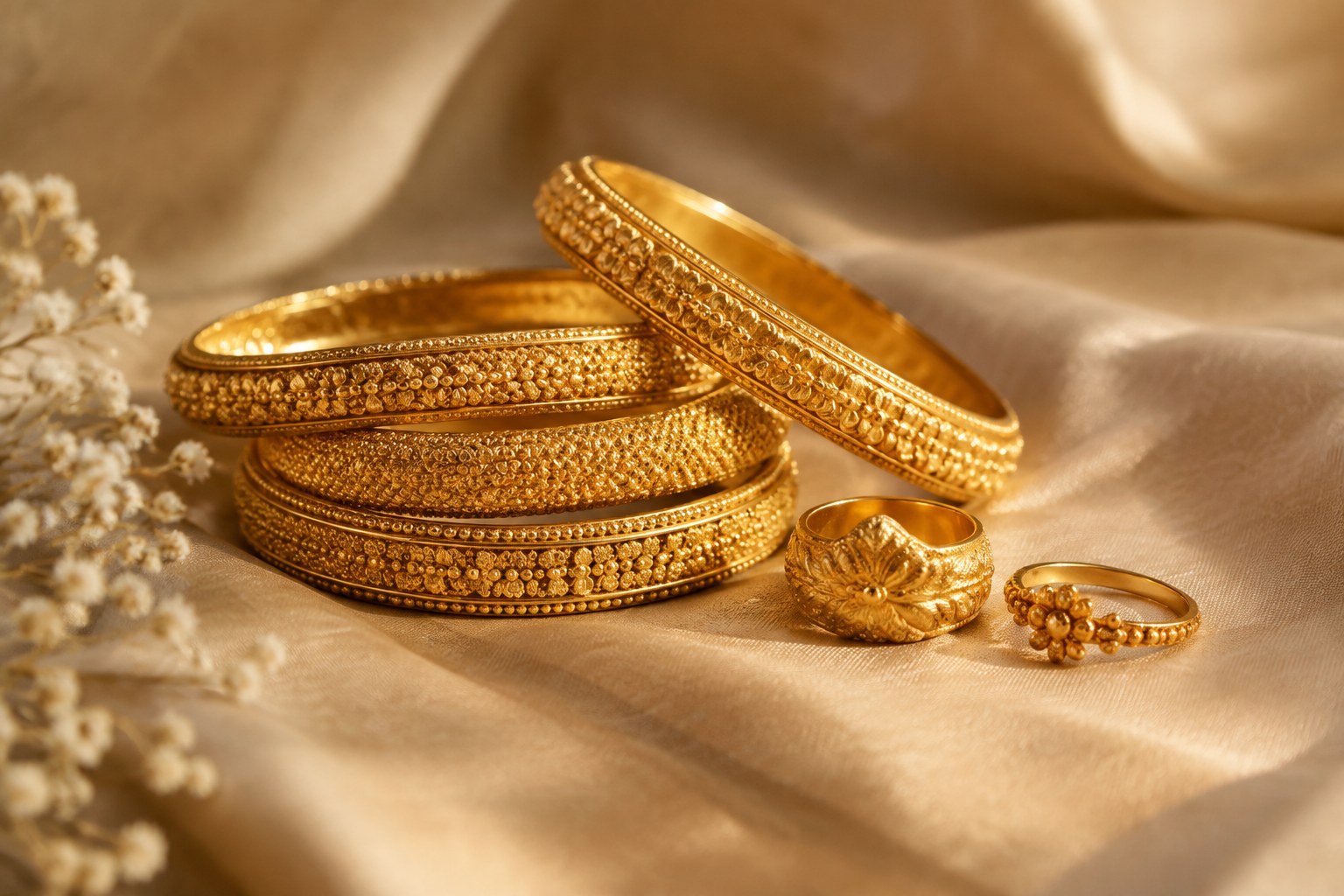
At 91.7% gold, 22K glows with an almost buttery yellow richness. It is the traditional purity for wedding and ceremonial jewellery across South Asia, the Middle East and parts of Asia, where high-purity gold carries cultural and store-of-value meaning. It is noticeably soft: fine for necklaces, earrings and bangles, but a 22K ring on a working hand will pick up dents. Stone settings in 22K are usually reinforced or made in a harder alloy for security.
Which purity for which piece
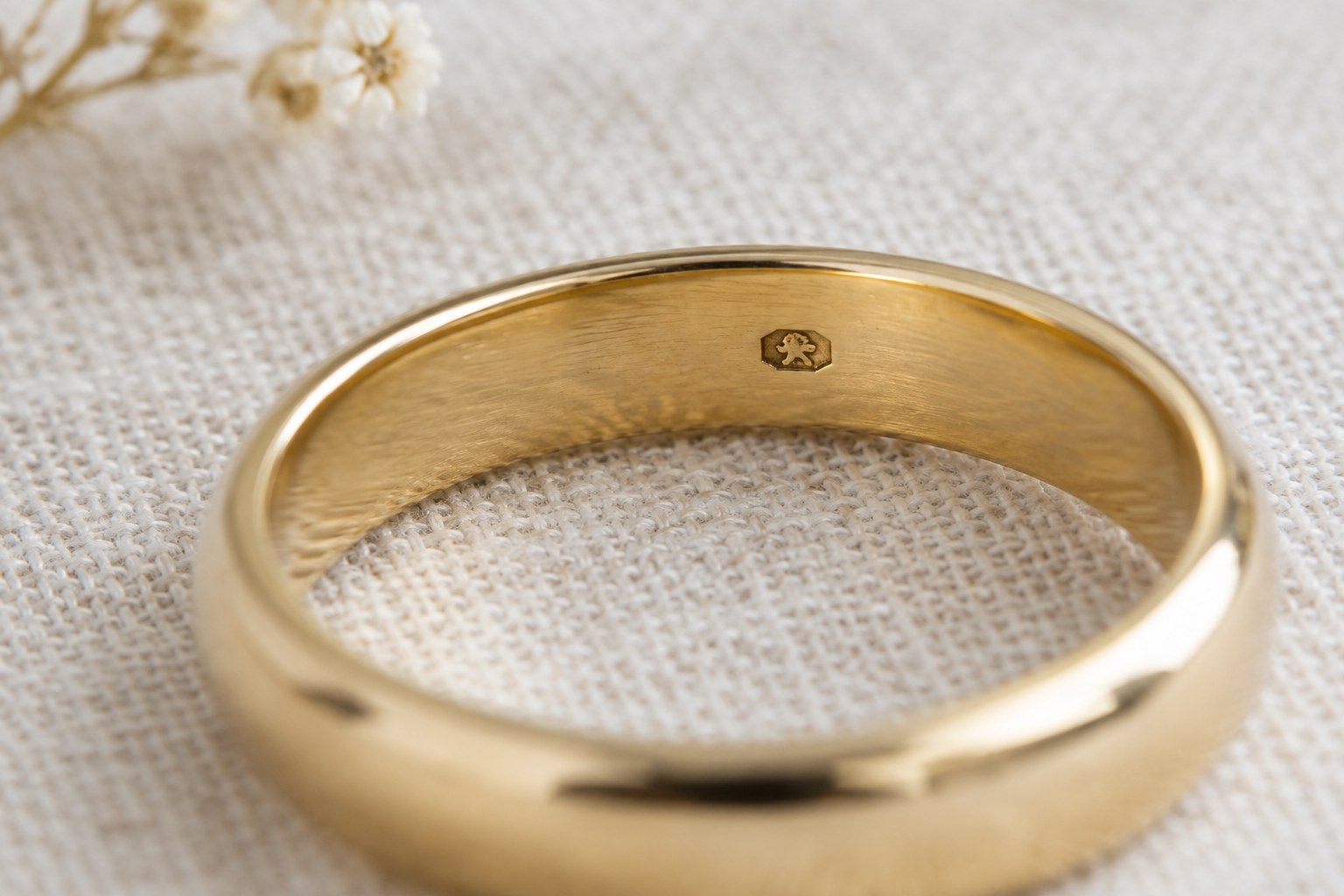
Match the metal to the job. Engagement rings and wedding bands worn daily: 14K or 18K. Earrings and pendants: 18K or 22K, since softness hardly matters. Bangle stacks and heritage pieces: 22K. Tight budgets or rough-and-tumble wear: 10K. And whatever you choose, check the stamp: 10K/417, 14K/585, 18K/750 or 22K/916 should be marked on the piece, alongside any assay or hallmarks your country requires.
Crafted in your chosen gold with Shewah
Tell us the piece and the purity you prefer, and we will make it to order, hallmarked and quoted before work begins.
Explore Shewah's jewellery or contact us on WhatsApp at +91 96622 66360 to discuss metals.
AI-generated illustration; not a Shewah product or a scale measurement.
SHEWAH Editorial Concept Illustration (Non-Catalogue)
Sources
- Gold Jewellery: Colour, Carat & Purity - World Gold Council
- Fineness - Wikipedia
The Maison Shewah Atelier Standard
Every creation referenced across our journal essays is made individually to order using solid 18K gold and independently certified diamonds (IGI & GIA). We uphold complete material transparency and zero synthetic plating.
Research & Gemological References
- [1]Gold Jewellery: Colour, Carat & Purity — World Gold Council (Verified: 2026-10-15)
- [2]Fineness — Wikipedia (Verified: 2026-10-15)


