Diamond Shapes, Explained: Round to Emerald and Everything Between
“Shape is the first decision most people fall in love with. How the main diamond shapes differ in sparkle, size look and price.”

AI-generated illustration; not a Shewah product or a scale measurement.
SHEWAH Editorial Concept Illustration (Non-Catalogue)
Round, oval, pear, emerald, cushion, princess, marquise, radiant, asscher, heart: diamond shapes are the first decision most people fall in love with, often before they know a single grade. Shape is the outline of the stone, and it changes everything about how a ring looks on the hand: its sparkle style, its apparent size, and how it sits in a setting.
Here is what separates the main shapes and how to choose one you will love in ten years, not just today.
First, shape is not cut
People use the words interchangeably, but they mean different things. Shape is the outline: round, oval, square. Cut is the quality of the faceting within that outline, the thing that decides sparkle. You can have a beautifully cut oval and a badly cut oval; both are ovals. When a report gives a cut grade, it is judging the second, not naming the first.
Round brilliant: the benchmark
The round brilliant is the most popular diamond shape by a wide margin, and the only one with a formal cut grade from GIA, because its 57 or 58 facets have been mathematically optimised for brilliance. It is the sparkliest shape, the most forgiving of lower colour and clarity, and the most expensive per carat, partly because cutting a round wastes more rough diamond.
Oval, pear and marquise: the elongators
Ovals deliver near-round brilliance in an outline that looks bigger per carat and lengthens the finger. Pears combine a rounded end with a point for a teardrop effect; marquise stones stretch that idea to a dramatic boat shape. All three can show a "bow tie," a faint dark band across the middle, so judge these shapes in photos or video, not just on paper.
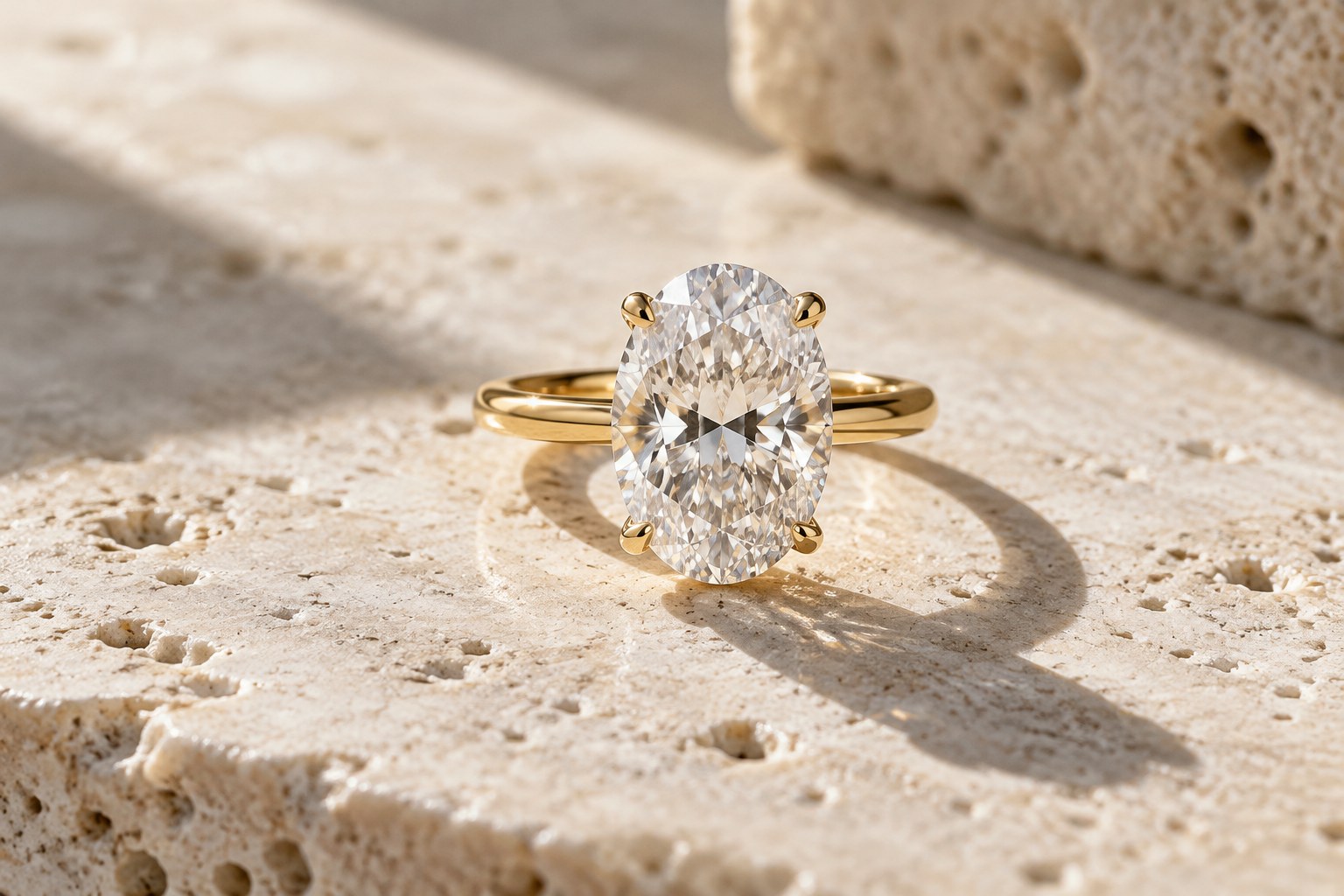
AI-generated illustration; not a Shewah product or a scale measurement.
SHEWAH Editorial Concept Illustration (Non-Catalogue)
Cushion and princess: the soft and the sharp
Cushions are rounded squares with a vintage, candlelit glow. Princess cuts are crisp, modern squares with sharp corners and strong brilliance, though those corners need protective prongs. Both usually cost less per carat than rounds while looking distinctly stylish.
Emerald, asscher and radiant: the step cuts
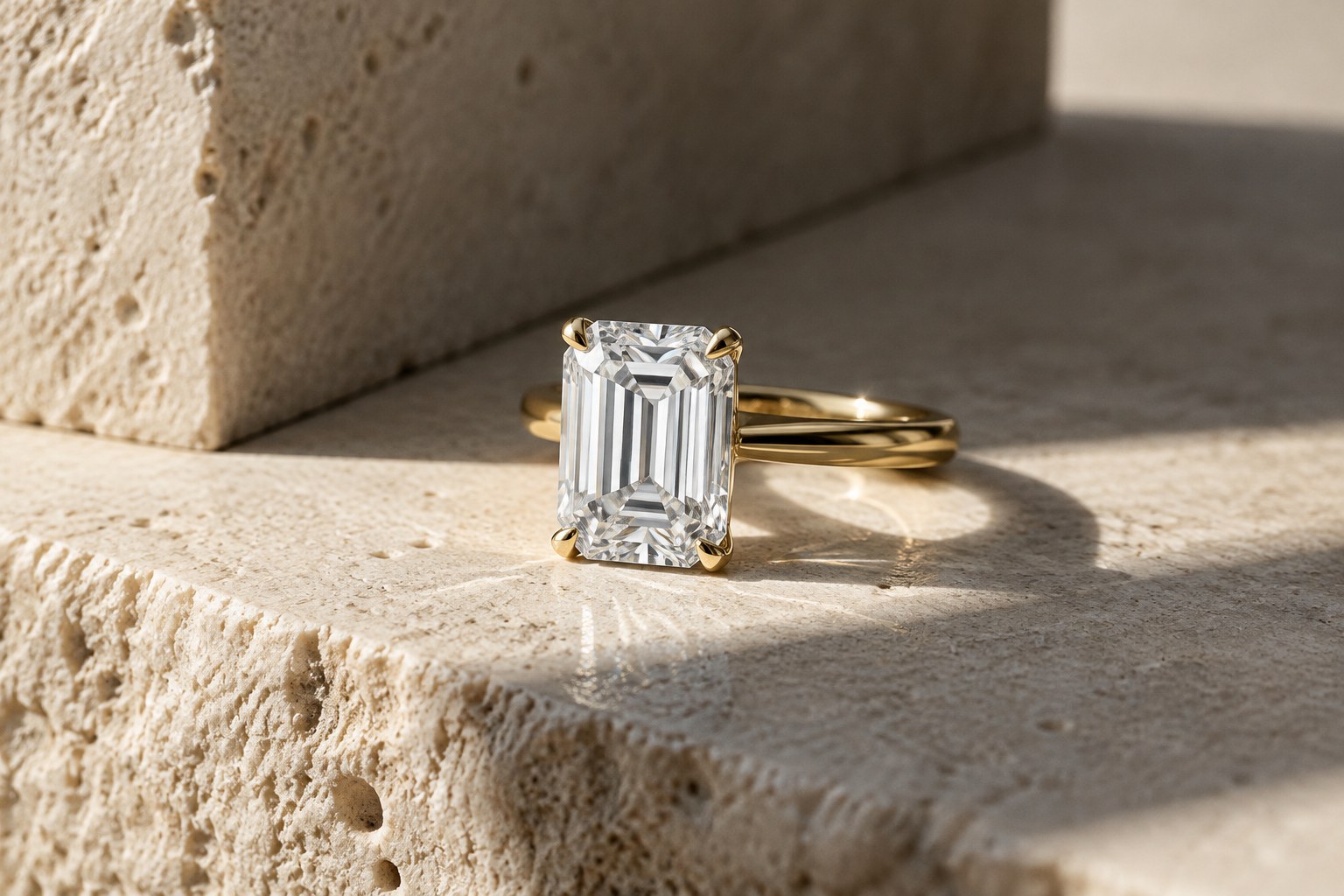
Emerald and asscher cuts use long, parallel facets that create a hall-of-mirrors effect: elegant, architectural flashes instead of disco sparkle. The trade-off is honesty: step cuts reveal inclusions and colour more readily, so budget for a grade or two higher in clarity. Radiant cuts split the difference, pairing a rectangular outline with brilliant-style faceting for more sparkle.
Heart: the romantic outlier
Heart shapes are unmistakable and sentimental, best at sizes large enough for the cleft and lobes to read clearly, usually from about half a carat up.
How shape affects price and size
As a rough rule, fancy shapes cost 10 to 30 percent less per carat than rounds of the same quality, so a $3,000 lab-grown budget buys a visibly larger oval or cushion than round. Elongated shapes also face up bigger: a one-carat oval covers more of the finger than a one-carat round.
Choosing for the hand and the habit
Long shapes flatter shorter fingers; wider shapes like cushion and princess balance slender ones. If you are hard on your hands, favour shapes without fragile points, or protect points with V-prongs. And remember the setting: a halo can make any shape look larger, while a plain solitaire lets the outline speak for itself.
Cut your perfect shape with Shewah
Tell us the shape you keep coming back to, and we will source certified lab-grown diamonds in it and design the ring around your favourite.
Explore Shewah's jewellery or contact us on WhatsApp at +91 96622 66360 to compare shapes.
AI-generated illustration; not a Shewah product or a scale measurement.
SHEWAH Editorial Concept Illustration (Non-Catalogue)
Sources
- Guide to Diamond Shapes for Engagement Rings - GIA 4Cs
- Diamond Shapes: Price and Size Comparison - International Gem Society
The Maison Shewah Atelier Standard
Every creation referenced across our journal essays is made individually to order using solid 18K gold and independently certified diamonds (IGI & GIA). We uphold complete material transparency and zero synthetic plating.
Research & Gemological References
- [1]Guide to Diamond Shapes for Engagement Rings — GIA 4Cs (Verified: 2026-10-15)
- [2]Diamond Shapes: Price and Size Comparison — International Gem Society (Verified: 2026-10-15)


