Diamond Meaning and Properties: April's Birthstone
“Diamond is April's birthstone and the hardest material in nature. Discover what diamond means, from billion-year origins to laboratory-grown stones.”
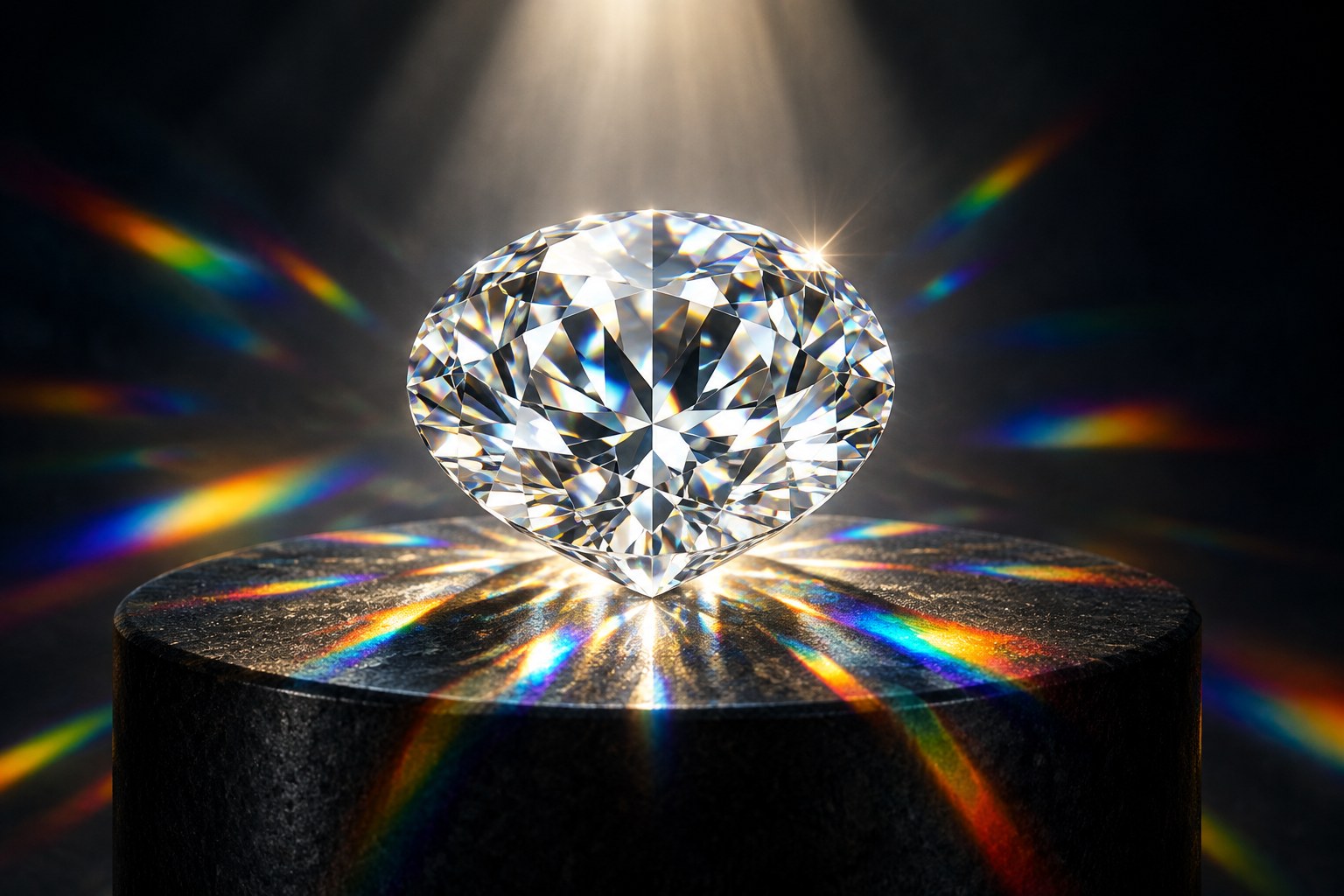
AI-generated illustration; not a Shewah product or a scale measurement.
SHEWAH Editorial Concept Illustration (Non-Catalogue)
One gem has become the word for precious itself. Diamond is the hardest natural material on Earth, the classic stone of engagement rings, and the birthstone for April. Whether mined from deep in the mantle or grown in a laboratory, its meaning has stayed remarkably constant. Here is the story and science behind it.
A billion years in the making
Diamond forms under conditions that exist only about 100 miles beneath the Earth's surface, where heat and pressure force carbon atoms into a rigid three-dimensional bond. Most diamonds formed more than a billion years ago. It is the only gem made of a single element, carbon, and chemistry alone shows how extraordinary the structure is: graphite is also pure carbon, yet soft enough to write with, while diamond can be scratched only by another diamond.
The hardest thing in nature
Diamond is the hardest natural material known: 58 times harder than anything else found in nature, a perfect 10 on the Mohs scale. It conducts heat better than any other gem, too, which is why a diamond feels cold against the lip in the old jeweller's test. That hardness is why diamond defines the top of every durability chart, and why a diamond ring can be worn daily for a lifetime. Rarity adds to the legend: the average yield in most diamond mines is one part diamond to one million parts host rock.
Meaning: enduring love, written in stone
Unsurprisingly, a stone this permanent came to symbolise permanence itself. Diamond stands for enduring love, strength and clarity, which is exactly why it became the engagement ring stone. It is the birthstone for April on almost all modern lists, and it marks the 60th and 75th wedding anniversaries: the gem for love that has truly lasted.
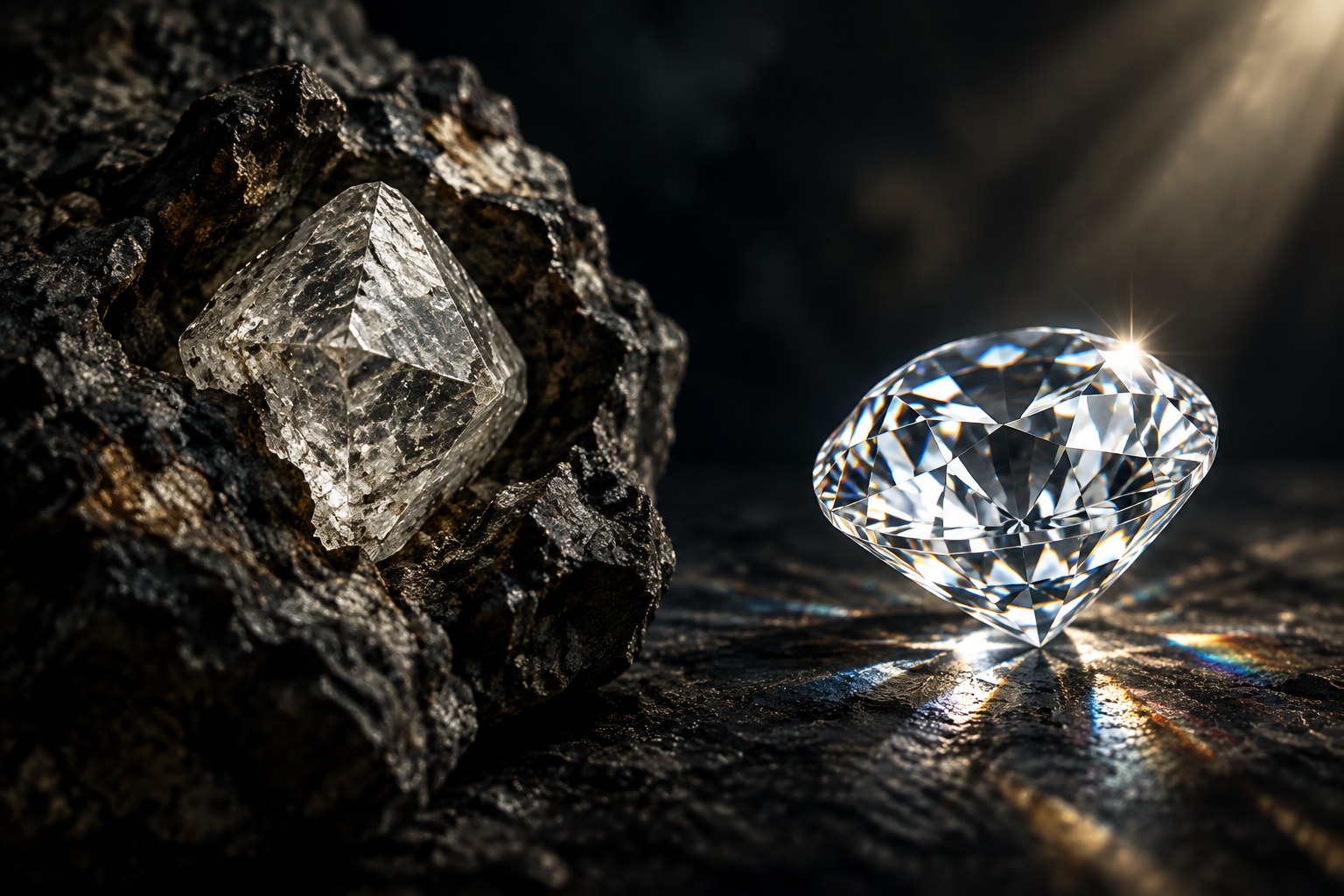
AI-generated illustration; not a Shewah product or a scale measurement.
SHEWAH Editorial Concept Illustration (Non-Catalogue)
From mantle to laboratory
Natural diamonds tell a billion-year story, and laboratory-grown diamonds tell a scientific one: the same carbon structure, the same hardness, the same optics, grown in weeks. Chemically, physically and optically they are identical; only origin differs. Whichever you choose, the meaning, April birthday and all, travels with the stone, while lab-grown puts far more size and quality within a given budget in US dollars.
The April gift
For an April birthday, diamond is the definitive gesture, and it does not have to mean a ring: stud earrings, a pendant or a tennis bracelet all carry the same birthstone meaning. Lab-grown diamonds have changed what that gesture costs. Where a mined one-carat stone might strain a budget, a lab-grown diamond of the same size and quality typically costs a fraction of the price in US dollars, leaving room for better cut, better colour, or simply more stone.
The scale of the extraordinary
The numbers behind diamond read like poetry. Fifty light years away sits a star nicknamed Lucy, a celestial diamond estimated at 10 billion trillion trillion carats. Back on Earth, the human contribution to a diamond's beauty is the cut: nature supplies the hardness, the cutter supplies the light. A well-cut stone returns light to the eye as brilliance and fire; a poorly cut one leaks it away. This is why cut is the first thing to prioritise in any diamond purchase, whatever the origin.
Find your diamond with Shewah
Shewah crafts certified lab-grown diamond jewellery in solid gold, made to order in Surat and shipped to the US, UK and Australia. Explore Shewah's jewellery or message us on WhatsApp at +91 96622 66360 to create an April gift that lasts forever.
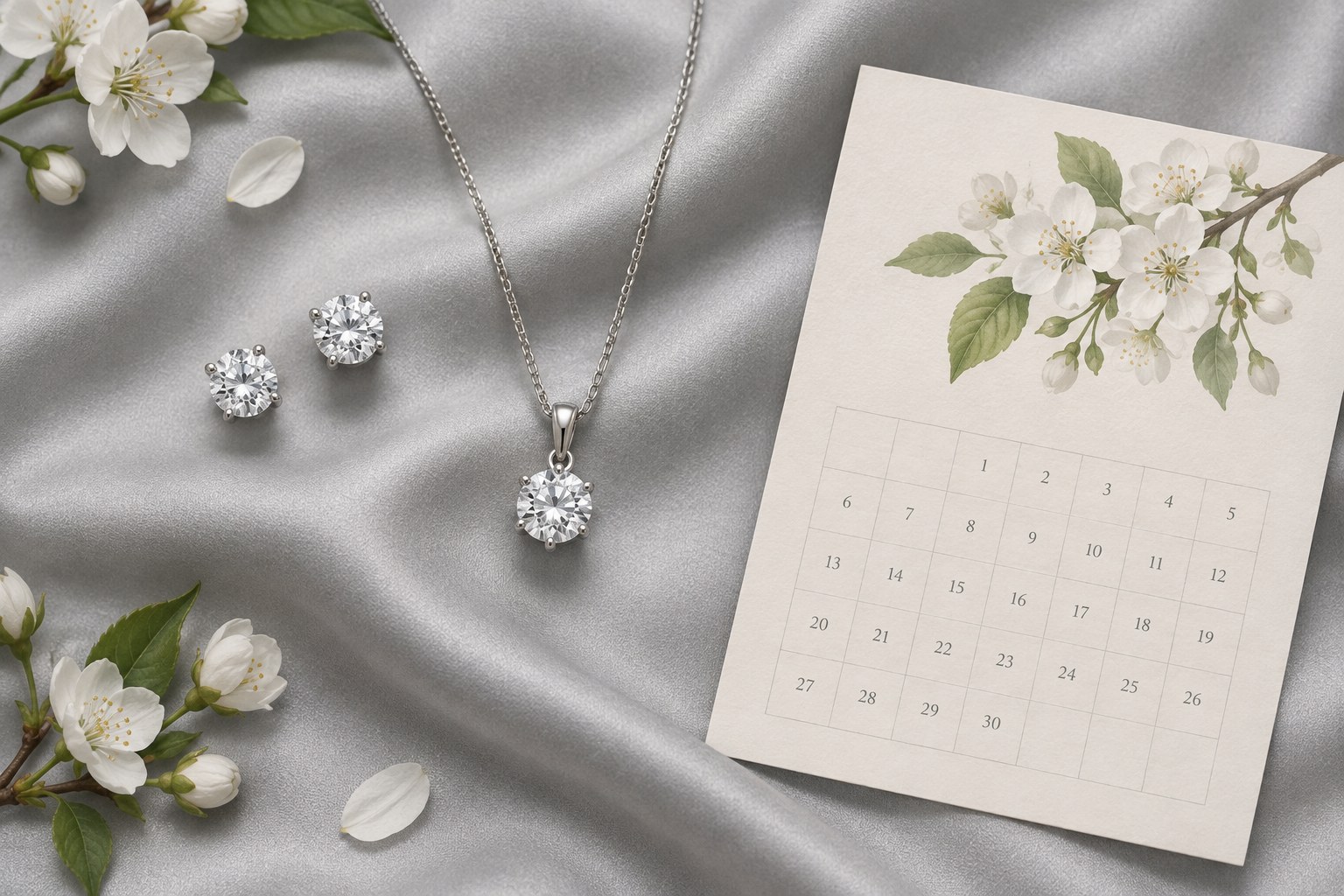
AI-generated illustration; not a Shewah product or a scale measurement.
SHEWAH Editorial Concept Illustration (Non-Catalogue)
Sources
- Diamond Gemstone - GIA
The Maison Shewah Atelier Standard
Every creation referenced across our journal essays is made individually to order using solid 18K gold and independently certified diamonds (IGI & GIA). We uphold complete material transparency and zero synthetic plating.
Research & Gemological References
- [1]Diamond Gemstone — GIA (Verified: 2026-10-21)


