Diamond Fluorescence: What It Is and When It Matters
“Fluorescence is a glow under UV light, not a flaw: what it is, the one genuine red flag, and what to ask before you buy.”
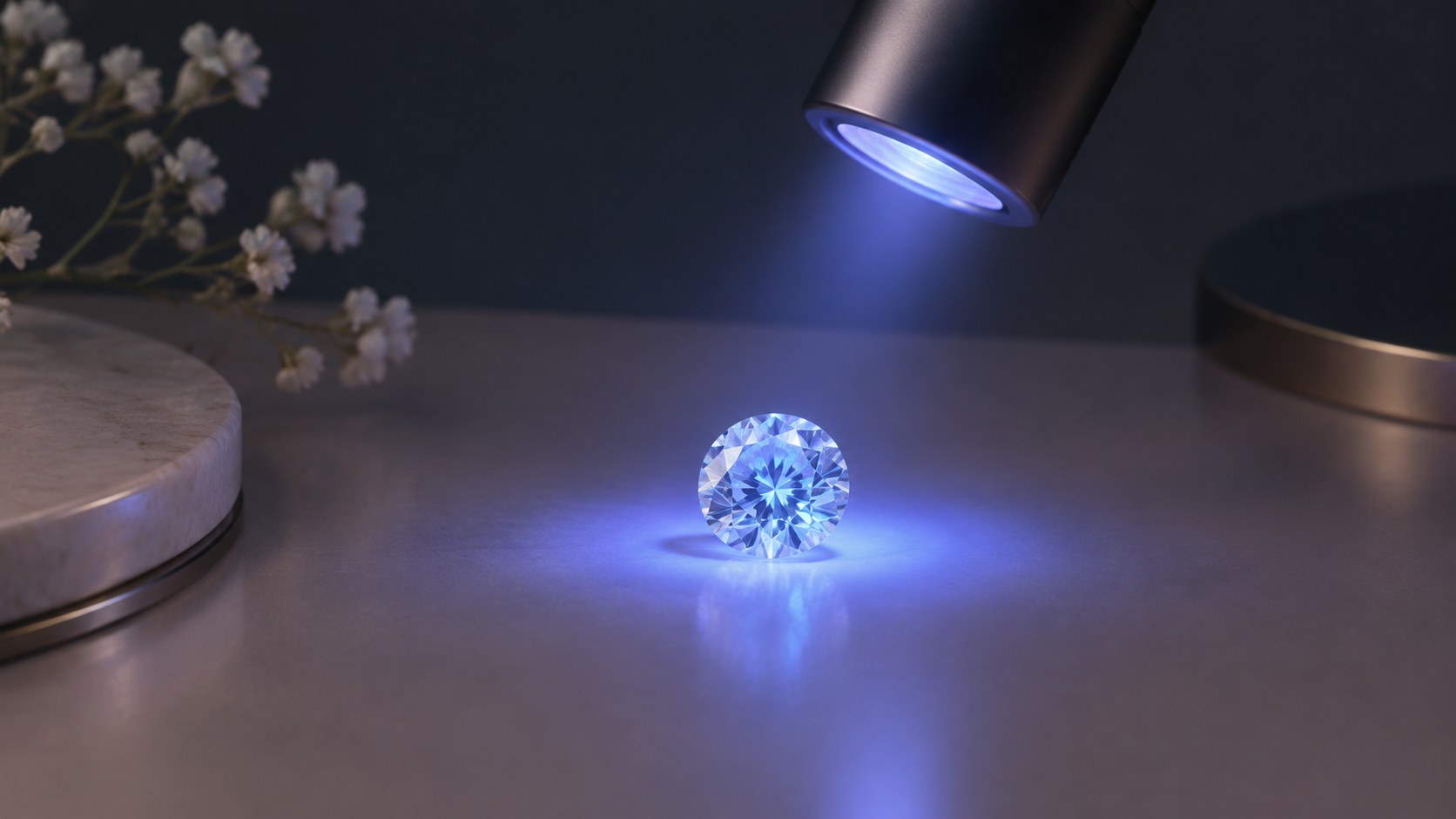
AI-generated illustration; not a Shewah product or a scale measurement.
SHEWAH Editorial Concept Illustration (Non-Catalogue)
Some diamond buyers open a grading report, spot the word "fluorescence" and freeze. Others have never heard of it and wear a fluorescent diamond happily for years. The truth sits calmly in between: fluorescence is a natural characteristic, usually invisible, occasionally useful, and only rarely a reason to walk away from a stone.
What fluorescence actually is
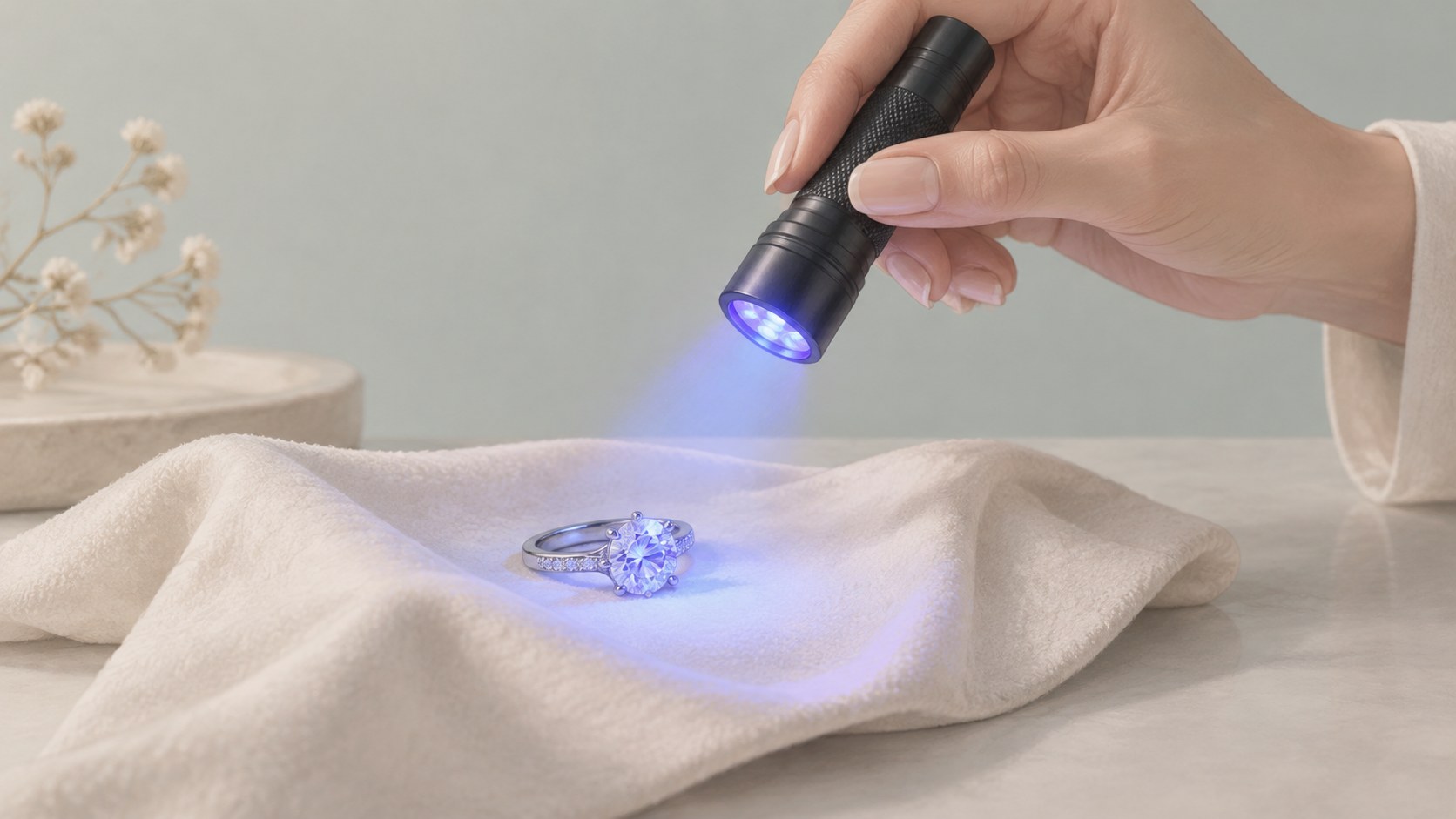
Fluorescence is a soft glow some diamonds emit when ultraviolet light hits them. Trace elements inside the crystal absorb UV energy and re-release it as visible light, most often blue. Under everyday indoor lighting, where there is little UV, you see nothing unusual at all. Roughly a third of gem-quality diamonds show some degree of it, graded from none through faint, medium and strong.
When it matters
Two situations deserve your attention. First, a small share of strongly fluorescent diamonds can look hazy or oily, as if a film sits inside the stone. This is uncommon, but it is the one genuine red flag, and you can only judge it by looking at the actual diamond, not the report line. Second, in diamonds with warmer body colour, faint to medium blue fluorescence can make the stone appear a touch whiter in daylight, because sunlight contains UV. Some buyers seek this out deliberately.
What it does not affect
Fluorescence says nothing about hardness, durability or whether a diamond is real. It does not make a stone more fragile, and it does not change how the diamond looks under restaurant lighting, office lighting or evening lamps, which is where most of life happens.
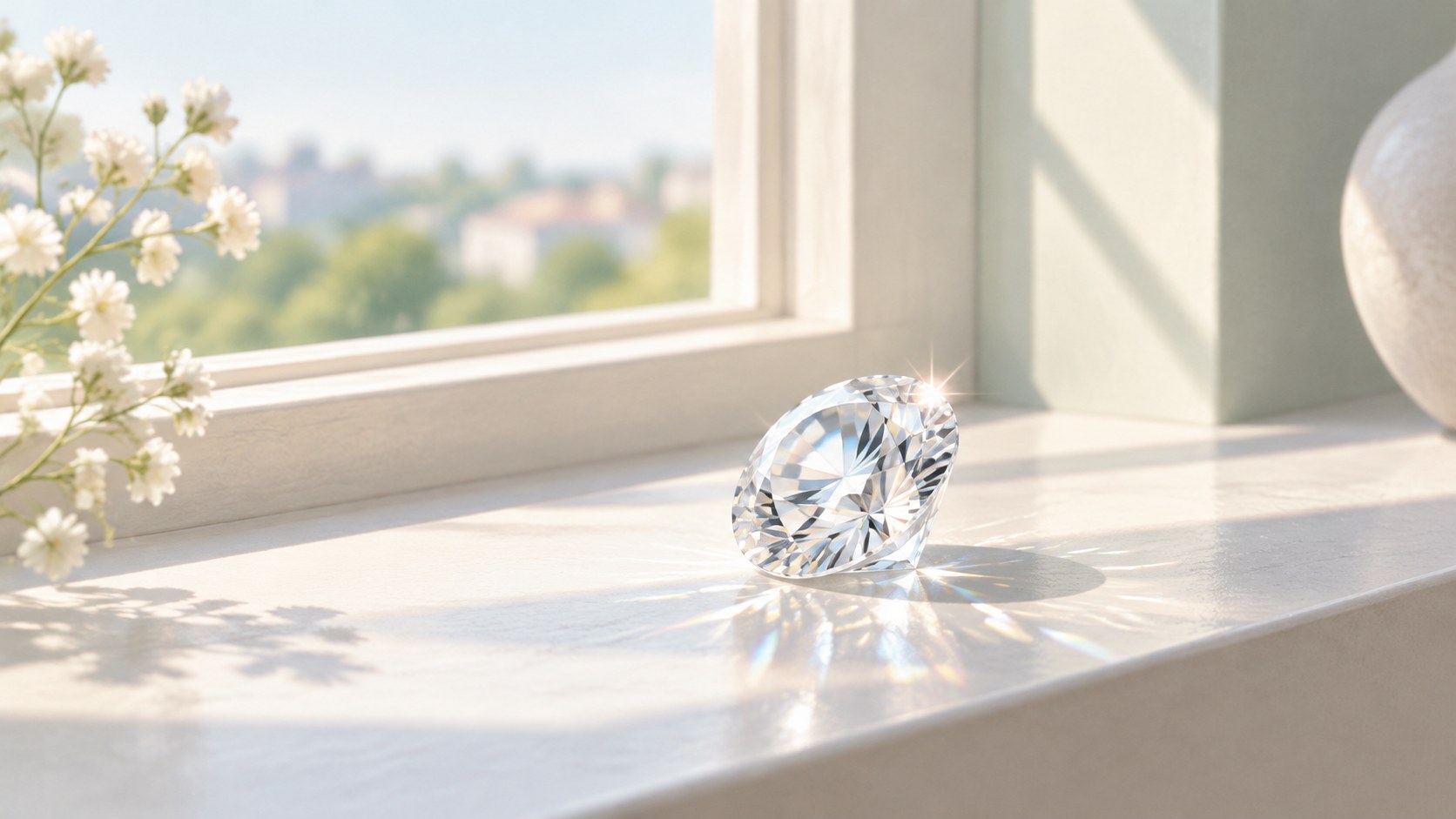
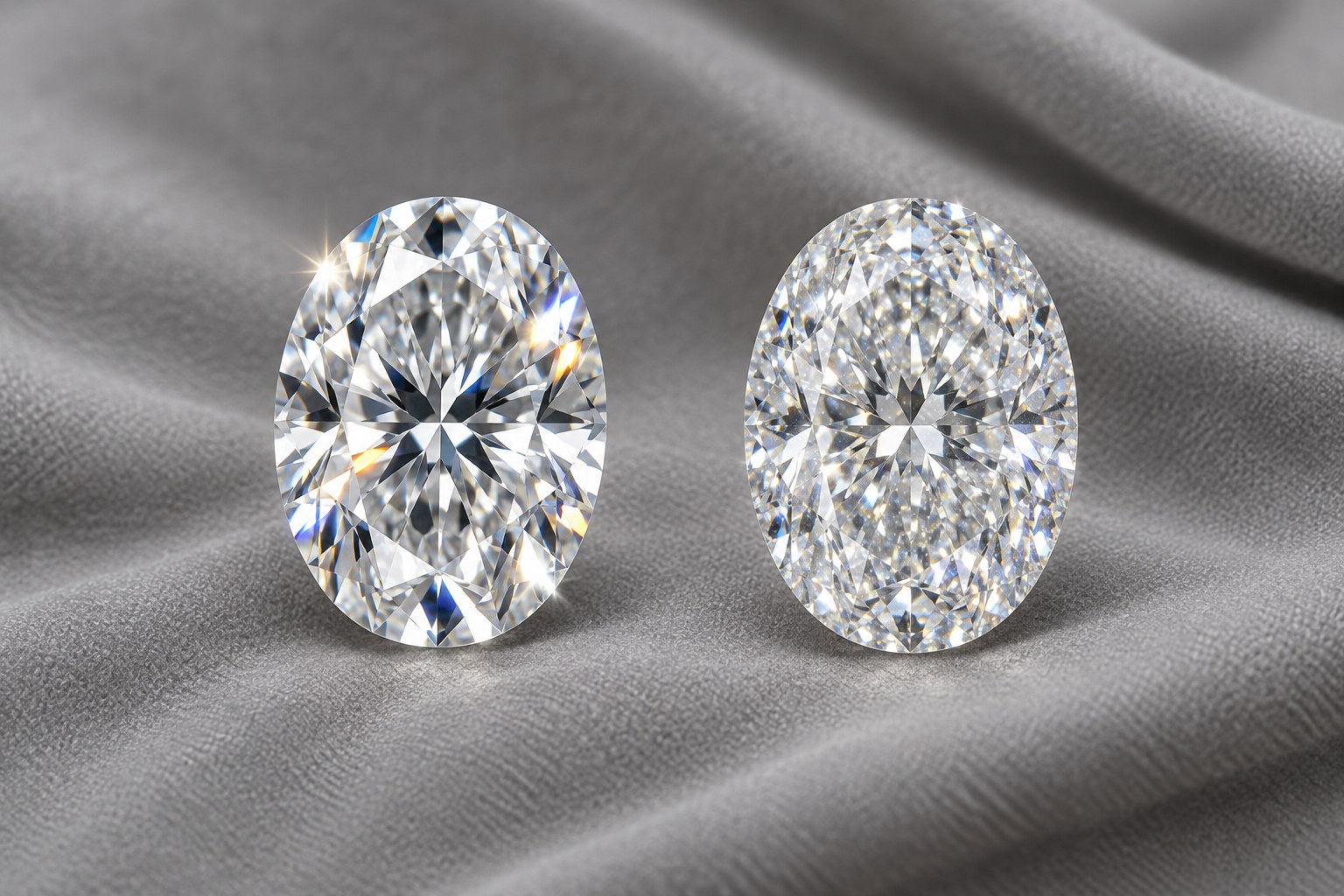
AI-generated illustration; not a Shewah product or a scale measurement.
SHEWAH Editorial Concept Illustration (Non-Catalogue)
Fluorescence in lab-grown diamonds
Lab-grown diamonds can show fluorescence just as mined ones do, because it comes from trace chemistry inside the crystal rather than from where the crystal grew. The reading is identical: note the strength on the report, then judge the individual stone with your own eyes in daylight. A clean, bright fluorescent lab-grown diamond is simply a diamond with a hidden party trick.
The myths to ignore
Fluorescence is not a defect that needs forgiving. Plenty of crisp, bright, lively diamonds carry medium or strong fluorescence with no haze at all. Equally, a "none" grade is not a badge of superiority; it simply describes a stone that stays quiet under UV. Treat the line on the report as information, not a verdict. It is also worth knowing that fluorescence has no link to how a diamond was grown or mined; it appears across natural and lab-grown stones alike, and neither origin makes it more or less desirable.
What to check and ask
Ask the strength grade, then ask to see the stone in natural daylight and under a UV lamp if one is available. Look for transparency: a good fluorescent diamond looks perfectly clear, just with a blue glow under UV. If a strongly fluorescent stone looks even slightly milky in daylight, choose a different stone. If it looks clean and bright, you have simply found a characteristic many buyers overlook.
Clear answers, with Shewah
At Shewah, every lab-grown diamond comes with its full grading details, and we will happily show you stones under different lighting before you decide. Explore Shewah's jewellery or message us on WhatsApp at +91 96622 66360 with any question about a specific diamond.
AI-generated illustration; not a Shewah product or a scale measurement.
SHEWAH Editorial Concept Illustration (Non-Catalogue)
Sources
- Fluorescence (Wikipedia) - https://en.wikipedia.org/wiki/Fluorescence
- Diamond (gemstone) (Wikipedia) - https://en.wikipedia.org/wiki/Diamond_(gemstone)
- Ultraviolet (Wikipedia) - https://en.wikipedia.org/wiki/Ultraviolet
The Maison Shewah Atelier Standard
Every creation referenced across our journal essays is made individually to order using solid 18K gold and independently certified diamonds (IGI & GIA). We uphold complete material transparency and zero synthetic plating.
Research & Gemological References
- [1]Fluorescence — Wikipedia (Verified: 2026-11-03)
- [2]Diamond (gemstone) — Wikipedia (Verified: 2026-11-03)
- [3]Ultraviolet — Wikipedia (Verified: 2026-11-03)