Custom Engagement Rings: A Design and Approval Checklist
“Plan a custom engagement ring with a clear checklist for stone details, dimensions, design approval, ring size, price and delivery before ordering.”

AI-generated illustration; not a Shewah product or a scale measurement.
SHEWAH Editorial Concept Illustration (Non-Catalogue)
A custom engagement ring starts with a clear brief, not a perfect drawing. You need to agree on the stone, metal, proportions, fit and order terms before a design can become the ring you want.
GIA's custom-ring guide recommends thinking about timing, stone shape, style, metal and ring size before meeting a jeweller. This checklist turns those decisions into questions you can use during design and approval.
Whether you plan a proposal for a particular date or are choosing the ring together, confirm the actual timeline for your order. Do not assume that a generic lead time covers stone sourcing, design changes and delivery to your destination.
1. Describe the finished look
Start with a few preferences you can explain: a compact ring, an elongated stone, a plain band or a more decorative outline.
Choose a small set of references and say what you like about each. You may prefer the stone shape in one image and the band proportions in another. Tell the jeweller that, instead of asking them to guess which details matter.
Also say what you do not want. A low setting, a particular metal colour or space for a future wedding band may be important enough to guide the entire design.
A reference image is a starting point. It does not prove that the same construction suits a different stone or that every detail can be reproduced in your chosen dimensions.
2. Name your stone preferences
Confirm the stone's identity and whether you want a natural diamond, a laboratory-grown diamond or a coloured gemstone. Have that choice stated in the written quote.
For a diamond, ask for the available laboratory documentation and the actual stone specifications. Check the report with the issuing laboratory rather than relying on a laboratory name in a description.
For coloured gemstones, ask what origin information is available, whether treatments are disclosed and what care the finished ring will need. Do not assume every stone can be worn or cleaned in the same way.
If the jeweller is still sourcing the stone, distinguish a sample image from the stone being offered. Ask when you will see the actual stone and which specifications will be confirmed before production.
3. Compare dimensions, not only carat weight
Carat describes weight. Length and width in millimetres help you understand how a stone's outline will appear on the hand.
Ask for the centre-stone dimensions, band width and proposed setting height. If there are accent stones, separate their total weight from the centre-stone weight.
A magnified drawing can make a slim band look substantial. Ask for a normal-scale comparison or an on-hand reference where available, and keep the stated dimensions beside it.
Do not approve proportions from a single close-up image while leaving the measurements unresolved.
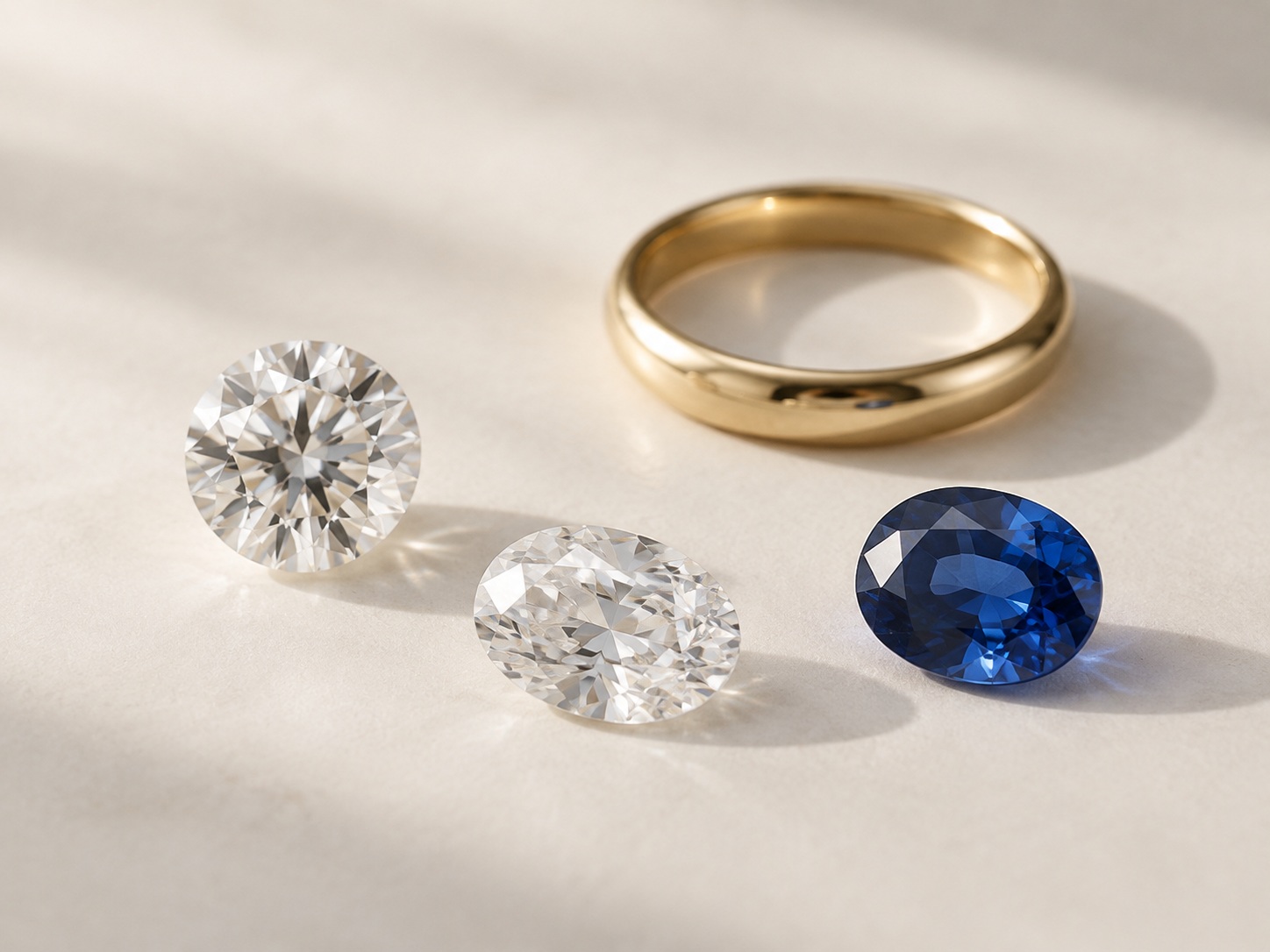
AI-generated illustration; not a Shewah product or a scale measurement.
SHEWAH Editorial Concept Illustration (Non-Catalogue)
4. Discuss the setting from every side
The top view shows the outline. The side view shows height and the relationship between the stone and band. The underside helps explain the construction around the finger.
Ask the jeweller to describe how the chosen setting holds the stone and protects any points or corners. Tell them about the way the wearer expects to use the ring, including activities where it will be removed.
If the ring needs to sit beside a wedding band, include that in the brief now. Ask whether you want a close fit or a deliberate gap and how that will be checked. A promise that a design is "stackable" is less useful than seeing the intended arrangement.
5. Confirm the actual metal
Name the alloy and metal details, not just the colour. A white-coloured ring is not automatically platinum, and a yellow-coloured ring does not establish gold purity.
Ask which parts of the ring use the agreed metal, whether any finish or plating is involved and what maintenance is recommended. If material sensitivities matter, discuss them before approving the alloy.
Do not assume a brand uses the same metal or documentation for every custom order. The final quote should describe your ring specifically.
6. Get the intended finger measured
Have the exact finger and hand measured with a proper sizer where possible. Share the proposed band width and whether the ring will be worn with another band.
For an international order, label the size system. A US number and a UK or Australian letter are different labels; millimetre measurements can help clarify the conversation, but the jeweller should confirm the final order size.
If secrecy means you only have an existing ring or an at-home estimate, explain how you obtained it. Ask what remains uncertain and what alteration options exist for the chosen design.
Do not treat future resizing as a guaranteed solution. Confirm the limits, cost and effect on the ring before ordering.
7. Agree on the design-review process
Ask what you will receive for review: written specifications, sketches, rendered views, a model or another form of preview. Confirm how changes are requested and whether there is a cost or limit to revision rounds.
Review a design against your brief rather than asking only whether it looks attractive. Check stone shape, visible proportions, band width, height and the details that matter to the wearer.
An attractive render is not a photograph of the finished ring. Lighting and presentation can change its appearance. Ask which aspects are exact measurements and which are illustrative.
Keep a clear record of the approved version. If the design changes, ask for an updated summary so an old image cannot be mistaken for the final instruction.
8. Confirm the price and timing
Request a complete quote for the agreed ring and destination. Clarify taxes, delivery and any optional services rather than assuming a headline ring price is the final payable amount.
Ask when the timeline starts. Stone selection, design approval and production may be separate stages. Confirm the expected dispatch and delivery dates, and what happens if the schedule changes.
If you have a proposal date, tell the jeweller early. GIA's custom-ring guide discusses proposal timing because custom work can take time. That supports planning ahead, not a promise that any particular ring can meet a fixed deadline.
Keep the spending limit you chose. If a requested change increases the quote, review the new total before agreeing to it.
9. Read the order terms before payment
For a custom piece, confirm cancellation, return, alteration and repair terms for that exact order. Do not assume they match an off-the-shelf product's terms.
Ask what happens if the finished ring differs from the approved specifications, and how a concern should be reported. Keep the final quote and design approval together.
For engraving, review the exact wording, spelling and date. Confirm whether engraving changes any alteration or return options.
10. Check the finished ring against the agreement
When the ring is ready, compare the final photographs or inspection with the agreed description. Confirm the stone documentation, size, metal and design details you requested.
Ask for care instructions for the complete ring and the recommended inspection routine. If a stone feels loose, a setting looks damaged or the fit is uncomfortable, contact the jeweller rather than attempting a home adjustment.
The goal is a ring you understand and enjoy wearing, not simply a design you approved quickly because the render looked polished.
Frequently asked questions
How long does a custom ring take?
Ask for the actual timeline for your design and destination. Complexity, stone selection, approvals and delivery can affect it. Do not rely on a generic number of weeks as a guarantee.
Do I need a complete drawing before contacting a jeweller?
No. A clear set of preferences, useful references and a budget can start the conversation. Ask how the jeweller will turn the brief into a design for review.
Can a custom ring use a laboratory-grown diamond?
That is a choice to discuss in the brief. Confirm the actual stone offered, its origin and available documentation in the quote rather than assuming from the design.
Is a rendered image the final product?
No. It is a design preview. Keep the distinction clear and confirm the dimensions and specifications that govern the finished order.
Can I change the design after approval?
Ask before ordering. Changes may affect price, timing or whether work must be repeated. Get the policy for your particular order in writing.
Bring your design brief to Shewah
Share your stone preference, budget, intended finger and the ring details that matter most. Include a required date if you have one, then ask for the exact design, quote and timeline before approval.
Explore Shewah's jewellery, or contact us on WhatsApp at +91 96622 66360 to discuss a custom engagement ring.
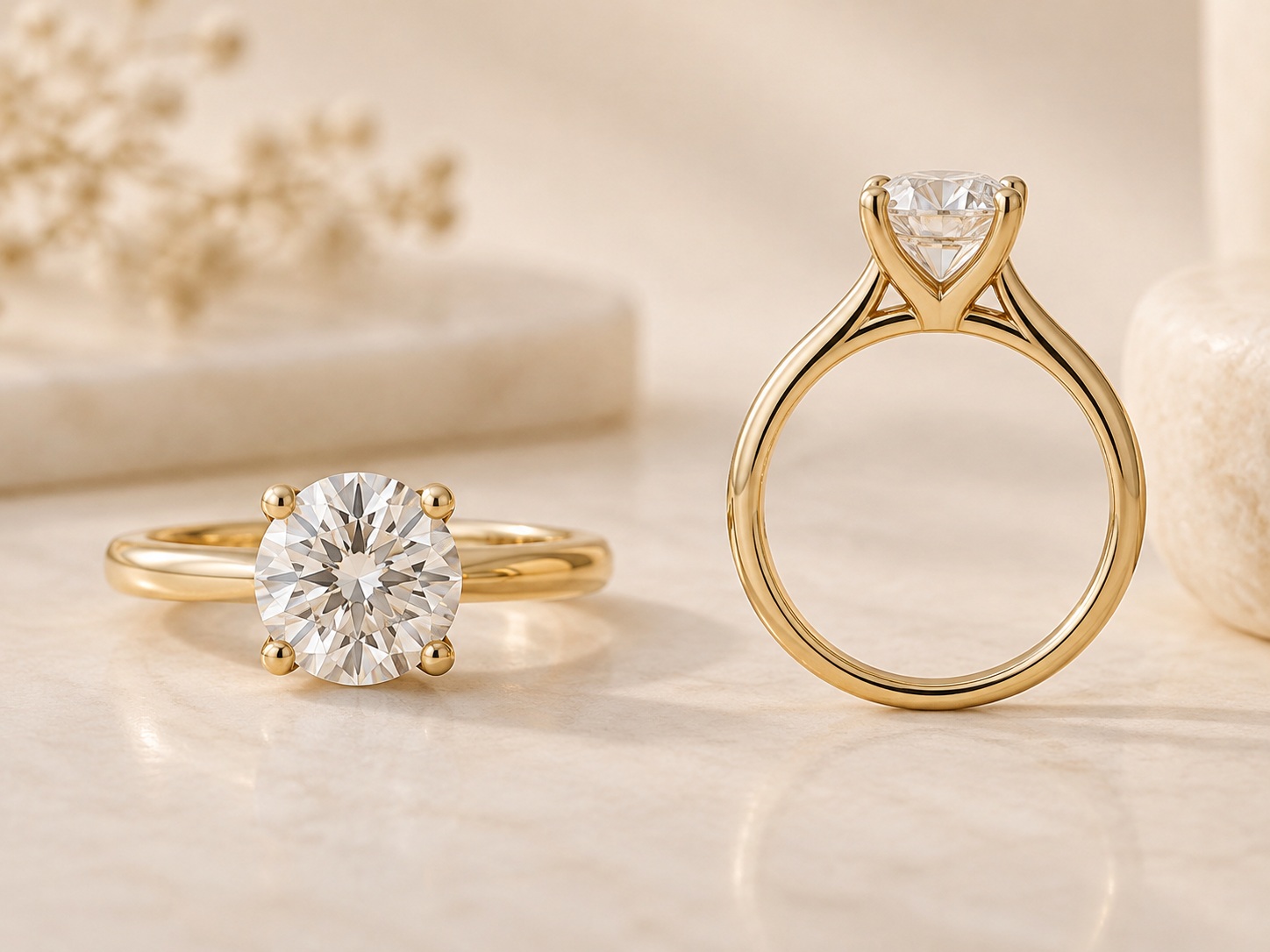
AI-generated illustration; not a Shewah product or a scale measurement.
SHEWAH Editorial Concept Illustration (Non-Catalogue)
Sources
The Maison Shewah Atelier Standard
Every creation referenced across our journal essays is made individually to order using solid 18K gold and independently certified diamonds (IGI & GIA). We uphold complete material transparency and zero synthetic plating.
Research & Gemological References
- [1]GIA: Custom Made Engagement Rings Guide — GIA (Verified: 2026-10-12)
- [2]GIA: 10 Tips for Buying an Engagement Ring — GIA (Verified: 2026-10-12)
- [3]GIA: Ring Size Guide — GIA (Verified: 2026-10-12)


