Citrine: November's Birthstone, Explained Honestly
“Sunshine in quartz: what citrine is, why most of it begins life as amethyst, and how to buy November's birthstone with open eyes.”

AI-generated illustration; not a Shewah product or a scale measurement.
SHEWAH Editorial Concept Illustration (Non-Catalogue)
Citrine is sunshine in a stone: transparent yellow to warm orange, durable, affordable and cheerful on the hand. It is also November's birthstone and one of the most frequently bought yellow gems in the world. Here is what it is, why most of it begins life as a different colour, and how to choose well.
What citrine actually is
Citrine is the transparent yellow-to-orange variety of quartz, coloured by traces of iron in its crystal structure. The range runs from pale lemon through golden yellow to a deep brownish or reddish orange, and the earthy, deep oranges are the most popular shades in today's market. At 7 on the Mohs scale, it is durable enough for any jewellery, including everyday rings.
Its tawny colour caused centuries of confusion with topaz, which is why old sources sometimes call it "topaz quartz". They are entirely different minerals; only the colour overlaps.
The open secret: most citrine starts as amethyst
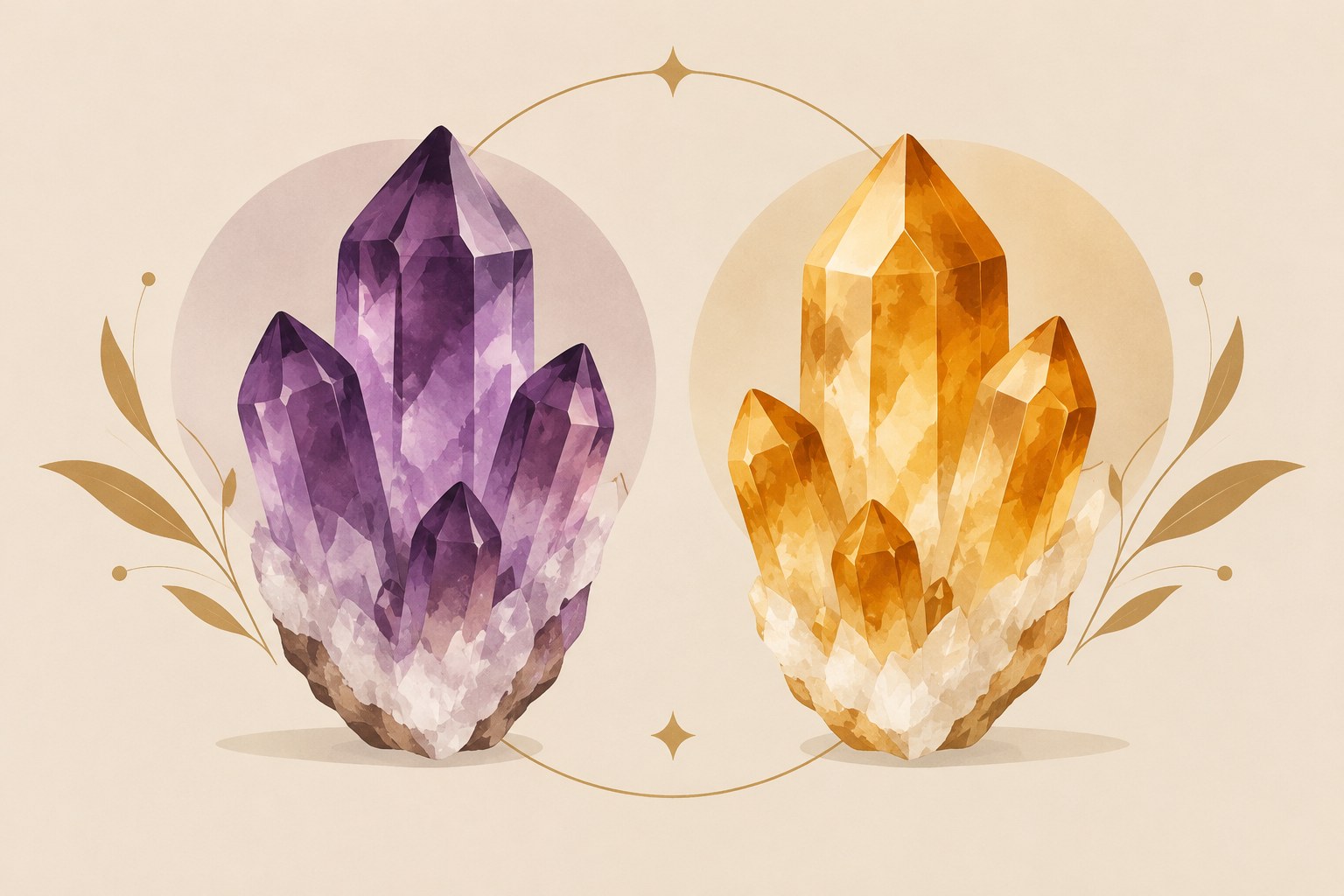
Natural citrine is rare. The great majority of citrine on the market is produced by heat-treating amethyst, its purple sibling in the quartz family. This is stable, permanent, and completely standard practice, and it is why citrine stays so affordable. There is nothing wrong with a heated stone, but an honest seller will tell you, and the price should reflect that treated citrine is plentiful.
This family connection has a charming side effect: in Bolivia, amethyst and citrine sometimes occur in the same crystal, giving ametrine, a natural stone split half purple, half yellow.
November's birthstone
Citrine shares November with topaz and is also the recognised gem for the thirteenth wedding anniversary. For November birthdays it offers a warm, wearable stone at a fraction of the price of most birthstones, in sizes that would be unaffordable in almost any other gem.
AI-generated illustration; not a Shewah product or a scale measurement.
SHEWAH Editorial Concept Illustration (Non-Catalogue)
Choosing a good citrine
- Buy the colour you love. Deep, even orange-red tones are prized; pale yellows are abundant and budget-friendly. There is no wrong answer, only your answer.
- Ask about treatment, expect heat. Assume heat treatment unless told otherwise and price accordingly. Untreated natural citrine exists and costs more.
- Look for eye-clean stones. Good citrine should be free of visible inclusions; it is one of this gem's strengths that clean material is easy to find.
- Enjoy the sizes. Large citrines are genuinely affordable, so this is a stone that invites a bold centrepiece.
Caring for citrine
Warm soapy water and a soft brush, no harsh chemicals, and no prolonged strong sunlight, which can affect some stones' colour. Store it apart from harder gems such as sapphire and diamond.
Where citrine comes from
Brazil supplies most of the world's citrine, much of it from the same mines that produce amethyst. Bolivia, Spain, Madagascar and parts of Africa also produce material. The Bolivian connection matters for the curious: that is where amethyst and citrine grow together in single crystals to make ametrine, the naturally two-toned stone that shows the family resemblance on its face.
Citrine vs yellow sapphire and yellow diamond
If you are shopping a yellow stone, citrine sits at the accessible end of a family that runs up through yellow sapphire to yellow diamond. It will not match a sapphire's hardness or a diamond's sparkle, but at a twentieth of the budget it delivers the same sunny effect in sizes those stones rarely reach. For a statement ring or pendant worn with ordinary care, it is one of the best value plays in coloured gems.
Set in gold with Shewah
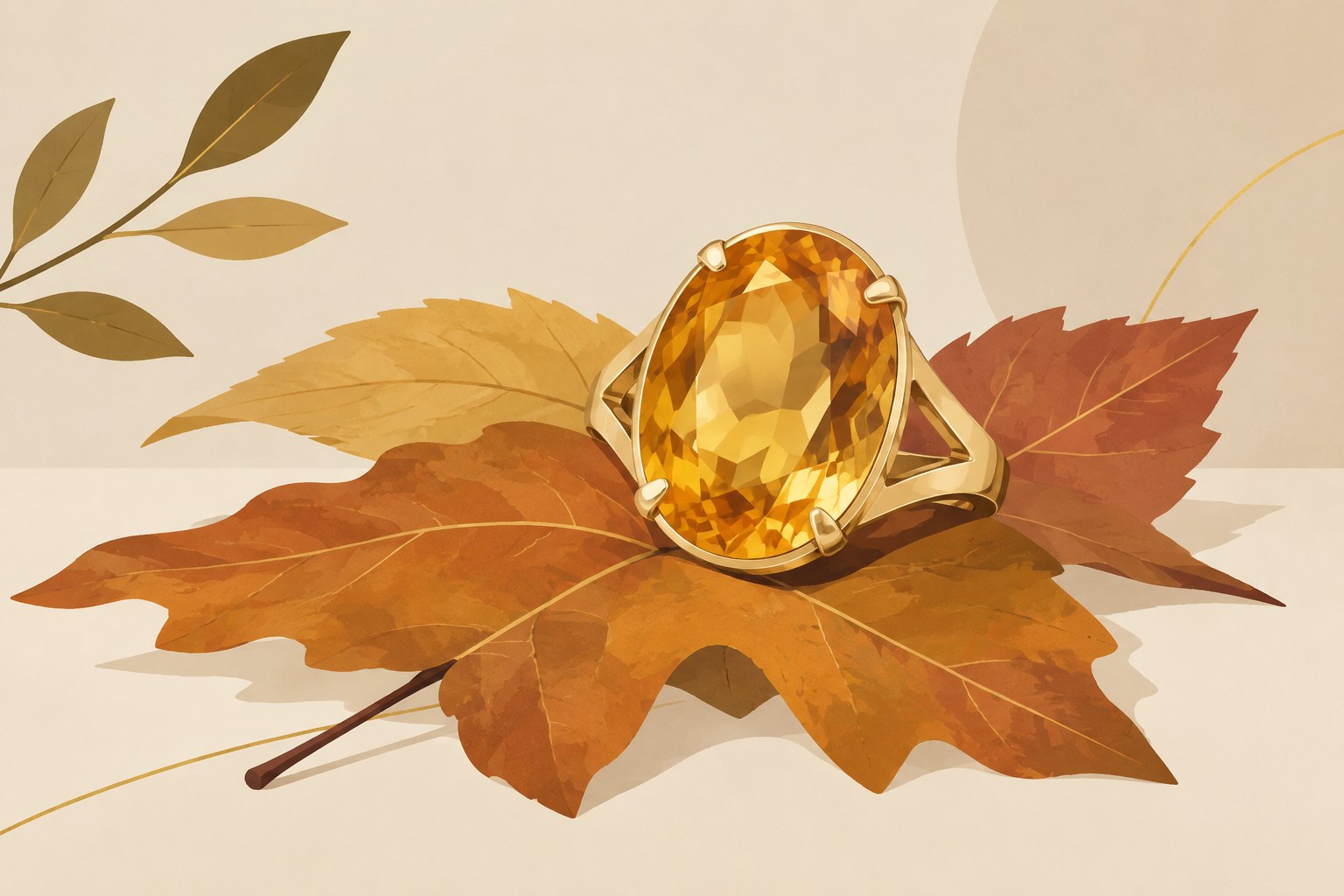
Citrine glows in yellow gold and turns striking in white. Tell us the look, and we will make your piece to order, quoted before work begins.
Explore Shewah's jewellery or contact us on WhatsApp at +91 96622 66360 to talk stones.
AI-generated illustration; not a Shewah product or a scale measurement.
SHEWAH Editorial Concept Illustration (Non-Catalogue)
Sources
- Citrine Gemstone - GIA
The Maison Shewah Atelier Standard
Every creation referenced across our journal essays is made individually to order using solid 18K gold and independently certified diamonds (IGI & GIA). We uphold complete material transparency and zero synthetic plating.
Research & Gemological References
- [1]Citrine Gemstone — GIA (Verified: 2026-10-17)


