Bezel vs Prong Settings: Which One Is Right for Your Diamond?
“The two classic diamond settings compared honestly: light performance, security, maintenance and style, so you can choose the one that fits your life.”
AI-generated illustration; not a Shewah product or a scale measurement.
SHEWAH Editorial Concept Illustration (Non-Catalogue)
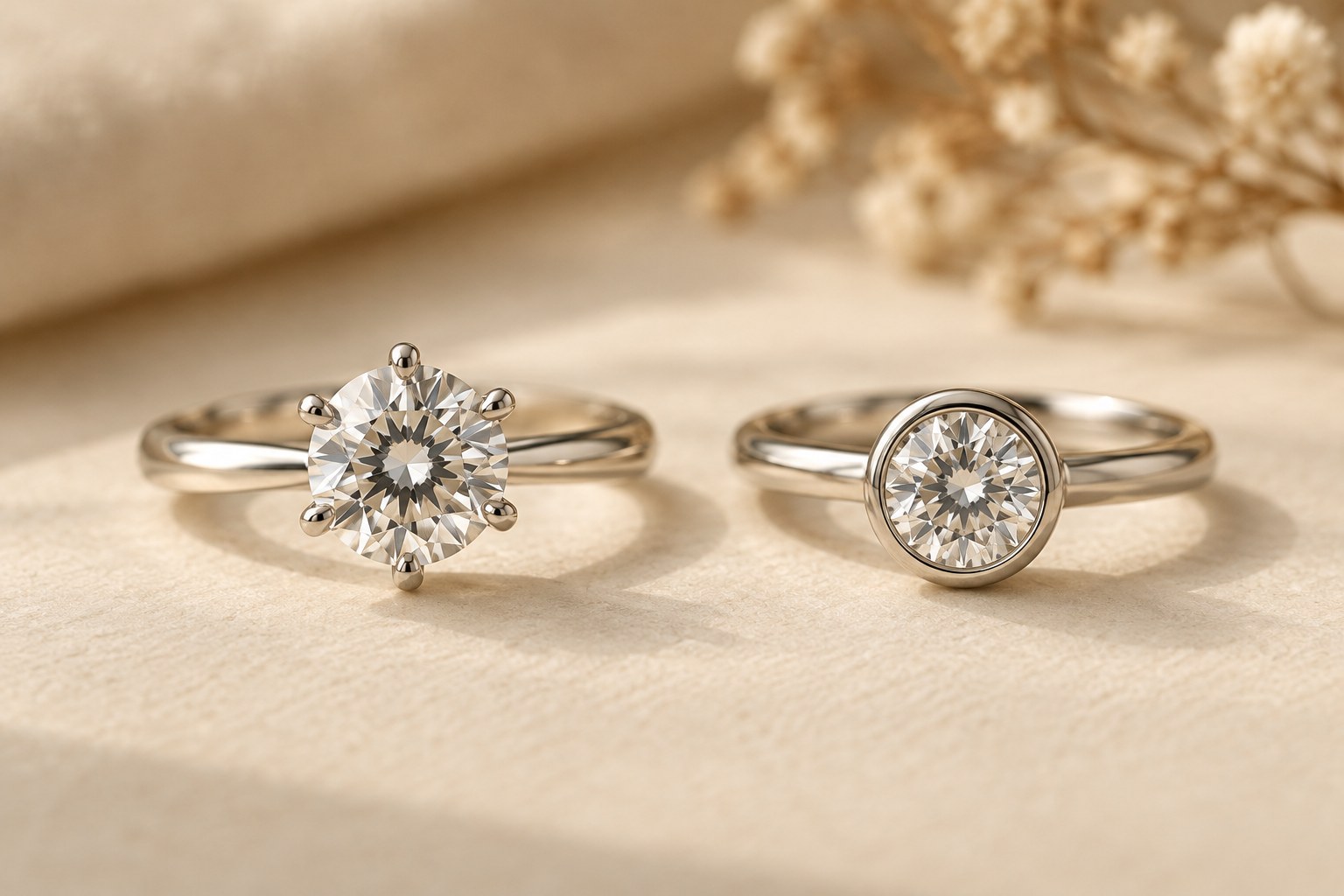
Two settings dominate diamond jewellery, and they could not look - or live - more differently. The prong setting lifts a stone up on slim metal claws so light floods in from every side. The bezel setting wraps the stone's edge in a smooth collar of metal, holding it low and sleek. Neither is better in the abstract; each is better for a particular stone, lifestyle and eye. Here is how to choose between them.
How a prong setting works
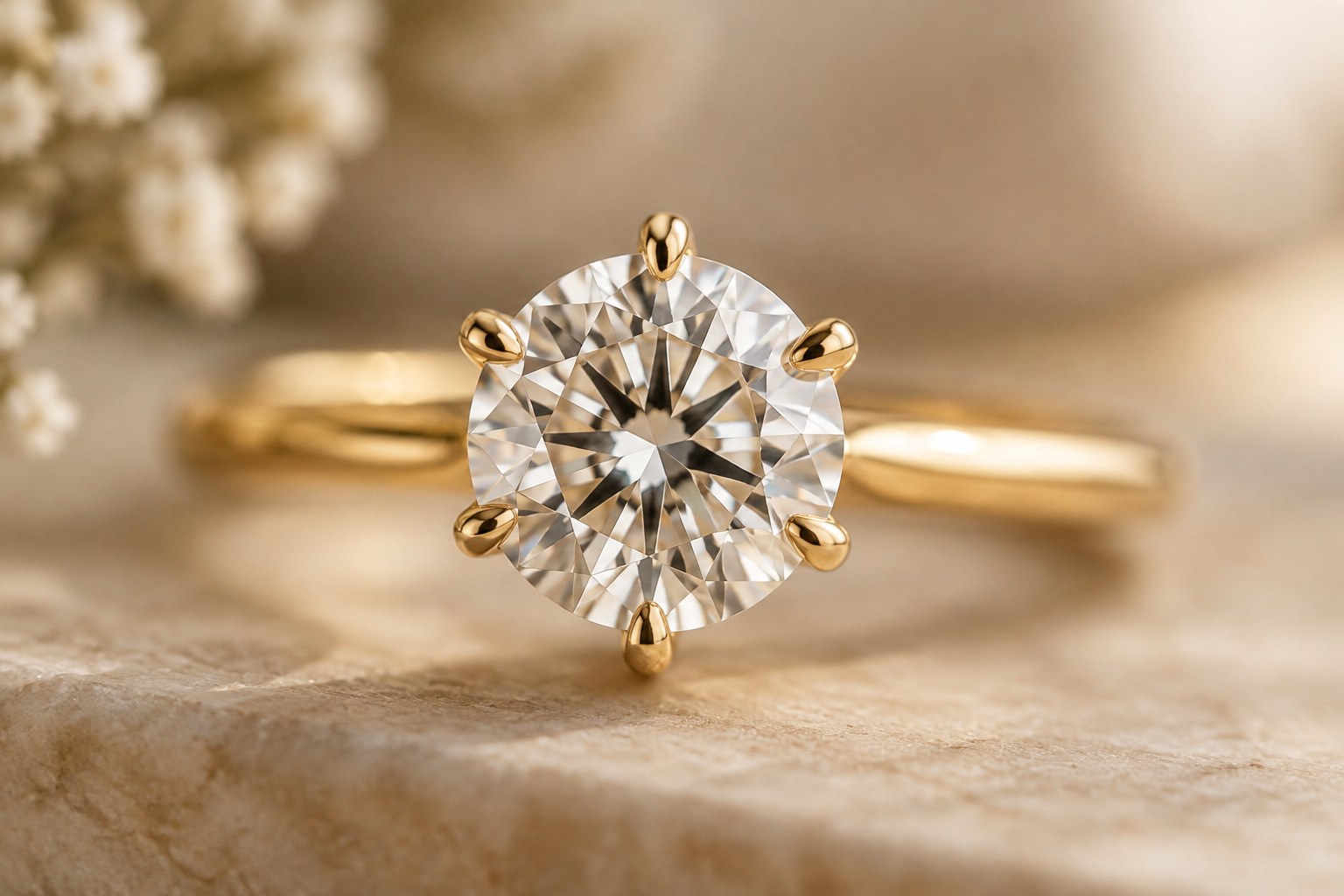
A prong setting holds a diamond with four or six small claws that grip the girdle, the stone's widest edge. Because so little metal touches the diamond, light enters freely and the stone shows its full outline. The effect is airy and classic: the solitaire most people picture is a prong setting. Six prongs hold a stone slightly more securely and make a round diamond look rounder; four prongs show more of the stone and suit square and princess cuts, where a claw can sit neatly at each corner.
How a bezel setting works
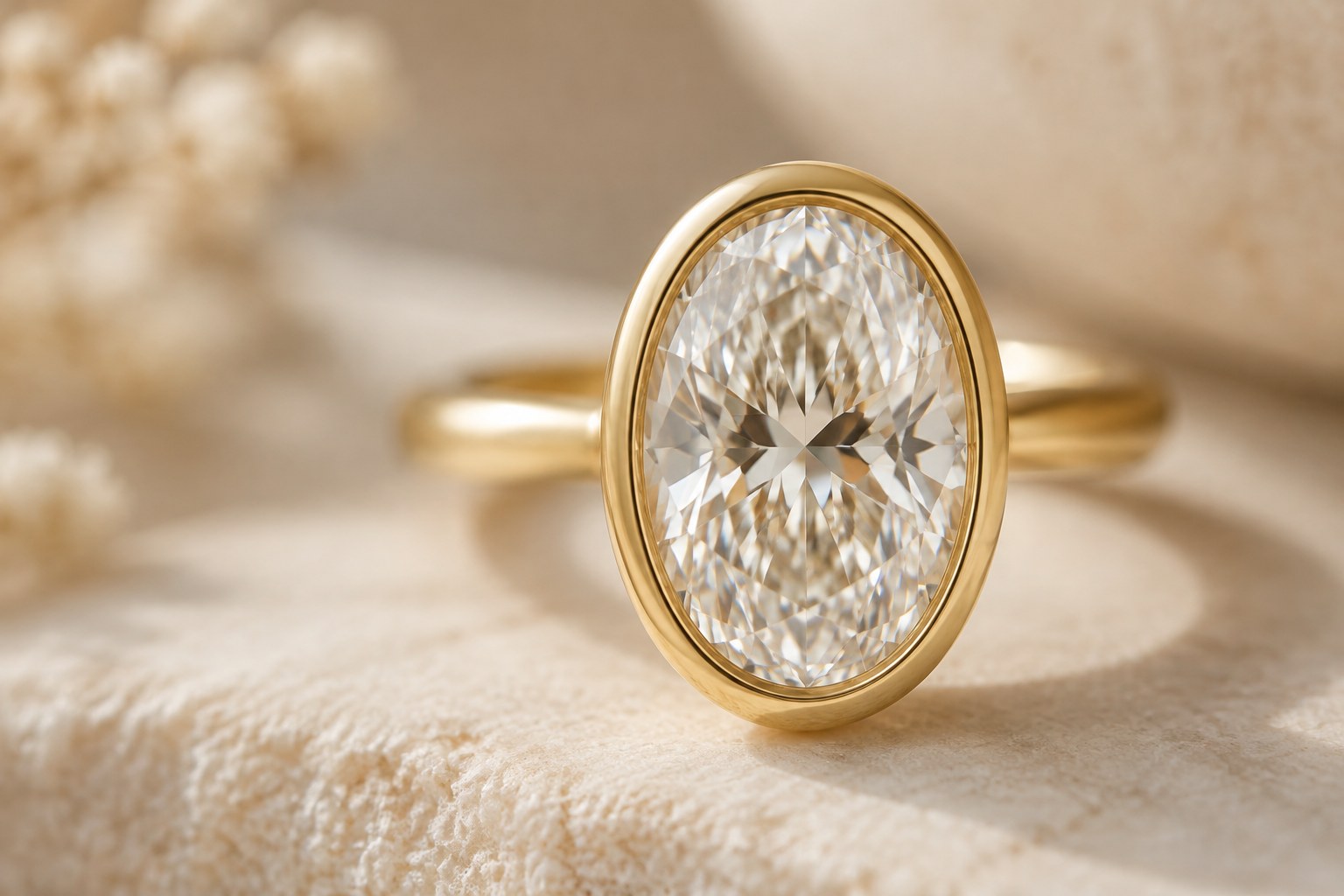
A bezel setting surrounds the diamond's girdle with a continuous rim of metal, folded over the stone's edge to lock it in place. A full bezel circles the entire stone; a partial or half bezel leaves sections open. The look is modern, smooth and uninterrupted, and it has become the signature of minimalist design. Bezels flatter elongated shapes especially well - ovals, emeralds and marquises sit like smooth river stones inside their metal frames.
Sparkle: an honest comparison
Prong settings win on light return, full stop. With the pavilion exposed, more light enters and exits the stone, so a prong-set diamond scintillates more in most lighting. A bezel covers the stone's edge, which trims a small amount of light performance. That said, a well-cut lab-grown diamond in a slim bezel still sparkles beautifully, and the bright metal rim can make the stone read slightly larger than its carat weight. If maximum fire is the priority, choose prongs; if the stone is well cut, the bezel's trade-off is smaller than reputation suggests.
AI-generated illustration; not a Shewah product or a scale measurement.
SHEWAH Editorial Concept Illustration (Non-Catalogue)
Security and everyday wear
Here the bezel takes the lead. The metal collar shields the girdle - the most vulnerable part of any diamond - from knocks and chips, and there are no prongs to snag, bend or wear thin. Prong settings are perfectly safe when maintained, but claws do loosen over years of wear and should be checked by a jeweller every year or so. For gloves-on professions, healthcare workers, athletes and anyone hard on their hands, a bezel's snag-free surface is a genuine quality-of-life upgrade.
Cleaning and maintenance
Bezels are low-maintenance in daily life but trickier at cleaning time: lotion and dust collect where the rim meets the stone, and the covered pavilion means grime hidden underneath needs a soft brush and warm soapy water to shift. Prong settings are easy to brush from every angle, though the claws themselves collect fibres and should be inspected for movement. Both settings respond well to the same gentle home routine.
Style: what each one says
A prong setting reads classic, romantic and traditional - the engagement ring of films and family albums. A bezel reads contemporary, architectural and quietly confident. Prongs suit vintage-inspired and ornate designs, halos and pavé shoulders; bezels suit clean bands, wide cigar styles and east-west orientations. Neither dates the way trend-driven details do, which is part of why both have survived centuries of fashion.
Can you have both?
Yes - and many people do. Bezel-set necklaces and stud earrings pair naturally with prong-set rings, because earrings and pendants face less impact and benefit from the bezel's smooth comfort against skin. Mixing the two across a jewellery wardrobe is far more interesting than loyalty to one.
Choose your setting with Shewah
Shewah crafts lab-grown diamond rings in both bezel and prong settings, each made to order with certified stones. If you are weighing sparkle against security for the way you actually live, explore Shewah's jewellery or message us on WhatsApp at +91 96622 66360 - we will talk it through honestly.
AI-generated illustration; not a Shewah product or a scale measurement.
SHEWAH Editorial Concept Illustration (Non-Catalogue)
Sources
The Maison Shewah Atelier Standard
Every creation referenced across our journal essays is made individually to order using solid 18K gold and independently certified diamonds (IGI & GIA). We uphold complete material transparency and zero synthetic plating.
Research & Gemological References
- [1]Protective Gem Settings for Rings — International Gem Society (Verified: 2026-10-28)
- [2]Ring Setting Styles: Prong, Bezel, Channel & More — MOH London (Verified: 2026-10-28)
- [3]Engagement Ring Styles & Settings Guide — Taylor & Hart (Verified: 2026-10-28)


