Antique vs Vintage vs Estate Jewellery: What the Labels Actually Mean
“They are not synonyms. A clear guide to the three most misused words in jewellery - and how to read the clues yourself.”
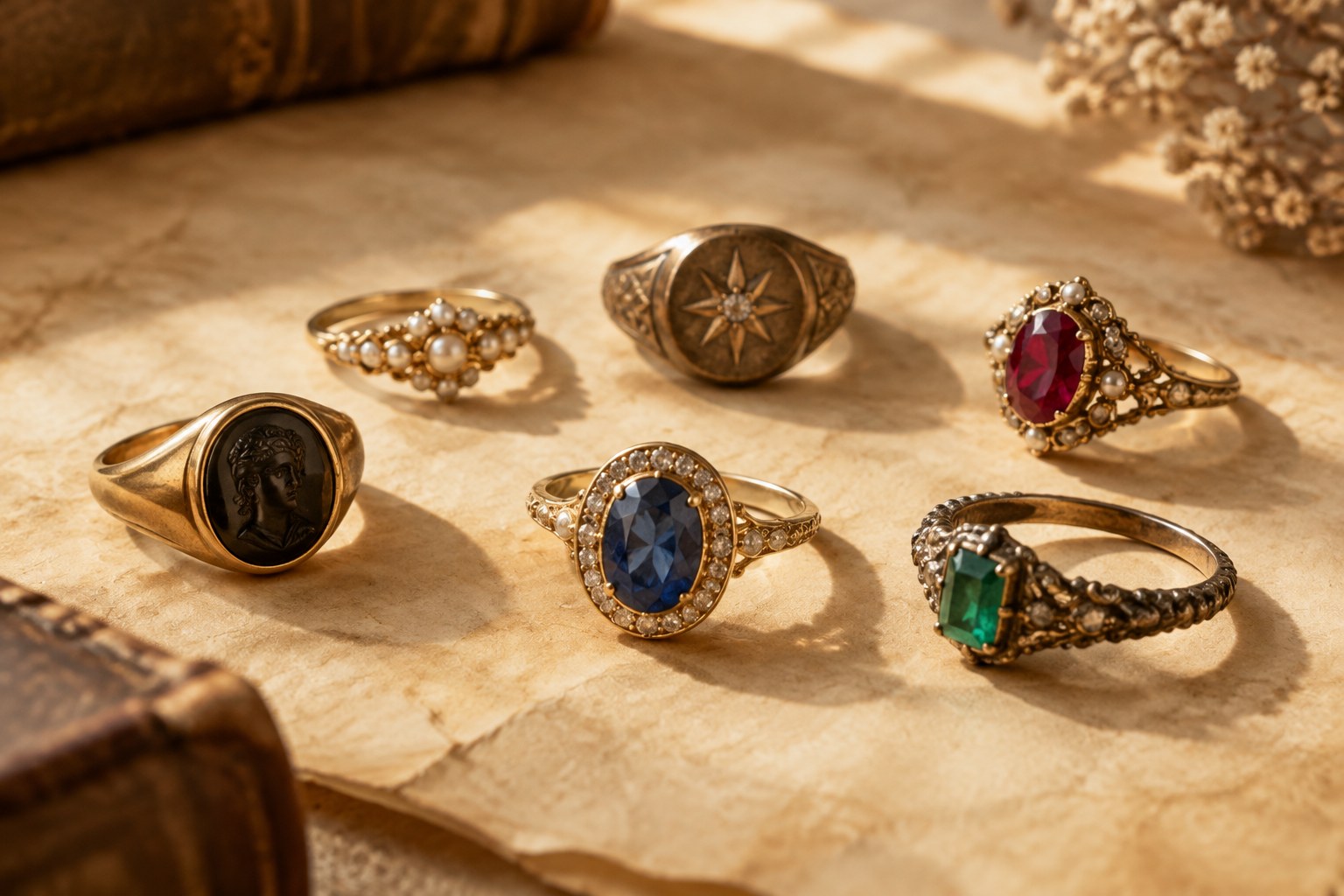
AI-generated illustration; not a Shewah product or a scale measurement.
SHEWAH Editorial Concept Illustration (Non-Catalogue)
Three words dominate the world of older jewellery, and they are used loosely enough to confuse anyone: antique, vintage, estate. They are not synonyms. Each tells you something different about a piece, and knowing the difference helps you buy with clear eyes and describe what you own with confidence.
Antique: a century or more
The strict and widely accepted definition: an antique is at least 100 years old. Right now that means anything made before the mid-1920s, and the line moves forward every year. Antiques carry the fingerprints of their eras - Georgian closed-back settings, Victorian sentimentality, the platinum lacework of Edwardian jewels, and early Art Deco geometry arriving at the boundary. Because of their age, antiques were made with hand techniques and older stone cuts, which is much of their charm.
Vintage: roughly 20 to 99 years
Vintage is the flexible middle. Most dealers use it for pieces between about 20 and 99 years old, which today spans late Art Deco through Retro boldness, mid-century modernism, and on to 1980s and 1990s design. The word says less about law and more about style: a vintage piece is old enough to represent its era, young enough to wear without ceremony. Note the sliding window: as the Antique Jewellers guide points out, what counts as vintage updates as decades pass.
Estate: simply pre-owned
Estate is the most misunderstood of the three. It means only one thing: the piece has had a previous owner. An estate jewel might be 200 years old or bought last year and resold. All antiques offered for sale are estate pieces, but most estate pieces are not antiques. When a seller leans on "estate" as if it guaranteed age or value, ask for the piece's actual date.
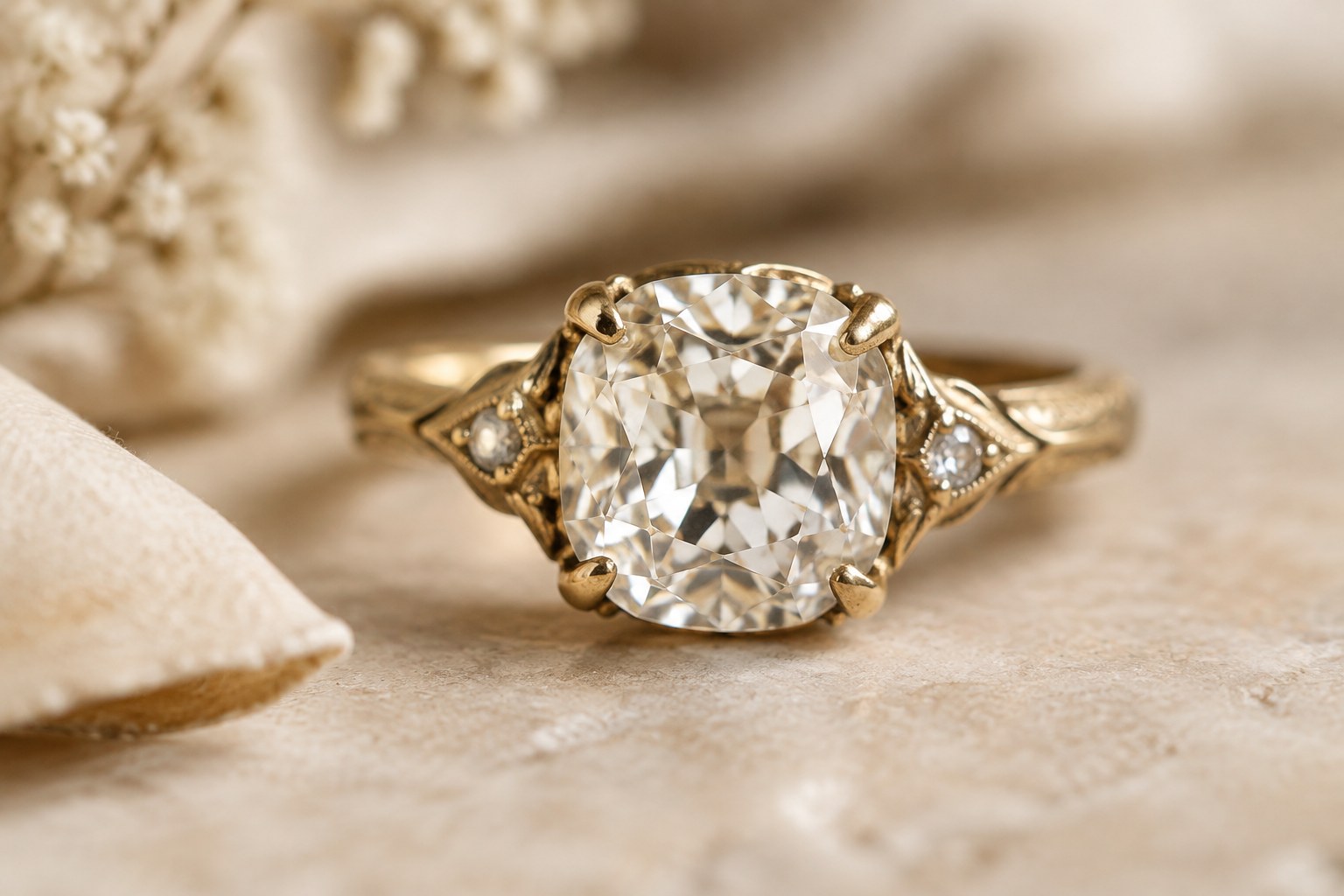
AI-generated illustration; not a Shewah product or a scale measurement.
SHEWAH Editorial Concept Illustration (Non-Catalogue)
Why the labels matter when you buy
Age categories affect value, rarity and care. A genuine Georgian ring is a survivor; it should cost and be treated accordingly. Vague language, by contrast, is a mild warning sign. Reputable dealers, including members of trade bodies such as the British Antique Dealers' Association, catalogue pieces with a stated period and will explain how they dated it. Ask how, and listen for specifics: construction, hallmarks, stone cuts, maker's marks, wear patterns.
Reading the clues yourself
You need not be a specialist to notice the big signals. Hallmarks inside shanks and on clasps can date and place a piece precisely in countries with assay traditions. Stone cuts tell stories too: old mine and old European cuts point to the 19th and early 20th centuries, long before the modern brilliant. Hand-finished interiors, platinum worked with tiny tools, and signs of honest wear all support a claimed age. Lang's Antique Jewellery University notes that terminology in this field has shifted over time, which is exactly why evidence beats labels.
Reproduction is not a dirty word, if declared
Vintage-style and antique-style jewels are made new today, sometimes beautifully. Trouble starts only when style is sold as age. "Art Deco style" is honest; "Art Deco" for a 2010 casting is not. A trustworthy seller states clearly what is period, what is later, and what has been altered or restored.
Caring for older pieces
Age brings fragility. Foiled-back Georgian stones dislike water; enamel and seed pearls dislike ultrasonics; old prongs deserve a jeweller's inspection before daily wear. Clean gently, store pieces separately, and let a specialist handle repairs so that patina and original work survive.
Choose pieces with a future with Shewah
If you love the romance of heritage but want jewellery made for daily modern life, consider the best of both: new pieces, crafted in certified lab-grown diamonds, designed with the permanence to become tomorrow's heirlooms. Explore Shewah's jewellery, or message us on WhatsApp at +91 96622 66360.
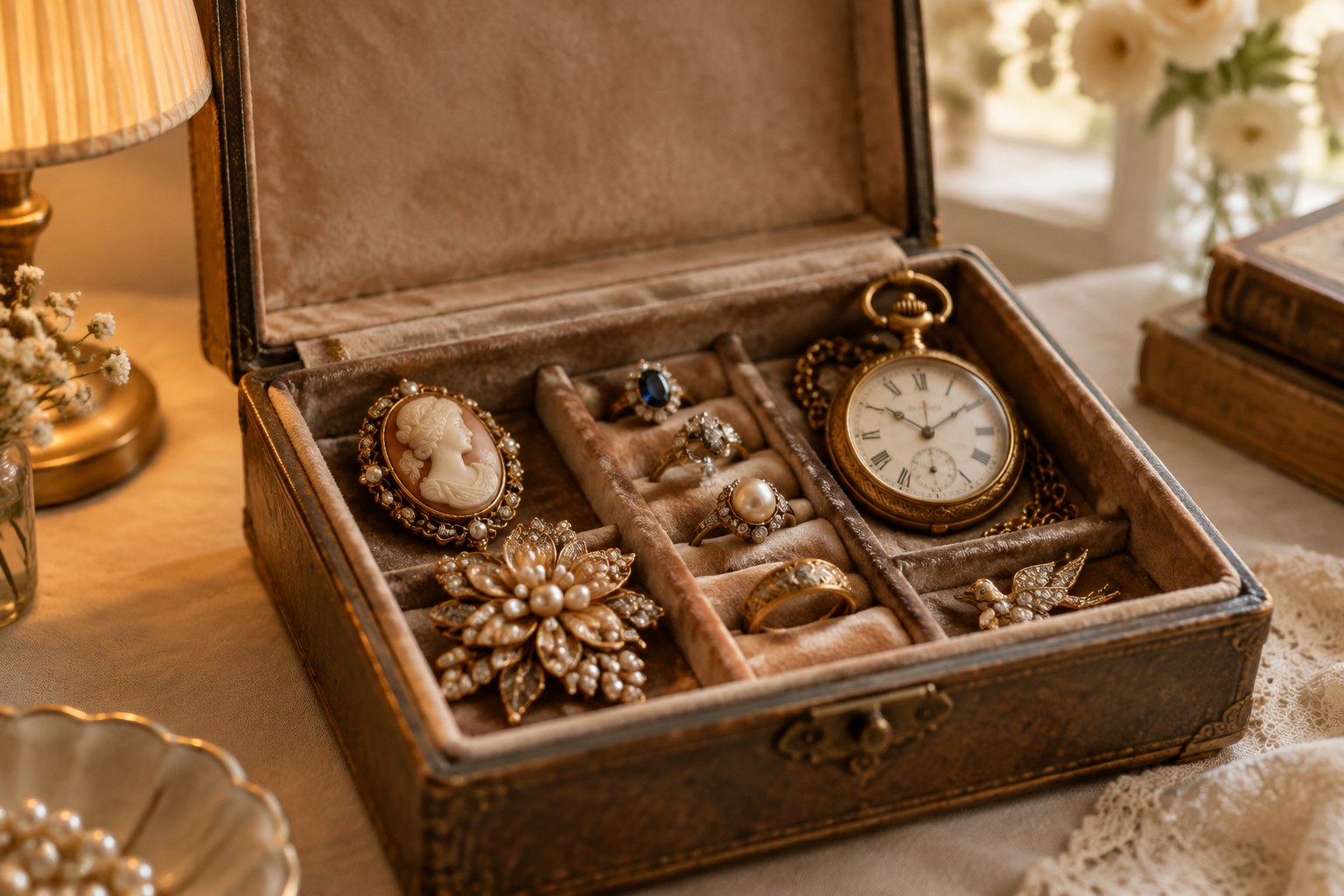
AI-generated illustration; not a Shewah product or a scale measurement.
SHEWAH Editorial Concept Illustration (Non-Catalogue)
Sources
- Antique vs Vintage vs Estate Jewellery - Antique Jewellers
- BADA Guide to Buying Antique Rings - BADA
- What's in a Name? - Lang Antiques
- Advice on caring for jewels: antique, vintage, estate - The Jewellery Editor
The Maison Shewah Atelier Standard
Every creation referenced across our journal essays is made individually to order using solid 18K gold and independently certified diamonds (IGI & GIA). We uphold complete material transparency and zero synthetic plating.
Research & Gemological References
- [1]Antique vs Vintage vs Estate Jewellery — Antique Jewellers (Verified: 2026-10-25)
- [2]BADA Guide to Buying Antique Rings — BADA (Verified: 2026-10-25)
- [3]What's in a Name? — Lang Antiques (Verified: 2026-10-25)
- [4]Advice on caring for jewels: antique, vintage, estate — The Jewellery Editor (Verified: 2026-10-25)


