Alexandrite Meaning and Properties: June's Colour-Change Birthstone
“Green by day, red by night: alexandrite is nature's colour-change marvel and one of June's three birthstones. Discover its meaning, rarity and buying tips.”
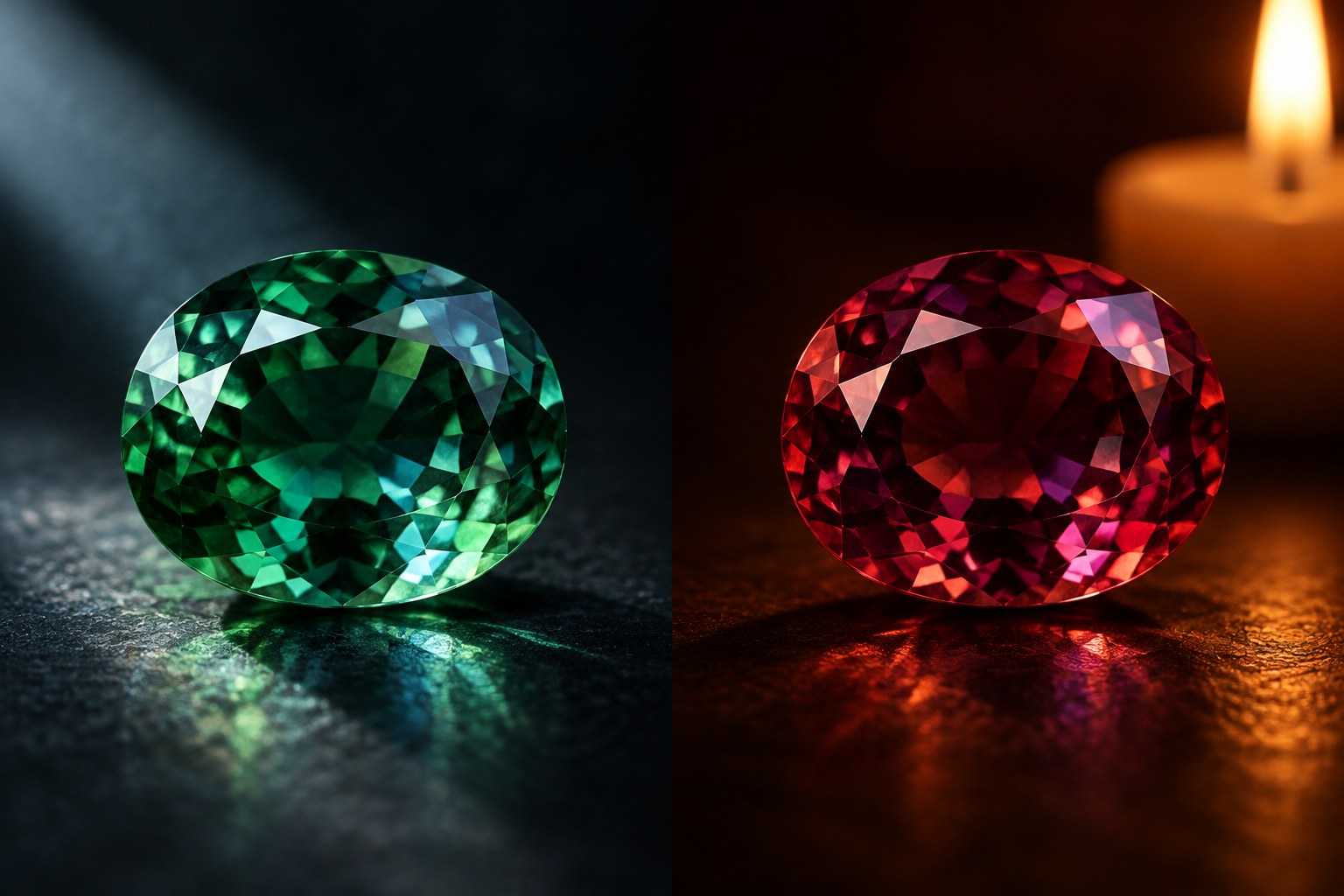
AI-generated illustration; not a Shewah product or a scale measurement.
SHEWAH Editorial Concept Illustration (Non-Catalogue)
Alexandrite is the gem world's magic trick: bluish green in daylight, purplish red under lamplight, a stone that changes its mind with the light. Collectors describe the finest examples as emerald by day, ruby by night. It is rare, it is fascinating, and as one of June's three birthstones it makes an unforgettable gift. Here is the meaning and science behind it.
Because supplies are so thin, most alexandrite jewellery is made to order or released in tiny runs, and lab-grown alexandrite, grown with the same chemistry, offers the colour change at a friendlier price.
A young legend
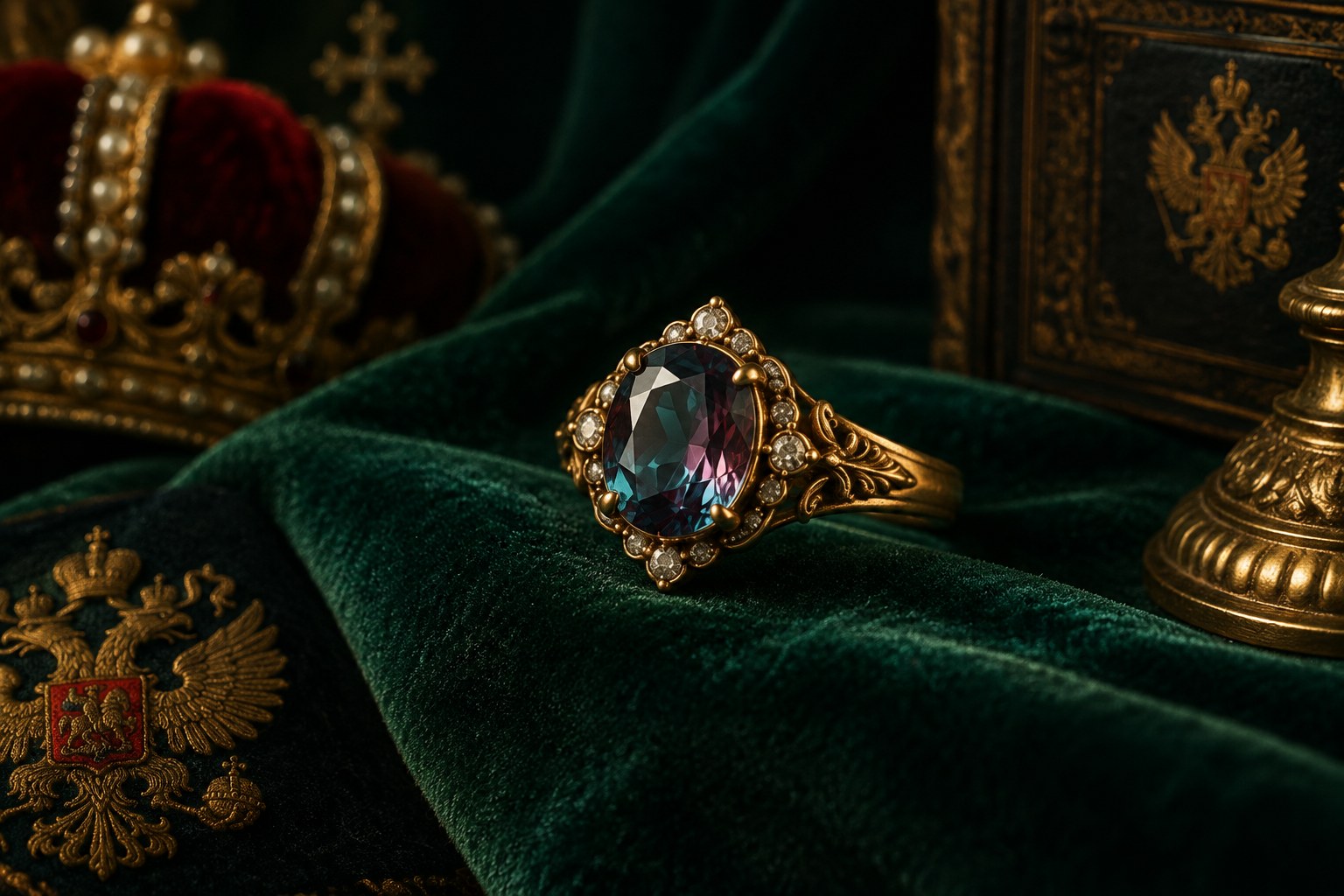
Most famous gems have ancient histories; alexandrite's story starts in Russia's Ural Mountains in the 1830s. It was named for Czar Alexander II, and its red-and-green palette conveniently echoed the colours of imperial Russia, which made it an instant patriotic treasure. Today it is also mined in Sri Lanka, East Africa and Brazil, but fine material remains exceptionally rare and valuable.
The science of the colour change
Alexandrite is the colour-change variety of chrysoberyl, with the chemistry BeAl2O4. Its colour depends on an absorption band around 580 nanometres, balanced between the red and green parts of the spectrum. Daylight is rich in blue-green wavelengths, so the stone reads green; incandescent light is rich in red, so the same stone reads purplish red. Few gems demonstrate so clearly how much the light source shapes what we see. Some alexandrites go further and show both colour change and a cat's-eye effect: two phenomena in one gem.
What to look for
Judge an alexandrite first on the drama of its change: a crisp green-to-red flip is the ideal, while muddier brownish shifts cost far less. Good stones have few inclusions, though fine needles can create that prized cat's-eye. Because the rough is so rare, alexandrite is often cut to save weight, and most faceted stones weigh under one carat. Larger, high-quality gems rise in price dramatically, which is why fine alexandrite is quoted more like a sapphire than like most coloured stones. Expect natural stones with a strong change to start in the low thousands of US dollars per carat, while lab-grown alexandrite brings the look into the low hundreds.
When you shop, view the stone under both kinds of light before deciding. Any honest seller of alexandrite will happily show you the change, because the change is the stone.
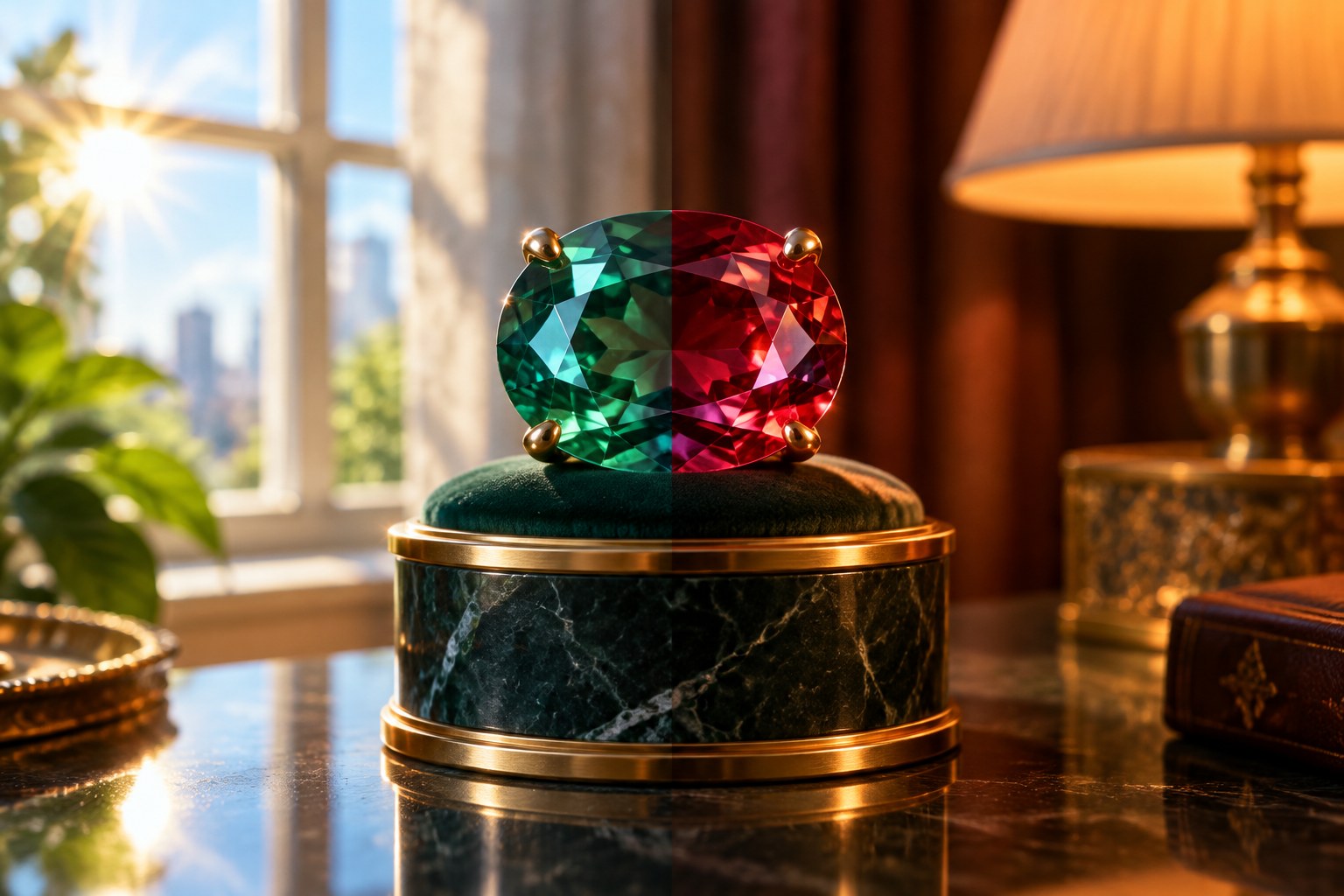
AI-generated illustration; not a Shewah product or a scale measurement.
SHEWAH Editorial Concept Illustration (Non-Catalogue)
Harder than you might think
For all its delicacy of colour, alexandrite is a tough customer: 8.5 on the Mohs scale, behind only diamond, moissanite, sapphire and ruby among common gems. That makes it genuinely suitable for an everyday ring, unlike many romantic stones that ask for careful wear. Warm water, mild detergent and a soft brush keep it bright.
A June birthstone with a twist
Alexandrite shares June with pearl and moonstone, and it is also the gem of the 55th wedding anniversary. For a June birthday with real theatre, or an anniversary that deserves more than the usual, nothing else in the gem case does what it does. It also suits people who want a stone with a story: the Russian origin, the patriotic colours, the physics lesson hiding in a ring.
Create your alexandrite piece with Shewah
Shewah sets fine coloured gems in solid gold, made to order in Surat and shipped to the US, UK and Australia. Explore Shewah's jewellery or message us on WhatsApp at +91 96622 66360 to discuss a stone as rare as your story.
AI-generated illustration; not a Shewah product or a scale measurement.
SHEWAH Editorial Concept Illustration (Non-Catalogue)
Sources
- Alexandrite Gemstone - GIA
The Maison Shewah Atelier Standard
Every creation referenced across our journal essays is made individually to order using solid 18K gold and independently certified diamonds (IGI & GIA). We uphold complete material transparency and zero synthetic plating.
Research & Gemological References
- [1]Alexandrite Gemstone — GIA (Verified: 2026-10-20)


