The Tennis Necklace Guide: Settings, Lengths and How to Wear One
“One unbroken line of diamonds. How the tennis necklace got its name, how to choose the right setting and length, and how to wear it daily.”
AI-generated illustration; not a Shewah product or a scale measurement.
SHEWAH Editorial Concept Illustration (Non-Catalogue)
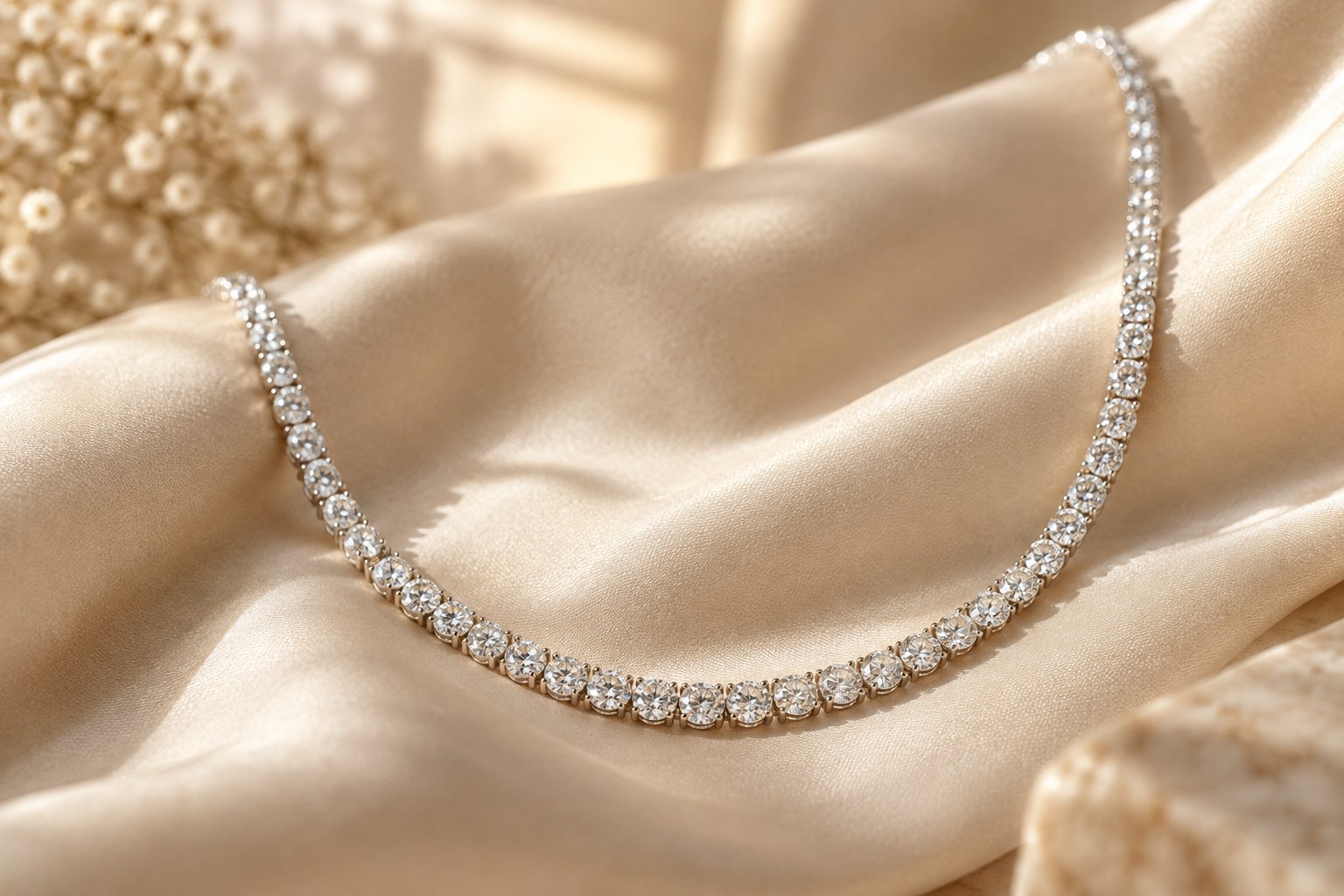
Few pieces earn their place in a jewellery box as completely as the tennis necklace: a single, unbroken line of diamonds resting at the base of the neck. It reads as modern minimalism, yet it carries one of the best stories in sport. Here is what it is, where the name comes from, and how to choose one you will wear for decades.
Why it is called a tennis necklace
The name belongs first to the bracelet. At the 1987 US Open, champion Chris Evert stopped play when her diamond line bracelet flew off mid-rally, and the "tennis bracelet" was christened on live television. The necklace, the same continuous line of individually set stones worn at the neck, inherited the name and, lately, the spotlight: British Vogue has charted its return as the everyday investment piece worn with everything from knits to tailoring.
What makes a necklace a tennis necklace
The defining feature is construction, not carat weight. A true tennis necklace is a fully articulated line: each stone sits in its own collet or claw, linked so the necklace drapes fluidly and moves with you. That flexibility is the quiet engineering that separates it from a rigid riviere-style collar, and it is the first thing to check in the hand. Drape it over a finger; it should pour, not kink.
Settings: prong, bezel and channel
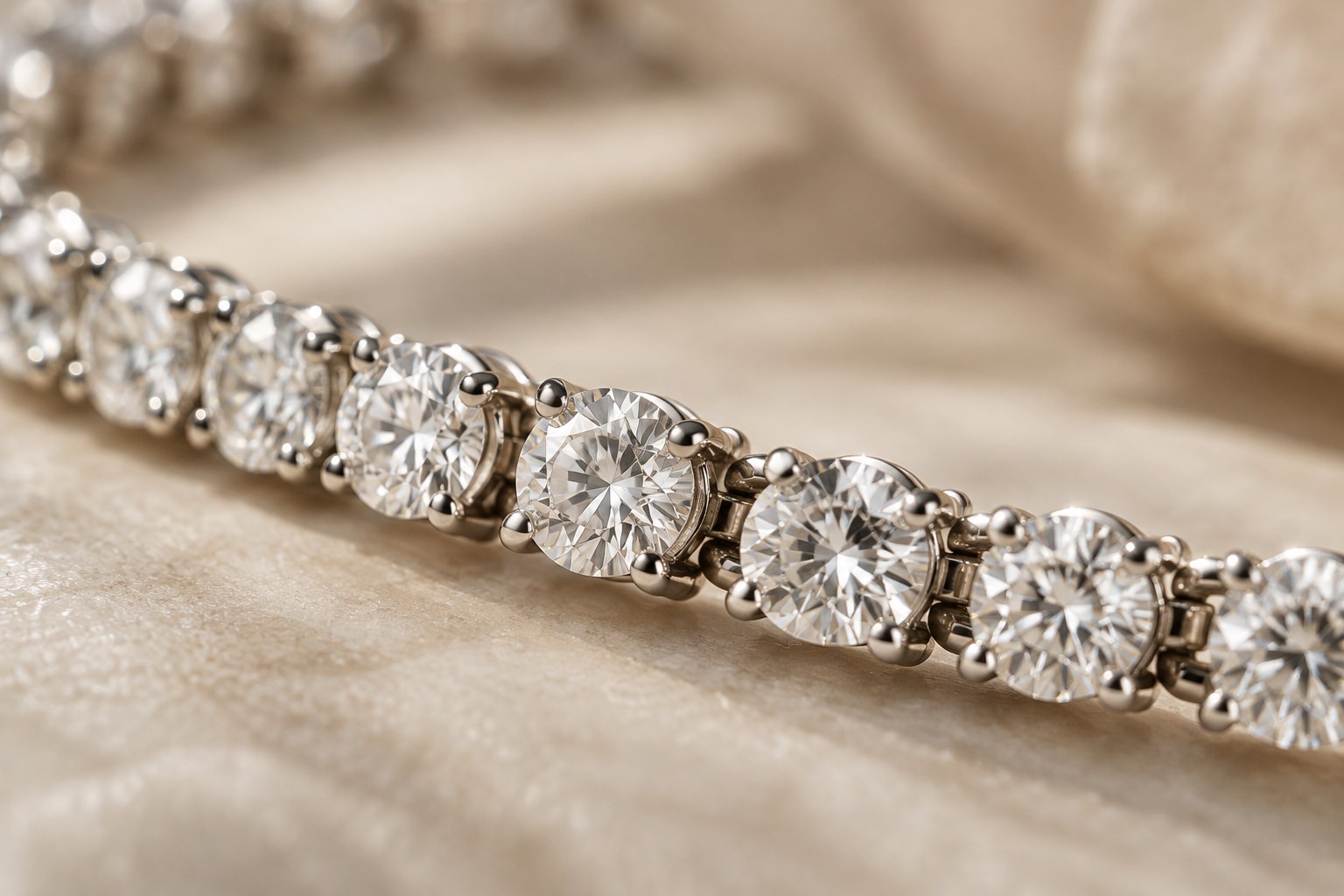
Three settings dominate. A four-claw (or three-claw) prong setting exposes the most diamond to the light and gives the classic, airy look. A bezel wraps each stone in a smooth rim of metal: slightly more contemporary, and the most secure and snag-resistant for daily wear. A channel setting seats stones edge to edge in a continuous groove for a sleek, linear shimmer. None is "best"; the right one is the one that matches how you live.
AI-generated illustration; not a Shewah product or a scale measurement.
SHEWAH Editorial Concept Illustration (Non-Catalogue)
Length and proportion
Most tennis necklaces live between 14 and 18 inches. At 14 to 15 inches the line sits like a choker at the hollow of the throat; 16 inches is the classic collarbone length and the most versatile; 17 to 18 inches drops lower and layers well over a crew neck. Try lengths against your own necklines before deciding. Stone size matters to proportion too: smaller stones (under about 0.10 carat each) read as a shimmer, larger ones as a statement.
Uniform or graduated
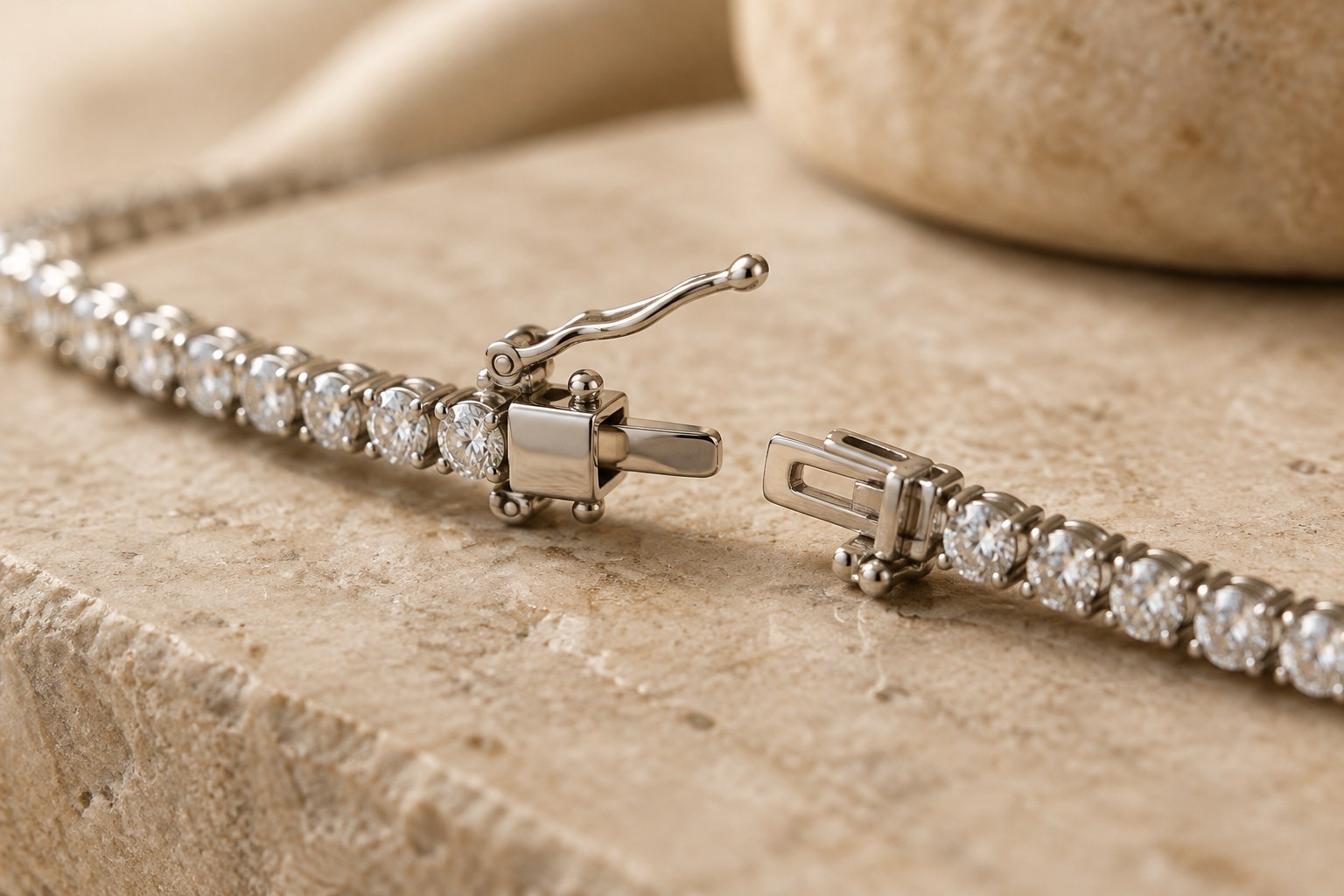
A uniform line, where every stone matches, is the purist's choice and the easiest to layer. A graduated line, swelling gently towards the centre, adds presence at the front and often sits more comfortably against the curve of the neck. Sotheby's specialists also advise checking the clasp: a tennis necklace should close with a secure box or lobster clasp backed by a safety catch or figure-eight latch, because a line of diamonds deserves a belt-and-braces fastening.
Choosing the stones
Lab-grown diamonds have transformed this category: the same carbon crystal, the same fire, in a continuous line that once belonged only to high jewellery. Ask for certification on significant stones and buy from a house that will show you grading reports without being asked twice.
How to wear it
The joy of the piece is its range. Worn alone with a white T-shirt it is the definition of quiet luxury; layered over a fine pendant it builds a considered stack; with eveningwear it replaces the classic strand of pearls. One honest rule from stylists: let it be the hero. If the tennis necklace is on, keep the rest of the story simple.
Find your line of light with Shewah
Shewah's atelier in Surat crafts tennis necklaces in certified lab-grown diamonds, with secure clasps and fluid articulation checked stone by stone. Explore Shewah's jewellery, or message us on WhatsApp at +91 96622 66360 and let us help you choose the line that suits your life.
AI-generated illustration; not a Shewah product or a scale measurement.
SHEWAH Editorial Concept Illustration (Non-Catalogue)
Sources
- How to Choose the Perfect Tennis Necklace - Sotheby's
- Why The Tennis Necklace Is A Winning Everyday Investment - British Vogue
- What Is A Tennis Necklace - Alexis Jae
The Maison Shewah Atelier Standard
Every creation referenced across our journal essays is made individually to order using solid 18K gold and independently certified diamonds (IGI & GIA). We uphold complete material transparency and zero synthetic plating.
Research & Gemological References
- [1]How to Choose the Perfect Tennis Necklace — Sotheby's (Verified: 2026-10-25)
- [2]Why The Tennis Necklace Is A Winning Everyday Investment — British Vogue (Verified: 2026-10-25)
- [3]What Is A Tennis Necklace — Alexis Jae (Verified: 2026-10-25)


