Nose Rings: A Complete Guide to Styles, Sizes, Materials and Healing
“Stud, screw, L-bend, hoop or clicker? A clear-eyed guide to choosing and wearing a nose ring, from first piercing to forever piece.”

AI-generated illustration; not a Shewah product or a scale measurement.
SHEWAH Editorial Concept Illustration (Non-Catalogue)
The nose ring carries more history per millimetre than almost any other jewel: worn on the Indian subcontinent for centuries as the nath, woven into Ayurvedic tradition and bridal ceremony, then carried west in the 1960s and 70s until it became a global language of personal style. Today the question is rarely whether to wear one, but which. This guide covers placements, styles, materials and the healing realities.
Placements: nostril, septum and beyond
The nostril piercing - through the curve of one nostril - is the classic, sitting a few millimetres above the crease where it flatters most. A high nostril sits further up, suited to small studs. The septum passes through the thin "sweet spot" of skin just beneath the cartilage between the nostrils, and can be flipped up to hide when life requires discretion. Rarer placements - bridge, nasallang, vertical tip - exist but are specialist territory. A skilled piercer will map placement to your anatomy, because noses, like ears, vary more than mirrors suggest.
Stud styles explained
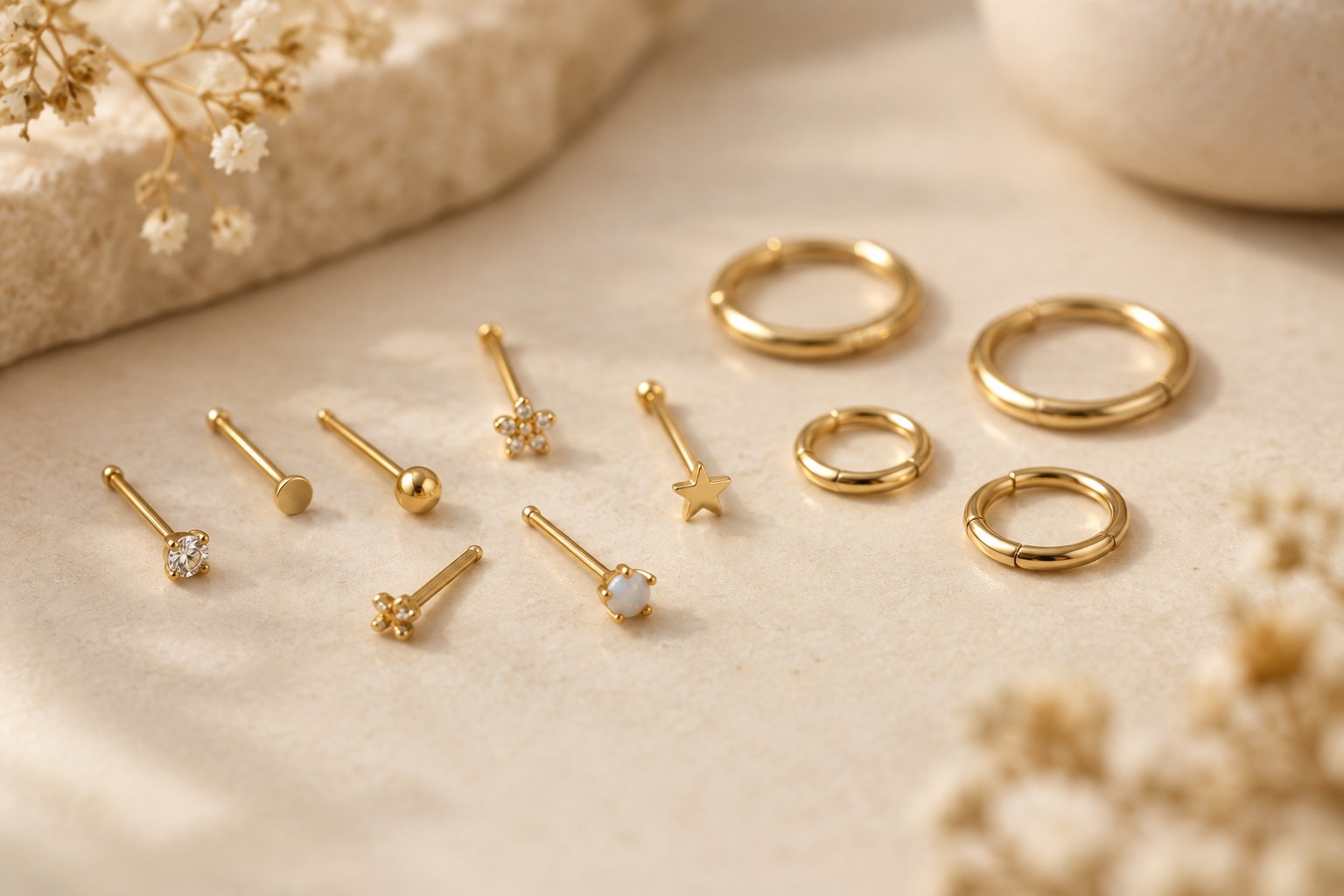
The humble nostril stud comes in several backings, and the differences matter daily. The L-bend is a post with a right-angle tail: easy to insert, easy to remove, best for healed piercings. The nose screw (or corkscrew) twists in and resists falling out - the secure everyday favourite, though trickier at first. The nose bone is a straight post with a tiny ball end; simple, but sized to healed piercings only. The flat-back labret, inserted from inside the nostril, is the professional's choice for fresh piercings because it is stable and easy to clean around. Fishtails are straight posts your piercer bends to fit exactly.
Hoops, rings and clickers
Hoops come once you are healed. Seamless and endless rings twist open and closed for a clean circle; clickers hinge and snap shut with a satisfying click and are the easiest to live with; captive bead rings hold a small bead in tension and suit septums especially; open hoops with a flat disc inside the nostril behave like a stud-hoop hybrid. Septum wearers have the widest wardrobe: clickers, circular barbells, and ornate nath-inspired designs.
AI-generated illustration; not a Shewah product or a scale measurement.
SHEWAH Editorial Concept Illustration (Non-Catalogue)
Materials and sizing
For healing and sensitive skin alike, material is everything. Implant-grade titanium and solid 14k or 18k gold are the safe standards; niobium is another body-friendly option. Sterling silver belongs in healed piercings only, if at all, and plated metals never belong in a healing one. Typical nostril piercings are done at 20 or 18 gauge; hoops are measured by inner diameter, commonly 6 to 8 millimetres for a snug nostril fit. When in doubt, your piercer's callipers beat guesswork.
Healing and aftercare basics
A nostril piercing typically takes two to four months to settle; a septum often less. Clean with sterile saline, leave the jewellery alone, and resist changing styles until a piercer confirms healing. Bumps happen; patience and salt water solve most of them, and a reputable piercer solves the rest.
The nath, with respect
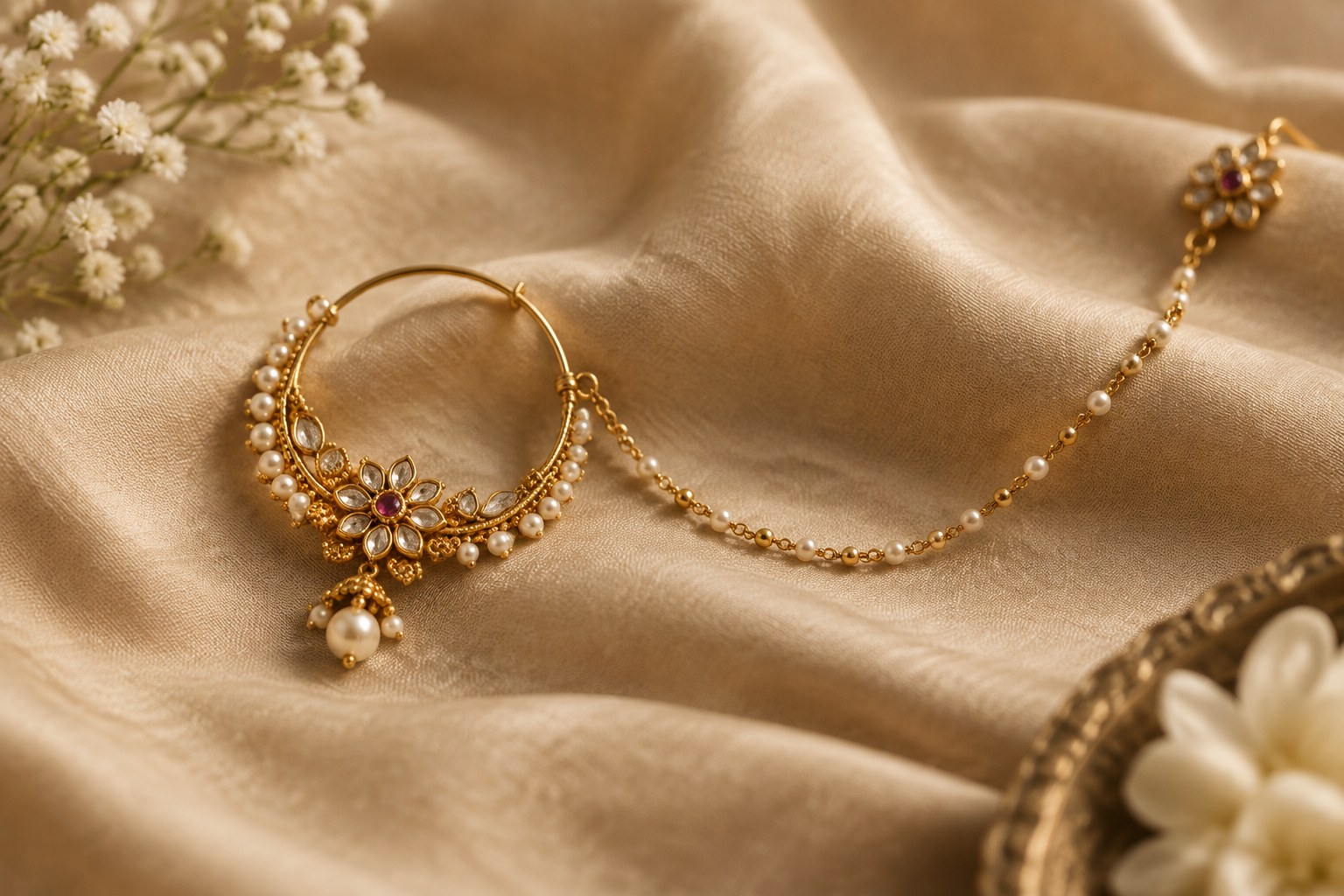
In India the nose ring is not a trend but heritage - a bridal essential in many regions, connected to Ayurvedic belief and centuries of craft. Wearing one today, anywhere in the world, carries a little of that lineage. It deserves jewellery worthy of it: real gold, real stones, made properly.
Find your first (or fifth) nose ring with Shewah
Shewah crafts delicate lab-grown diamond nose studs in solid gold, designed in Surat where the nath tradition is living history. Explore Shewah's jewellery, or message us on WhatsApp at +91 96622 66360 to find the stud that feels like you.
AI-generated illustration; not a Shewah product or a scale measurement.
SHEWAH Editorial Concept Illustration (Non-Catalogue)
Sources
- Nose piercing - Wikipedia
- History of Nose Piercings - Origins & Styles Around World - Painful Pleasures
- Types of Nose Piercings: Every Placement Compared - Best Piercing
- Nose Ring Buying Guide - Styles, Sizes & Materials - Twolobes
The Maison Shewah Atelier Standard
Every creation referenced across our journal essays is made individually to order using solid 18K gold and independently certified diamonds (IGI & GIA). We uphold complete material transparency and zero synthetic plating.
Research & Gemological References
- [1]Nose piercing — Wikipedia (Verified: 2026-10-25)
- [2]History of Nose Piercings - Origins & Styles Around World — Painful Pleasures (Verified: 2026-10-25)
- [3]Types of Nose Piercings: Every Placement Compared — Best Piercing (Verified: 2026-10-25)
- [4]Nose Ring Buying Guide - Styles, Sizes & Materials — Twolobes (Verified: 2026-10-25)


