East-West Settings: The Sideways Stone, Explained
“One small rotation, one big effect: what east-west settings change about presence, profile and pairing with a wedding band.”
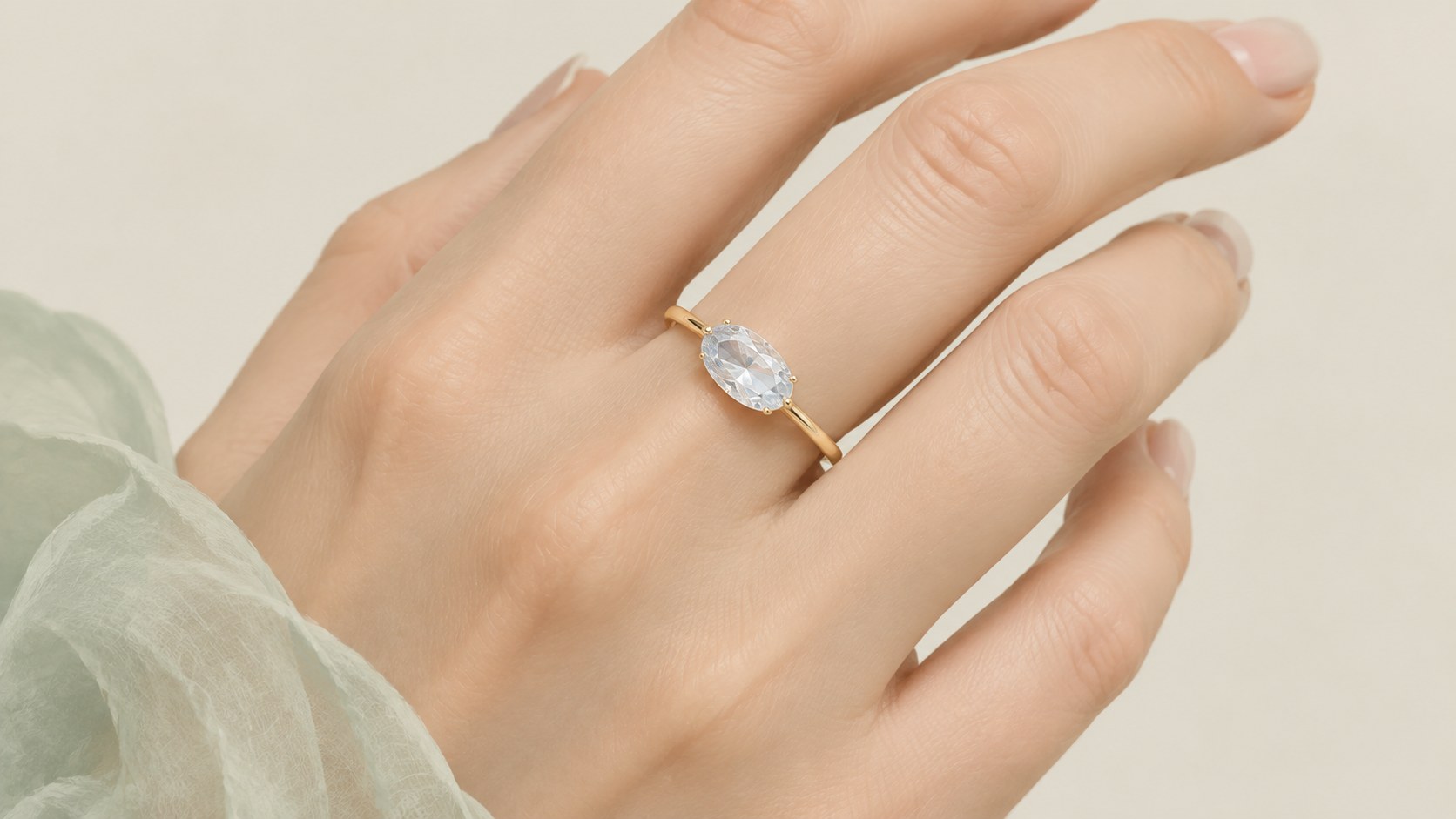
AI-generated illustration; not a Shewah product or a scale measurement.
SHEWAH Editorial Concept Illustration (Non-Catalogue)
Most engagement rings set an elongated stone pointing along the finger, north to south. An east-west setting turns that stone sideways, laying it across the finger instead. It is a small rotation with a surprisingly large effect: familiar, but clearly not standard. Here is what to know before you choose it.
What east-west means
The term describes the orientation of an elongated fancy shape, such as an oval, emerald cut, marquise, pear or radiant, set horizontally across the band rather than vertically along it. Round stones do not apply, since a circle looks the same from every angle. The setting style itself, prong, bezel or otherwise, works the same either way; only the stone's direction changes.
Why people choose it
East-west rings look modern without shouting. The sideways layout spreads the stone's coverage across the finger rather than along it, which many hands find flattering, and the whole head can often sit a touch lower and sleeker. It also reads as a deliberate, personal choice: the ring is clearly classic in its parts, just arranged your own way.
The honest trade-offs
Orientation changes presence. A stone that elongates the finger north-south can look broader and sometimes reads slightly smaller when turned sideways, so it is worth seeing the actual stone in both orientations before deciding. Symmetry matters more too: an east-west setting draws the eye to how level the stone sits, so precise setting work is essential. Finally, check the wedding band early; some east-west heads leave plenty of room for a straight band, others call for a shaped one. Resizing is usually unaffected by the orientation, but it is a fair question to raise before you buy, especially for bezel designs where the metal wraps the stone's full outline.
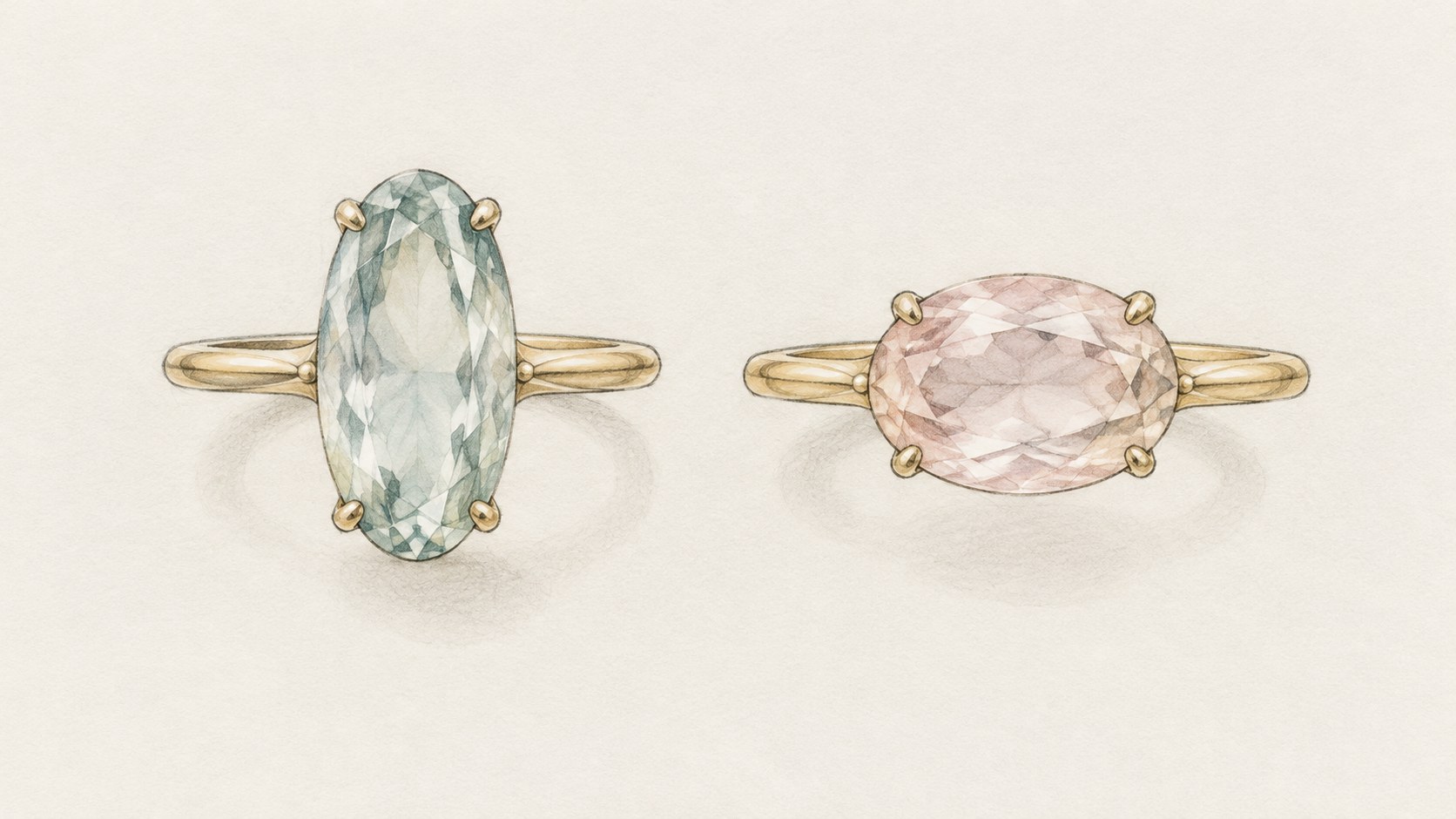
AI-generated illustration; not a Shewah product or a scale measurement.
SHEWAH Editorial Concept Illustration (Non-Catalogue)
Shapes that work best
Ovals and emerald cuts are the most natural east-west candidates, with marquise and pear close behind for a bolder, more directional look. Elongated cushions and radiants can work well too. What matters is that the shape has a clear long axis to show off; the rotation is the whole point.
A style with roots
Sideways stones are not an invention of the last decade. Antique rings occasionally set elongated stones across the finger, and contemporary designers revived the idea as a quiet alternative to the classic layout. That lineage matters for buyers: east-west is a variation on a tradition, not a passing gimmick, so it will still read as considered taste in photographs twenty years from now.
What to check and ask
Ask to see the same stone set, or at least held, in both orientations on your own hand. Look at the ring from arm's length and from the side. Confirm how the setting protects the stone's edges or points, since a sideways marquise or pear still has vulnerable tips. And if a wedding band is in the plan, try them together before anything is final.
A fresh angle, with Shewah
At Shewah, we can show you how the same lab-grown diamond transforms between orientations, so you choose with your eyes rather than a guess. Explore Shewah's jewellery or message us on WhatsApp at +91 96622 66360 to talk shapes and settings.
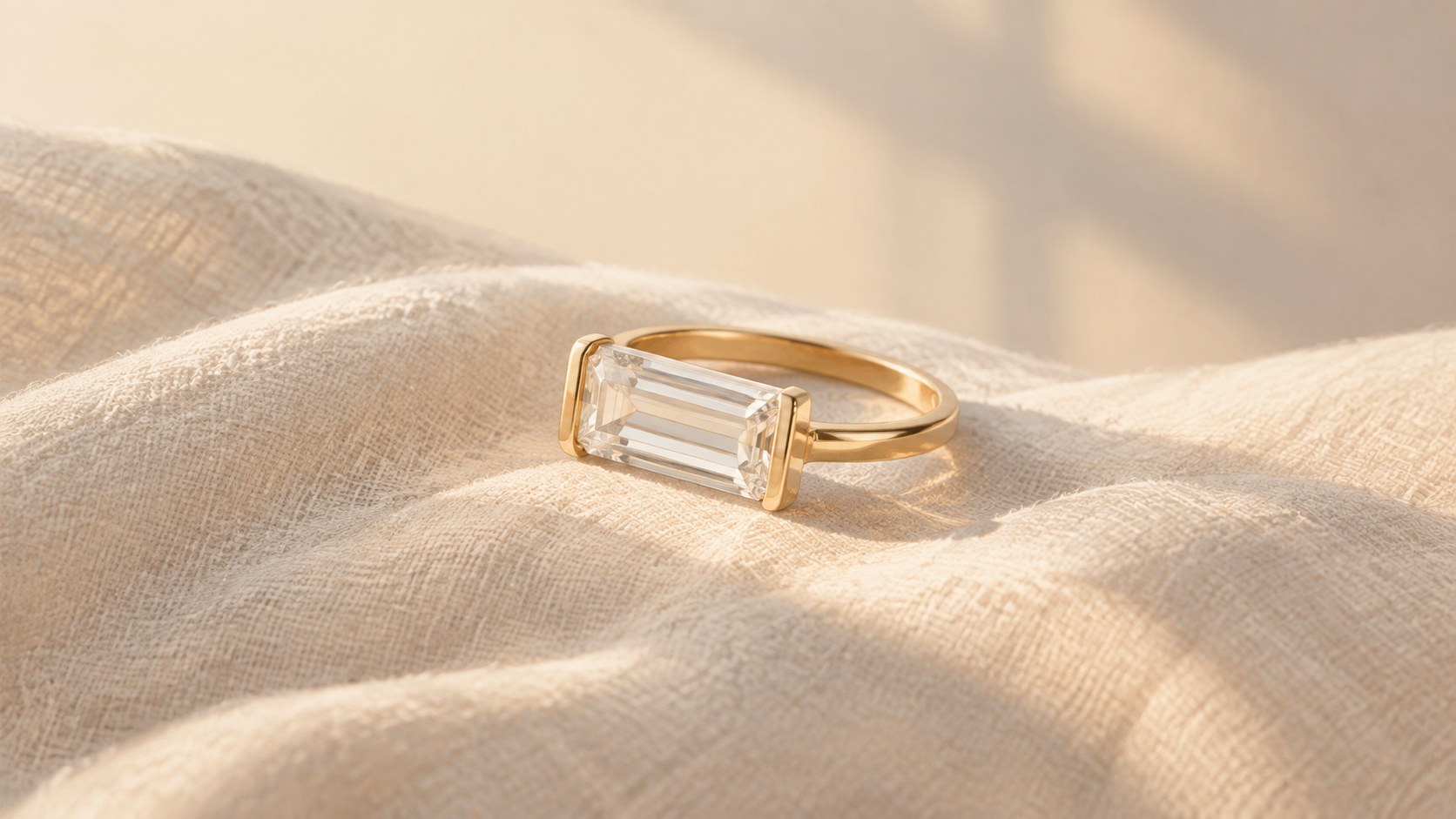
AI-generated illustration; not a Shewah product or a scale measurement.
SHEWAH Editorial Concept Illustration (Non-Catalogue)
Sources
- Engagement ring (Wikipedia) - https://en.wikipedia.org/wiki/Engagement_ring
- Diamond cut (Wikipedia) - https://en.wikipedia.org/wiki/Diamond_cut
- Ring (jewellery) (Wikipedia) - https://en.wikipedia.org/wiki/Ring_(jewellery)
The Maison Shewah Atelier Standard
Every creation referenced across our journal essays is made individually to order using solid 18K gold and independently certified diamonds (IGI & GIA). We uphold complete material transparency and zero synthetic plating.
Research & Gemological References
- [1]Engagement ring — Wikipedia (Verified: 2026-11-03)
- [2]Diamond cut — Wikipedia (Verified: 2026-11-03)
- [3]Ring (jewellery) — Wikipedia (Verified: 2026-11-03)