Cartilage Earrings: A Complete Guide to Placements, Healing and Styling
“Everything above the lobe, explained - placements, healing timelines, flat-back studs vs hoops, and the materials that matter.”
AI-generated illustration; not a Shewah product or a scale measurement.
SHEWAH Editorial Concept Illustration (Non-Catalogue)
The lobe was only ever the beginning. Cartilage piercings - helix, tragus, conch and friends - let you build an ear that is genuinely yours, and they have moved firmly from niche to mainstream. They also ask more of you than a lobe piercing: more patience, better materials, smarter jewellery choices. Here is the whole picture.
Know your placements
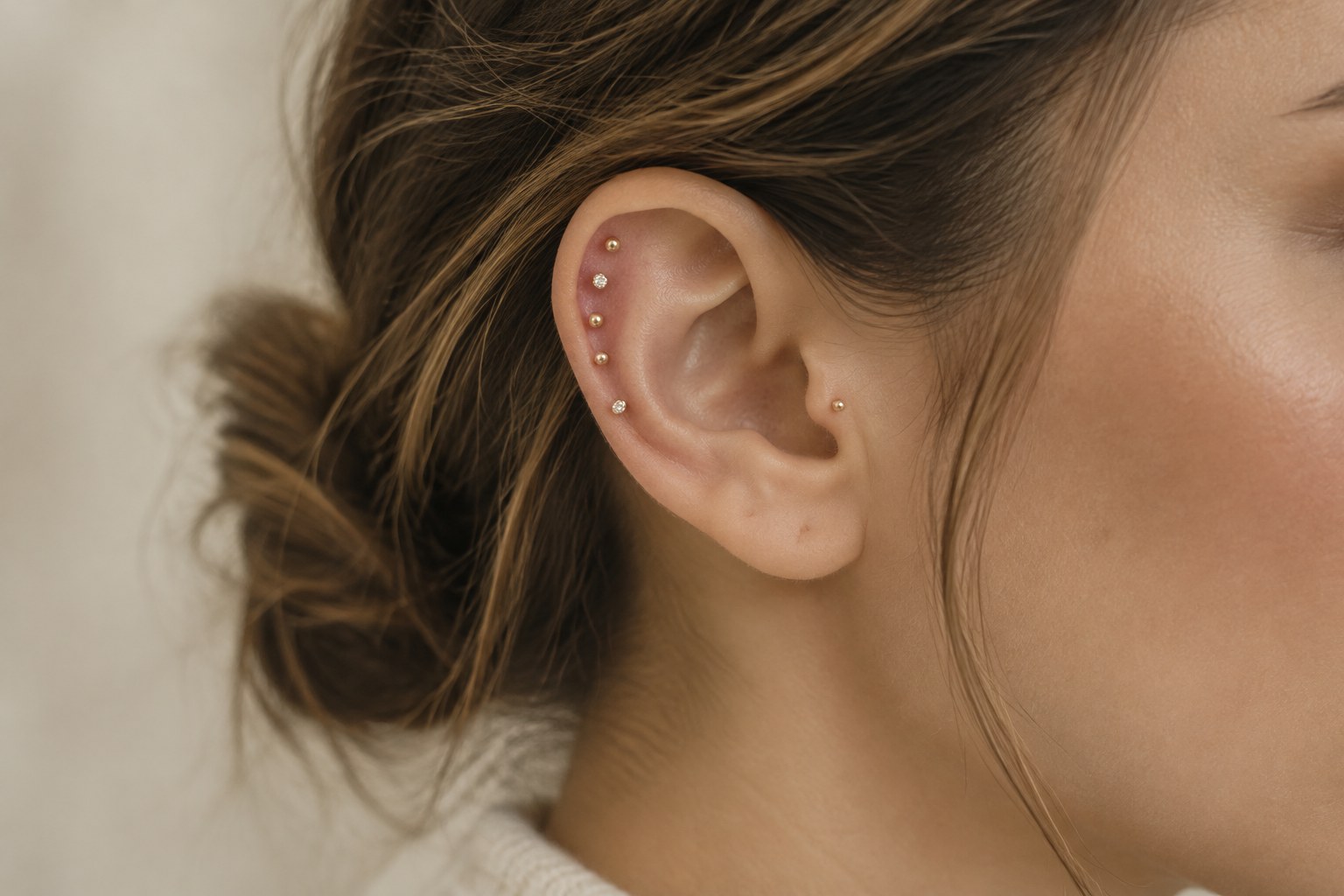
Cartilage covers almost everything above the lobe, and each spot wears differently. The helix runs along the upper outer rim and is the classic entry point. The forward helix sits at the front of that rim, near the face. The tragus is the small nub in front of the ear canal; the flat is the broad plane inside the upper ear; the conch is the inner cup, pierced through its centre or outer edge; the rook and daith fold into the inner ridges. Piercing guides agree on one thing: anatomy varies, and a good piercer will tell you honestly which placements your ear will and will not take.
Why cartilage heals differently
Lobe tissue is soft and well supplied with blood; cartilage is not. A lobe typically settles in six to eight weeks, while cartilage commonly needs three to six months, sometimes longer, to heal fully. During that window the piercing is not decorative, it is a wound with a tenant. Sleeping on it, twisting the earring, or swapping jewellery early are the classic ways to invite bumps and setbacks. Treat the timeline as real and the reward as worth it.
Starter earrings: what to look for
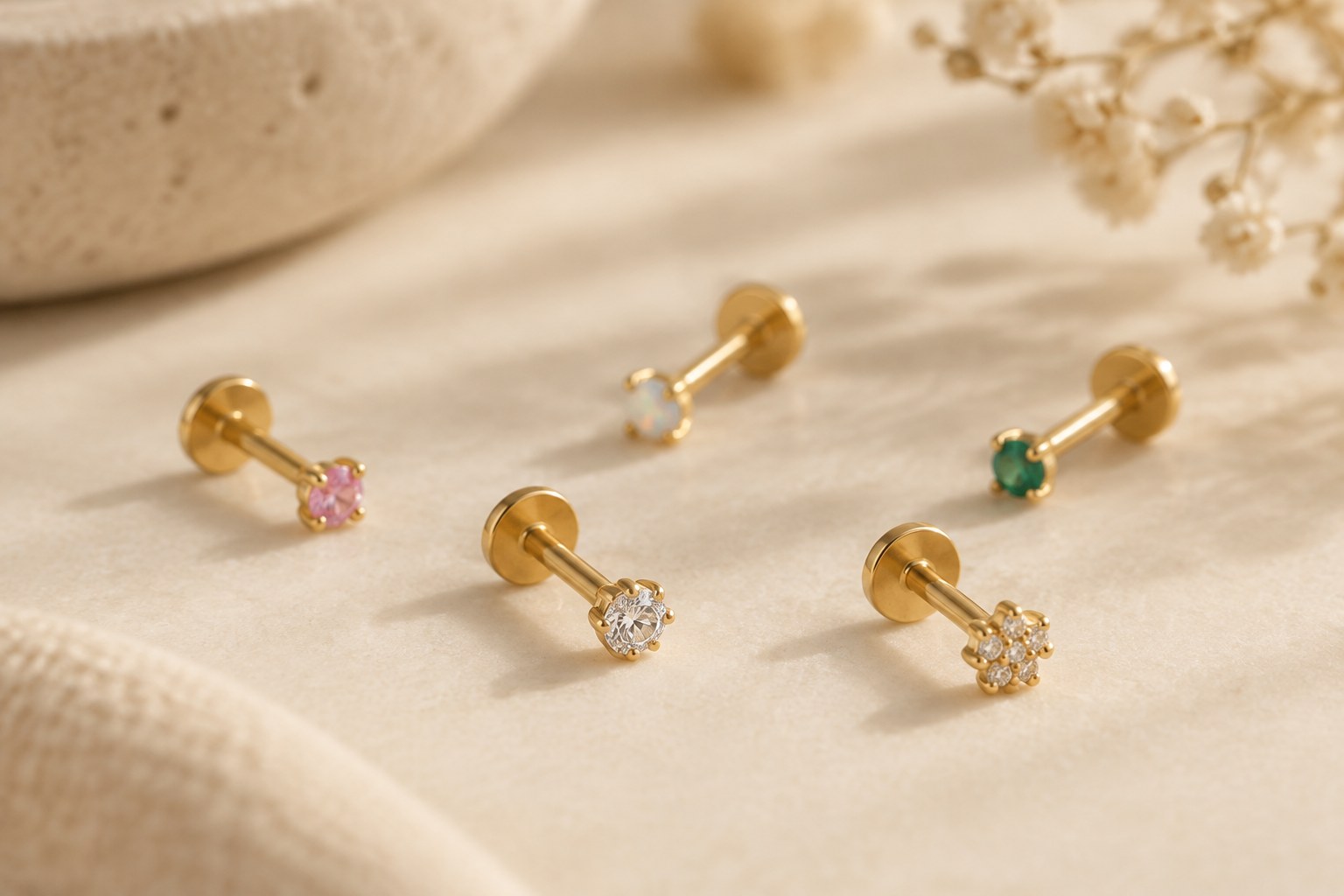
The near-universal professional recommendation is a flat-back labret stud: a straight post with a smooth disc that sits flush against the back of the ear, so nothing digs in when you sleep or wear headphones. Material matters more here than anywhere else in jewellery. Implant-grade titanium and solid 14k or 18k gold are the trusted choices; avoid plated metals and costume alloys until you are fully healed, because healing tissue reacts to exactly the impurities plating hides. Most cartilage is pierced at 16 or 18 gauge, slightly thicker than a standard lobe post, which is worth knowing before you fall for a delicate earring that will not fit.
AI-generated illustration; not a Shewah product or a scale measurement.
SHEWAH Editorial Concept Illustration (Non-Catalogue)
Hoop or stud first?
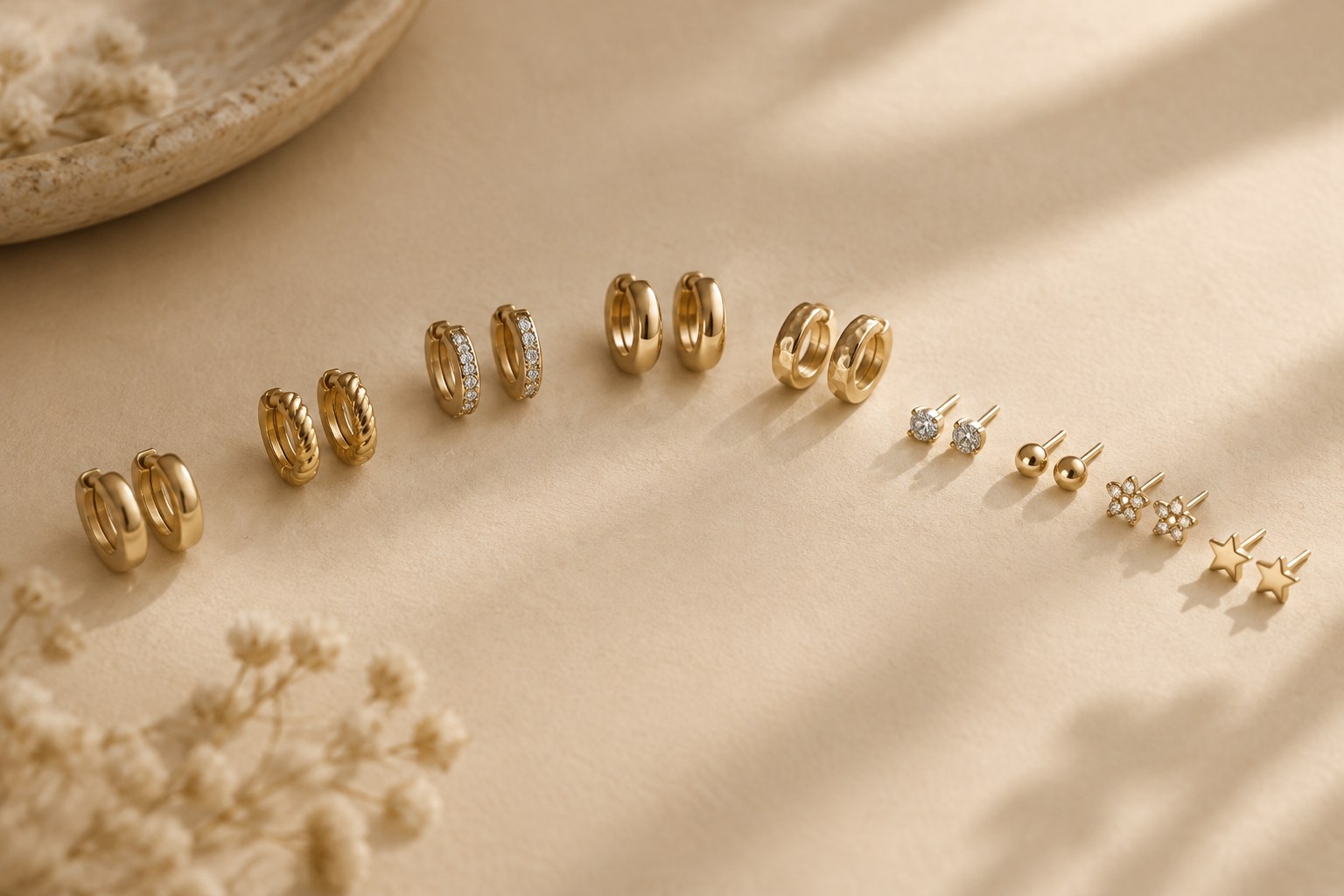
Studs first, almost always. Hoops move, rotate and catch, and movement is the enemy of healing. Once a piercer confirms you are healed - in person, not by calendar - small hoops and huggies become the joy of the helix and rook. A common professional step is "downsizing": swapping the initial slightly-longer post for a snugger fit a few weeks in, which reduces snagging and helps the piercing settle.
Small rules that save you months
Clean as your piercer directs, usually with sterile saline, and otherwise leave it alone. Keep hair products, phones and pillowcases in mind as sources of irritation. Do not change jewellery on a hunch; change it on a piercer's word.
Building a curated ear
Once healed, the fun starts: a helix huggie above a lobe stud, a tiny tragus glint, a flat-back star in the conch. The most elegant curated ears share a metal family and a mood rather than matching exactly. Ear cuffs and clip-ons can join the composition with no extra piercings at all, useful for testing a look before committing.
Build your ear story with Shewah
Shewah crafts small, comfortable lab-grown diamond studs and huggies that suit healed cartilage placements beautifully - real sparkle at an everyday scale, designed in Surat. Explore Shewah's jewellery, or message us on WhatsApp at +91 96622 66360 and we will help you plan the ear you have been picturing.
AI-generated illustration; not a Shewah product or a scale measurement.
SHEWAH Editorial Concept Illustration (Non-Catalogue)
Sources
The Maison Shewah Atelier Standard
Every creation referenced across our journal essays is made individually to order using solid 18K gold and independently certified diamonds (IGI & GIA). We uphold complete material transparency and zero synthetic plating.
Research & Gemological References
- [1]The Ultimate Guide to Ear Piercings: All of the Piercings Explained — Maison Miru (Verified: 2026-10-25)
- [2]Cartilage Piercings: A Complete Guide — Byrdie (Verified: 2026-10-25)
- [3]The Ultimate Guide to Cartilage Piercings — Mejuri (Verified: 2026-10-25)
- [4]Complete Guide to Ear Piercing Placements & Names — Scream Pretty (Verified: 2026-10-25)


